


Colour field
Use print for gradients, illustrations, small colour changes and tonal detail.
A rhinestone DTF transfer uses print for colour-rich artwork and crystals for selected light-catching detail. Build the two effects as one registered apparel program with a defined layer order, garment test and production record.
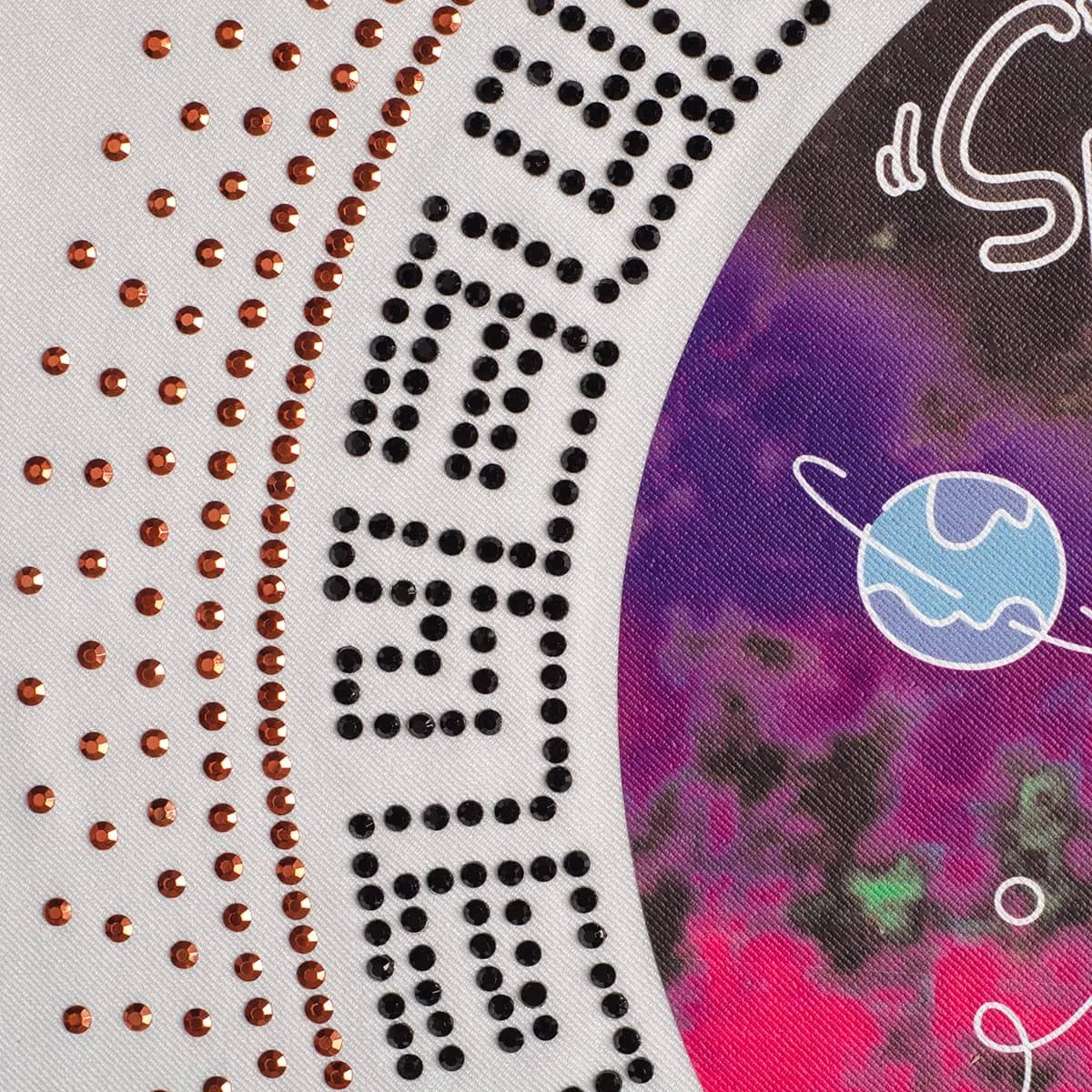
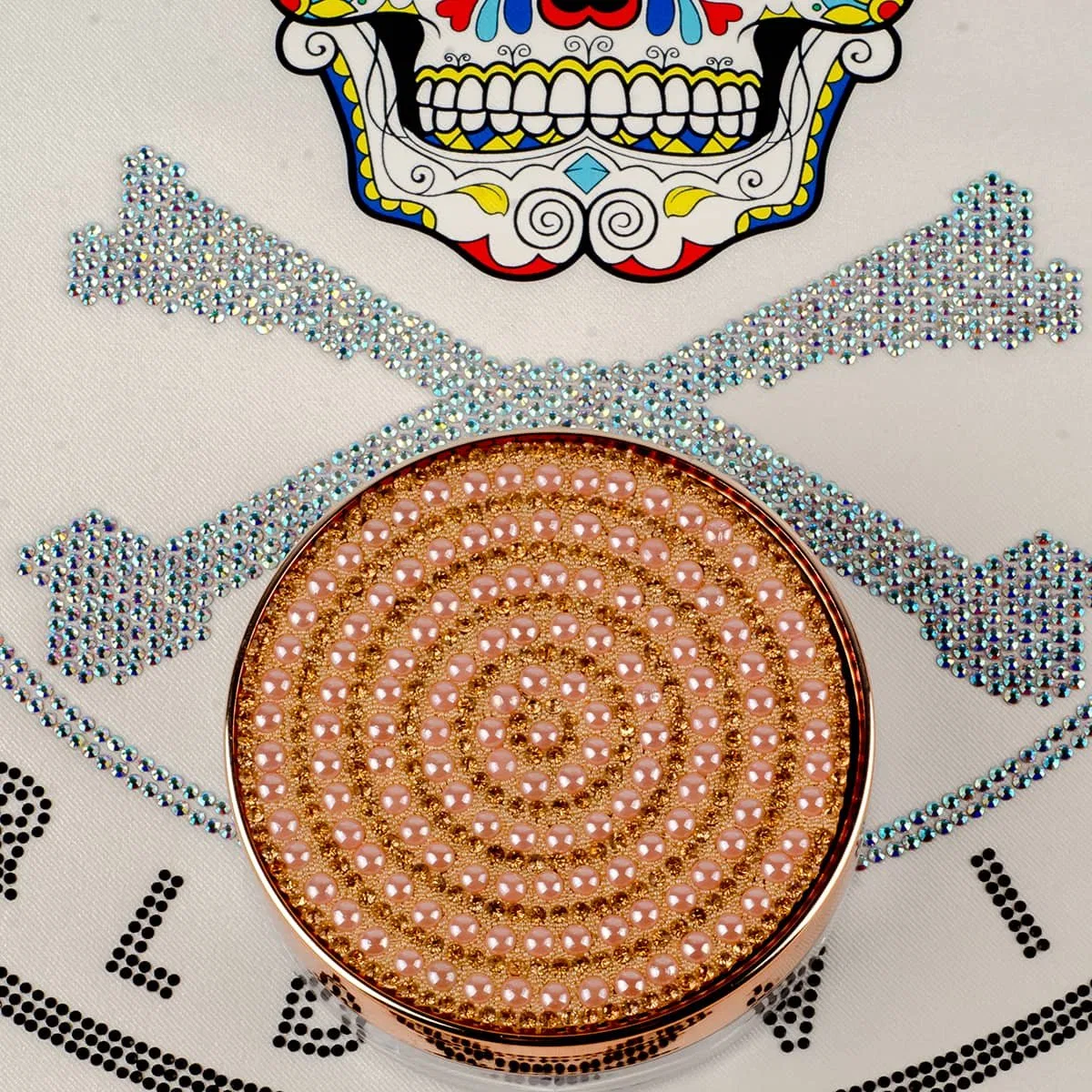
Use print for gradients, illustrations, small colour changes and tonal detail.
Place crystals where sparkle improves recognition instead of covering information.
Reserve practical space around fine outlines, text and stone adhesive seats.
Approve the final dimensions on the actual garment panel, not only on screen.
Show the final visual, overall size, orientation and garment placement. This is the reference used to compare the assembled sample.
Supply high-resolution raster or editable vector art with colour intent, underbase expectations and transparent boundaries identified.
Mark every stone centre, SS size, colour, grade and any intentional gaps. Keep text and critical outlines legible.
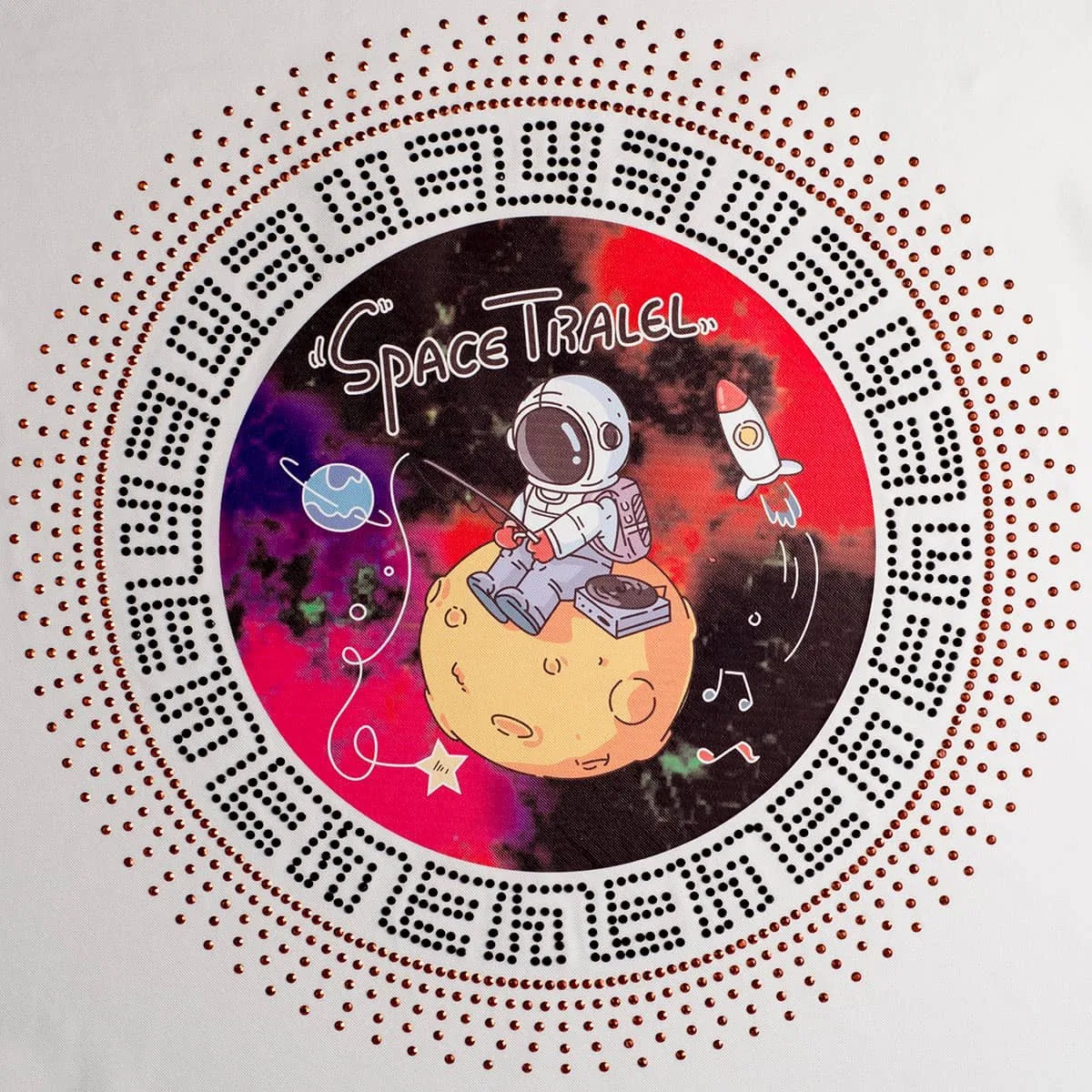
Reserve clear space around letter counters and narrow strokes in custom rhinestone DTF transfers.
Define whether each crystal sits inside, outside or along the printed contour before sampling.
Test the combined print, adhesive and heat process on the intended garment fabric.
Preserve open areas so rhinestone and printed heat-transfer artwork remains clean at finished size.
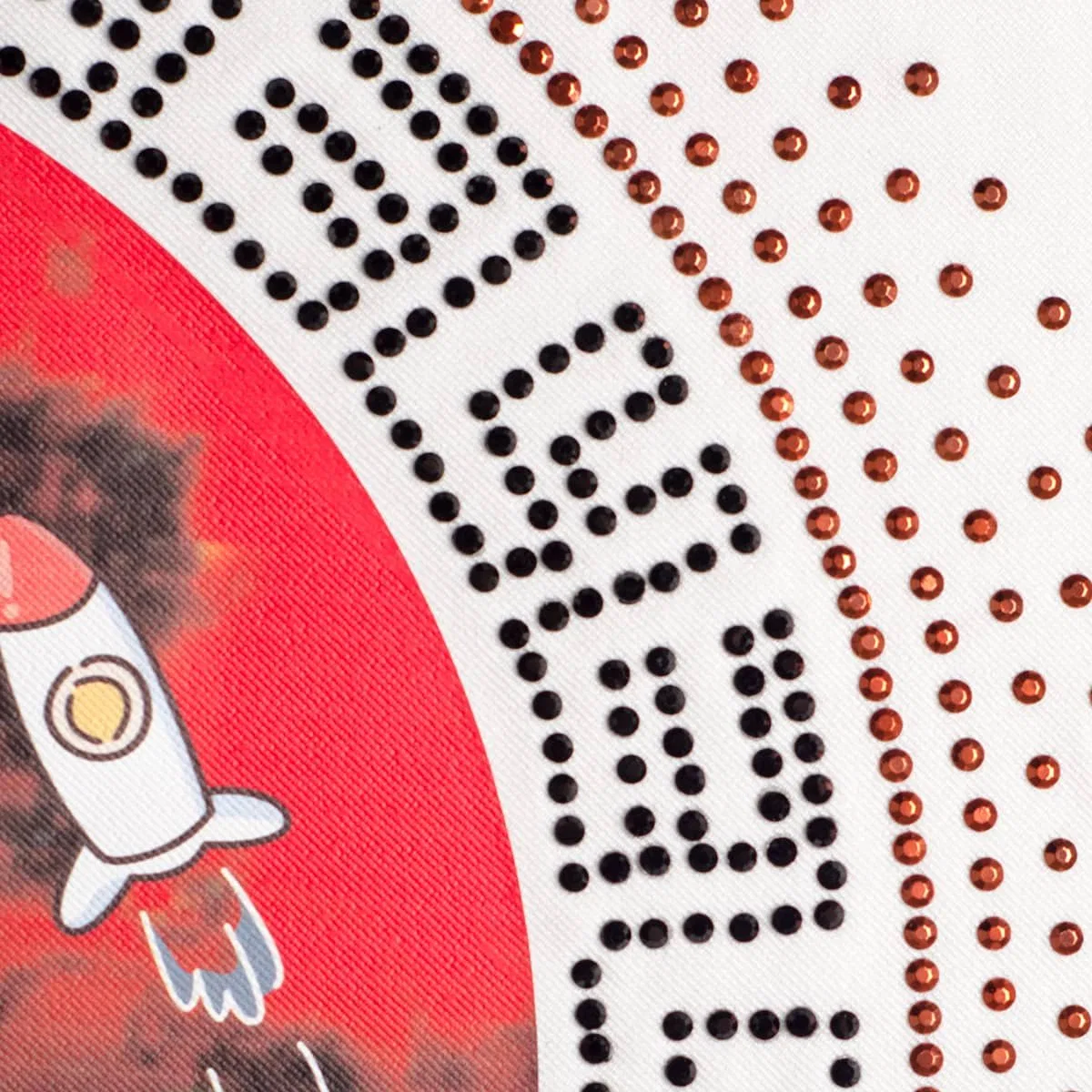
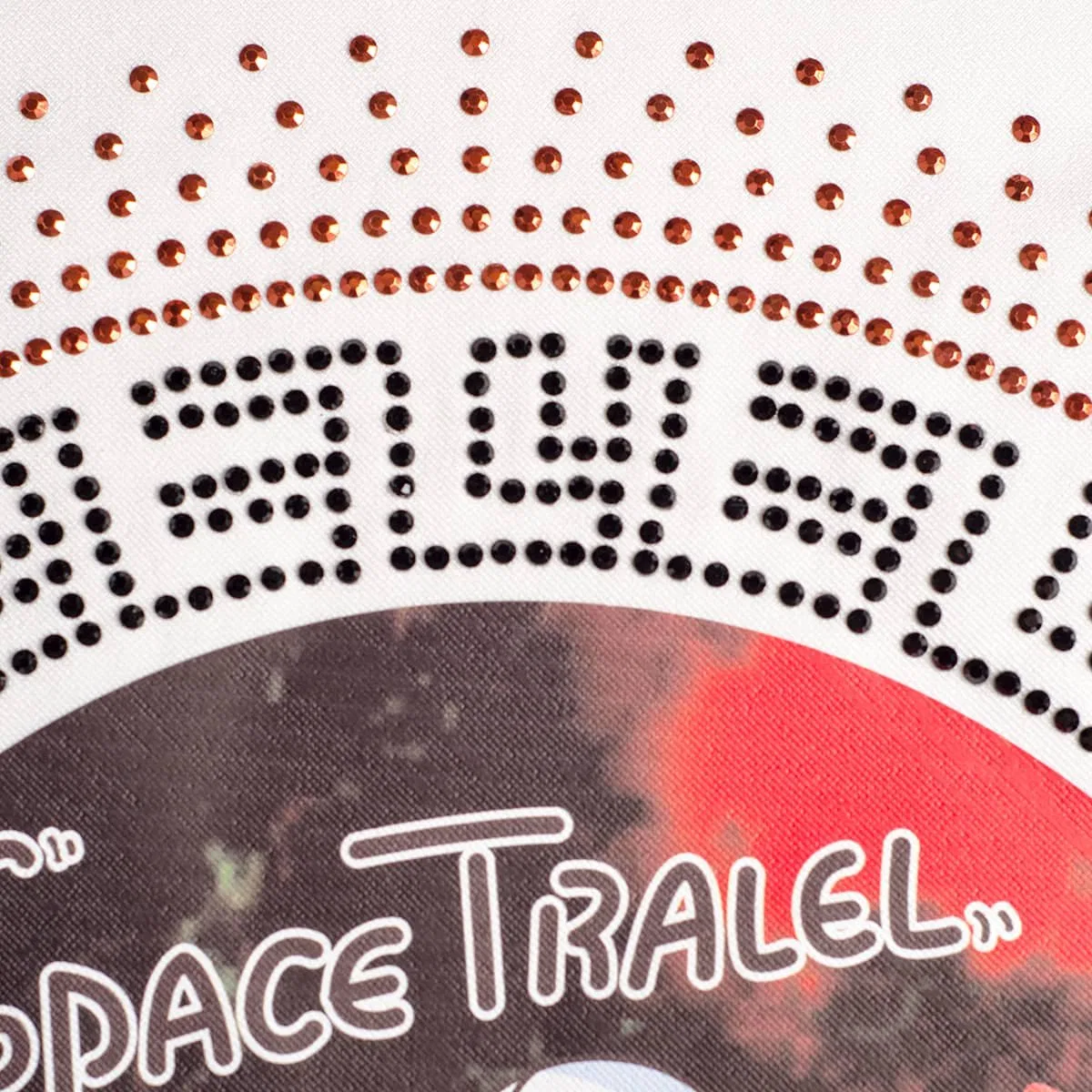
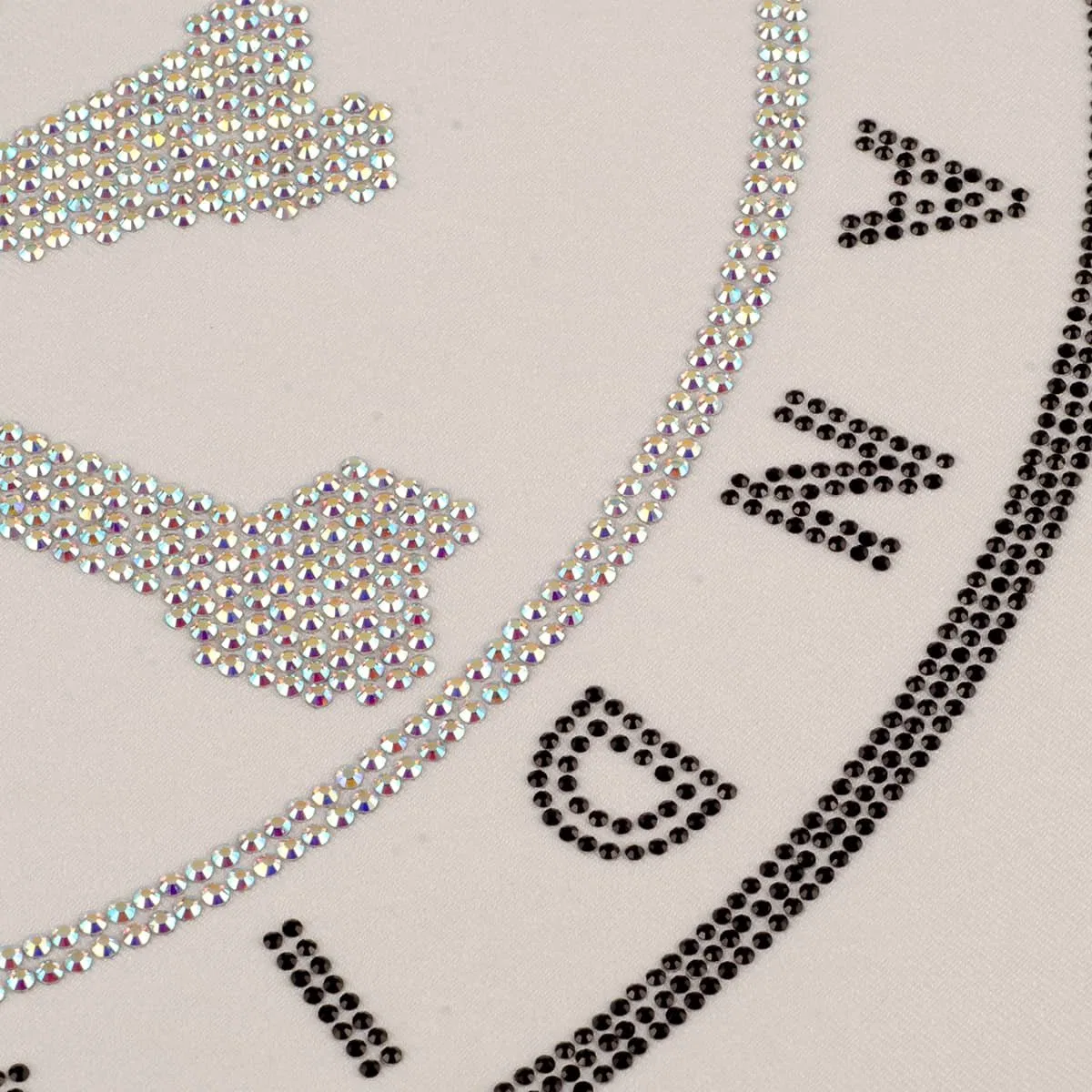
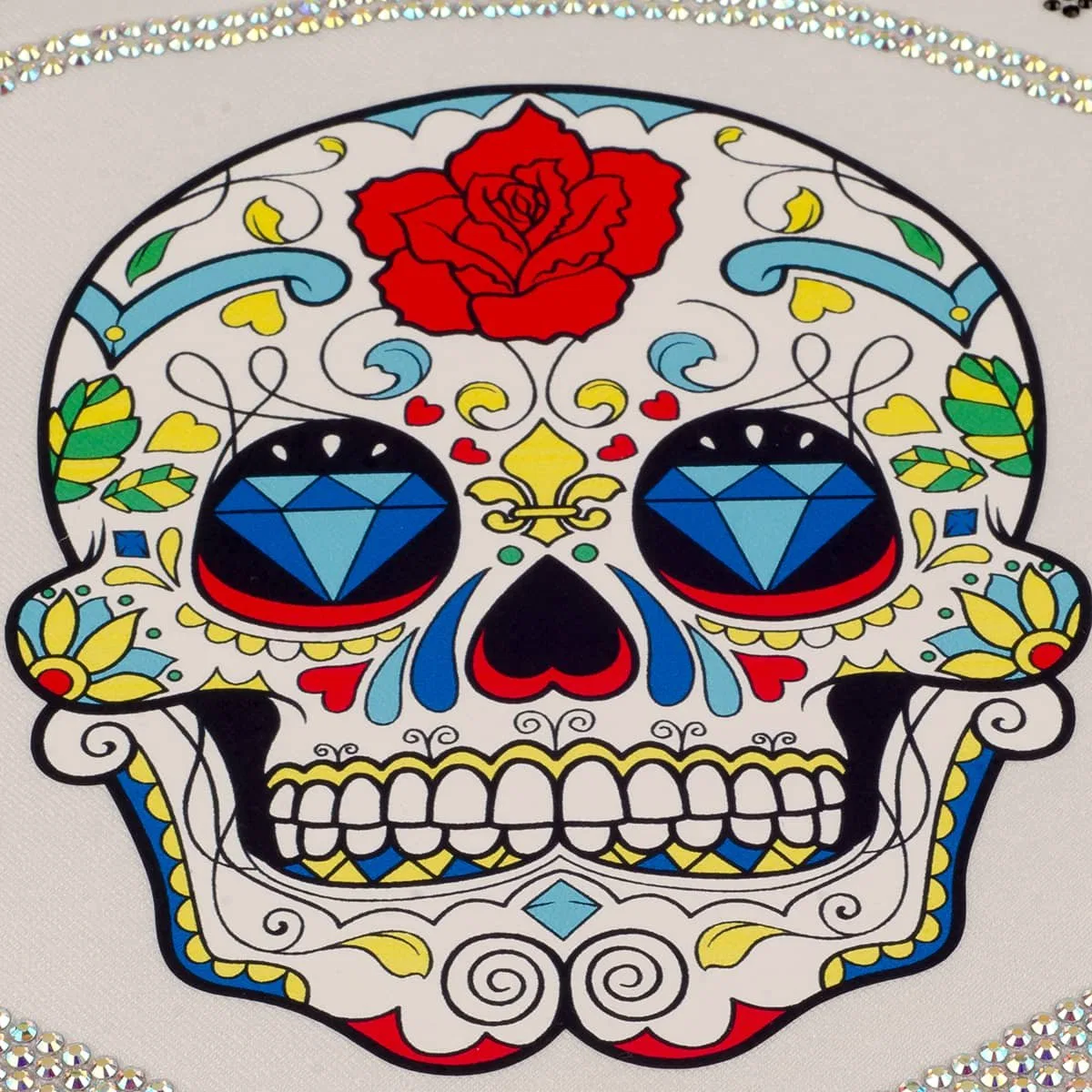
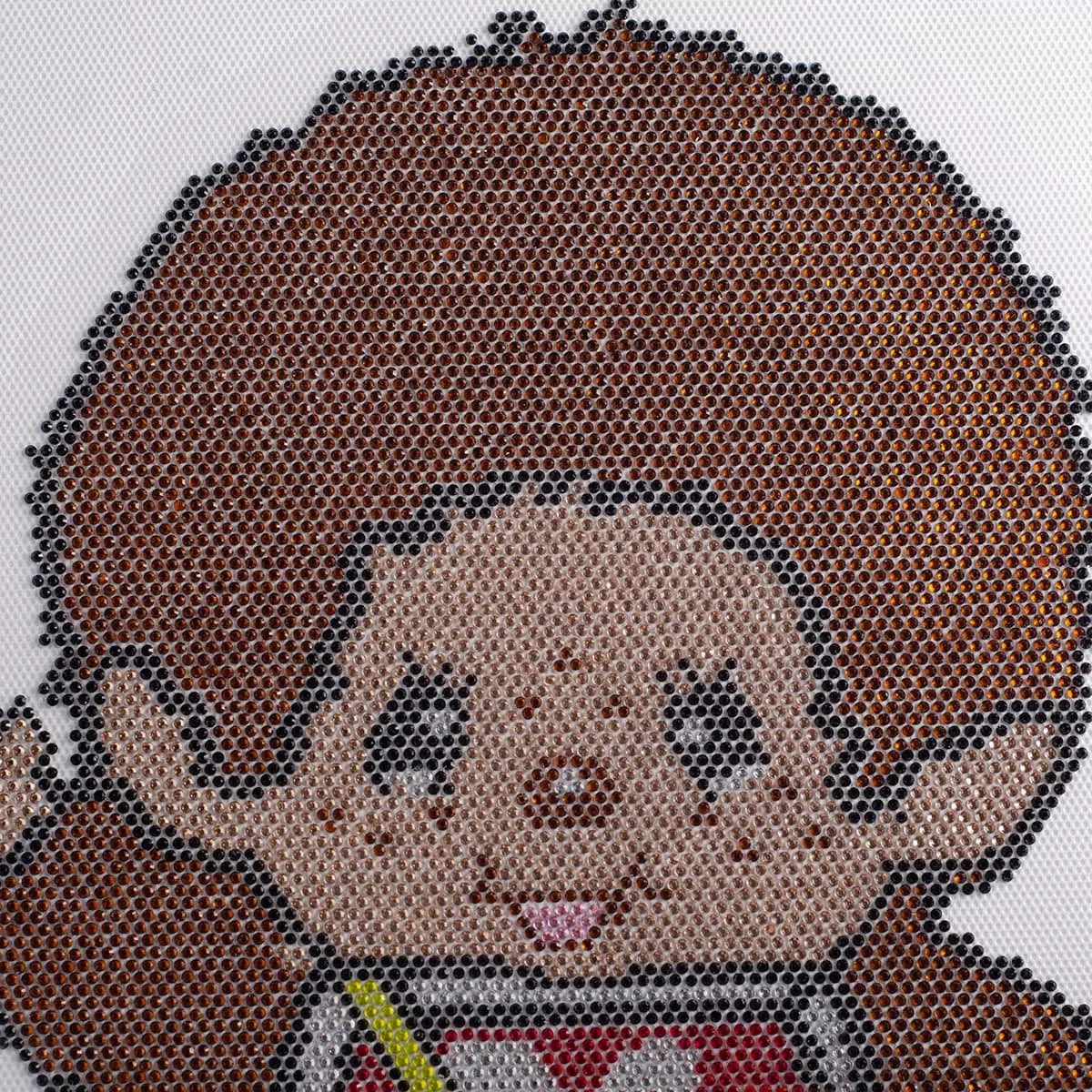
Match design code, garment and instruction revision.
Support a clean, flat, compatible application area.
Use the approved placement and orientation reference.
Follow the exact project recipe and layer order.
Observe the stated peel timing without shifting registration.
Check print surface, every stone and the garment reverse.
A print can look correct before stones are placed. The final applied sample proves whether both processes work together.
| Checkpoint | Evidence |
|---|---|
| Registration | Print boundaries align with the approved stone-centre map. |
| Appearance | Colour, coverage, sparkle and dimensions match the signed sample. |
| Application | Issued settings produce a clean surface and reliable placement. |
| Care | Project-specific wash testing records print and stone condition. |
| Packing | Layers, codes and instructions stay correctly paired. |
These cards are generated from the active catalog, so current SKU, material, MOQ and listed price remain connected to their product records.

Supply print dimensions, stone count, size mix, colours and versions.
Name fibre, colour, finish, seam location and who performs application.
List quantity by design, colourway, size and replenishment schedule.
Define unit packs, labels, paired layers, destination and target date.
It combines a full-colour printed transfer area with a registered rhinestone layer. The approved construction may arrive as coordinated layers or a supplier-defined application set.
Artwork should reserve clear seats for stones. Fine printed features beneath adhesive or stone edges can lose clarity, so collision points are reviewed before sampling.
The supplied format and application sequence depend on the approved construction. Follow the project instruction for layer order, temperature, time, pressure and peel.
Print can reproduce tonal artwork more efficiently than stones, while crystals should be assigned to highlights, borders or focal points.
Approve registration, print colour, stone map, applied dimensions, surface condition, adhesion, wash result and the complete application sequence.
Printed area, colour coverage, stone count and grade, design size, layer count, quantity, packing and destination all affect the quote.
Send composite artwork, print layer, stone map, garment details, quantities, packing and destination.