


Head circumference
The recorded range defines the listing context, not a promise of fit for every wearer.
Map the finished decoration around a curved crown: top origin, panel arcs, front field, side limits and brim boundary. Three active rhinestone cap references provide a consistent recorded size frame for discussing coverage, composition and wholesale sample approval.
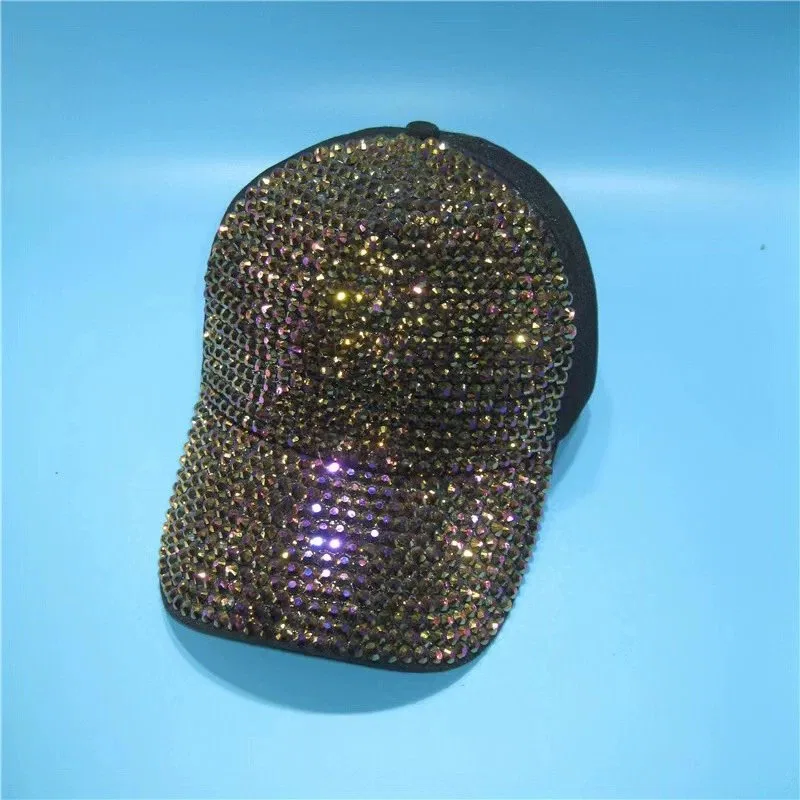
Products 165, 166 and 167 carry the same four dimensional entries. Use them as catalog facts for those listings, then confirm the current sample and fit details in the quotation. Decoration coverage still requires its own visual and physical approval.
The recorded range defines the listing context, not a promise of fit for every wearer.
Use the brim measurement when discussing the lower visual boundary and front proportion.
The crown depth helps frame how high a continuous or zoned decoration can appear.
The recorded diameter adds scale for the curved top and side views.
Each listing records an MOQ of 50 pieces. Variant allocations, colors, current price, construction options and production timing should be requested for the exact product line.
Similar silhouettes can carry different catalog names and material wording. Preserve the product ID and exact selected image through quotation and approval so the intended visual reference does not drift.

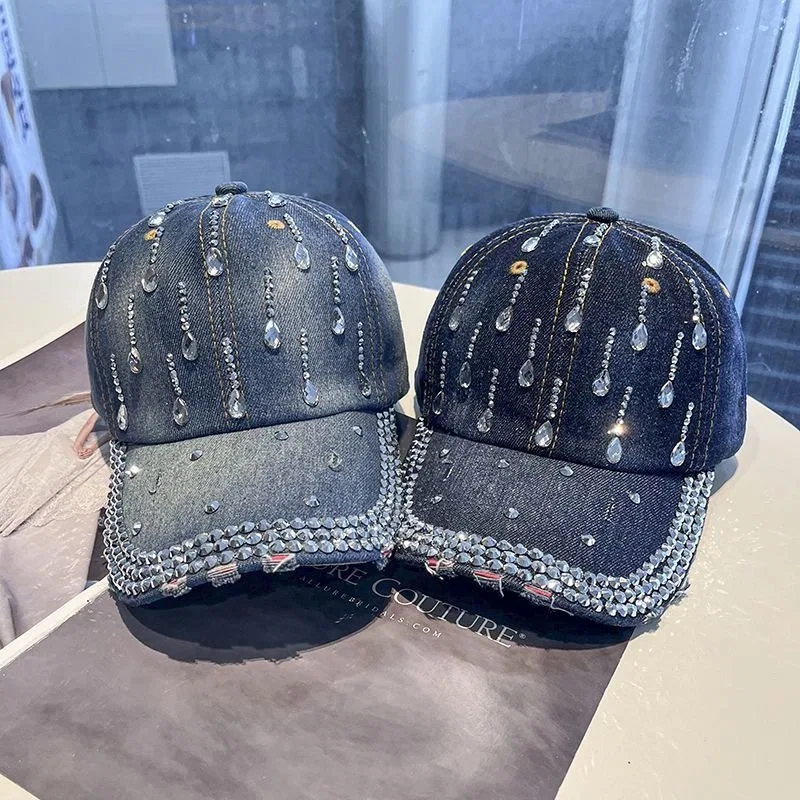
Front images support identification and visual discussion. They do not independently establish precise stone count, size allocation, spacing or unseen panel coverage. Request a coded sample when those details control the order.
Use the top button as a recognizable origin and divide the crown into concentric review rings. Ring language turns a vague request for "more crystals" into a visible boundary discussion without pretending that a round diagram reproduces the sewn panel geometry.
Inner ring: check clearance, crowding and the transition around the top button. Middle ring: examine density across curved upper panels and the continuity between seams. Outer ring: define how the field approaches the crown base, side panels and front brim transition.
Overlay panel seams on the ring drawing and attach corresponding top-view photographs. If density changes by zone, label the transition rather than leaving it to visual inference.
Coverage strategy changes the rhythm of the cap. Make the choice visible in the proof and sample rather than relying on adjectives alone.
Treat most of the visible crown as one decorated field. Review continuity across panels, spacing near seams, behavior around eyelets and the boundary at the lower crown. Look for abrupt thin areas that become visible from the side or top.
A full direction still needs defined exclusions. Mark the top button, seam valleys, closure area, sweatband zone and any intentional undecorated construction feature.
Reserve particular panels, rings, bands or motifs for rhinestones while leaving controlled negative space. State the start and stop points with measurements and photos. Confirm whether zone edges follow seams or cross them.
Zoning can support a logo, front emphasis or graduated field, but each change in density requires an identified sample rather than an informal adjustment during bulk work.
A curved crown reveals different parts of the composition as the cap turns. Photograph the same coded sample on a stable form and keep the camera height and distance consistent.
Judge optical centering, lower boundary, brim relationship and the main retail or event impression.
Observe how front density continues toward the side and whether a zone boundary feels intentional.
Inspect the side limit, closure direction, seam transitions and any sudden change in crystal coverage.
Check the inner ring, top-button clearance, radial balance and panel-to-panel continuity.
Include a close-up for construction discussion and a farther on-form view for composition. Photography can document placement, but the physical approved sample remains important for texture, color and reflective appearance.
A finished-layout record should join the cap identity, visible boundaries and sample evidence. Keep commercial allocation separate so a change in color or quantity cannot silently change the approved composition.
Product ID or custom blank code, color, construction version, circumference record and date received.
Full or zoned direction, panel map, top and lower boundaries, density notes and intentional exclusions.
Unique code, front, profile, three-quarter and top photographs, reviewer, revision and physical storage reference.
Quantity by variant, inner-pack count, carton grouping, destination, requested date and current quoted terms.
For related planning, compare the custom rhinestone hats guide, hat transfer placement guide and wholesale rhinestone buyer checklist. The active Product 167 page provides the catalog identity for the AB crystal reference.
These answers keep recorded cap dimensions, visible composition and transfer application as distinct review subjects.
The database uses one size frame for Products 165, 166 and 167. Its circumference range is 21.65 to 23.62 inches; the listed brim, crown depth and diameter measure 2.95, 5 and 7.08 inches respectively. Each product records a 50-piece minimum.
Full-crystal coverage treats most of the visible crown as a continuous decorated field. Zoned coverage reserves defined panels, bands or motifs. The buyer should approve boundaries, density and viewing angles on a physical cap sample.
No. Use it to identify the catalog reference and visual direction. Request an item-specific sample and written specification when stone count, spacing, size mix or panel-by-panel allocation is important.
A cap is curved, so a layout that looks balanced from the front may reveal gaps, crowding or abrupt boundaries from another angle. Multiple views make the visible coverage decision reproducible.
Use the rhinestone transfers for hats placement guide for transfer-sheet geometry, cap obstacles and equipment access. This page focuses on the visible composition of finished rhinestone cap references.
Cite Product 165, 166 or 167; identify the selected color and quantity; attach the full or zoned coverage map; show intended exclusions; and provide front, three-quarter, profile and top reference views. If requesting a custom logo or density pattern, add authorized artwork and measurable boundaries.
Ask Teebling to confirm the current construction, available options, sample route, packing, price and timing for the exact cap. Approve one coded physical cap and keep its image set with the purchase record so later production is measured against a finished composition rather than a broad crystal-cap description.