


Ball
Sport cue with line detail reviewed at real size.
Coordinate original sports-ball, bow, heart, star and bee motifs as a legal team set. This playbook links artwork rights, thread zones, scale, attachment evidence, team colors and kit packing without borrowing protected league graphics.
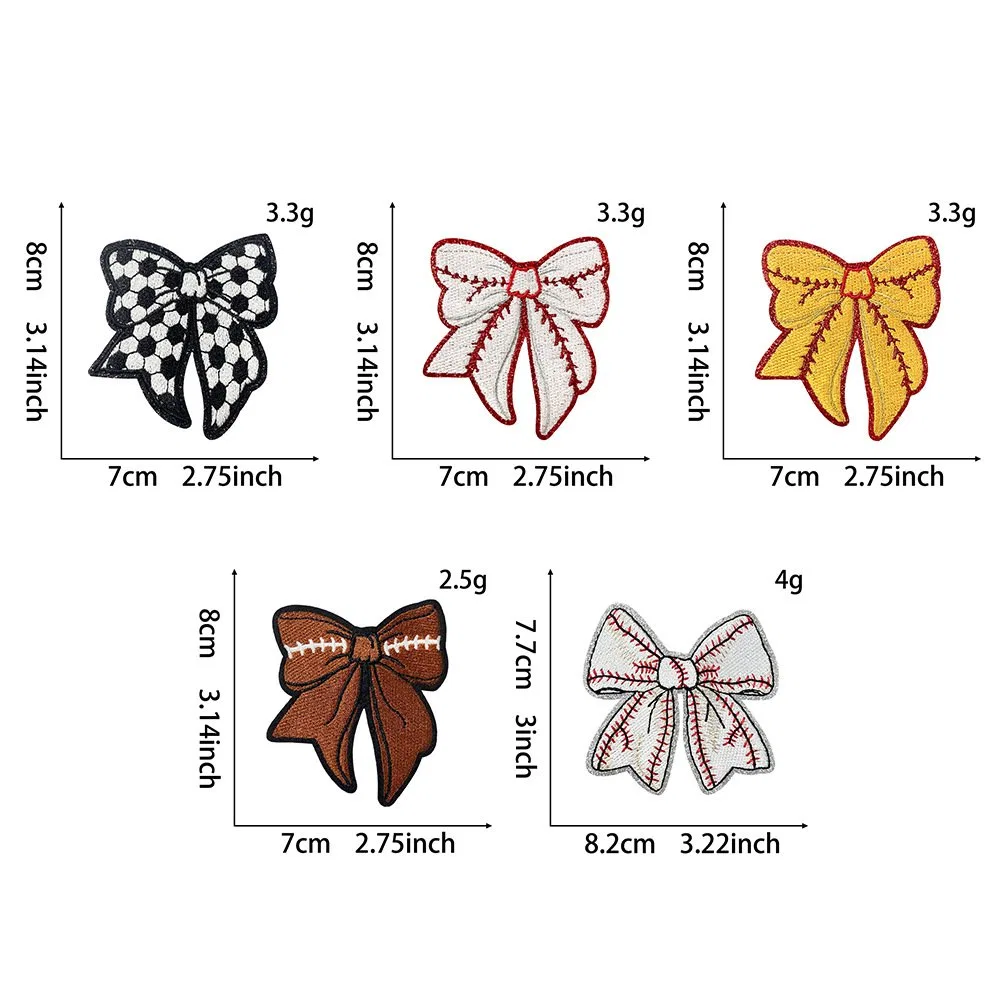
A sports theme does not require a professional team crest. Use original combinations of generic balls, bows, hearts, stars, bees, names or buyer-owned marks. Record who supplied the artwork and what rights permit production. If a third-party logo is requested, obtain written authorization before treating it as an approved manufacturing file.
Keep inspiration, working art and approved art in separate folders. A mood-board image may guide color or category, but it cannot become production artwork by default. Teebling needs a named final revision and a clean visual showing the exact requested emblem.
A coordinated set needs more than repeated colors. Assign each shape a selling or kit purpose, then check that its silhouette reads at the planned scale. A heart star embroidered patch can serve as a spirit accent, while a ball-centered bow may identify a sport. “Team bling” should describe a buyer-defined styling direction, not an unsupported league association.
Sport cue with line detail reviewed at real size.
Directional frame that can carry color and a central symbol.
Spirit accent with clear perimeter and interior fill plan.
Pointed emblem requiring edge and stitch inspection.
Characterful generic motif with segmented thread zones.
Record 14 is named Glitter Bow, Football and Bee Embroidered Patch; its material is thread embroidery, reference size is 2.63 by 2.2 inches and MOQ is 100. Record 15 is Sports Ball Embroidered Bow Iron-On Patches; it states thread embroidery, three pictured size variants and MOQ 100.
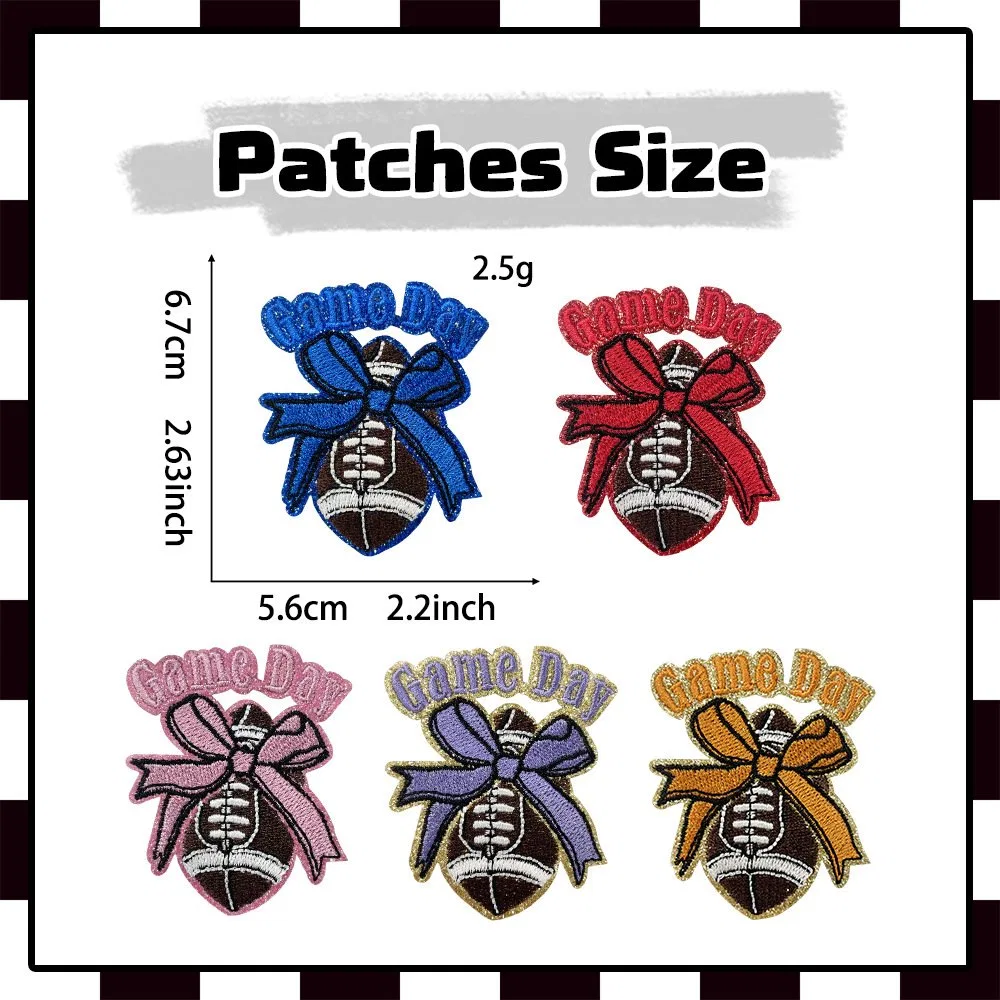
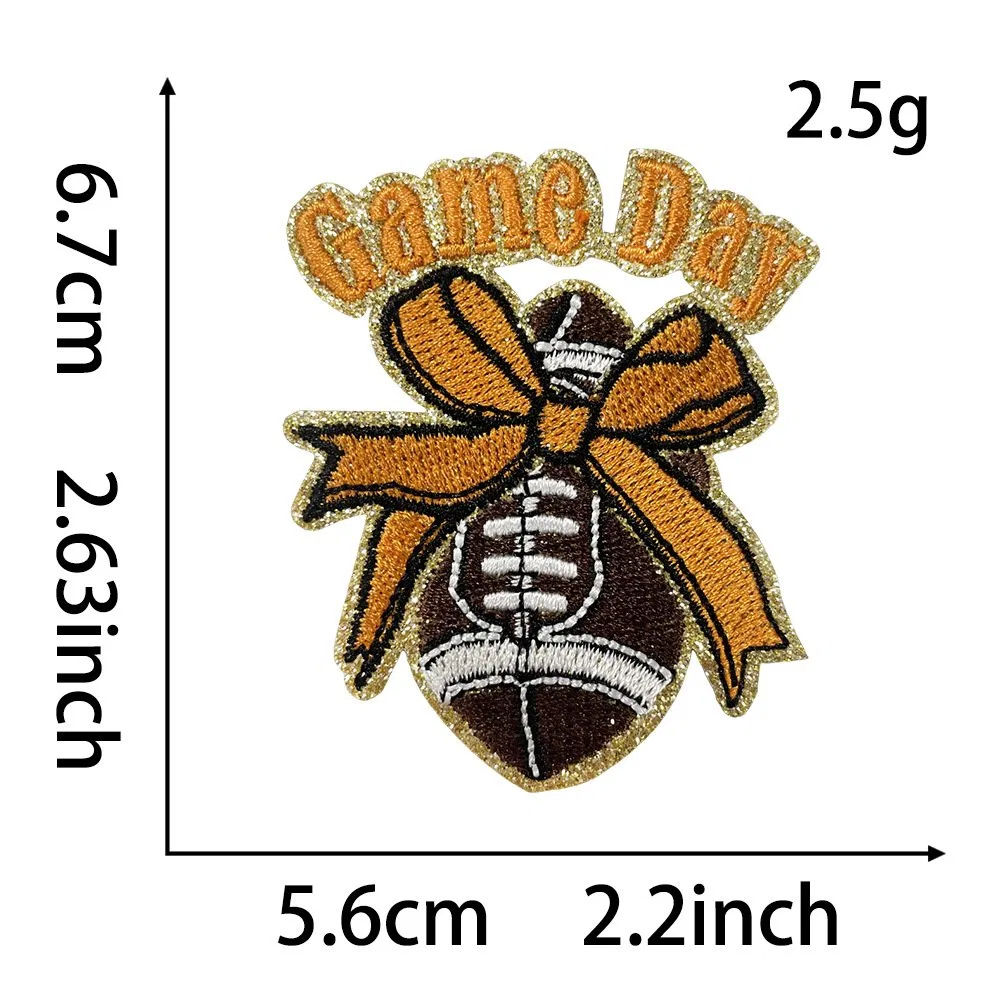
Provide a flat color map, physical size, border direction and detail priority. Thread embroidery should be reviewed as stitched geometry, not only as a screen palette. Ask Teebling to assess narrow lines, lettering, small counters and adjacent color fields for the chosen scale and construction.
Identify the ball, monogram or central icon that must remain recognizable.
Use bow loops, heart fields or star bodies to carry coordinated team color.
Flag laces, outlines, facial cues or tiny type for supplier review at finished size.
Specify edge color and intended silhouette; do not assume every badge uses one border style.
Where a sparkle or specialty appearance is requested, describe the desired visible effect and let the quotation confirm the actual material. Do not transform a product title containing “glitter” into a generic composition claim for every new motif.
Record 15 lists pictured variants at 5.7 by 7.2 cm, 7 by 8 cm and 8.2 by 7.7 cm. Those dimensions belong to the pictured variants and should not be reassigned to a new design. Set the new patch size from its artwork and receiving product, then evaluate whether thread detail remains clear.
Measure from neckline, placket and armhole; judge the silhouette at normal conversational distance.
Account for curvature, seams, handles and limited application access around smaller zones.
Balance broader visibility with garment movement and any player name or number nearby.
Create a placement sheet for each garment size when coordinates or available fields change. A single enlarged mockup cannot prove that the patch fits every youth, adult or accessory variant.
Define the smallest packed unit and label it with project, motif, revision, size, colorway, quantity and destination. If different sports, age groups or garment sizes use different patches, separate them physically and in the packing ledger. Photograph the completed sort before shipment when several designs look similar.
Keep each original emblem under its approved product or project identity.
Separate team palettes and identify thread references used in the sample.
Route patch size to the garment group or accessory named in the placement plan.
Mark approved spare units so they are not counted twice as regular inventory.
Continue with embroidered heat-transfer badge planning, compare broader factory options through custom embroidered patch wholesale guidance, and keep sequin construction distinct with the tiger sequin patch guide.
These answers connect original artwork, stored facts, physical scale, application evidence and kit-level traceability.
Production requires artwork rights. Submit buyer-owned, licensed or original generic sports artwork and keep authorization with the project. This guide does not offer unauthorized league, club or character marks.
Record 14 states thread embroidery, 2.63 by 2.2 inches and MOQ 100. Record 15 states thread embroidery and three pictured variant sizes: 5.7 by 7.2 cm, 7 by 8 cm, and 8.2 by 7.7 cm, with MOQ 100.
Give each original motif, size, colorway, attachment request and pack destination its own line. Show requested units per line and ask Teebling to confirm current minimum allocation.
No. Obtain instructions for the exact reverse and test the selected patch with a representative receiving item and the intended equipment before releasing production.
Include project code, motif, artwork revision, orientation, size, team colorway, packed quantity and destination such as garment size, player group, store or event batch.