


Specimen 16 / Leopard heart
Use this entry to discuss the heart silhouette, leopard field, embroidery appearance and scale. Ask the live quotation to confirm current thread colors, reverse, exact dimensions, attachment direction and packing.
Use the two recorded leopard motif patches as verified references, then treat any cheetah direction as a separate custom artwork request. Teebling can review spot structure, motif silhouette, embroidery or sequin intent, dimensions, reverse construction, garment context and assortment without relabeling one animal pattern as another.
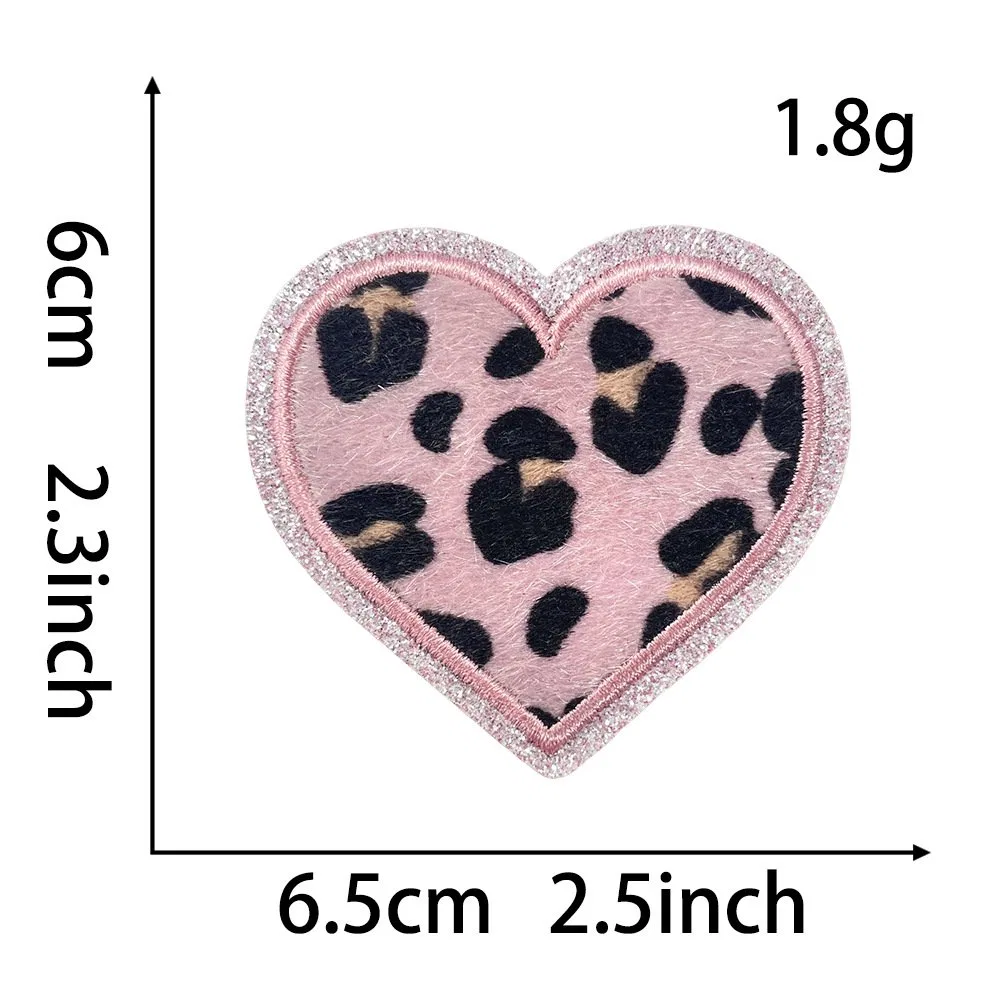
Record 16 identifies a leopard heart patch for bags and hats, with thread embroidery, a 2.3 × 2.5 inch reference size and a stored MOQ of 100. Record 25 identifies leopard heart, star and lightning sequin patches, with a thread embroidery material field, a 2.4 × 2.36 inch reference size and a stored MOQ of 100. Preserve both the titles and material fields rather than resolving their nuance by assumption.
A custom print brief should explain the repeat logic and spot character in observable terms. This gives the artwork team useful information while the buyer remains responsible for choosing and approving the intended leopard or cheetah identity.
Show whether marks are ringed, solid, irregular, clustered or directional. Use authorized references with the desired level of stylization.
Name the base field and identify where garment color should remain visible. A transparent mockup must not hide the product boundary.
Indicate open and crowded areas across the actual motif outline. A tiny crop cannot describe the whole distribution.
Print the pattern inside the final heart, star, bolt or custom shape so spot size can be judged against the perimeter.
The available product evidence contains leopard wording and no confirmed cheetah item. Therefore, cheetah cannot be presented as a material option or alternate name for records 16 or 25. It begins as new artwork and must receive its own proof, sample, product description and quotation.
Cite the stored titles, photographs, sizes, material fields and recorded minimums. A new leopard variant can point to those specimens for visual direction while stating every changed field.
Supply an authorized cheetah pattern reference, explain its spot system and avoid attaching the leopard product ID to the new identity. Teebling should return a dedicated design revision and construction proposal.
A heart, star and lightning bolt do not expose the same portion of a repeat. Place the chosen pattern inside each finished outline, then inspect what happens at points, notches and narrow channels. Do not crop one approved heart file to create every other shape without review.
Balance the central cleft, curved shoulders and lower point. Check whether a dominant spot lands awkwardly on the visual axis or disappears into the border.
Review each point at true scale and protect the distinction between pattern marks and the outer outline. Fine corners may need a supplier-led adjustment.
Track the spot rhythm through narrow diagonals and abrupt bends. Preserve the energetic silhouette while keeping the internal pattern readable.
The product images are suitable for visible reference, but their faces do not prove the current backing or application method. Ask for an item-specific reverse photograph and construction statement before describing the patch as heat applied, sew on or adhesive.
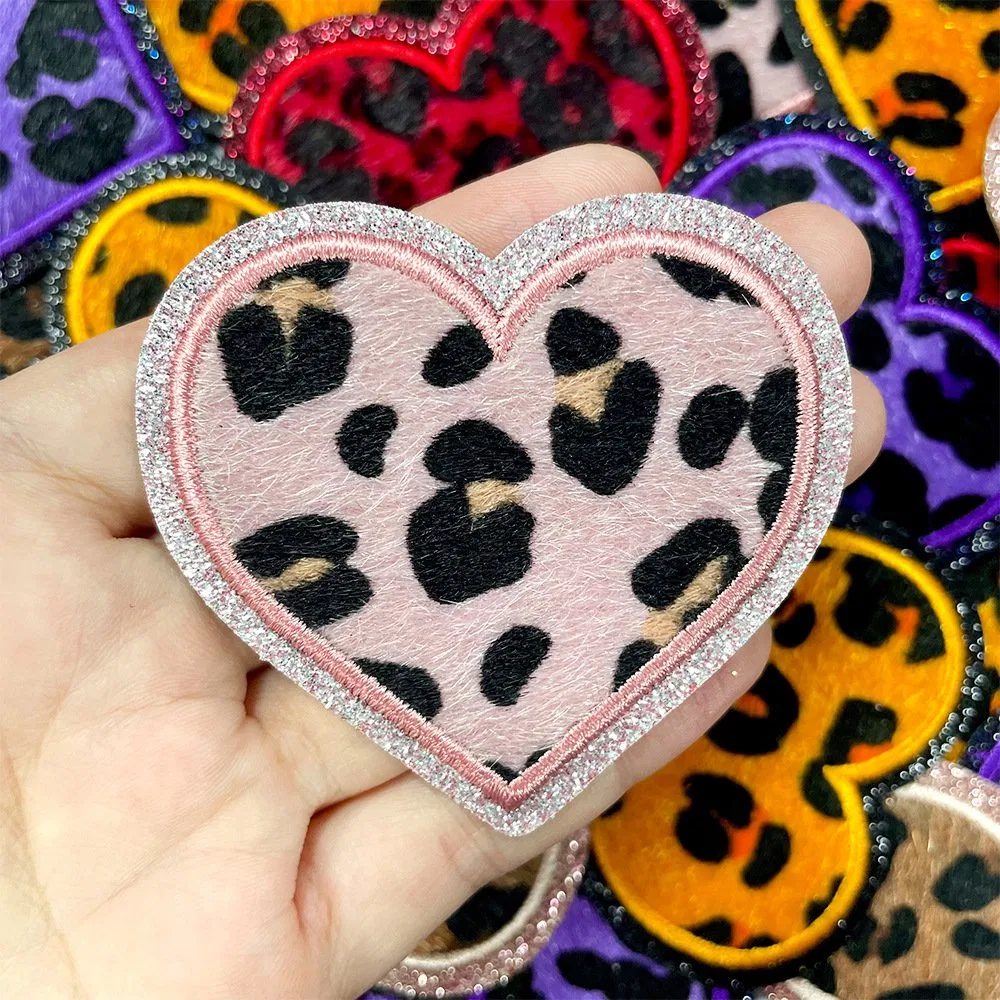
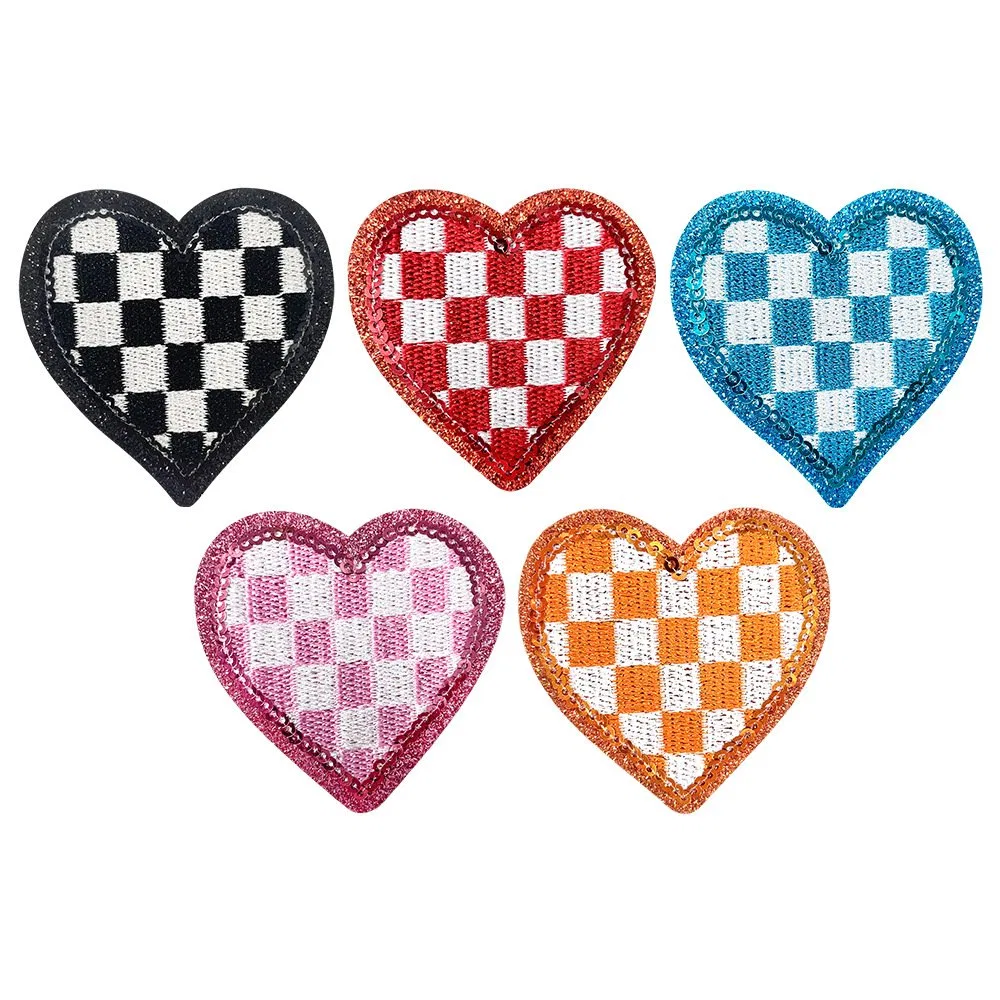
Label the sample with pattern identity, product reference, artwork revision, shape, dimensions, material wording and date. Photograph the front straight on, the edge at an angle, the reverse and the intended garment context. Review color and decorative response under lighting relevant to the product display.
Check whether the pattern remains legible at normal viewing distance, whether the perimeter is clean around points and curves, and whether thread or sequin direction supports the design. Describe observed results instead of promising universal durability or colorfastness.
Provide the exact fabric, placement and production equipment. Obtain supplier instructions for the selected reverse, then run a representative trial. Examine surrounding fabric, patch face, perimeter and alignment after the buyer's defined handling or care review.
A color, shape, scale, surface or backing change creates a new sample condition. Do not transfer approval from the leopard reference to a separately designed cheetah patch.
Mixed shape, color and pattern programs need line-level labels. Give each design a stable code that never depends on a casual phrase such as “animal print.” The carton map should let the receiving team distinguish confirmed leopard items from a new custom cheetah design without opening every pack.
Write leopard or custom cheetah exactly as approved.
Identify heart, star, lightning or the named custom outline.
Carry the confirmed construction wording from the order.
State size, colorway and artwork revision.
Reconcile units to the purchase-order row and destination.
For broader sourcing context, compare custom embroidered patches, review sequin patch programs, and use embroidered badge application planning when a heat-assisted route is proposed.
The answers protect the evidence boundary between recorded leopard products and a buyer-requested cheetah design. They also separate visible artwork from the reverse and attachment facts that only the selected SKU can establish.
Leopard is confirmed in the titles for records 16 and 25. No cited database record confirms a cheetah product, so a cheetah direction must be submitted and quoted as separate custom artwork.
Record 16 states thread embroidery, a 2.3 by 2.5 inch reference size and a minimum order quantity of 100 pieces.
Record 25 states thread embroidery, a 2.4 by 2.36 inch reference size and a minimum order quantity of 100 pieces, while its title identifies sequin patches.
No. Pattern identity is part of the design. A cheetah request needs its own authorized reference, spot logic, color direction, proof, sample and supplier confirmation.
No. A title or search phrase does not establish the supplied backing or application process. Confirm the reverse and item-specific attachment instructions before a garment trial.