


Program name
State brand, collection and product family. Identify whether the request is a new build, a replacement for an existing component or a reorder against a prior approved sample.
A meaningful 3D TPU patch online request connects the logo to physical size, relief, colors, reverse, receiving product and quantities. Complete the fields below so Teebling can identify decisions, evidence gaps and sample needs.

Start with buyer organization, project name, revision owner, intended receiving product and target milestone. Assign a short code that can appear on artwork, sample labels, quantity sheets and packing instructions. A generic email subject such as “TPU logo” cannot distinguish later changes in size, color or construction.
State brand, collection and product family. Identify whether the request is a new build, a replacement for an existing component or a reorder against a prior approved sample.
Name who approves appearance, who validates garment assembly and who accepts commercial terms. Different decisions may require different reviewers.
Separate quote due date, sample need, garment trial, production release and delivery request. Teebling must confirm actual feasibility and timing.
Supply editable source art when available, plus a read-only reference that shows the intended appearance. Expand or clearly define critical paths, identify fonts or converted lettering, label colors and draw the final perimeter. Add width and height in a stated unit; a pixel dimension or zoomed screenshot does not define finished scale.
If source files are not available, disclose that limitation rather than presenting a low-resolution preview as production-ready. Teebling can identify what must be redrawn and which details need process confirmation. Keep the original and supplier-adjusted version under separate revision codes.
Record 35 states TPU, 7.5 cm and a recorded MOQ of 100. For item 43, the stored fields read TPU silicone, a 5 cm reference and a 100-piece minimum. Item 44 instead carries TPU and silicone wording, measures 5 by 3 cm in the record and also lists 100 as its MOQ. Use a reference to explain the visual or dimensional direction, then ask for a written construction proposal for the new TPU badge.
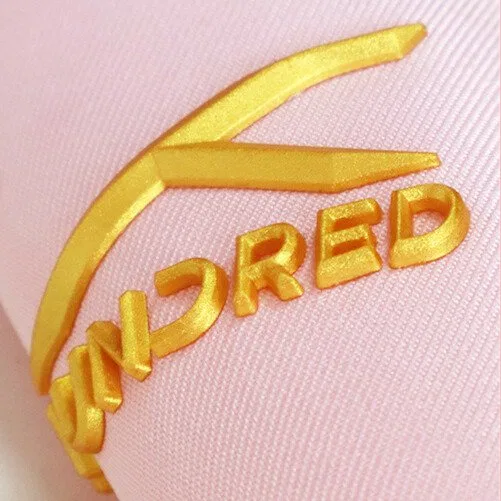
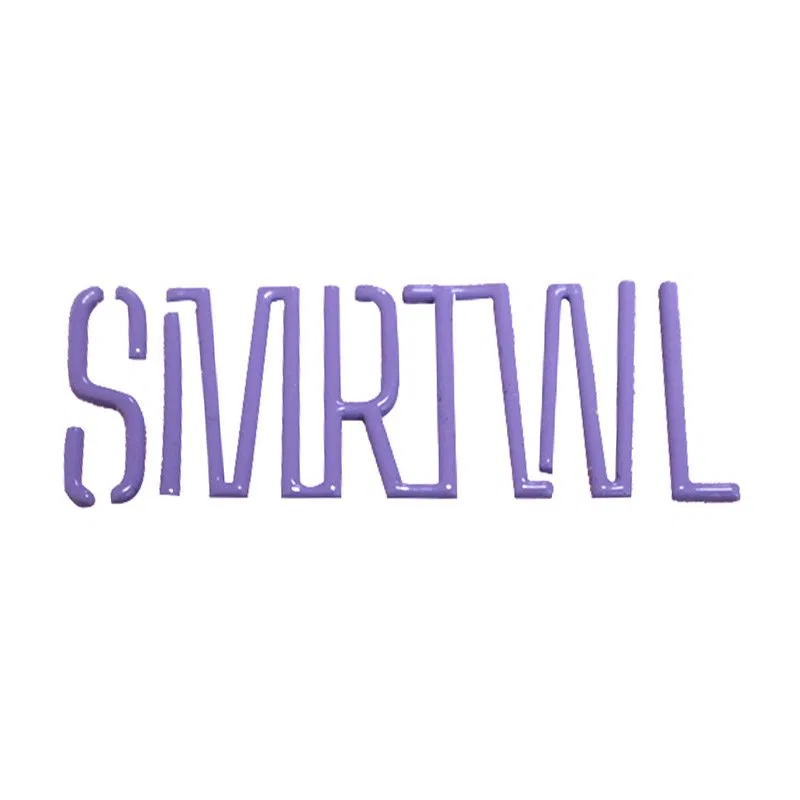
Prepare a numbered elevation legend and a flat color separation. Connect each raised or recessed instruction to a visible shape, then add at least one cross-section through representative details. Teebling should confirm achievable geometry for the selected process; this page does not impose a universal line width or height.
Identify the common body or garment-visible opening from which elevations are described.
Map primary relief, secondary detail, recessed channels and any flat color zones. Distinguish a visual shadow from a manufactured level.
Define outline, visible border, corners and how the profile terminates at the perimeter.
If several colors use the same level, group them visually but retain independent color labels. If a color change also changes height, record both attributes. A photographic reference may illustrate surface character, yet the new quote must state which elements are required rather than “same as photo.”
Aggregate totals conceal the information needed to quote custom TPU patches. Separate artwork, dimensions, colors, reverse, attachment and packing variants, then show the requested quantity for each. Add sample units and approved spares as labeled lines rather than hiding them inside a production total.
| Revision | Size | Colorway | Attachment | Units | Pack group |
|---|---|---|---|---|---|
| Named artwork | Width × height | Approved zone list | Requested route | Required count | Garment or destination |
| Alternate build | Separate scale | Distinct palette | Confirmed proposal | Variant count | Labeled separately |
| Sample | Production intent | Proof colors | Trial construction | Stated units | Not bulk stock |
The displayed records each carry MOQ 100, but that fact does not establish how a new multi-variant order is allocated. Ask Teebling to return the commercial rule by line item in the current quotation.
Review the returned quotation against the submitted fields and mark any assumption that needs a written answer. A low total without a defined material, relief, reverse or variant matrix is not directly comparable with a complete build. Keep price, tooling, sample, packing and freight descriptions in their stated units.
The field is stated, traceable and tied to the same revision.
The supplier proposes a direction that still needs a sample or buyer decision.
The quote does not resolve the submitted question and must be clarified.
A new size, material or construction requires an updated comparison.
For attachment architecture, use TPU patch attachment methods. For material family selection, consult the raised logo patch comparison. For relief drawing preparation, follow the silicone label relief artwork guide.
The following answers explain how to turn a visual idea into an identifiable, sample-ready and commercially legible request.
Send a project identity, editable or high-quality artwork, finished dimensions, relief concept, color direction, receiving product, placement, requested attachment route, quantities by variant and the sample or delivery milestone.
A screenshot may start the conversation, but it does not reliably define curves, physical scale, colors or relief. Supply source artwork when available and label any missing decision that requires supplier review.
No. Records 35, 43 and 44 document different material wording and reference sizes. The reverse construction and application method must be confirmed for the exact quoted SKU.
Create a row for each artwork, size, color, attachment and packing combination. Show the units requested per row and ask how the current MOQ applies rather than distributing a recorded minimum by assumption.
Approve the identity-coded artwork, dimensions, colors, relief, perimeter, reverse, attachment direction, representative sample, quantity matrix and packing label. Record unresolved tolerances or tests as conditions.