


Product 172
40S 2-Ply 100% Cotton Basic Crew Neck Adult T-Shirt.
A decorated-shirt specification starts before the crystals. Identify the blank's recorded fiber content, construction, color, size allocation and accessible decoration zone, then prove the proposed transfer on the exact garment that will be ordered.
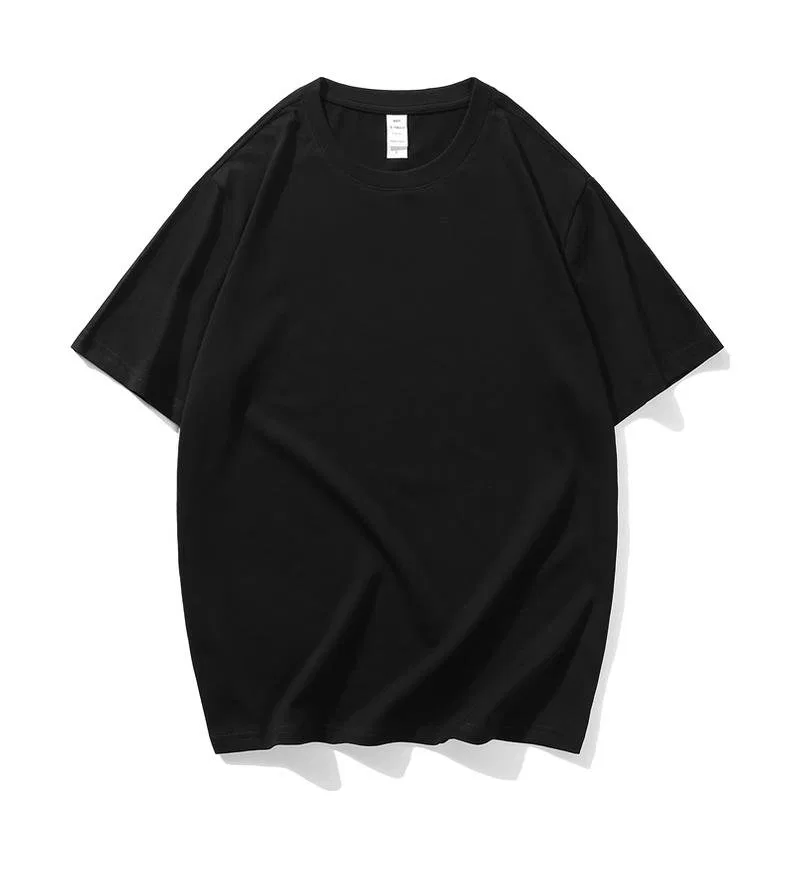
Product 172 is named 40S 2-Ply 100% Cotton Basic Crew Neck Adult T-Shirt. Its active row supplies material, minimum and item code. The generic size field is empty and no fabric-weight value or body-measurement chart appears, while the displayed options record male S–5XL, female S–4XL and kids XS–4XL. That boundary lets the page identify available labels without inventing GSM, knit gauge, shrinkage or garment measurements.
40S 2-Ply 100% Cotton Basic Crew Neck Adult T-Shirt.
Use this exact recorded wording for the cited reference.
Request current price, allocation and timing in a written quote.
Carry the item code through sample and order correspondence.
When a B2B T-shirt program needs weight, collar dimensions, seam construction or colorfastness evidence, add those questions to the supplier request instead of presenting them as known facts.
Product 173, Cute Crown Cat Rhinestone Heat Transfer T-Shirt, records 100% Cotton, MOQ 50 and item code EVA-LAS-013. Product 179, Las Vegas Full Crystal Letter Rhinestone T-Shirt, records 100% Cotton with Premium Clear Hotfix Rhinestones, MOQ 50 and code EVA-LAS-080. These are separate catalog identities, not proof that Product 172 uses either decoration.
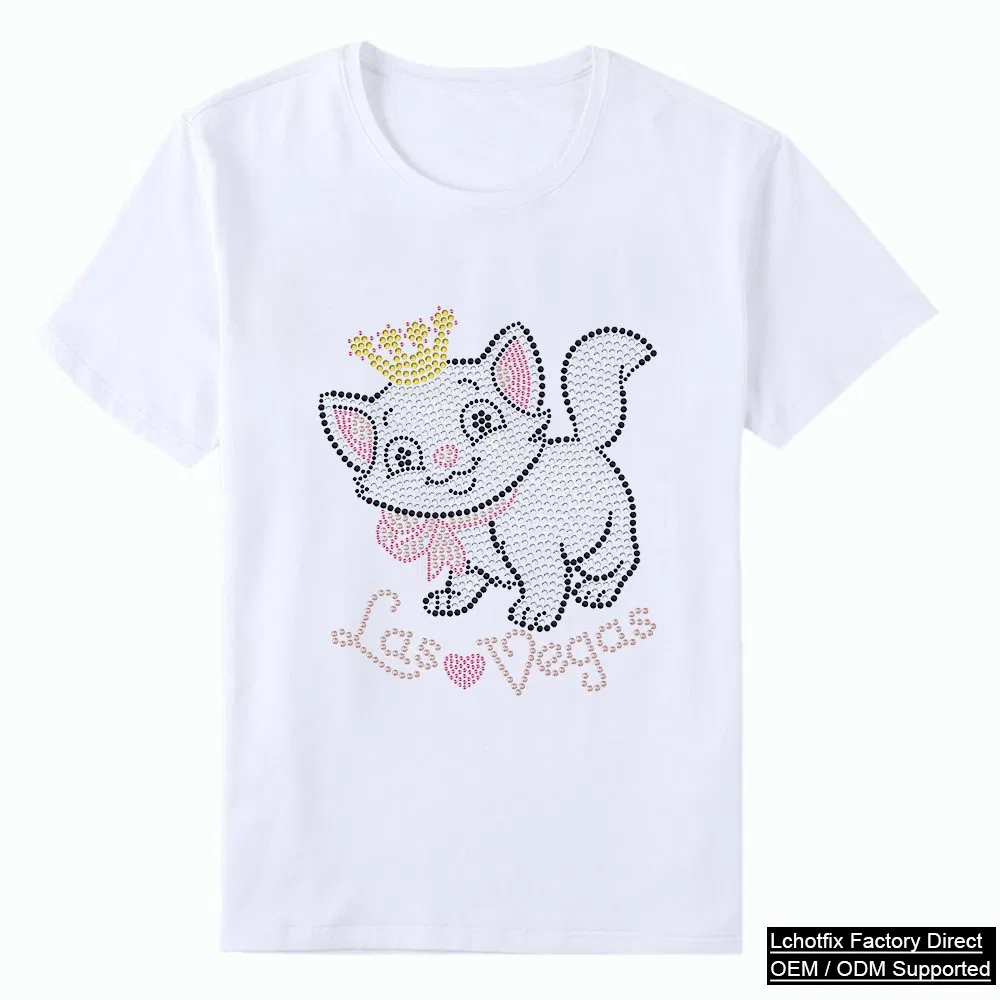
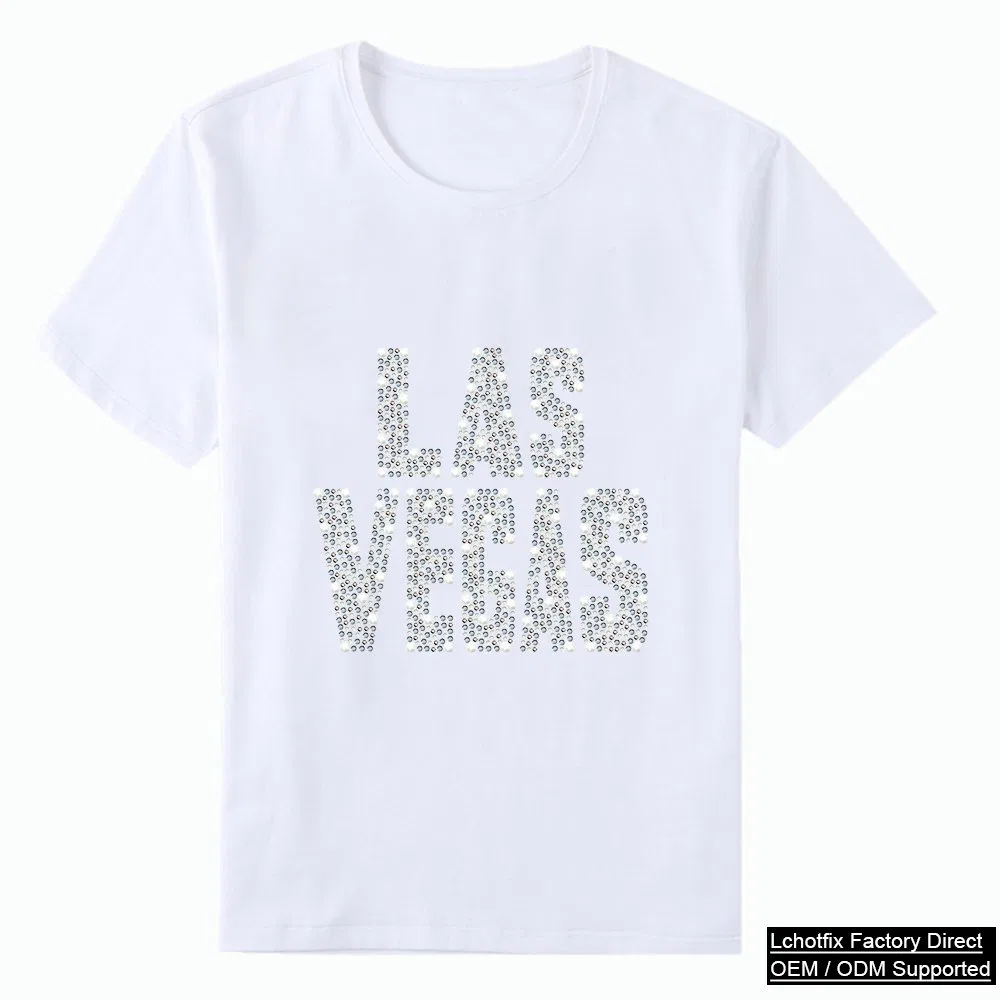
Inspect Product 172, Product 173 and Product 179 separately when selecting a reference.
Fiber content is one line of a decoration decision. Request the current color, knit and finish information relevant to pressing; inspect the physical surface; and identify any coating, treatment or construction detail that could affect the proposed process. Do not infer these properties from the product name or photograph.
For wholesale custom shirts, record the blank source and version in the artwork approval. A later substitution of color, style or finish creates a new garment-transfer pair and should trigger review rather than silent replacement.
The OEM rhinestone shirt planning page covers the broader sourcing relationship; this passport remains focused on the blank-to-decoration match.
A shirt front is not an unlimited flat sheet. Mark collar seam, shoulder line, sleeve join, side seam, hem and any pocket or panel that affects press access. Use stable garment landmarks for placement, and show the intended centerline plus finished decoration dimensions.
Record the reference point used for vertical placement.
Check whether the artwork approaches a curved join.
Define the clear press area and complete transfer boundary.
Keep a measurable relationship to lower construction.
Verify centering and platen access by garment size.
Requests for custom T shirts with hotfix crystals should include a placement drawing, not merely a centered mockup floating on a generic shirt silhouette.
Product 172 displays male S–5XL, female S–4XL and kids XS–4XL options, but those labels are not a body-measurement chart. Confirm current availability and garment measurements for the order, then place the proposed decoration on the smallest and largest included pieces to decide whether one artwork field remains visually and technically appropriate.
Inspect collar clearance, side limits and the visual weight of the artwork.
Use a stable comparison size for placement measurements and photography.
Judge whether the same design appears undersized or requires a controlled second map.
If groups are created, give each artwork size its own code, garment-size range and quantity. Bulk hotfix T shirts become difficult to reconcile when “small” and “large” transfers are described only in email prose.
Color contrast can change the appearance of clear and colored stones, while the garment surface and equipment determine the application result. Build a garment-specific trial plan from supplier instructions and record what was actually evaluated.
Identify blank code, color, size, transfer revision, placement, equipment and the observed applied surface. Photograph the full shirt and key details.
Repeat the identity record and inspect visual contrast, alignment, missing stones and any visible garment response without assuming the first result transfers automatically.
Use the garment application test guide to organize the evidence. A custom rhinestone T-shirt manufacturer request should define buyer acceptance rather than rely on an unspecified “standard test.”
These answers preserve the difference between recorded cotton facts and the garment information that still needs written confirmation.
Product 172 is 40S 2-Ply 100% Cotton Basic Crew Neck Adult T-Shirt. Its material field says 100% Cotton, the minimum is 50 and its item code is ZQLW-T-001.
No fabric weight is stored in the inspected product row. A buyer who needs weight, knit or finishing details should request the current written blank specification and a physical sample.
Garment color changes contrast and can alter the visible balance between clear, colored or printed decoration. The coded trial should match the intended blank, color and transfer revision.
It may or may not produce the desired proportion. Review placement on the smallest and largest garments, then document one size or controlled artwork groups rather than assuming.
State blank product or specification, color and size allocation, artwork revision, decoration dimensions, quantity, sample expectation, packing split, destination and requested date.
Send the intended blank code or complete blank specification, garment colors, size quantities, authorized artwork, transfer dimensions, placement drawing, sample expectations, packing split, destination and requested date. If Product 172 is the intended blank, cite ZQLW-T-001 and ask Teebling to confirm its current options and terms.
The final approval should link each garment size group to one artwork revision and one tested garment-transfer pair. Compare the finished-program scope with the custom rhinestone T-shirt guide before assigning decoration and packing responsibilities. That connection lets purchasing, decoration and receiving identify what was approved without inventing missing blank details.