


Source identity
File creator, date, revision, organization and documented authority to reproduce the mark.
Declare the source, scale, colors, edge, attachment direction and garment destination before a supplier chooses construction. A complete preflight lets the quote identify unknowns and lets the proof show exactly what changed.
Record the owner or license source, submitting contact and limits on reproduction. Attach the original editable file, linked assets and type information. If a marketplace graphic or reference image is used only as inspiration, label it clearly and provide new production artwork rather than asking the supplier to trace it.
File creator, date, revision, organization and documented authority to reproduce the mark.
Named person who can accept simplification, color changes, edge construction and final proof.
Buyers preparing bespoke iron on patches wholesale should keep this rights declaration with the purchase record. A visually approved proof does not cure missing reproduction authority.
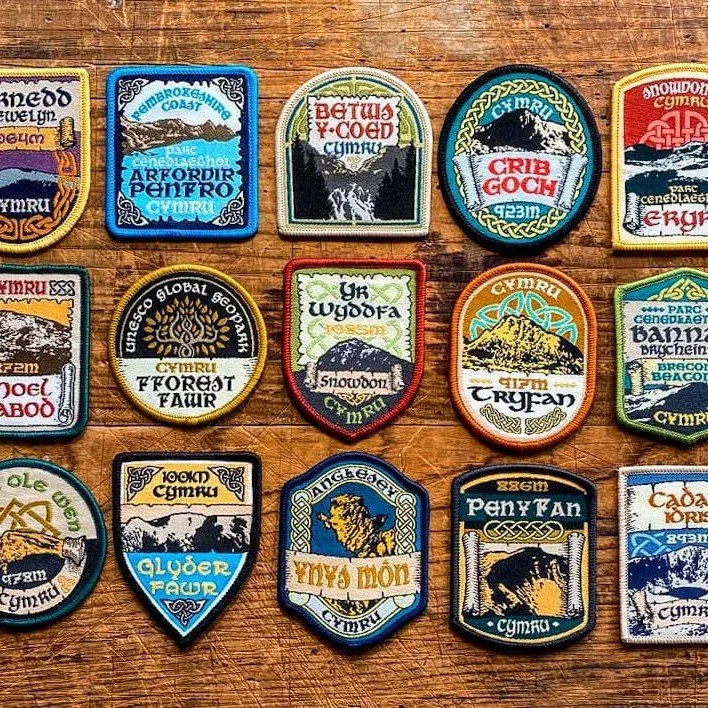
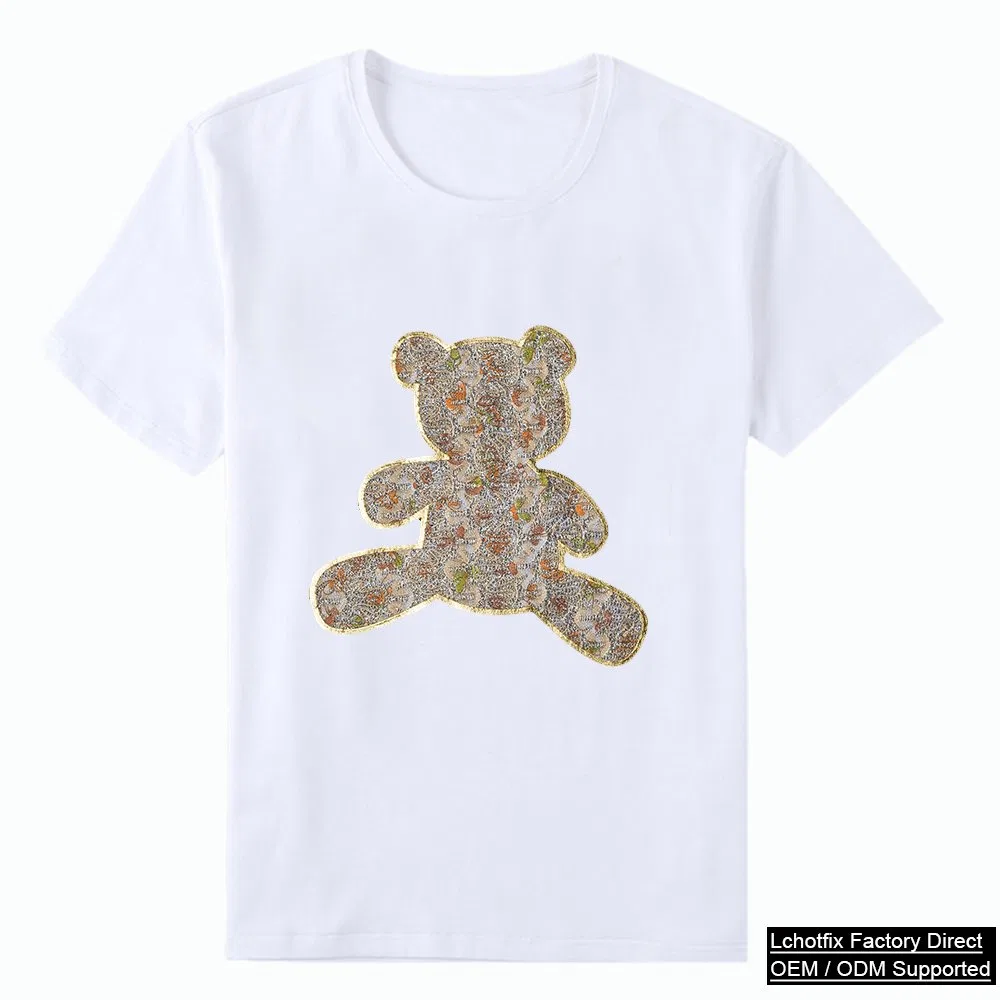
Product 22 is Outdoor Adventure Logo Iron-On Patches, recorded as embroidery thread, 2.1 × 2.1 inches, MOQ 100 and code TB-D55470503F66. Product 168 is Laser Cut Fabric Rhinestone Heat Transfer Patch, recorded with fabric, rhinestones and holographic crystal, MOQ 50, code RJX-501 and an 8 × 10-inch design area; its generic size field is blank.

Open Product 8, Product 22 and Product 168 for their separate identities.
A custom-size field is not a measurement. Provide width, height, units and orientation for every variant. Add a ruler or dimension line to the locked proof and mark text, counters, symbols or narrow gaps that must remain recognizable at final scale.
Complete finished boundary, not artwork canvas size.
Include raised, embroidered or cut edge where applicable.
Smallest letter, opening, stroke or rhinestone zone.
Placement size shown on the actual product silhouette.
Iron on stickers for clothes custom wholesale should still carry a physical finished-size statement. Do not let a preview application's zoom percentage become the only scale reference.
The embroidered patch size guide gives a separate framework for thread-based references.
Name every visible color and indicate whether it belongs to thread, print, rhinestones, TPU, silicone, metallic film or base textile. Keep effects on separate source layers when possible. If a supplier proposes a material substitution, require a revised labeled proof and sample instead of approving only a similar screen color.
Shapes, lettering and color references tied to the approved revision.
Thread direction, stone zones, print areas or raised relief clearly distinguished.
Textile or film boundary, color and intentional negative openings.
Custom fabric patches should specify which fabric appearance is required and which remains open for supplier evaluation. Photographs can guide the request but do not replace a material confirmation.
The edge controls the silhouette, artwork clearance and how the piece meets the garment. Request the visual outcome, then ask which evidenced construction can produce it. Product 8 is an embroidery-thread reference; Product 168 names laser-cut fabric. Neither should silently define the other.
Dimension the gap from critical art to the edge. Identify where stones, thread or print may approach the boundary and where the base must remain visible. Approve the complete silhouette on a physical sample if edge character is commercially important.
Use the custom fabric patch page for broader base and finish questions before freezing the artwork envelope.
The answers keep rights, scale, edge, garment and attachment decisions visible before quotation.
Provide an authorized editable source with fonts, linked assets or outlined type handled intentionally. Add a locked review PDF that shows finished dimensions, colors, orientation and revision.
An embroidered border, laser-cut textile edge or another construction changes artwork clearance and appearance. Describe the visual target and ask the supplier to confirm a feasible edge for the selected material.
No. Name the receiving garment, material, color, placement and any seam, coating or stretch area. Attachment must be evaluated on the exact product pair.
Mark every detail that must remain legible at finished size. Let the proof identify simplification, enlargement, removal or a construction change, then approve the measurable revision rather than a verbal promise.
No. Product 168 records an 8 by 10 inch design area even though its generic size field is blank. That catalog footprint identifies the existing laser-cut fabric rhinestone reference; a new request still needs its own explicit finished dimensions.
Ask Teebling to identify feasibility questions, proposed construction, proof changes, sample route, current terms and timing in writing. A wholesale order custom iron ons should be released only after the buyer accepts a revision that can be measured and traced.