


Fixed inputs
Artwork revision, size, placement and quantity remain identical across the audition.
Shortlist candidates through the same controlled challenge. The useful comparison is not who shows the largest gallery, but who can explain the proposed build, document a sample, control revisions and return an order record your team can inspect.
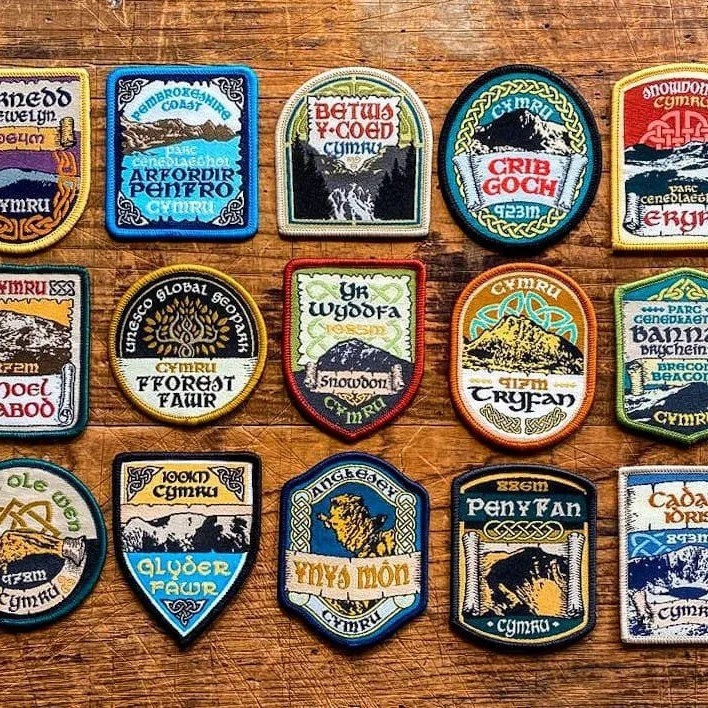
A defensible search for a custom embroidered patch supplier starts with one comparable request. Provide buyer-authorized artwork, intended finished dimensions, required text, color direction, receiving product, placement, attachment intent, quantities, destinations and target date. Separate mandatory conditions from preferences. Ask each candidate to mark assumptions and missing inputs before pricing. When one company receives a detailed file and another sees only a screenshot, their answers cannot be scored on equal ground. Freeze the issue date and version of the brief, then record every clarification so the final recommendation can be reconstructed.
Artwork revision, size, placement and quantity remain identical across the audition.
Construction details not evidenced in the source record become written supplier questions.
Require scope, exclusions, sample route, pack proposal and commercial terms in a common order.
Three active records show why supplier scope must be specific. Product 8 lists high-quality embroidery thread, custom sizing and MOQ 100. Product 10 records embroidery thread plus full polyester hook-and-loop, custom sizing and MOQ 100. Product 22 records thread embroidery, 2.1 by 2.1 inches and MOQ 100. These facts describe three products; they do not prove that an unquoted backing, edge or application setting is available for every design.


Words such as wholesale patch makers and wholesale patches makers do not disclose whether one site controls digitizing, embroidery, cutting, molding, reverse application or final inspection. Request a process map for the exact proposed patch. For every stage, name the responsible organization, production location, approval input and output record. If work is subcontracted, ask how the selected partner is qualified and how changes are communicated. Supplier selection should reward clear ownership, not punish a truthful boundary. The embroidered patch guide can frame construction questions, while the candidate must answer them for the quoted build.
Identify activities performed at the audited or quoted facility and the evidence generated there.
Name external operations, transport handoffs, acceptance checks and escalation responsibility.
Keep unresolved edge, backing or application choices open until the sample route confirms them.
A decorative sample that avoids the risky details is weak evidence. Mark the smallest lettering, narrow border, tight corner, color junction, edge transition and reverse feature that matter to the order. Require the sample identifier and artwork revision to appear in the review record. Compare physical dimensions by a declared method and photograph front, back and scale reference together. If the request concerns custom embroidered patches for clothing wholesale, include the exact garment material or a representative swatch in the attachment trial. Follow supplier-confirmed instructions rather than borrowing settings from another patch. The sample approval checklist supplies a useful evidence discipline even when the selected construction is embroidery.
Introduce a realistic change after the first proof, such as corrected lettering, a new dimension or a revised border. The goal is not to create unnecessary work; it is to see whether the candidate assigns a new revision, identifies downstream effects and replaces obsolete instructions. A reliable response states what changed, what remained stable, whether the sample must be repeated and how cost or timing may move. Watch for silent artwork replacement or verbal approvals that cannot be traced. For bespoke iron on patches wholesale, the revision record should also preserve the receiving material and confirmed application reference because a face-art change can alter the tested construction.
Keep the superseded proof, the change request, the supplier response, the new proof code, affected specification fields and the named approver. A clean chain matters more than a fast but undocumented answer.
Fast replies are useful only when they reach the person who can resolve the question. Record the sales contact, technical owner, quality contact and escalation route proposed for the order. Submit one question that crosses functions, such as whether an edge change affects sample status and packing identity. Evaluate whether the response is complete, internally consistent and tied to a stable document. Confirm working language, time-zone coverage and the method used to approve urgent changes. A candidate who names a limitation and returns with verified information is safer than one who supplies instant unsupported certainty.
Specific answer, source identified, assumptions marked and next action named.
Technical and commercial approvals come from accountable roles rather than an anonymous thread.
Disputed samples, schedule changes and quality holds have a documented destination.
Ask each supplier to describe unit protection, inner quantity, carton labeling, artwork and lot identity, destination splits and documentation. A low unit quote can hide an unsuitable pack or missing sort work. Request the currency, price basis, included services, sample charges, payment milestones, lead-time assumptions, shipping responsibility and validity period in a structured schedule. Do not infer delivery performance from a product photo. Use the artwork checklist to close missing creative inputs and the export packing guide to sharpen transit questions without assigning rhinestone-sheet methods to embroidered patches.
Remove brand names from the final scorecard if internal policy allows, then compare scope fit, product evidence, sample quality, revision control, communication, packing and terms. Weight categories before proposals are opened so the team cannot rewrite priorities around a favored answer. Record conditions separately from scores: an unresolved attachment method, for example, may require a sample gate even when the candidate ranks well overall. Complete commercial and compliance due diligence through the buyer's own process. The result should identify a recommended supplier, an alternate, open actions, decision owner and review date rather than claiming that one audition guarantees future performance.
Attach the frozen brief, candidate questions, evidence links, score rationale, deviations, sample photographs, commercial comparison and approval signatures. The packet makes a later resourcing decision possible without replaying the entire search.
The answers below keep portfolio evidence, factory ownership and order-specific confirmation in separate columns.
Issue the same authorized artwork, dimensions, receiving product, quantity, packing request and deadline to every candidate. Score the returned evidence against one frozen brief instead of comparing unrelated proposals.
No. A portfolio indicates directions worth discussing, while process ownership, equipment, subcontracting and inspection responsibility need written confirmation for the quoted patch.
Products 8, 10 and 22 provide separate embroidery, hook-and-loop and iron-on references. Their recorded specifications belong only to those products and are not blanket factory capability claims.
Record the sample code, artwork revision, dimensions, face, border, reverse, attachment direction, receiving material, deviations, photographs, reviewer and dated decision.
Proceed after scope, evidence, sample handling, change control, packing, terms and communication ownership are comparable. Any unresolved item should remain visible as a condition rather than becoming an assumption.