Main brand label
Protect the core logo, word mark and capitalization. Place it where the customer expects to identify the maker, then keep the format stable across related garments where appropriate.
Build a custom woven clothing label system that stays coherent from the first garment through size variants and future collections. Teebling helps brands organize logo detail, finished dimensions, fold and edge direction, sewing placement, variable text, color references, sample approval and wholesale quantities. The objective is a useful production record for neck labels, hem signatures, size markers and branded soft goods—not merely a large logo file reduced until it fits.
One garment may carry several labels, each with a different purpose and update cycle. Treating them as a system prevents size, care or product information from crowding the permanent brand mark.
Protect the core logo, word mark and capitalization. Place it where the customer expects to identify the maker, then keep the format stable across related garments where appropriate.
Use a hem, pocket, cuff or accessory label as a visible design accent. Show the viewing face, orientation and measured relationship to seams or edges.
List every size version and quantity separately. Lock the naming convention, typography and orientation so similar small labels are not mixed during sewing.
Supply the buyer-approved care, fiber, origin or other required wording as controlled text. Teebling does not determine the buyer’s legal content; the responsible brand must provide and approve it.
Confirm spelling, capitalization, punctuation and symbol use in plain text as well as artwork. Identify the master logo file and do not approve from an unlabeled screenshot.
Inspect counters, narrow gaps and thin lines at the finished dimensions. If text becomes crowded, prioritize the essential identity and consider a separate information label instead of shrinking everything further.
Assign background, primary logo, secondary detail and edge colors by function. Screen references guide communication; the physical sample establishes the accepted appearance.
Review both faces and explain which side is customer-facing. The reverse, fold and sewing path affect how the label enters the garment even when they are not prominent in retail photography.
A fold name is useful only when it is connected to a placement drawing. Show the visible face, fold direction, sewing allowance and where the garment seam captures or topstitches the label.
Suitable for a surface or seam plan where the full rectangle remains visible. Mark the stitch line and any required clearance from text or logo detail.
Side folds can create clean sewing areas while preserving the central face. State fold depth and final visible width rather than supplying only the unfolded artwork.
Useful when the label is captured in a seam and presents two faces. Show the top, bottom, front, reverse and reading orientation after folding.
For loops, angled edges or exterior signatures, provide a construction sketch and a sewn reference. Teebling can review the exact request without assuming a generic fold.
Placement controls visibility, orientation and sewing access. Use a garment photograph or technical drawing with a measured callout from a stable construction point.
Show whether the label sits below a neck seam, enters a binding or works with an existing size marker. Confirm the readable orientation when the garment is opened.
Identify left or right from the wearer’s perspective and state the distance from the hem or another reference point. List any information-label stack in sewing order.
Set the amount visible outside or above the seam and check how the label reads when the garment hangs naturally.
Coordinate label scale with topstitching, folds and small construction areas. A compact exterior mark often needs a simplified logo lockup.
Show panels, reinforcement, lining and hardware. Apparel folds cannot be assumed to work unchanged on a curved or structured accessory.
Variable labels should be countable before production. A line-list approach protects exact wording and makes packing easier for the sewing room.
Record the fixed brand artwork, finished dimensions, fold and base colors.
List each size text exactly and assign a quantity that matches the garment order.
Name each label palette and connect it to the intended garment colors.
Supply buyer-approved wording, punctuation and reading order for every version.
Specify bundle labels and separation so similar small components reach the correct sewing line.
Never use “assorted” as a substitute for a variant count. Each logo, size, color and text combination needs its own quantity row.
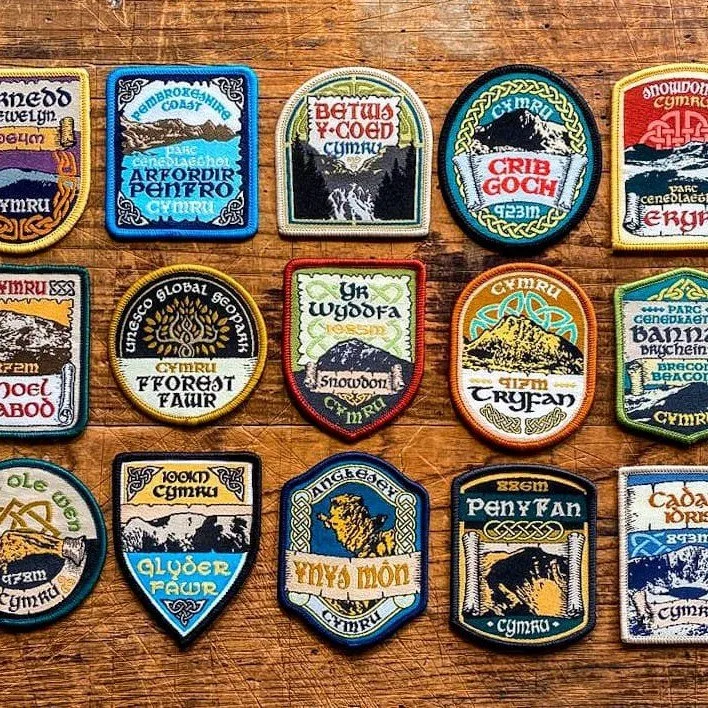
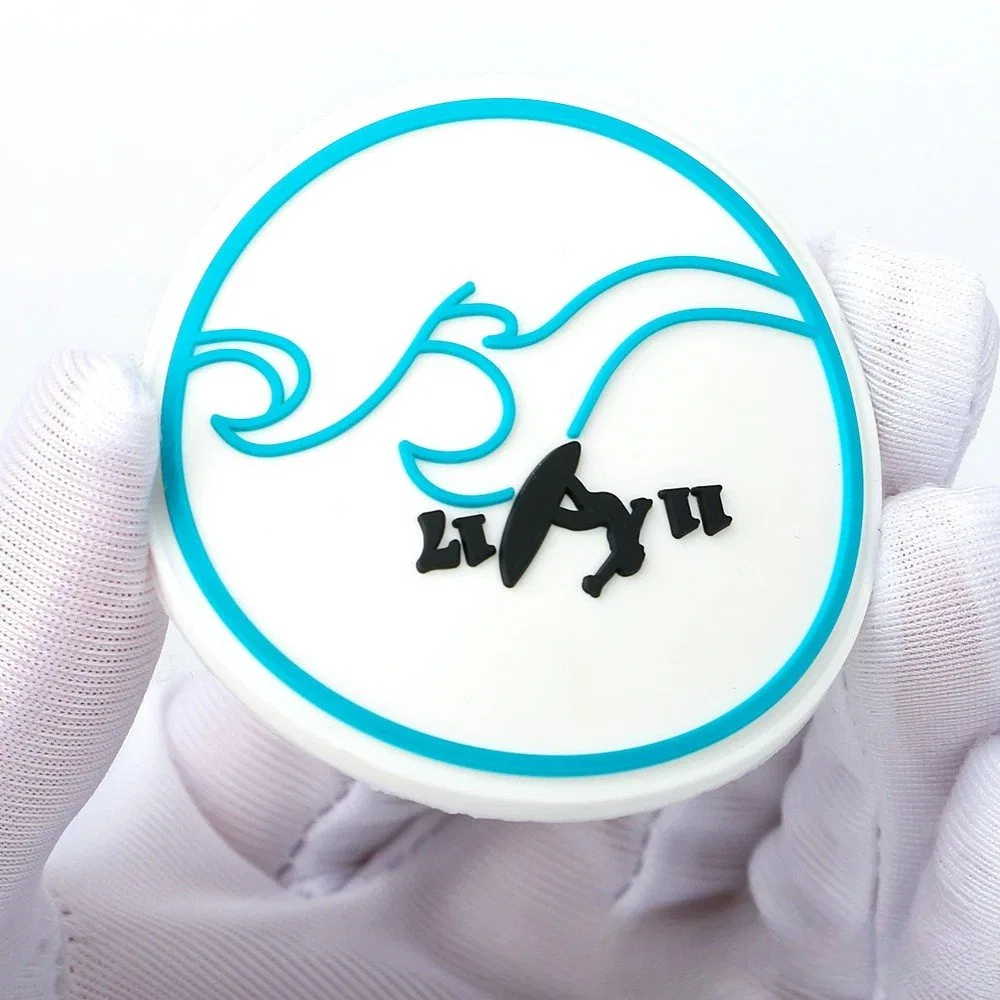
These neighboring product references illustrate why the material family must be explicit. Embroidered patches usually carry more body and border, while soft molded labels use a different surface and attachment logic. A woven clothing label brief should remain focused on the requested textile label, fold and sewing plan.
Comparison photography is not a woven-label sample. Request and approve the physical construction specified for the actual Teebling project.
The sewing team should be able to identify the correct label, visible face and placement without reconstructing the buyer’s email history.
Lock the exact text, logo revision, dimensions, colors, fold and edge direction.
Inspect readability, front and reverse, fold behavior and true-size visual balance.
Confirm seam path, orientation, visible face and position on the intended product.
Use the project code, label role, size or text version and verified quantity.
Save the accepted artwork, sample photos, sewn placement and variant matrix for reorders.
Explain the label’s role in the collection, then attach the editable artwork, one-to-one dimensions, fold drawing, garment placement and variant counts. Teebling can review the complete system and discuss sampling and commercial terms against the exact label family requested.
Use these answers to prepare an inquiry. The buyer-approved wording, physical sample and representative sewn garment govern the final Teebling specification.
Provide editable artwork, exact finished dimensions, label purpose, fold or edge direction, color references, garment placement, sewing allowance, quantity by logo and size version, packing, destination and requested timing. Include a physical reference when matching an established label system.
View the artwork at the label’s real finished size and identify text that must remain readable. Very fine lines, small counters and tight spacing may need adjustment, so buyers should approve a physical sample rather than relying on an enlarged screen proof.
The choice depends on the label’s purpose and how it enters the garment seam or surface. Show the intended sewing location, visible face, seam allowance and orientation; Teebling can then review the requested straight, end-fold, center-fold or other project-specific direction.
List every variable text version and quantity separately. Keep the brand label, size marker, care content and country information in a controlled matrix so spelling, capitalization, language and counts can be approved without mixing roles.
Review finished dimensions, logo proportions, text clarity, color direction, edge finish, fold, front and reverse appearance and the sewn position on a representative garment. Save labeled photos and the accepted artwork revision for future reorders.