


Recognition gift
State the organization, recipient group, presentation date and whether the item is sold, gifted or packed with another product. Keep any requested wording separate from the standard motif.
Organize ambulance, fire-response and medical-kit motifs into a countable wholesale range for gift stores, team appreciation, events or accessory programs. Verified catalog facts anchor the plan while authorization, hardware, quantities, packing and current commercial terms remain explicit quote decisions.
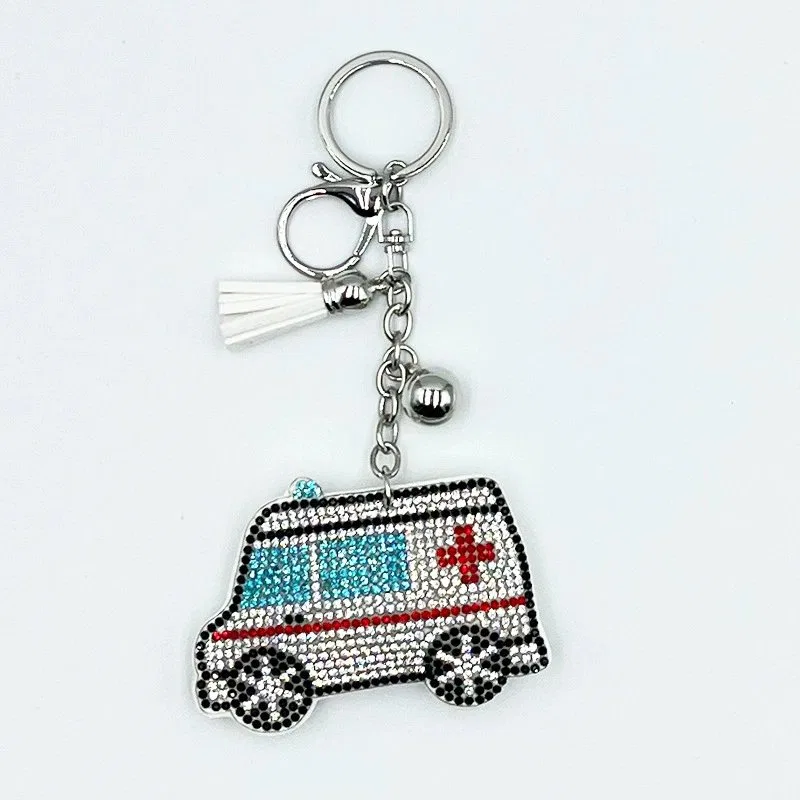
A coherent assortment begins with the place it will be sold or distributed. A hospital gift counter, appreciation event, responder fundraiser and general novelty store may use the same three references in different ratios. Record the audience and channel before deciding which motif should carry the largest quantity.
State the organization, recipient group, presentation date and whether the item is sold, gifted or packed with another product. Keep any requested wording separate from the standard motif.
Define the expected display method, price position, theme breadth and replenishment plan. A shelf-ready program needs individual identity and scannable pack information.
Work backward from the in-hand date and location. Allocate approval, packing and delivery decisions without inventing a universal production timetable.
Decorative ambulance, fire truck and medical kit imagery does not create permission to use an agency seal, protected crest, department name or other official mark. Supply written authorization for custom identity work.
The images below belong to three active catalog entries. They can support an assortment proposal because their names, materials, dimensions and minimums are recorded. They should not be treated as a promise that every color, tassel, card or custom emblem is included.
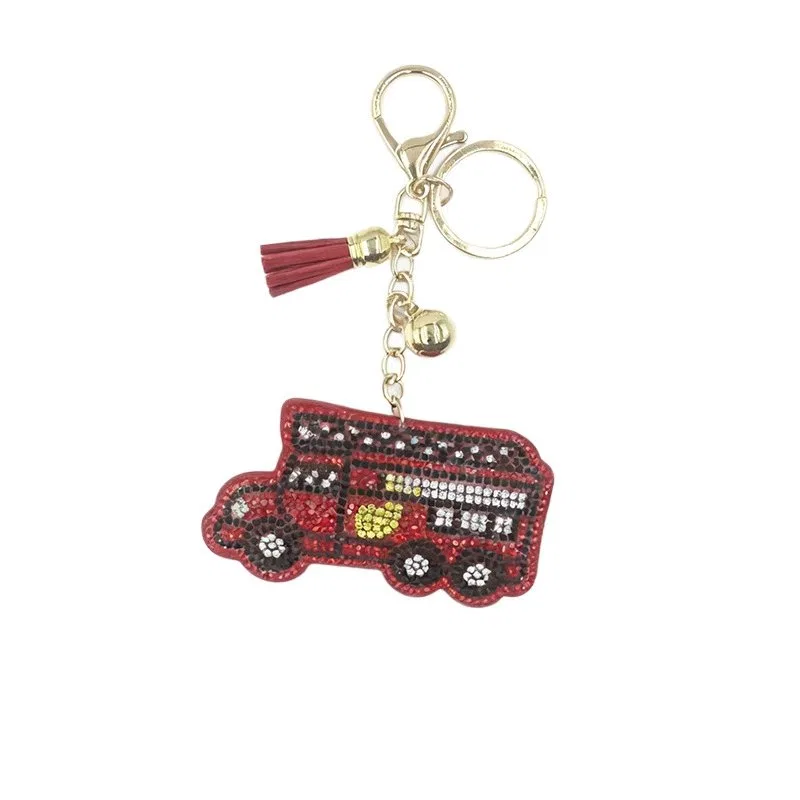
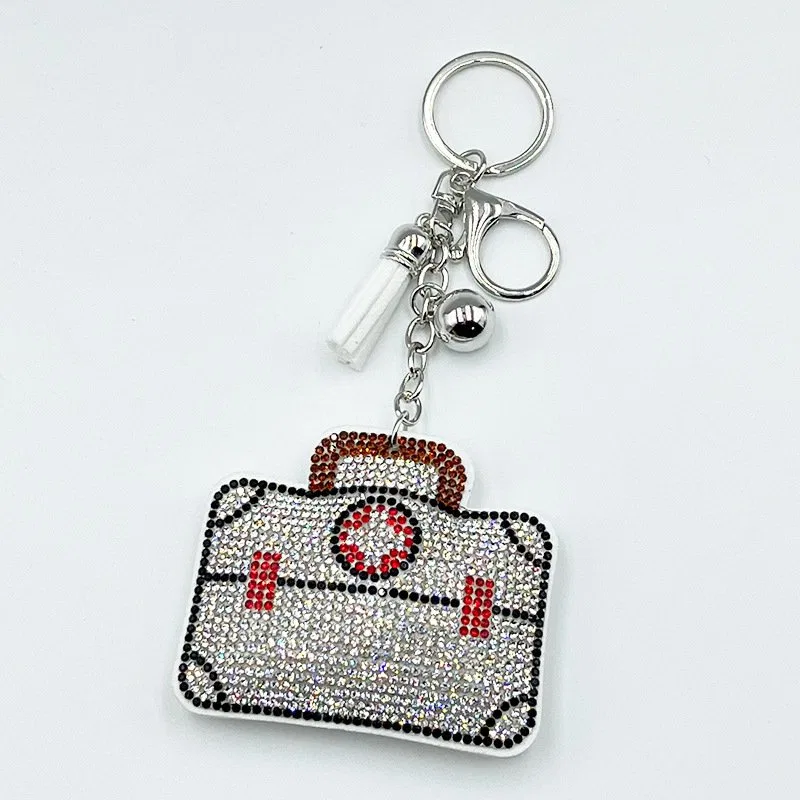
Use the product names and slugs in the purchase line list so similar silhouettes cannot be confused. Link the visual approval to the exact item page and note every requested change as custom work for review.
On-screen images may appear equal even though the physical widths and heights differ. Mark the measurements in the range sheet, print a one-to-one outline when possible, and place that outline on the intended bag, zipper or key ring. The surrounding hardware changes the complete hanging footprint.
A horizontal vehicle profile. Check that the front and rear remain recognizable when the charm hangs and turns.
Another horizontal format with a slightly different envelope. Keep its line item distinct from the ambulance.
A broader symbol with fabric recorded in the material description. Review the entire face and edge on the sample.
Dimensions in this guide are catalog records for the displayed configurations. Confirm any variation in writing. Do not scale a custom mark or added message merely by comparing it with the photo.
A charm is more than its decorated face. Inspect every connection in sequence and describe the hardware or tassel direction requested in the quote. Product photography can show a configuration, but the current order specification should name what will be supplied.
Review stone placement, backing face, outside contour and the area where the connector meets the decorated piece. Look for twisting or crowding around the attachment point.
Confirm the hardware arrangement, finish direction and opening method on the selected sample. Test how the ring fits the intended zipper pull, handle loop or key set.
Attach the complete sample to the real product. Observe front-facing balance, total drop, movement and contact with bag surfaces or neighboring hardware.
If customers will repeatedly remove and replace the charm, define a relevant handling check and record the observation without turning a limited trial into an overgeneralized promise.
The three verified references each show a 50-piece minimum, but a mixed program still needs current split approval. Build the request one item at a time and ask Teebling to confirm whether proposed design and option allocations meet the terms of the present quote.
Keep any nurse-cap, syringe, capsule or other proposed addition on its own row. A stable line identity makes later replenishment, carton checking and retail receiving less dependent on visual memory.
Packaging should identify the item, protect the decorated face and prevent hardware from becoming tangled. Sketch the card and attachment points around the measured product rather than dropping the charm onto a generic card after production.
Reserve space for approved brand information, product identity and any compliant retail labeling. Keep text clear of the hanging motif and do not imply an official service affiliation without authorization.
Define SKU, motif name, quantity, country or handling information required by the buyer, and scannable code location. Ask which packaging components and printing are included in the current quote.
Sort inner packs by exact design and option. Mark mixed cartons with counts that reconcile to the assortment ledger, then state the destination and receiving contact.
Use these answers to separate verified catalog evidence from custom requests, permissions and commercial terms. A clear boundary makes the product story more credible and the order easier to inspect.
The evidence set includes Product 110, a sparkling ambulance design; Product 111, a fire truck motif; and Product 138, a crystal medical kit keychain, each with a current 50-piece minimum. A nurse bag charm would require its own authorized motif, sample and quotation.
Not from the catalog evidence alone. Treat them as decorative themes. Any protected badge, department name, seal or insignia requires authorization and written artwork review before it enters a custom brief.
Create one line for every design and color version, then state units per line, hardware direction, tassel choice if applicable, packing method and destination. Ask Teebling to confirm current split and minimum terms.
Review motif recognition, dimensions, stone placement, edge finish, hardware connection, hanging orientation and the way the charm sits on the intended bag or key ring. Record the item and sample revision.
No. Product pages contain recorded catalog values for shown configurations. A current quotation should confirm unit price, quantity tier, options, packaging, delivery terms and any custom artwork work.
Provide the audience, sales or gift channel, exact product references, quantity by design, requested hardware and tassel direction, individual packaging, carton sort, destination and required in-hand date. For custom marks, attach authorized editable artwork and explain which organization may approve it.
Explore the broader rhinestone keychain and bag charm planning guide when the collection extends beyond the medical theme. Use the private-label accessory framework for branded presentation and the wholesale buyer checklist for approval and receiving controls.