Signature tray
Choose one or two motifs that express the central story and can lead photography. Their approved materials, scale and colors establish the range's visual reference.
Build pearl patches as a deliberate range rather than a mixed tray of unrelated motifs. Teebling helps buyers coordinate motif jobs, verified material wording, finished scale, attachment questions, quantity groups and display identity.
Start with customer, receiving product, retail setting and decoration occasion. Decide whether the collection offers romantic accents, personalized letters, statement motifs or a balanced mixture. Every SKU should contribute a distinct visual job, price-request group or placement opportunity; otherwise similar patches compete for the same demand.
Choose one or two motifs that express the central story and can lead photography. Their approved materials, scale and colors establish the range's visual reference.
Add smaller or quieter options that share a recognized design language without copying the signature. Connect them through palette, pearl direction, base color or placement.
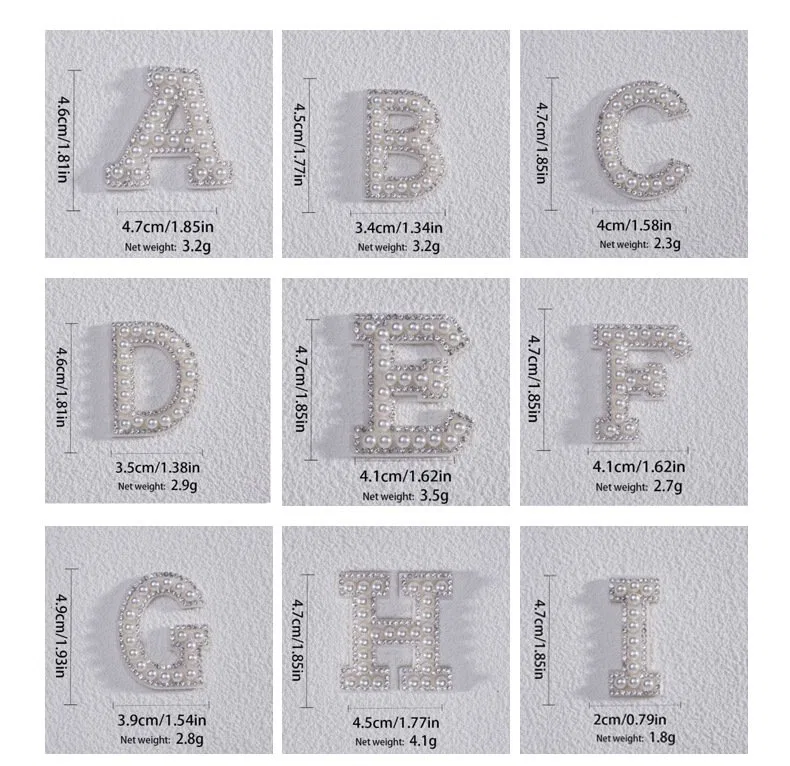
Use pearl letter patches only when character demand, fulfillment and sorting are planned. Alphabet inventory requires different quantity logic from fixed motif packs.
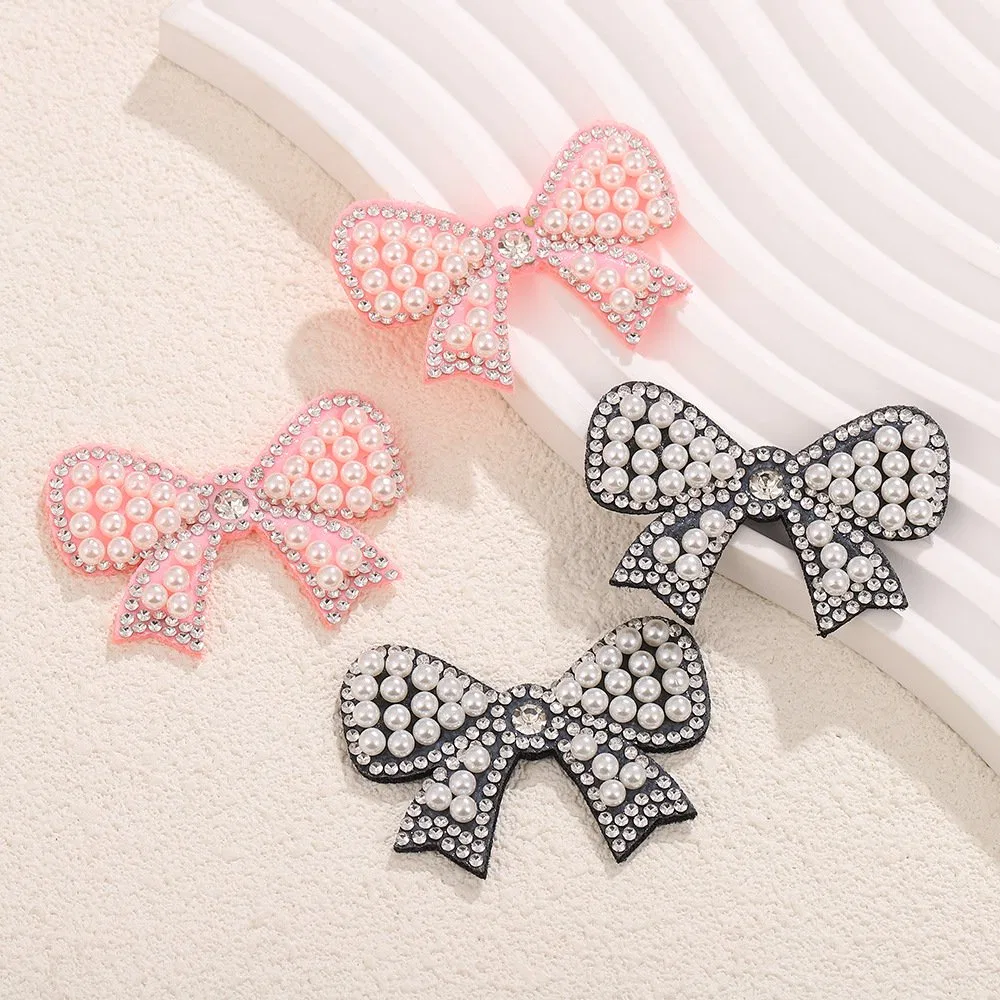
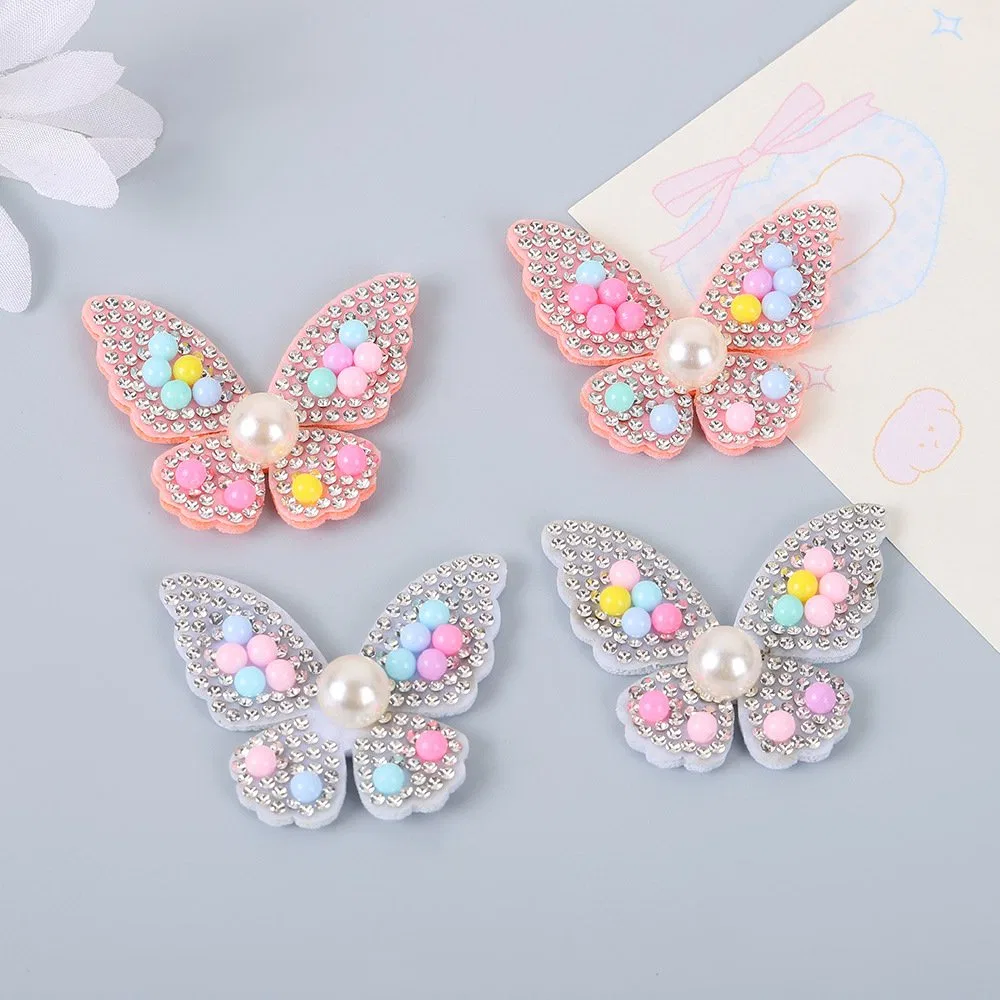
A bow, butterfly and alphabet glyph create different edges, reading distances and customer choices. Draw the outer silhouette at actual size and note whether it is directional, paired, symmetrical or character-specific. Then decide how many shapes the display can explain without becoming visually noisy.
Use related artwork only when rights are clear. A buyer-owned custom motif should be identified separately from catalog references, and a request for a known character or protected mark requires authorization rather than informal imitation.
Record 58 states rhinestone, pearl and felt fabric at 4.6 by 4 cm with MOQ 100. Record 81 states pearl and rhinestone felt fabric at 4.5 by 5 cm with MOQ 100. Record 57 is titled Pearl Bow but its material field states rhinestone and felt fabric, at 5.3 by 3.2 cm with MOQ 100; current pearl details require confirmation.
Do not place every light-colored round element into one pearl grade. Record supplier wording, face composition, base, reverse and intended attachment for each selected item. If visual matching matters, ask for labeled physical samples under consistent lighting and keep them linked to the commercial line item.
Records 58 and 81 provide pearl wording in their material fields. The quote should still confirm color, size, distribution, companion rhinestones, felt direction, reverse and tolerances for the current order.
Record 57 demonstrates a boundary: the product title uses Pearl Bow, while the stored material field does not list pearl. Present it as a bow reference and request written composition confirmation before making a material claim.
Where different constructions create different costs, keep them as separate quote groups. A unified retail story does not require the factory records to erase meaningful material differences.
The three references occupy distinct rectangles and silhouettes. Create a 100-percent outline for every SKU, place it on the actual receiving product and measure from stable seams. A 4.6 by 4 cm butterfly and a 4.5 by 5 cm letter cannot be treated as equivalent merely because both fit in the hand.
5.3 × 3.2 cm recorded for item 57.
4.6 × 4 cm recorded for item 58.
4.5 × 5 cm recorded for item 81.
Check pockets, seams, bag handles, shoe curves and other nearby structures. If the collection uses more than one garment style, repeat placement approval for each meaningful application zone.
List design, size, color, construction, attachment request, planned units and pack type on each row. Separate letters by character and motifs by orientation where relevant. All three shown records have a recorded MOQ of 100, yet their commercial allocation across a new assortment must be returned by Teebling in the current quote.
| Assortment role | Exact SKU or revision | Variant | Requested units | Display group |
|---|---|---|---|---|
| Signature | Approved motif | Size and color | Forecast quantity | Lead presentation |
| Companion | Distinct product | Construction label | Supporting quantity | Coordinated tray |
| Personalized | Character code | Letter and finish | Character demand | Sorted drawer |
Agree on image, item code, motif name, dimensions, color, construction revision and pack quantity for the smallest sellable or production unit. A pearl range can look coordinated while remaining operationally precise. The receiving team should reconcile cartons to the same ledger used for buying.
Use the actual SKU and orientation, not a general collage that hides differences.
Print the project or product code, variant and packed quantity legibly.
Use only current instructions for the exact reverse and receiving product.
Retain the approved revision and supplier line reference for replenishment.
Plan alphabet-specific allocation with pearl letter patch guidance, develop motif evidence through rhinestone butterfly applique sourcing, and compare broader options in rhinestone patches wholesale.
These answers protect material accuracy while connecting motif selection to dimensions, quantities, packing and retail identity.
Record 58 states rhinestone, pearl and felt fabric, while record 81 states pearl and rhinestone felt fabric. Record 57 has “Pearl” in its title but its material field states rhinestone and felt fabric, so the exact pearl construction should be confirmed for a current quote.
There is no universal count. Start from selling space, audience, price groups and a realistic unit plan, then assign a clear role to every motif instead of expanding the range only to add variety.
Do not assume that separate products or custom builds share a minimum. Submit quantities per SKU, size, color and construction so Teebling can state how current commercial minimums apply.
Show an accurate product image, motif identity, finished dimensions, attachment direction confirmed for that SKU and any buyer-facing care or application information supplied for the exact product.
Inspect each selected motif for dimensions, material wording, color, pearl and rhinestone placement, base, edge, reverse and pack identity. Keep decisions tied to labeled samples and revision codes.