


Performance wardrobe
Identify the act, costume colors, lighting, planned wear duration, movement context and change schedule. The wardrobe lead should decide how products are issued, tracked and removed under the production's own policy.
Coordinate diamante, rhinestone and pearl-accent pasties as documented wardrobe products rather than generic body decoration. Teebling can quote measured catalog references, artwork or color variants, pair configuration, reverse evidence, private sample review and labeled packing. The buyer remains responsible for intended-use review and wearer-specific safety decisions.
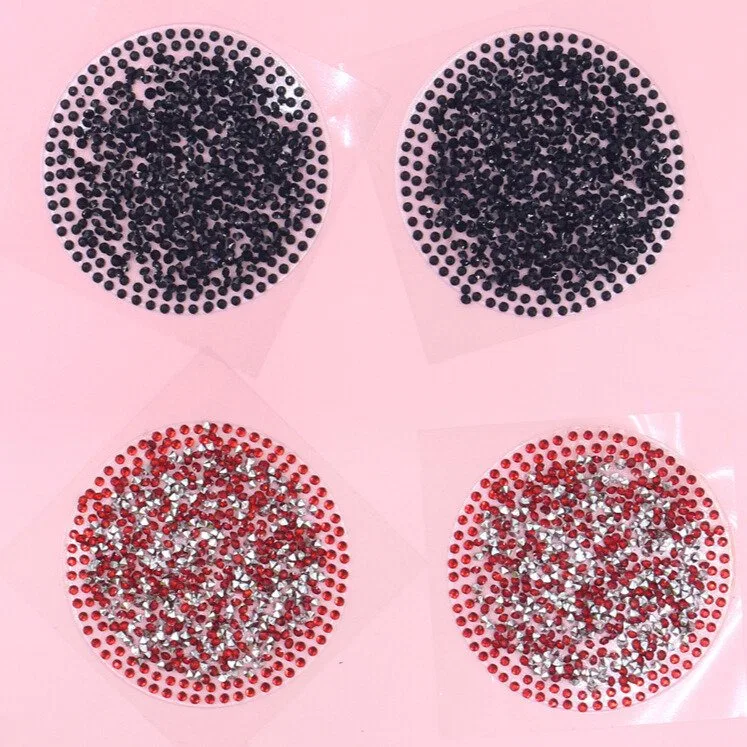
State whether the product supports a stage costume, festival assortment, editorial styling, dance program, retail pack or another lawful adult wardrobe use. The role controls visual scale, pair matching, color direction, pack labeling and the questions that must be resolved about the contact side. Do not hide intended use behind a decorative mood board.
Identify the act, costume colors, lighting, planned wear duration, movement context and change schedule. The wardrobe lead should decide how products are issued, tracked and removed under the production's own policy.
Define pair or unit count, sealed presentation, variant naming, instructions ownership, age restrictions if applicable and the destination market's labeling requirements. Packaging must not add unsupported safety claims.
Specify whether pieces are worn, mounted, photographed or used only as visual props. Separate the styling requirement from any assumption about skin contact or repeated use.
The database supplies three useful reference points. Record 40 states diamante and glue at 7 × 7 cm with a recorded MOQ of 100. Record 36 states acrylic rhinestone and PU at 7 cm with a recorded MOQ of 50. Record 82 states rhinestone and pearl at 2.75 × 2.75 inches with a recorded MOQ of 50. These phrases do not constitute full contact-surface specifications.
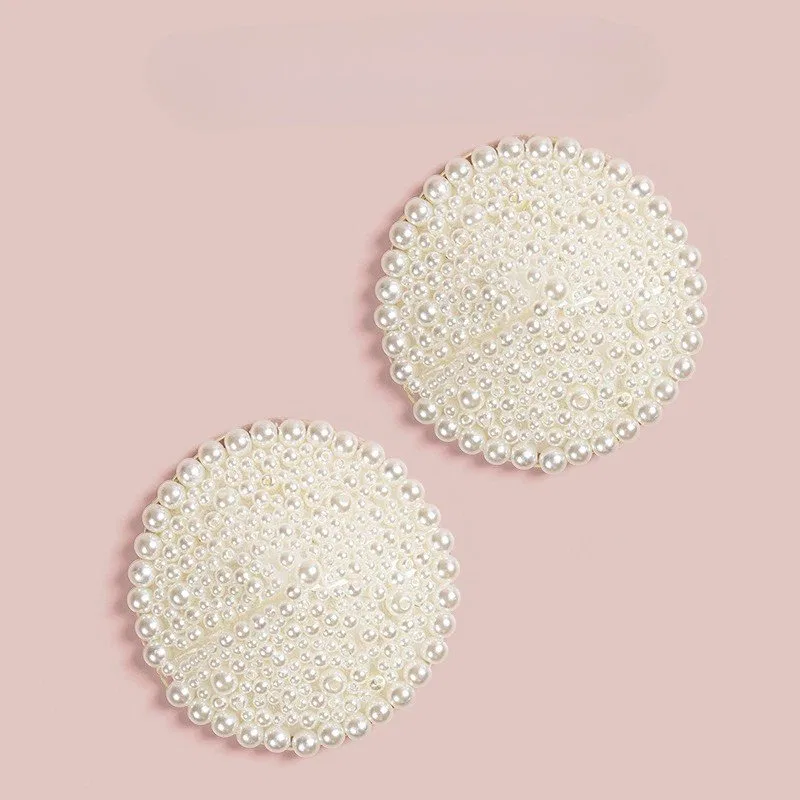
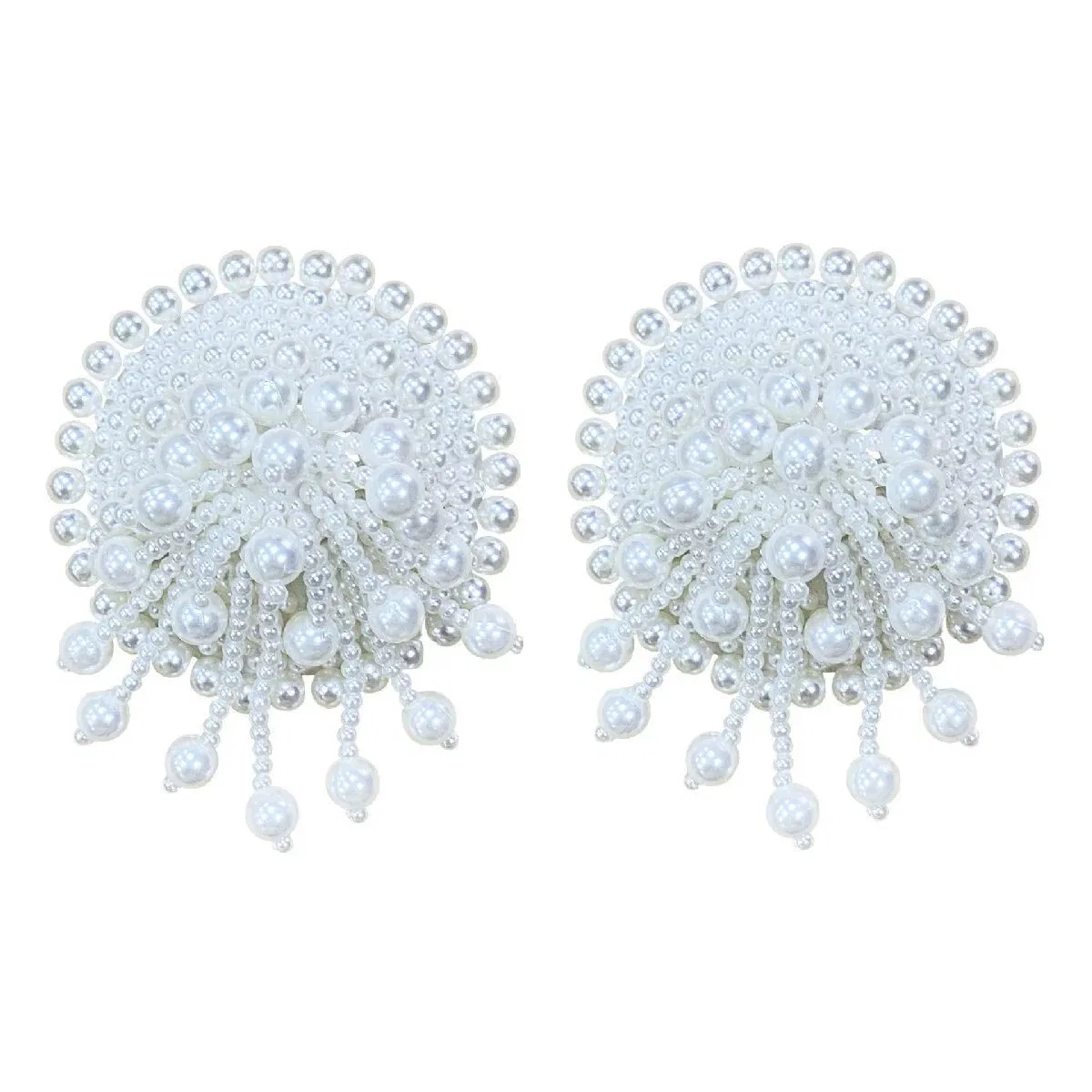
Ask the quotation to confirm current size, pair format, color, tassel or trim, liner, reverse, full material information, intended use, MOQ and allocation. Do not merge the three records into one interchangeable product.
“Glue” and “PU” are recorded material words, but neither tells the buyer every substance on the contact side, how a liner functions, whether the product is intended for direct skin contact, or which instructions accompany the current SKU. Obtain a supplier statement covering the full construction, intended use, storage, application, removal and disposal or reuse direction where applicable.
Ask whether product labeling identifies ingredients, warnings, exclusions or shelf conditions. Preserve the answer and packaging from the approved sample lot. If the supplier cannot support a required intended use, the buyer should not fill the gap with marketing language.
This guide does not diagnose sensitivities, approve a wearer, guarantee hypoallergenic performance or replace medical advice. Individual skin, health history, medications, environment and wear conditions can differ. The buyer and wearer should follow the current instructions and seek qualified guidance for personal concerns.
Stage lighting, movement, neighboring textiles and costume changes shape the visual brief. Document those conditions without making them a promise about retention or wearer comfort.
Photograph the approved face under relevant stage colors and ordinary backstage light. Check whether highlights preserve the intended motif.
Show fringe, mesh, sequins, trims or rigid pieces near the product. Identify possible snag or coverage concerns for wardrobe review.
Describe choreography and costume change demands to the responsible production team. Do not turn a limited fitting into a guarantee for every performer.
Use consent-based handling, restricted photographs and secure records. Crop or avoid personal imagery when a labeled product-only view is sufficient.
Complete a product-only inspection first, using a clean controlled surface and the approved pack. Give every observation a sample code so sensitive wearer information is not needed to identify the merchandise.
Verify whether the selling unit is a pair or individual piece, then inspect symmetry, color matching, trim orientation and packaging count.
Measure the finished outline, review diamante, acrylic rhinestone, pearl or tassel features, and compare the result with the approved proof.
Photograph the perimeter, contact side and liner without exposing a wearer. Flag lifting components, contamination or construction differences.
Retain supplied directions, warnings, material information, lot identity and storage notes. Escalate missing or contradictory documentation before issue.
A production with several looks can easily mix similar sparkling pieces. Assign a stable SKU or project code and use sealed packs that keep the approved pair, liner and instructions together. The packing list should state whether quantities are counted by piece, pair or retail unit.
Name round, pearl, tassel or the approved custom silhouette.
Carry the exact recorded or supplier-confirmed material wording.
Print the approved dimensions and unit without silent conversion.
Route packs to performer code, costume look, store or event batch as appropriate.
Include current instructions and any required buyer-approved labeling.
Reconcile packed totals against the purchase order and retain a photo of the labeled assortment. If one SKU changes contact construction or instructions, quarantine it from the approved version until the wardrobe and buying teams review the revision.
Include the catalog record or custom artwork code, exact dimensions, surface direction, colorway, trim, pair format, quantity by variant, packaging, intended lawful use, destination and requested timing. Request the current full material statement, reverse and liner evidence, instructions, warnings, sample identity and commercial minimum. Keep personal wearer details out of the sourcing file unless genuinely necessary and appropriately protected.
The buyer should approve the visible sample, product documentation and packing before bulk release. The responsible wardrobe or retail team must independently decide whether the current product and instructions fit its use, policies and customer obligations. A changed adhesive, PU layer, liner, trim or instruction set creates a new review condition.
For neighboring categories, review custom garment accessory sourcing, compare bulk apparel embellishments for costume components, and use rhinestone patch planning when the decoration belongs on a garment rather than the body.
These answers preserve the recorded catalog facts and set a firm boundary around safety and intended-use claims. The exact quotation, supplied instructions and responsible wearer review remain essential parts of any purchase decision.
Product 40 is named Round Shiny Diamond Nipple Pasties for Festival and Stage Disposable Covers, with diamante and glue at 7 by 7 cm and MOQ 100. The guide also cites Product 36 at 7 cm with MOQ 50 and Product 82 at 2.75 by 2.75 inches with MOQ 50.
No universal skin-safety, allergy, medical or irritation guarantee is made here. Buyers must obtain the exact product composition and intended-use information, review wearer-specific concerns and follow applicable professional guidance.
No. Those database fields are useful evidence but not complete layer specifications. Ask the supplier to identify the current face, reverse, liner, adhesive or contact materials for the quoted SKU.
Inspect the visible design, dimensions, pair matching, edge, reverse, liner, packing and wardrobe context. Keep any wearer trial voluntary, private, limited and consistent with the product instructions and production policy.
Separate each design, color, size, pair or unit format, material wording and destination. Use sealed labeled packs with a count sheet and a code that matches the approved sample.