


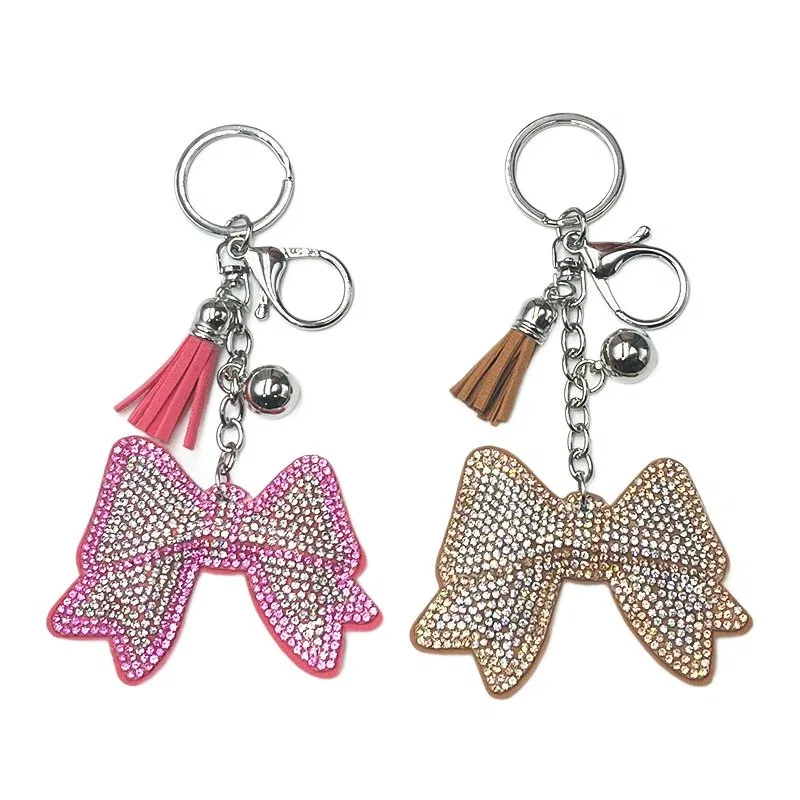
Hanging bow / 125
Metal alloy, rhinestones, tassel; 2.8 x 2.2 in; MOQ 50.
Compare three real bow references, then turn silhouette, materials, dimensions, connectors, tassels and display presentation into an accessory specification buyers can inspect.
The phrase rhinestone bow keychain can cover materially different accessories. Product 125 is a hanging bow reference made from metal alloy, rhinestones and tassel at 2.8 x 2.2 inches. Product 148 combines Korean suede, rhinestones and metal at 2.5 inches wide by 1.7 inches high. Product 155 records metal, rhinestones and tassel at 2.6 inches wide by 2.1 inches high. Each record lists MOQ 50. Use the exact product link and measurements in a request, then confirm current availability and construction rather than merging the records into one imaginary standard.
Metal alloy, rhinestones, tassel; 2.8 x 2.2 in; MOQ 50.
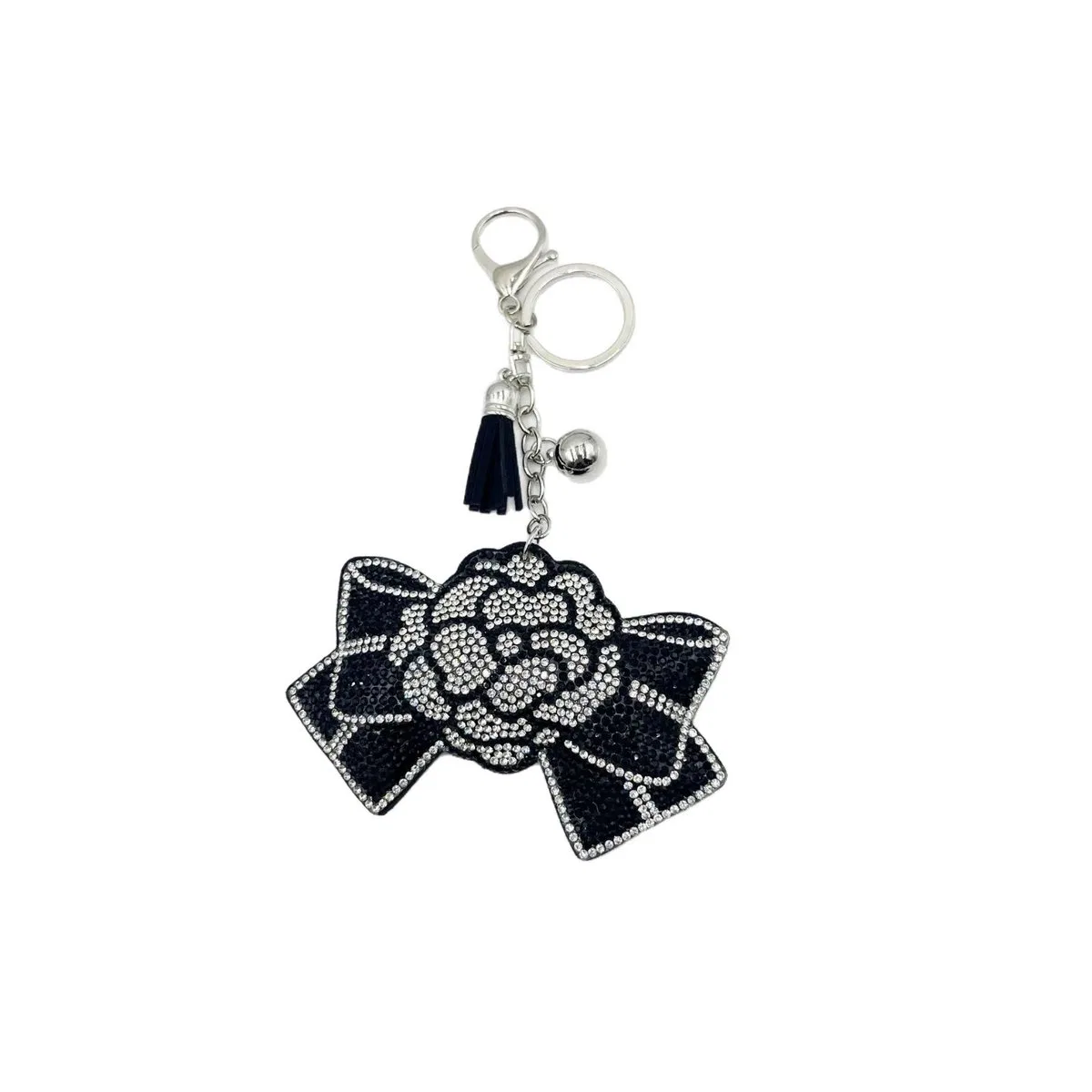
Korean suede, rhinestones, metal; 2.5 W x 1.7 H in; MOQ 50.
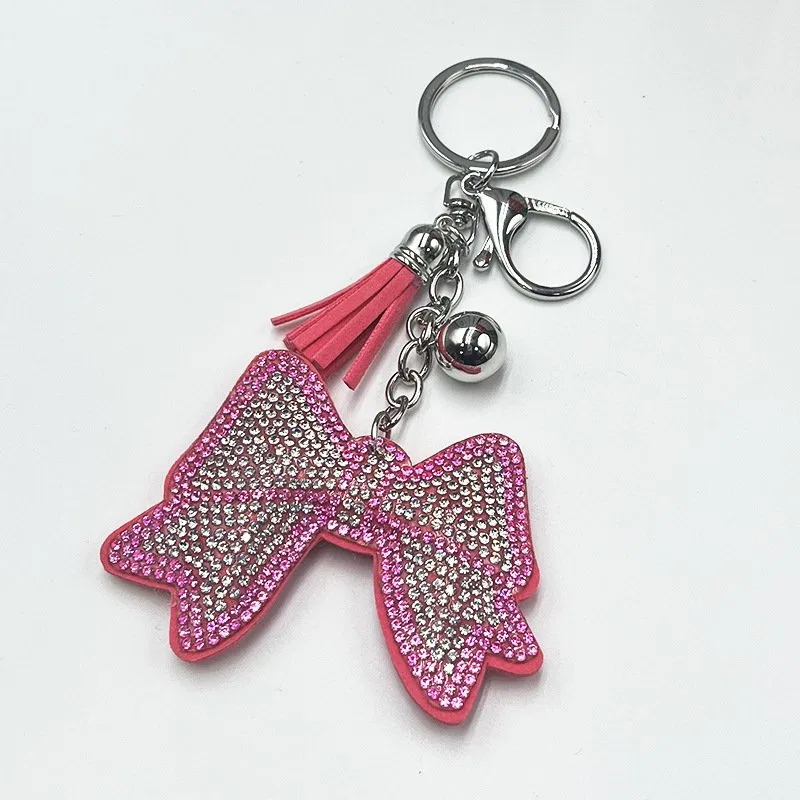
Metal, rhinestones, tassel; 2.6 W x 2.1 H in; MOQ 50.
A bow is a system of loops, knot, tails and negative space. State which width and height the drawing measures and whether the tassel or ring is excluded. Add the selected product reference, orientation and any maximum envelope required by a retail card. Mark the smallest stone fields and the narrowest connections that must remain readable. If a custom variation is requested, approve a dimensioned proof instead of scaling a website image. The recorded dimensions are reference facts for the named products, not automatic dimensions for a new silhouette.
Record loop-to-loop width, top-to-tail height, knot position and orientation using one declared method.
Document the full hanging length separately when ring, chain, connector or tassel affects display fit.
The supporting phrase iron on bow describes a garment-decoration direction, not a keychain. A keychain specification must cover its body and connection hardware; an appliqué or transfer specification must cover its carrier, reverse and application process. Keep the requests on separate purchase lines, with separate proofs and inspection criteria. This prevents a search phrase from collapsing two different product families. If the buyer also needs bow-shaped garment decoration, request it as a separate development question and do not treat the three catalog keychains on this page as evidence for a heat-applied product.
Body, ring, connector, chain, tassel and hanging orientation.
Face, base, reverse, carrier and tested receiving material.
One stable identity and acceptance record for each format.
Ask how current minimums apply instead of assuming they combine.
Specify the required ring style, chain length, connector, swivel behavior, tassel, finish direction and attachment location. Ask for close front, back and side evidence before approval. If a component is not recorded in the database, treat it as a requested feature, not a confirmed fact. Check that the connector does not twist the bow into the wrong display orientation and that the hanging load is carried by the intended point. A sample review should record opening action, edge feel, attachment security and visible finish consistency without inventing an unsupported performance rating.
Shape, opening action and finish direction.
Link style, length and orientation where required.
Placement and relationship to the bow body.
Presence, color, hang and pack protection.
Product 148 is not simply a dark version of Products 125 or 155: its recorded Korean suede, rhinestones and metal create a different material direction. Build a bill-of-materials request at the level necessary for visual approval, including face material, stone color map, metal finish and tassel direction. Ask how color references will be communicated and which physical specimen represents the production target. The phrase wholesale rhinestone keychains describes a category, but the approved material record must identify the exact bow variant. Never infer plating chemistry, stone composition or durability claims that the supplied record does not state.
Metal-led or suede-led direction tied to a product or approved custom proof.
Rhinestone color distribution and acceptable visual placement reference.
Requested metal and tassel appearance, subject to written confirmation.
Create one row for each product, face color, hardware finish and tassel direction. Add quantity, destination and display-card code, then total the rows without assuming that unlike variants share one minimum. All three cited products record MOQ 50, but a current quotation must state how the selected mix is allocated. The custom rhinestone keychain guide provides the parent category framework; this atelier stays focused on bow profiles. Use the keychain packaging guide when card, barcode and hanger details become the central buying decision.
Exact product or approved custom profile and dimension convention.
Body, rhinestone map, hardware and tassel direction.
Variant quantity, destination, pack code and confirmed MOQ treatment.
State whether the accessory ships loose, in a protective sleeve, on a branded card or in another approved unit. Place the hanger opening so the bow faces forward and the tassel can hang without being sharply folded. Record the card dimensions, required warnings or buyer-provided copy, barcode zone, product identity and inner-pack quantity. Test one complete unit in the intended fixture before approving a larger pack. If this is a broader private-label program, the private label fashion accessories guide can hold the brand and presentation system while this page controls the bow itself.
Use the connection point and hanger location to preserve display orientation.
Prevent abrasive contact with stones, suede and tassel during distribution.
Carry product, variant, barcode and pack identity through receiving.
Reconcile product and variant identity, quantity, dimensions and display pack before opening the full lot. Compare silhouette, material direction, rhinestone pattern, metal appearance, tassel and connection points with the released sample. Operate the ring or requested closure as the approved inspection method requires, then observe hanging orientation. Record any loose component, visible damage, deformation or pack mismatch by affected quantity and lot. Photograph the full unit and the detail together. Hold disputed goods for authorized disposition rather than mixing them back into accepted stock.
Profile, dimensions, stones, materials, hardware, hang and visual finish.
Card or sleeve, identity, barcode zone, orientation, protection and count.
These answers separate recorded product facts from the details a buyer must request and approve.
Products 125, 148 and 155 are documented bow keychain references. All record MOQ 50, while their materials, tassel descriptions and reference dimensions differ.
No. A keychain is an accessory with hardware; an iron-on bow describes an appliqué or transfer intent. Keep those formats in separate specifications and quotations.
Cite the selected product record, then confirm the current measurement convention in the proof. Product 125 records 2.8 by 2.2 inches, Product 148 records 2.5 wide by 1.7 high inches, and Product 155 records 2.6 wide by 2.1 high inches.
Request clear front, back and connection-point evidence and specify the required ring, chain, connector, tassel and finish. Do not infer an unrecorded hardware detail from a small image.
Send Teebling the product references, selected silhouettes, colors, materials, requested hardware, dimensions, quantities by variant, sample plan, display packing, destination split and required inspection evidence.