


Stop
Hold related stock and prevent operators from improvising settings on production units.
When a rhinestone heat transfer is not sticking, stop the trial from becoming a chain of undocumented adjustments. Preserve the failed garment and carrier, confirm identity, and isolate garment, equipment, access, procedure and transfer branches before changing one controlled variable.
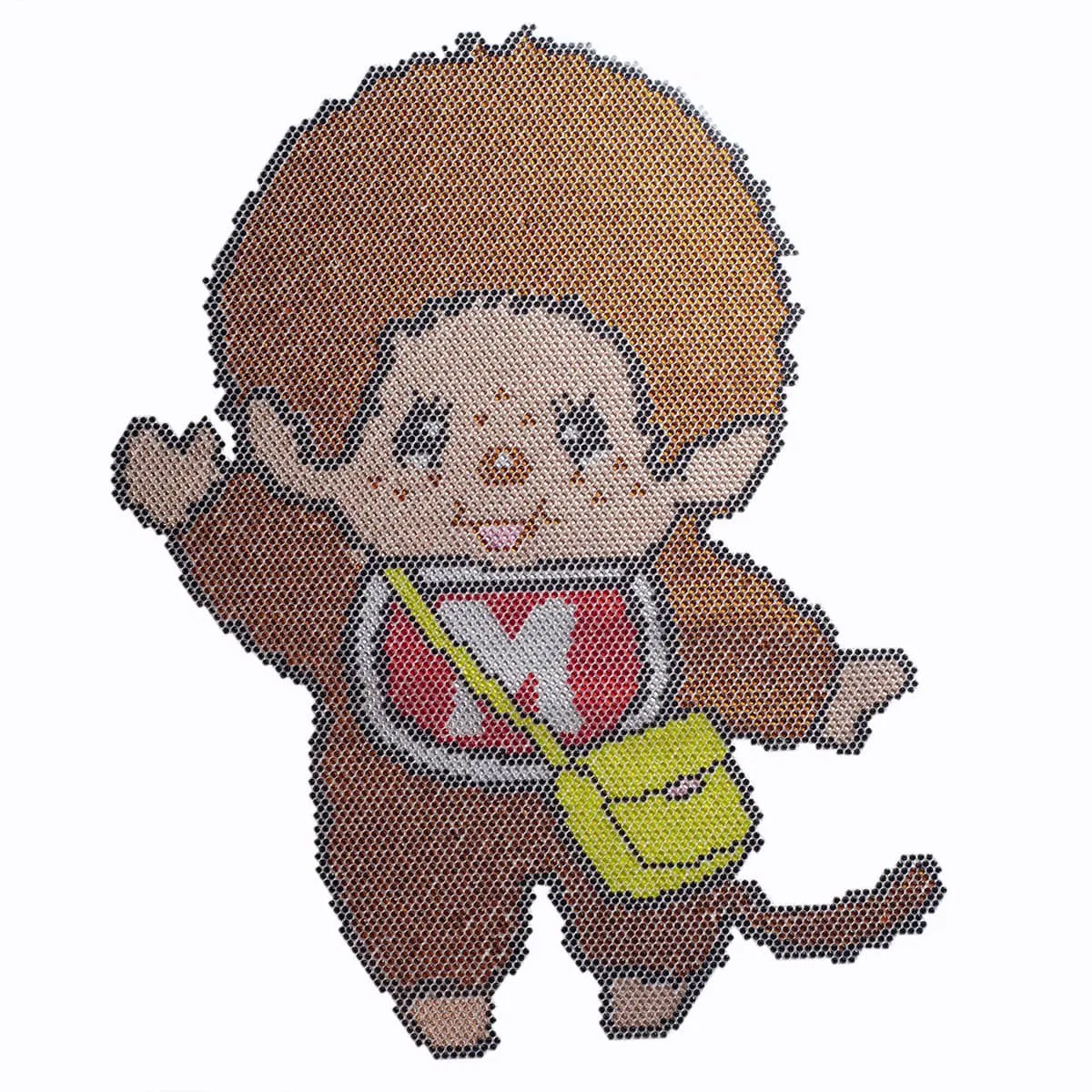
Label the failed garment, transfer remainder, carrier, packaging and instruction sheet with one incident code. Do not discard loose stones, peel the remaining map or re-press the same area before photographs are taken. Record exactly when the symptom appeared: during release, immediately after cooling, at handling or during the buyer's later evaluation.
Hold related stock and prevent operators from improvising settings on production units.
Capture product or custom code, artwork revision, lot or receipt reference and quantity affected.
Document full placement, close details, reverse where accessible, carrier and equipment setup.
Store failed and unaffected examples separately under their original orientation and labels.
Ready to press bling still requires traceable incoming identity. A preassembled sheet can be convenient without making every later failure self-explanatory.
Product 27 is Cross-Pattern Hotfix Rhinestone Transfer, recorded as DMC rhinestone at 28 × 25 cm, MOQ 50 and code TB-CD68EEAAF29D. Product 28 is Adhesive Rhinestone Transfers for T-Shirts and Hats, recorded as DMC rhinestone at 20 × 18 cm, MOQ 50 and code TB-B6638275B13E. Similar material wording does not prove identical carrier, adhesive or application instructions.

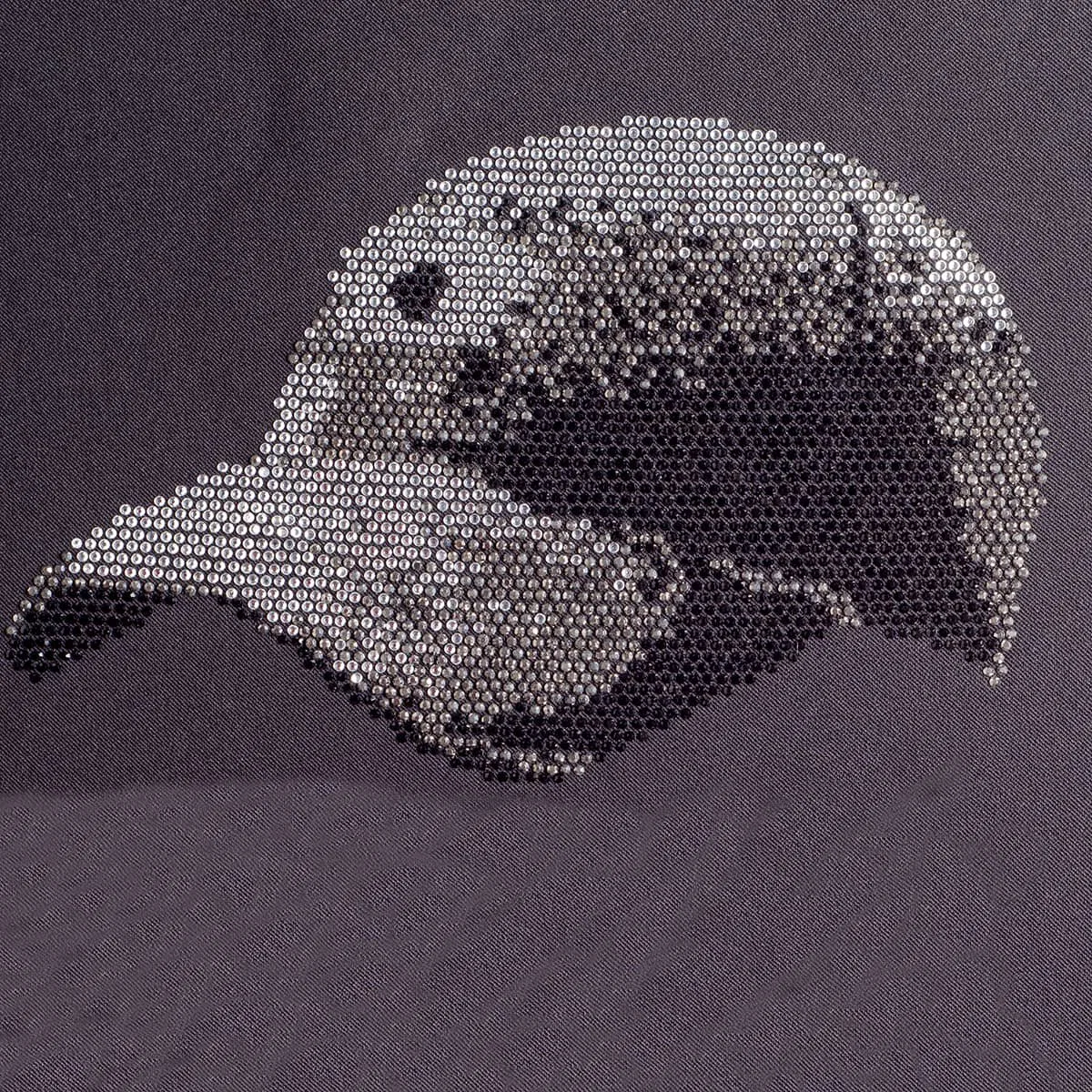
Open Product 26, Product 27 and Product 28 when reconciling the catalog identity.
Record supplier, style, fiber content, knit or weave, finish, color, thickness, stretch and production stage. A substitute blank or coated panel can behave differently even when its merchandising name sounds equivalent. Compare the failed piece with the approved sample and retain both when investigating a change.
Look for coating, texture, contamination, pile or finish differences in the exact placement field.
Map seams, pockets, linings, folds and layered areas that interrupt uniform support.
Note moisture, prior treatment, storage history and any preparation required by the current instruction.
Heat press bling transfers should be evaluated on production-representative garments. A successful swatch cannot automatically approve a finished shirt with different construction.
Identify the machine, platen, operator, displayed conditions, maintenance status and any verification method used under the buyer's process. Compare the incident record with the approved trial. This page does not prescribe a temperature, pressure or dwell increase; it asks whether the equipment delivered the instructed condition consistently.
Confirm the same equipment or a documented equivalent was used.
Inspect cleanliness, damage, alignment and complete access around the transfer field.
Capture settings shown during the trial without treating display values as independent calibration proof.
Record pads, pillows or protective layers only when included in the exact instruction.
Compare actual order of steps with the approved work instruction.
Escalate unexplained equipment variation to the responsible process owner.
The heat-press test guide provides a neutral trial record without inventing universal conditions.
A raised seam or zipper can create a local symptom that resembles a general adhesive failure. Inspect the defect pattern against garment topography. Then compare every handling, placement, application, cooling and release step with the current instruction for the exact transfer and garment.
Check whether a nearby obstruction prevented uniform access under the affected zone.
Compare the entire map, equipment record and garment surface when the symptom is widespread.
Record timing, direction and observation only; obtain the required sequence from the supplier instruction.
Note sheet movement, bending, placement correction or disturbed coordinates before application.
Verify whether every layer used was named and oriented in the approved procedure.
Describe facts and create a controlled retest instead of concealing an improvised change.
How to heat press rhinestone transfers is an item-and-garment question. A successful correction is meaningful only when its revised conditions and outcome are recorded.
Use a photograph or coordinate overlay to mark every affected point. Classify the visible pattern as isolated, edge-related, obstruction-related, color-zone-related or distributed, but label the category as an observation. Do not declare adhesive chemistry, equipment fault or garment incompatibility without supporting evidence.
One or several separated stones with the surrounding field appearing intact.
A repeated condition near the carrier or artwork perimeter.
A pattern aligned with a seam, zipper, fold or uneven support area.
A distributed observation requiring identity, garment, equipment and procedure review.
The quality checklist helps name inspection windows consistently, while incoming-sheet inspection separates pre-application defects from later events.
After the branches are reviewed, decide whether a supplier or process owner authorizes a controlled retest. Use new representative units, preserve a control where practical and change only the documented variable. If identity, instructions or material condition remain uncertain, stop and send the evidence packet instead of forcing a result.
Product or custom code; artwork and transfer revision; lot or receipt identity; garment supplier and style; placement map; current instructions; equipment and operator record; photographs before, during and after; affected quantity; preserved samples; symptom coordinates; previous approved comparison; specific question requiring disposition.
Ask Teebling to confirm whether the evidence supports replacement review, instruction clarification, further sampling or another documented action. Retain the written response with the incident code.
The answers keep corrective action inside an identified product, garment, instruction and evidence trail.
Several variables can produce a similar symptom, including wrong transfer identity, unsuitable garment surface, uneven access, equipment condition, instruction mismatch or handling. Preserve the failed evidence and isolate one branch at a time.
No universal adjustment is recommended here. Confirm the exact product instructions, garment and equipment first; uncontrolled changes can hide the cause or damage the textile.
Hotfix identifies an attachment direction associated with heat-activated construction, but it does not provide one recipe for every transfer, stone, carrier or garment.
Products 26, 27 and 28 are separate DMC rhinestone transfer records with sizes 30 by 21 cm, 28 by 25 cm and 20 by 18 cm. Each records MOQ 50 and its own item code.
Escalate when identity is uncertain, instructions conflict, repeatable defects remain after a controlled check or the observed condition suggests a component issue. Send codes, photographs, samples and the complete trial record.
Record the confirmed cause only when evidence supports it. State which units were accepted, held, replaced, reworked or discarded; name the decision owner; and update the work instruction if an approved change must reach production. Preserve the original failure and corrected trial as separate coded records.
That closeout prevents an operator's successful improvisation from becoming an undocumented recipe. Future orders can refer to the exact product-garment pairing and approved procedure without claiming the finding applies to every hotfix transfer.