


Macro bench
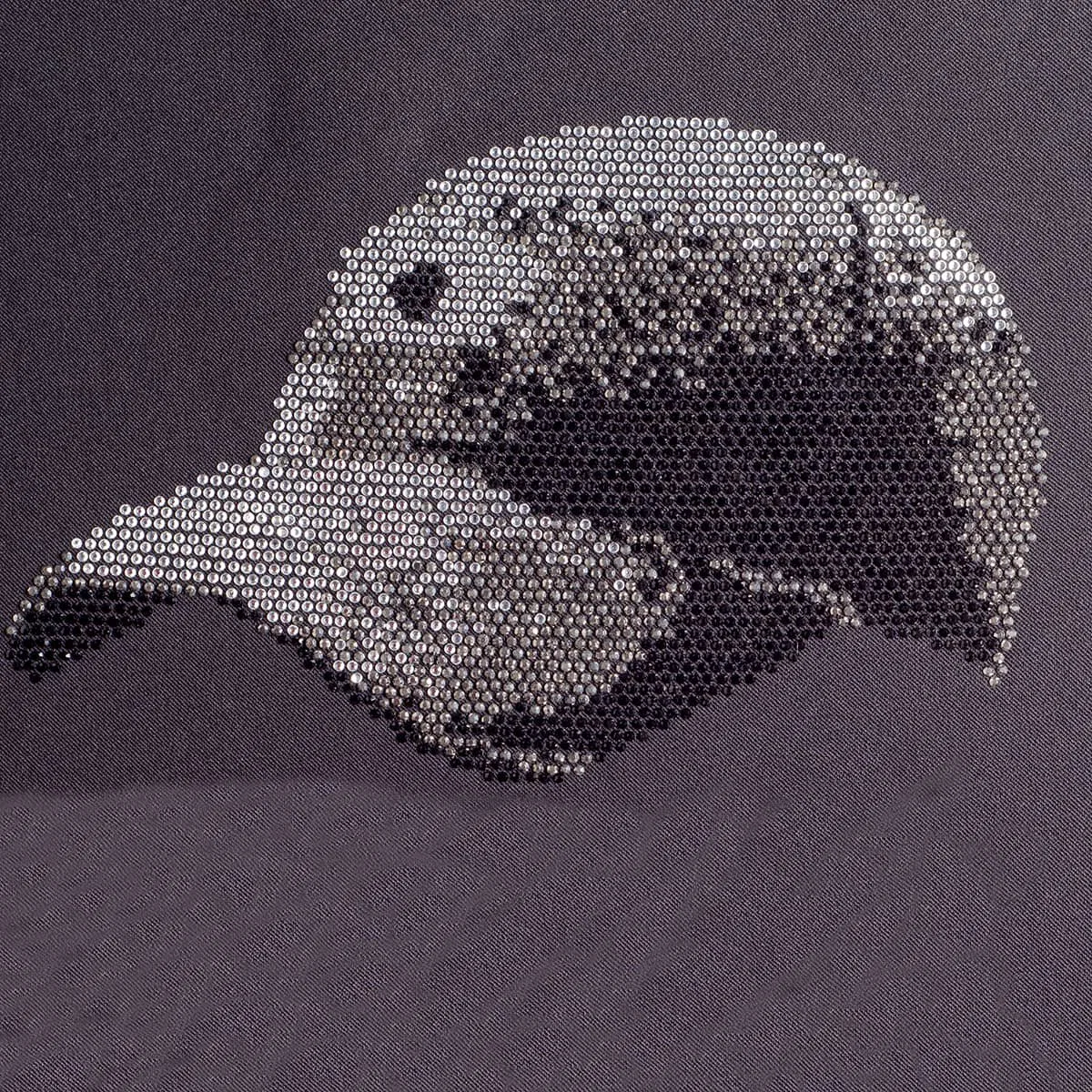
Inspect missing coordinates, doubled points, inconsistent gaps, tight turns and color-zone boundaries.
Very small stones let a map carry many coordinates, but more points do not automatically make artwork clearer. This guide anchors the discussion to one evidenced 1.2 mm SS1 reference and separates catalog facts from the density, carrier and garment trials a buyer still needs to approve.

The active database name is “1.2 mm SS1 Czech Rhinestone Heat Transfer.” Its material field says Rhinestone Czech, its reference field measures 30.4 × 30.4 cm, its minimum is 50 and its item code is WF-019. Those entries describe Product 29 only. They do not establish the construction, color, stone count or spacing of a different request.
Cite the product ID, code and chosen photograph in the inquiry. Ask Teebling to confirm the current sample route and written specification for the proposed artwork.
Open the Product 29 detail page when the buyer intends this exact reference.
Search language such as heat rhinestone transfers often combines product type and application intent. The purchase brief should replace that broad phrase with a measurable map and identified receiving garment.
Product 26 is Custom Hotfix Rhinestone Transfers for T-Shirts, recorded as DMC rhinestone, 30 × 21 cm, MOQ 50 and code TB-65107DD80631. Product 28 is Adhesive Rhinestone Transfers for T-Shirts and Hats, also recorded as DMC rhinestone, 20 × 18 cm, MOQ 50 and code TB-B6638275B13E. Neither record says SS1, so they are composition references rather than evidence of 1.2 mm stones.

See Product 26 and Product 28 for their catalog contexts.
Small coordinates can follow fine contours, yet the map still needs negative space. Establish the finished dimension first, overlay a coordinate grid and inspect narrow letter counters, eyes, interior corners and adjacent color zones. Mark areas where the desired curve would force stones into contact or create an unintended dark mass.
Compare a normal viewing preview with a magnified map. The first tests recognition; the second exposes coordinate errors. Buyers evaluating bling transfers should approve both rather than judging only an enlarged digital close-up. Keep an editable master plus a locked approval PDF with scale, revision and origin marks.
The artwork file guide explains how to package editable and review files without inventing production tolerances.
A very small stone can look precise under a lens while disappearing into noise from ordinary distance. Structure the approval around three views and make each answer explicit.
Inspect missing coordinates, doubled points, inconsistent gaps, tight turns and color-zone boundaries.
Check whether letters, symbols and negative spaces read on the stated garment color.
Judge the intended focal order on apparel, event merchandise or display under relevant light.
A diamante transfer request should state which details must remain readable and which are decorative texture. Record the camera setup used for approval photographs, but retain a coded physical sample when reflective appearance controls acceptance.
The proof defines stone coordinates; the physical carrier must preserve them through receiving, movement and placement. Ask for the proposed carrier construction and supplier handling instructions. On receipt, inspect the perimeter, lifted areas, displaced stones and identification before trimming or staging.
Product, artwork revision and orientation.
Uninterrupted coordinate area with named inspection windows.
Documented handling and trimming boundary for the specific sheet.
Supplier-directed sequence checked in the garment trial.
For movement and release workflow, use the carrier sheet handling guide. This page does not assign a universal peel angle or carrier shelf life.
A blanket instruction to “check the stones” is not reproducible. Divide the artwork into windows and name which risk each window represents. The order specification should state the selected locations, comparison method, sample frequency, escalation rule and record format.
Look for clipped coordinates and inconsistent perimeter rhythm.
Compare the approved corner map with the physical sheet.
Confirm that the negative opening remains visible.
Verify the intended transition between neighboring stone zones.
Check crowding and missing points in the heaviest area.
Confirm that isolated accents have not shifted.
The transfer quality checklist can hold the agreed evidence. Sampling does not replace a defined acceptance specification.
These responses separate recorded SS1 facts from design-specific proofing and application evidence.
Product 29 is named 1.2 mm SS1 Czech Rhinestone Heat Transfer. The database records Czech rhinestone material, a 30.4 by 30.4 cm size, MOQ 50 and item code WF-019.
No. It identifies one active reference. Density, spacing, color allocation and carrier construction for a new design require a measurable proof and an order-specific sample.
Macro review exposes collisions, missing coordinates and uneven turns, while normal viewing shows whether letters and symbols remain recognizable. Both views serve different approval decisions.
Divide the design into named windows, count or compare selected windows against the approved map and record the locations checked. The sampling plan should be agreed before bulk inspection.
No. Request current instructions for the proposed transfer, receiving garment and equipment. Document the applied conditions and observed result on a coded garment trial.
Send authorized vector artwork, requested finished dimensions, stone-size direction, colors, garment identification, placement, quantity by version and the details that must remain readable. Cite Product 29 and WF-019 only when that active SS1 reference is intended. If another construction is requested, label it separately.
Ask Teebling to return the proposed map, carrier details, current commercial terms and sample route in writing. For rhinestone transfers for heat press, approve the sheet and the applied garment as different checkpoints; for rhinestone heat press transfers with dense coordinates, add named macro sampling windows to the purchase record.