


Transfer only
Specify each decoration sheet, version, dimensions, carrier or base and quantity.
“Iron on” can point to a mapped rhinestone transfer, a laser-cut heat-transfer patch or another heat-applied decoration. Identify the supplied object first, then connect artwork, shirt, trial, sheet count and packing through one transfer-only order route.
A transfer-only buyer receives decorations to apply elsewhere. That differs from ordering finished T-shirts and from ordering a sew-on patch. Write the scope in plain language: Teebling supplies the confirmed transfer or heat-transfer patch; the buyer, nominated decorator or garment factory supplies the shirt and performs the approved application. If the supplier is also expected to provide blanks or finished decoration, move that work into a separate OEM brief rather than leaving responsibility ambiguous.
Specify each decoration sheet, version, dimensions, carrier or base and quantity.
Name the factory, equipment, garment and validated process that will receive the order.
If completed apparel is required, request garment, size/color allocation, application and packing together.
The visible face, carrier, textile base, edge and reverse determine what must be inspected and how the item is handled. Three catalog references help frame the conversation, but their images do not replace a written build description.
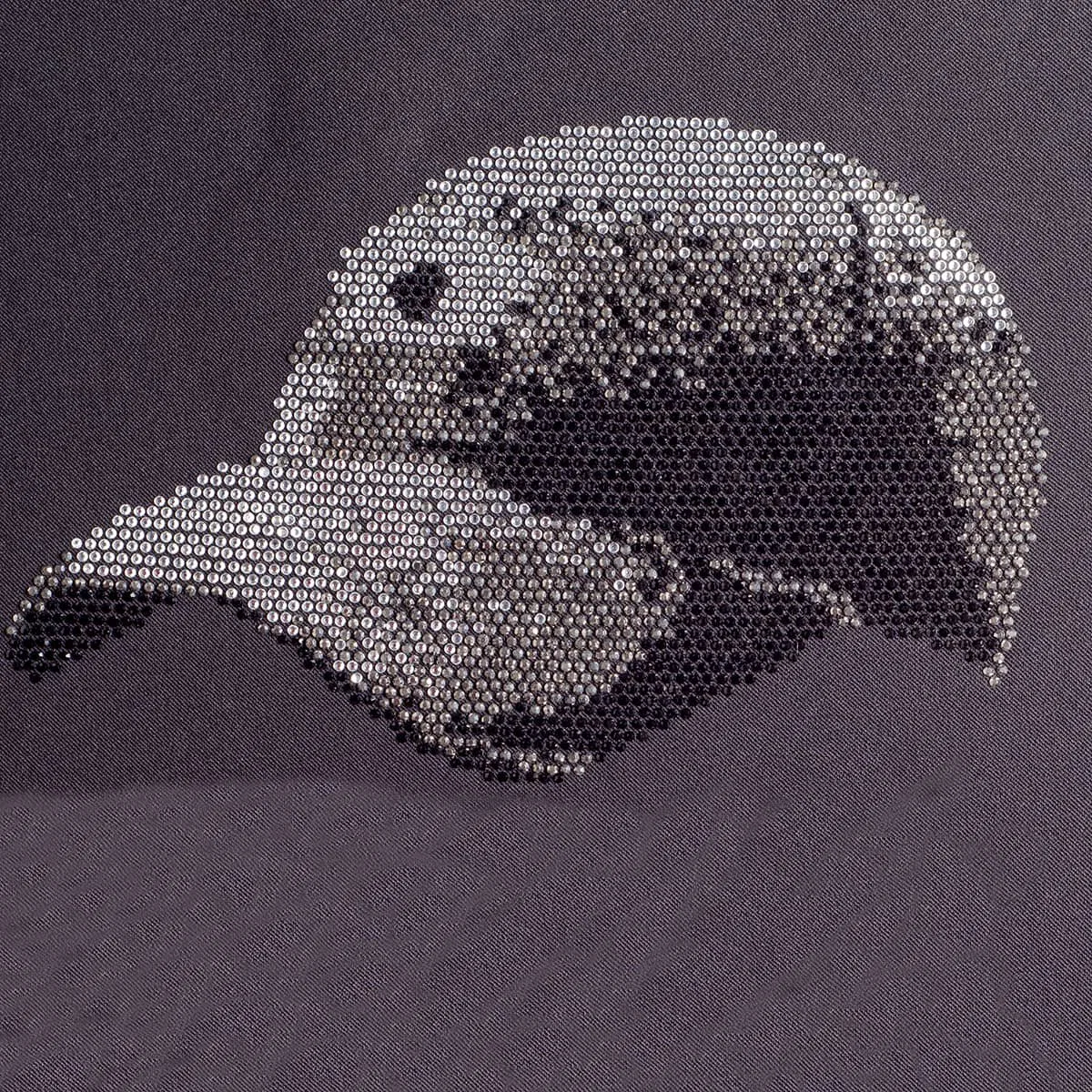
Product 28 records Rhinestone DMC at 20 x 18 cm and MOQ 50. Ask how the approved stone map is carried, oriented and released for the quoted order.
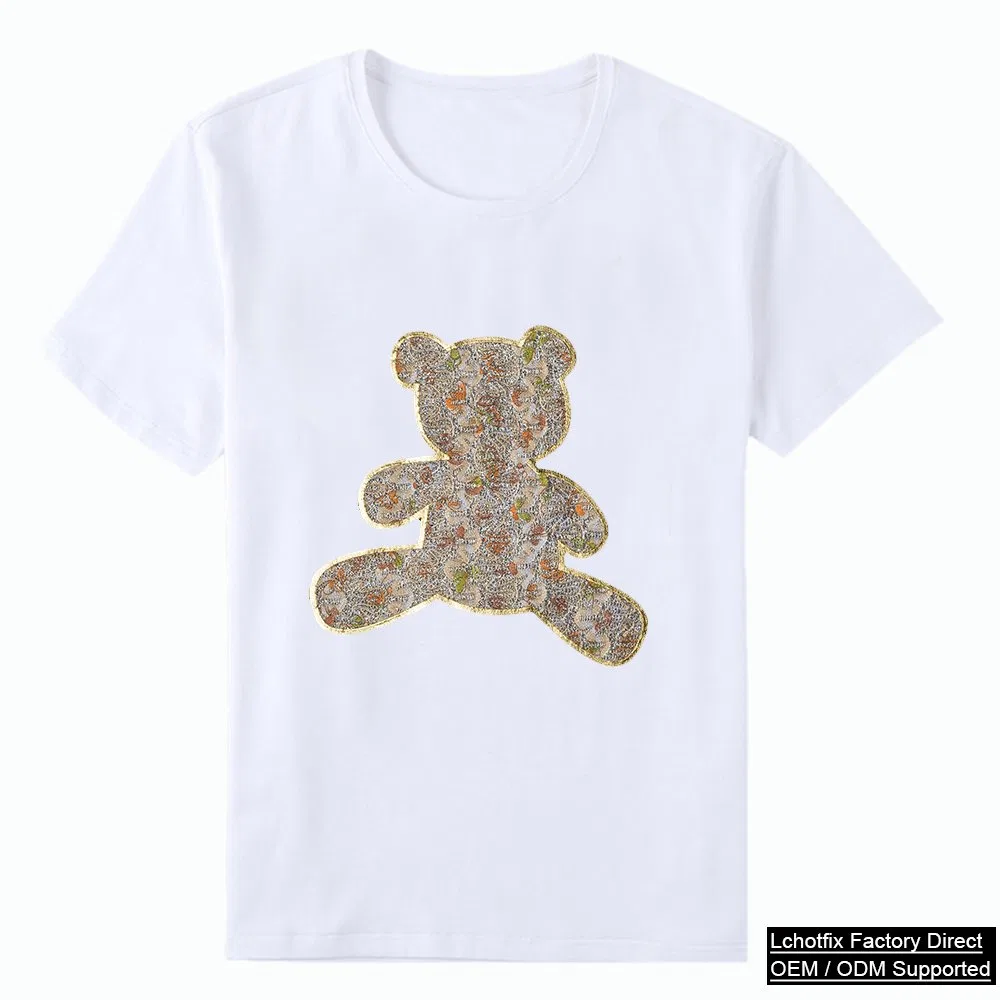
Product 168 records fabric, rhinestones and holographic crystal with MOQ 50. No size is recorded, so finished dimensions must be supplied in the quote.
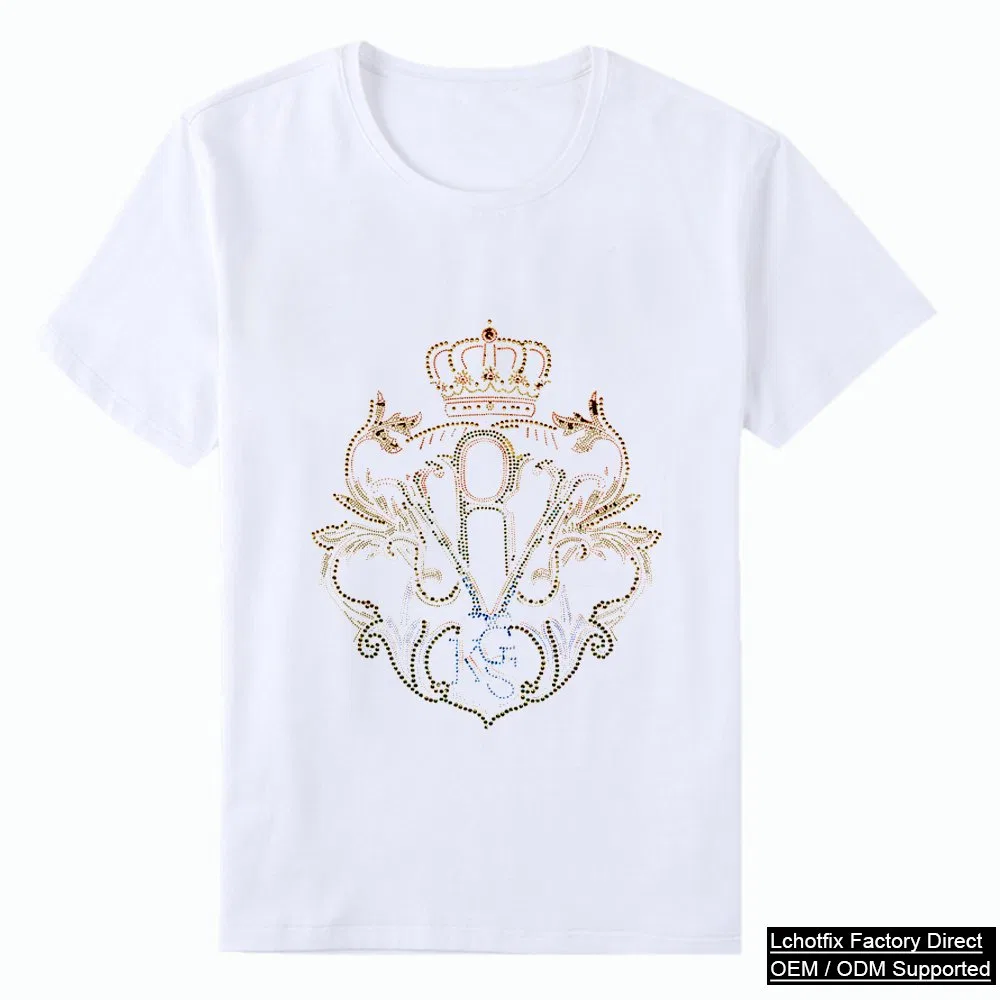
Product 169 is a crown monogram rhinestone heat-transfer patch with MOQ 50 and no recorded size. Variable art requires its own proof control.
Submit authorized source artwork and state the final width, height, orientation and shirt placement. Review narrow gaps, small lettering and fine shapes at printed physical scale, not only on an enlarged screen. For rhinestone maps, distinguish stones from printed or fabric areas. For a laser-cut patch, identify the cut outline and visible base. For personalized monograms, separate fixed design elements from each letter or name variation. Give every approved version a stable revision code that can travel on the inner pack.
Lock dimensions, source art, construction direction, colors and coordinate origin. Attach a garment mockup with measured anchors.
Mark top, face direction and whether artwork is viewed from the transfer or garment side during handling.
Record every size, color or personal variation instead of changing an approved file silently.
Record fabric composition, knit or surface texture, finish, color, seam construction and planned placement. A blank described only as cotton may still differ by blend, dye, treatment, thickness or structure. Measure the usable platen area and note pockets, seams, collars or zippers that affect contact. Follow the supplier's direction for the exact transfer and run a representative trial on the smallest and largest relevant garment sizes when placement proportion may change. The result belongs to that named transfer-and-shirt pair.
Open a labeled sample pack before releasing the production quantity. Compare design code, dimensions, orientation, visible construction, stone or component placement and carrier condition with the approved reference. Count by sheet and version. Quarantine creased, contaminated, shifted or unidentifiable pieces until the supplier provides direction; an application line is a poor place to discover that two similar designs were mixed.
Match purchase order, artwork revision, transfer label and selected reference image.
Check missing, moved or unintended elements against the approved physical-size proof.
Observe flatness, carrier cleanliness, backing protection and any edge damage.
Reconcile bundle, version and destination totals before material reaches the press.
One shirt ordinarily needs one matching decoration in the defined placement, but program totals can include multiple designs, front/back positions, size groups, samples, operator setup, replacement stock or several factory destinations. Create a line for every transfer version and reconcile it against the garment purchase. The minimum order for products 28, 168 and 169 is currently 50 pieces, but commercial allocation and current availability are confirmed in the quote.
Describe inner-pack protection, interleaving or separation in relation to the actual quoted transfer construction. Keep different artwork revisions, dimensions, colors and orientations apart. Every bundle should carry a readable design code, quantity and destination. If a factory receives only part of the total, provide a carton map that reconciles all splits. Store and handle the delivered transfer in accordance with supplier instructions; do not invent universal shelf-life or environmental claims.
State the requested format, authorized artwork, final dimensions, top orientation, shirt specification, placement, quantities by version, application site, sample need, inner-pack count, destination and requested timing. Reference product 28, 168 or 169 only when its documented image and material direction is relevant. Teebling can then confirm the offered construction, current commercial details and testing path without blurring a transfer sheet into a patch or finished garment. The artwork file guide helps organize production sources, the heat-press test guide defines controlled garment evidence, and the export packing guide covers longer distribution routes. Keep each linked record attached to the same transfer revision.
Use these answers to make a request precise before materials reach a decoration line. The accepted transfer, garment test and written supplier direction govern the actual order.
It means a transfer-only decoration intended for a buyer-managed application workflow. The quote must still identify the actual construction, carrier or base, artwork, dimensions, quantity and supplier-directed application; iron-on is not one universal material.
Product 28 is a Rhinestone DMC transfer recorded at 20 x 18 cm with MOQ 50. Products 168 and 169 are heat-transfer patches with MOQ 50; their sizes are not recorded. Use their names and images to discuss directions, then obtain a written specification.
Not necessarily. A patch may include a defined fabric or textile base and edge, while a mapped rhinestone transfer may arrive on a carrier without that patch perimeter. Ask the supplier to identify every visible and hidden layer.
No universal instruction should be inferred. Follow the direction supplied for the exact transfer and test it with the intended shirt fabric, finish, placement and equipment before releasing a garment run.
State pieces or sheets per artwork revision, dimensions, orientation, variant code, inner-pack count and factory destination. Keep designs separated and protected in the condition specified for the quoted construction.