


Core line
Choose the few motifs and colorways expected to remain available. Give them stable codes and avoid trend-dependent names that become unclear next season.
A rhinestone bag charm tassel wholesale range needs more than several attractive photographs. Plan palette, motif pairing, hardware finish, SKU identity, display, packaging, quantity allocation, and reorder evidence as one coordinated line while preserving the exact catalog facts for each reference.
State where the line will sell, who will use it, what receiving objects it should attach to, and how many retail or promotional variants the program can support. A nurse bag charm collection may serve workplace gifting, event merchandise, or general accessories, but it must not imply professional endorsement, medical performance, or safety certification. Identify the season, theme, planned retail display, and reorder cadence as buyer inputs.
Choose the few motifs and colorways expected to remain available. Give them stable codes and avoid trend-dependent names that become unclear next season.
Separate limited palette or event variants so their packaging, allocation, and discontinuation do not alter the core specification.
For private label fashion accessories, identify brand artwork rights, card or bag requirements, barcode ownership, and approval responsibilities.
The private-label keychain packaging guide expands presentation controls. Packaging remains quote-specific and is not included merely because a buyer requests a private-label range.
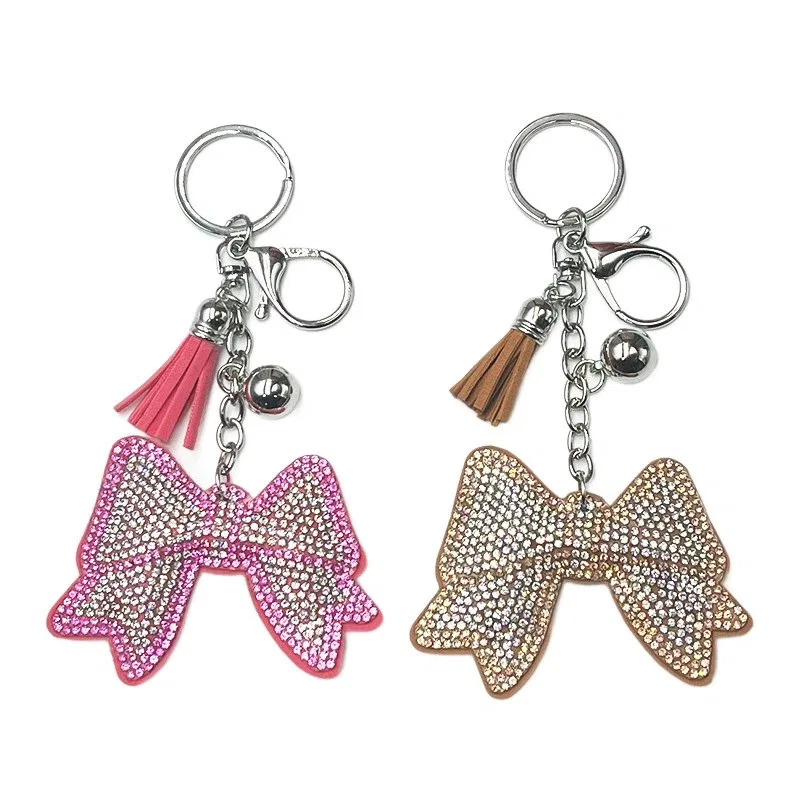
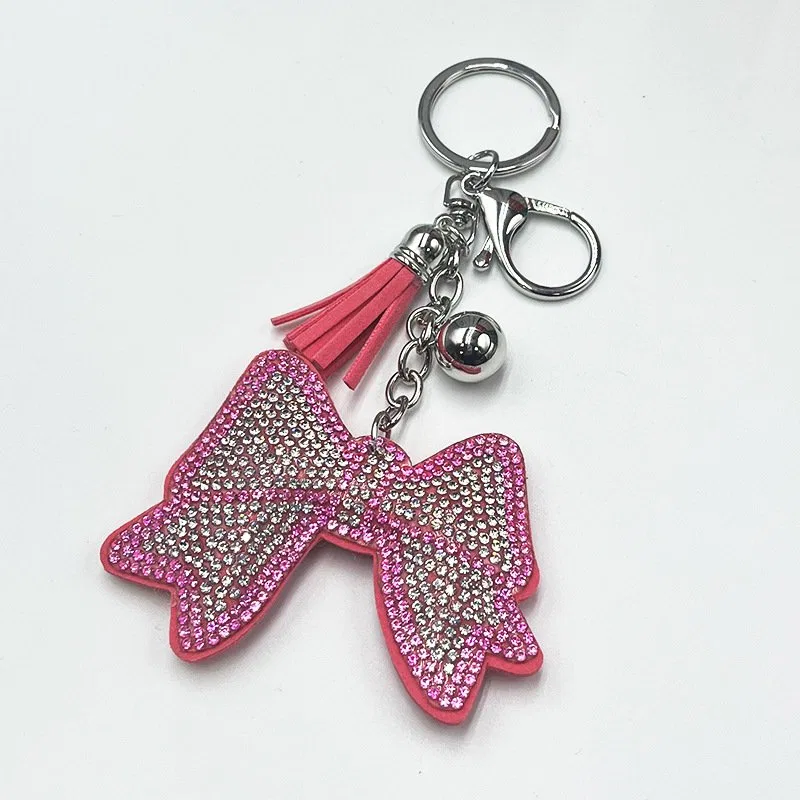
Product 125 is Hanging Bow Rhinestone Keychain, with Metal Alloy, Rhinestones, Tassel, size 2.8 × 2.2 inches, code HC-YWXK-031, MOQ 50. Product 155 is Bling Rhinestone Bow Tassel Keychain, with Metal, Rhinestones, Tassel, 2.6 inches (W) × 2.1 inches (H), HC-YWXK-061, MOQ 50. Product 139 is Crystal Nurse Cap Keychain, with Crystal, Metal, Fabric, 2.6 × 1.5 inches, HC-YWXK-045, MOQ 50.
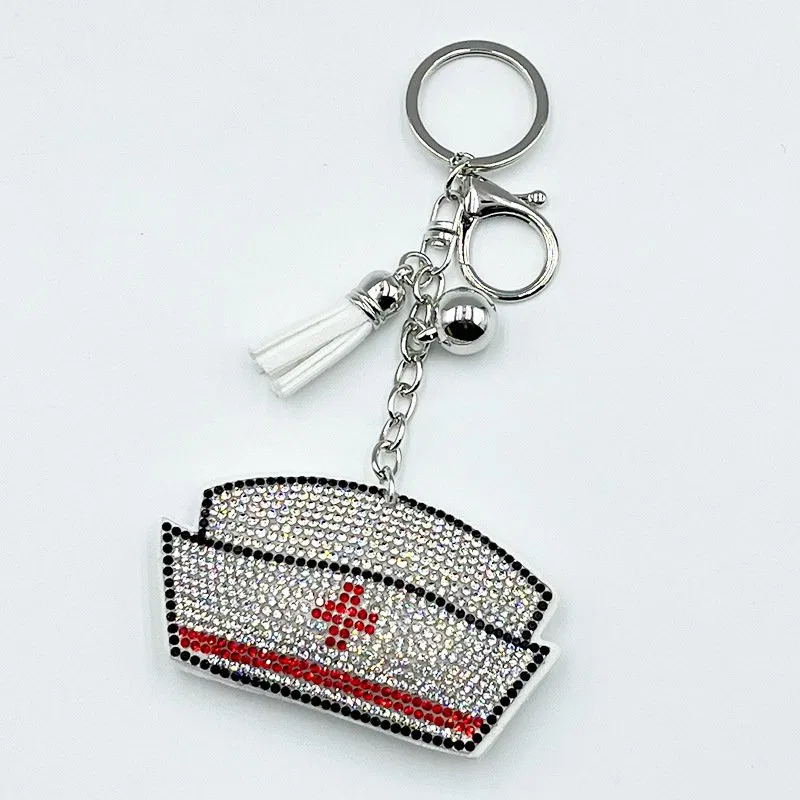
A new tassel pairing for Product 139 must be designed, sampled, and confirmed rather than reported as an existing specification. “Bag charm” is the intended merchandising context here; all three database names identify keychains.
Create the assortment palette from physical proposed components. Assign each tassel, motif colorway, fabric element, rhinestone or crystal mix, and hardware finish its own code. Digital boards can organize the concept, but they do not guarantee color equivalence among fiber, metal, stones, print, and screen. Approve the coordinated assembly under agreed viewing conditions.
Primary brand color used on the lead motif or tassel; cite a physical approval reference.
Lighter companion color evaluated beside the actual stones and metal proposal.
Contrasting option that expands the display without duplicating the same visual role.
Seasonal or gift-led accent retained as a distinct SKU rather than a generic “mixed” color.
Grounding option whose finish and fiber identity remain versioned for reorder.
Photograph each approved assembly with a sample code, but retain the physical master. Lighting, camera processing, and monitor settings can alter a digital comparison.
A good assortment avoids several variants that compete for the same visual role. Define the lead motif, supporting motif, gift or profession theme, color story, and price architecture inputs before assigning tassels. Keep buyer personas respectful and evidence-based; a nurse motif can identify a theme without claiming that the accessory is clinical equipment.
Repeat one motif color in the tassel and let metal or stones provide contrast. Record the exact component codes.
Use a distinct tassel color to make a small motif more visible, then approve the complete assembly rather than isolated swatches.
Use a controlled neutral tassel when several motif colorways must share a display, but do not assume one neutral source remains unchanged.
The rhinestone bow keychain guide offers bow-specific sourcing context. A bow line and a medical theme can coexist only when each SKU retains its own factual identity.
Using one ring, clasp, connector sequence, and finish across several variants can simplify a line, but the decision must follow fit and movement review. Draw the attachment path for each motif because size, orientation, tassel position, and fabric elements may change balance. Ask the supplier to confirm every finding and its finish; the cited product rows do not store component-level hardware details.
Record proposed ring or clasp, connectors, finish, orientation, and packaging clearance. Test it on every motif before calling it standard.
The rhinestone keychain hardware guide provides a full bill-of-materials workflow.
Create a separate hardware code when a heavier, wider, fabric-backed, or differently oriented motif requires another solution. Never substitute silently on reorder.
This page states no ring diameter, metal grade, plating, load, safety, or wear claim. Any quantitative requirement needs a buyer-approved method, criteria, and supplier confirmation.
A readable SKU architecture makes variants traceable without forcing staff to memorize color names. Create controlled codes for motif, tassel, hardware finish, packaging, and revision. Keep human-facing names concise, but let the bill of materials carry complete supplier-confirmed details. A change to any physical component should update the revision or create another SKU according to the buyer’s control policy.
BOW-HANGConnect to Product 125 or a confirmed custom artwork and exact dimensions.
TAS-P01Link color reference, fiber or material confirmation, dimensions, and approved sample.
HW-F02Identify complete findings sequence, finish, orientation, and supplier source.
PK-CARD1Specify card, bag, label, barcode, warnings, display direction, and units per pack.
Do not use “assorted” as a substitute for allocation. State the ordered quantity of each complete SKU and ask whether the proposed split is commercially available.
Mock up the line on its intended peg, counter, gift box, or event display. Check visual spacing, card scale, motif orientation, tassel interference, barcode access, and how easily staff distinguish near colors. Use forecast and sales data supplied by the buyer rather than making unsupported demand promises. Reorder from approved component codes, not from a photograph of the display.
| SKU control | Launch record | Reorder check |
|---|---|---|
| Motif | Product/custom code and dimensions | Same approved source and revision? |
| Tassel | Physical sample and component code | Color/material source unchanged? |
| Hardware | Finding sequence and finish sample | All subcomponents confirmed? |
| Pack | Artwork, barcode, orientation, quantity | Current copy and compliance review? |
The rows for Products 125, 155, and 139 each record MOQ 50, but Teebling must confirm whether motifs, colors, hardware, or packaging variants can share a minimum. This guide provides no price, lead time, delivery, or reorder guarantee.
These answers keep catalog keychains, proposed bag-charm use, recorded tassel materials, unrecorded pairings, and commercial allocation clearly separated.
Each catalog row records MOQ 50, but the database does not state that different motifs or variants may be pooled. Ask for current allocation and commercial confirmation.
No. It is stored as Crystal Nurse Cap Keychain with material Crystal, Metal, Fabric. No tassel is named in its material field, so any tassel pairing is a new supplier-confirmed assortment proposal.
Assign each proposed physical tassel a supplier-confirmed component code and approved sample. A screen name such as pink or blue is not sufficient for repeat identification.
No. Brand card, bag, barcode, warning, label, pack quantity, and assembly responsibility must be specified and quoted for the project.
Freeze motif, recorded or confirmed materials, dimensions, tassel, hardware map, finish, colorway, orientation, packaging, SKU, quantity allocation, and accepted complete sample for every variant.
Submit the assortment brief, authorized motif art or product references, physical palette, pairing matrix, hardware map, SKU scheme, display and packaging concept, quantity by variant, and sample approval owner. Ask Teebling to quote each proposed construction and allocation explicitly.
Release the motif, dimensions, tassel, hardware, finish, orientation, packaging, quantity, and accepted physical sample for each SKU. Link shared components through controlled codes while preserving variant-specific exceptions.
This makes a rhinestone bag charm tassel wholesale range reorderable without claiming that different catalog minimums pool automatically or that an unrecorded tassel already belongs to the nurse motif.