


Product
Code, variant, complete hardware and approved sample.
Turn a keychain and brand brief into a measurable packaging system. This working studio separates the product envelope, retention method, printed identity, scan zone, protective layer, inner count and destination carton so each approval answers one clear question.
A useful private label keychain packaging brief starts with channel, shopper, price communication owner, destination and handling route rather than a decorative card shape. Name the buyer SKU, selected catalog code or custom motif, permitted brand assets, required legal review, display fixture and replenishment unit. Indicate whether the keychain hangs, stands, lies in a tray or ships as a gift. Identify who supplies translations, barcode data and market-specific claims. Teebling can then assess the requested presentation against the chosen article. No database row used here records retail packaging, certified paper, recycled content, print finish, testing standard or country-specific labeling language, so those points remain supplier-and-buyer confirmation items.
Code, variant, complete hardware and approved sample.
Logo source, copy hierarchy, barcode and revision owner.
Fixture, inner pack, carton split and receiving destination.
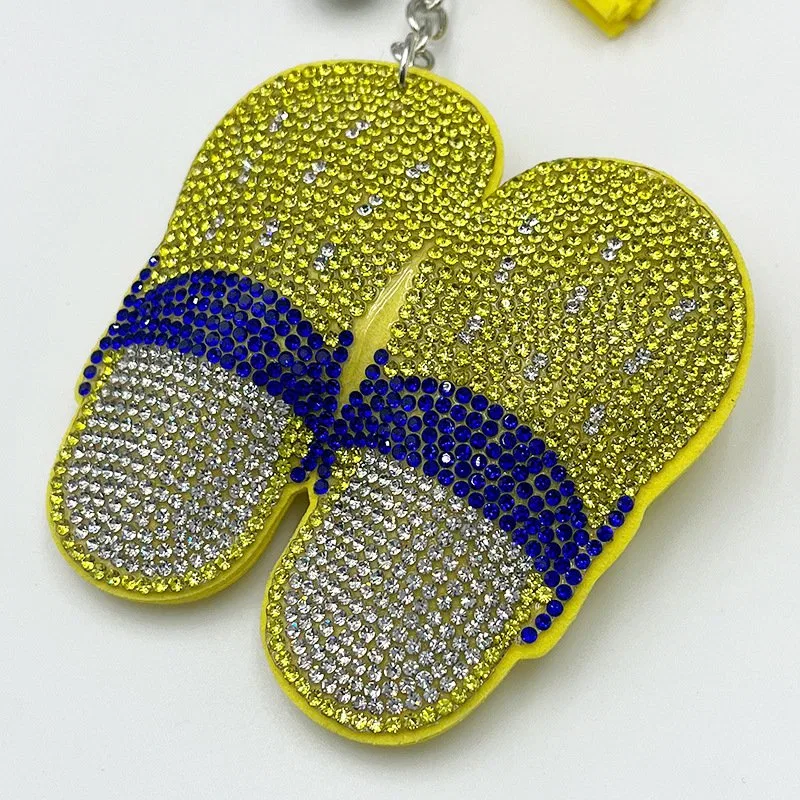
Product 93 records code HC-YWQK-001, Rhinestone and Flat Fabric, 2.5 by 1.5 inches and MOQ 100. The globe entry, Product 120, pairs code HC-YWXK-026 with Metal Alloy and Rhinestones; its reference size is 2.8 by 1.5 inches and its recorded minimum is 50. Product 143 lists HC-YWXK-049, Rhinestones plus PU leather base plus alloy metal hardware, 1.8 by 3.1 inches and MOQ 50. These are distinct catalog facts, not a universal pack specification. Confirm current samples because rings, connectors, tassels and movement can extend beyond the listed motif dimensions.
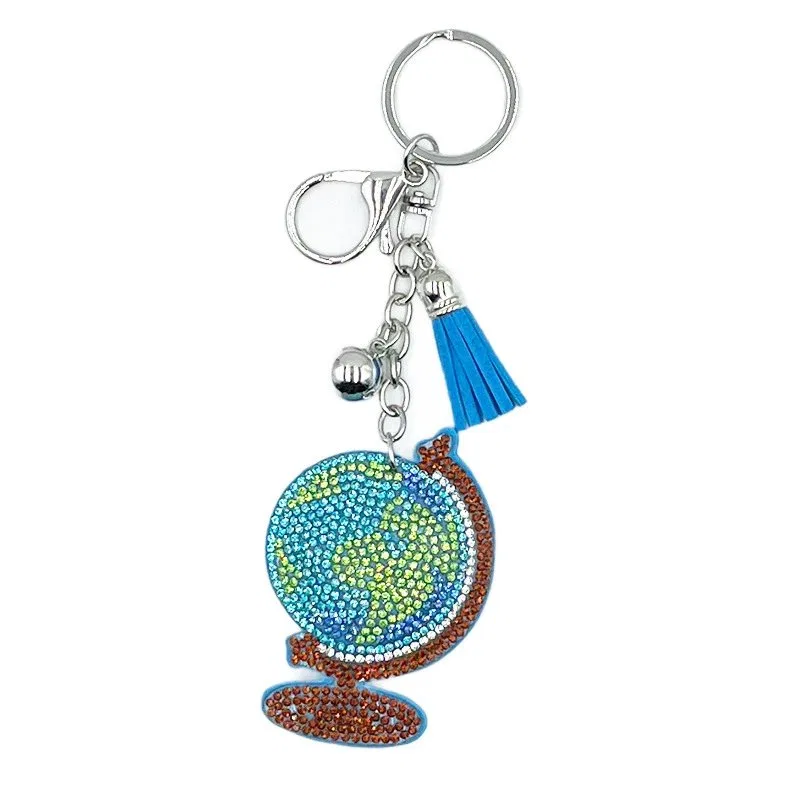
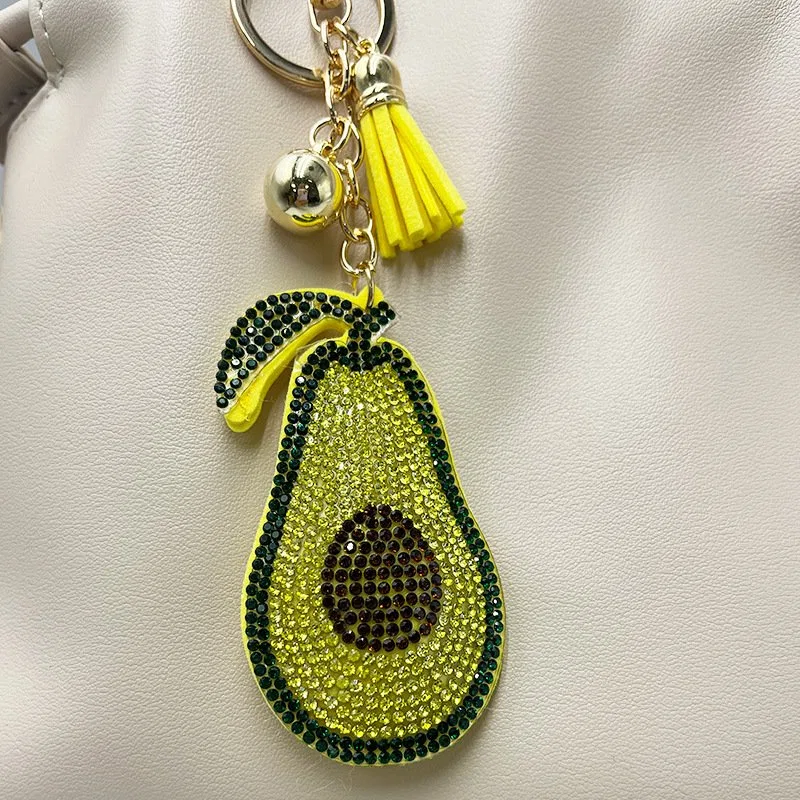
Place the approved unit on a scaled board with the ring extended and the decorative face oriented toward the shopper. Record overall width, overall height, maximum thickness, free-swing area and the lowest point created by any tassel. Add clearance so hardware does not sit across the logo or barcode. For a shared card, compare every approved variant against one transparent outline; do not infer fit from three catalog numbers. Mark cut line, safe copy area, hole or slot location, fold, adhesive-free region and any sleeve allowance. Request a physical mockup at intended size. A screen view can confirm composition, but it cannot prove balance on a hook or the way a moving charm rests after transport.
The attachment between keychain and pack must hold orientation without scraping crystal work, distorting a textile base or allowing loose hardware to mask printed information. Ask for the proposed slot, tie, band, insert or other retention construction by name and material, then approve the exact method on a current sample. Pull and handling expectations should be defined by the buyer and matched to an agreed test; this page does not assign load ratings. Check whether staff can remove the unit without tools, whether sharp ends are exposed, and whether the emptied pack leaves confusing components behind. Document the front, back and side view so production inspection can distinguish correct retention from an improvised substitute.
Sample code + card revision + attachment material + front orientation + back routing + removal observation + named approver.
Define the actual hazards in the packing route: crystal faces rubbing each other, metal rings marking printed cards, tassels tangling, moisture exposure requested by the destination, compression in an inner or repeated shop handling. Ask the supplier to propose a feasible separator, sleeve, tray or wrap for the selected keychain and carton plan. Approve transparency and presentation independently from protection. Avoid unsupported statements such as scratch-proof, waterproof or tarnish-free unless a defined method and evidence support the exact construction. A private label merchandise packaging guide can organize broader copy and pack decisions, while this keychain worksheet keeps hardware contact points visible.
Keep decorated surfaces from uncontrolled contact.
Restrain rings and connectors without hidden substitutions.
Recheck presentation after the approved transport simulation.
Supply final brand files and approved wording rather than asking production to reconstruct a logo from a screenshot. List font, color reference, hierarchy, reading direction and any quiet zones. Buyer counsel or the buyer's compliance owner should approve market-required statements; Teebling should not be asked to invent them. Position barcode artwork only after the attached product is shown on the dieline, then print and scan the complete sample under intended lighting. Record the code result, device or verification service, proof date and approver. Connect the card revision to buyer SKU, unit, inner label and carton mark. The sample approval workflow helps prevent a later copy correction from leaving old packaging in an otherwise current order.
Translate store, event or customer allocations into named inner packs before requesting a master carton. Record which buyer SKU and card revision belong in each inner, the exact count, orientation, divider proposal, label and destination. Reconcile those decisions with product-level minimums instead of treating MOQ as a carton quantity: Products 120 and 143 show 50, while Product 93 shows 100. Current packing feasibility and commercial terms require quotation for the combined order. Specify receiving count method and sample carton review when warranted. The private label accessory MOQ planning page separates product minimums from variant, packaging and allocation assumptions.
| Retail unit | One approved keychain and package revision |
|---|---|
| Inner | Controlled SKU mix, count and orientation |
| Carton | Declared inners, marks and destination split |
Use these answers to keep catalog facts, buyer-owned artwork, physical packaging proofs and receiving instructions from being merged into one vague approval.
Provide the selected keychain code, physical sample, card or pouch concept, brand files, mandatory copy, barcode artwork, destination, unit count, inner assortment and named approval owner.
No. Listed sizes describe the product record, while the complete ring, connector, tassel and swinging envelope must be measured on a current sample before a dieline is approved.
Products 93, 120 and 143 supply slipper, globe and avocado references with different materials, dimensions and minimum quantities; none records a finished retail package.
Place buyer-provided barcode artwork in a reserved clear area, print it at intended scale, attach the actual keychain and verify scanning under the buyer applicable barcode rules.
Release follows approval of the complete attached unit, printed copy, scan result, protective method, inner count, carton marks and revision-controlled packing instructions.
Send the product code and sample reference, quantities, variants, complete measurements, fixture details, dieline concept, brand source files, approved copy, barcode artwork, retention request, protection hazards, inner pack, destination split and deadline assumptions in one indexed package. Ask Teebling to return the proposed construction, current feasibility, quotation boundaries, sample sequence and required confirmations. Compare that response with the wholesale rhinestone keychains category record rather than copying settings from an unrelated accessory. Release production only against a signed complete unit and packing instruction. That evidence gives private label accessories teams a practical control point between creative presentation and repeatable receiving.
Product + dieline + copy + scan + retention + protection + inner + carton + destination + signed revision.