


Artwork and finished face construction
Removable identity system / blueprint
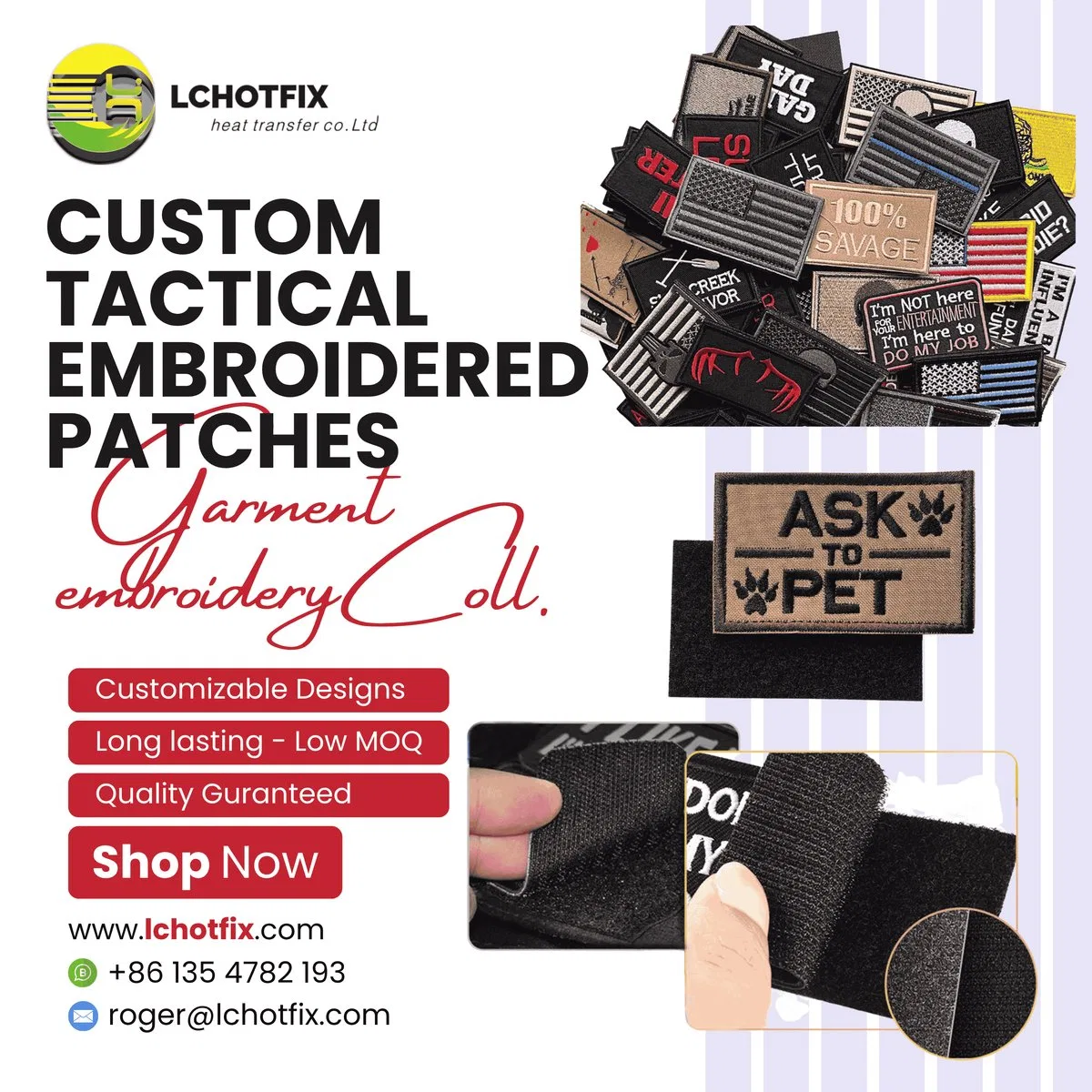
Custom hook and loop patches designed as a complete paired assembly
The visible patch is only half of the system. Artwork face, finished perimeter, patch-side backing, mating panel and receiving product must align as one configuration. Teebling helps wholesale buyers document that assembly so replacements, variants and repeat orders remain understandable.
Perimeter, dimension and orientation
Patch backing and compatible mating panel
Garment placement and replacement identity
Exploded assembly
Specify four connected planes
A useful brief separates the component layers, then reconnects them through one compatibility record. This makes review comments precise: the buyer can revise face artwork without accidentally changing panel dimensions, or change the garment placement without treating the patch construction as new.
Define artwork, color references, finished scale and the chosen decorative process. Embroidered, woven, printed or molded directions interpret detail differently, so the proof belongs to the face construction.
Record the base, perimeter, thickness direction and reverse-side backing. Inspect narrow points, corners and any area where the backing could become visible beyond the face.
Identify which side is supplied, its exact outline, orientation and usable engagement area. If the buyer has an existing panel, provide a physical reference rather than assuming compatibility from category language.
Show garment or accessory placement, surrounding seams and the intended orientation. The panel attachment to that product is a separate assembly decision that should have its own owner.
Receiving-panel geometry
Control the overlap, orientation and usable area
A mating panel should support the intended patch without becoming a distracting border or leaving important corners unsupported. Review the pair at finished size and in the actual garment location.
GEO / OUTLINEShape relationship
Decide whether the panel follows the patch contour or uses a regular geometry. Record acceptable exposure around the face and check the relationship at curves, points and corners.
GEO / SCALEUsable engagement
Dimensions should describe the functional contact area, not merely a nominal label. The sample review can reveal where edge construction or shape reduces effective overlap.
GEO / AXISOrientation cue
Asymmetric artwork or panels may need a top, front or alignment mark in assembly instructions. Do not rely on the packer to infer direction from a small icon.
GEO / HOSTPlacement field
Map the panel against seams, pockets, curves and neighboring trims. Confirm that the wearer or assembler can remove and replace the patch without conflicting with the surrounding product construction.
Separate a design variant from a compatibility variant
A new face graphic may still fit an approved panel family. A new size, outline or backing may not. Give the system a compatibility identity that is distinct from the artwork revision so replacement patches can be selected without visual guesswork.
Artwork revision
Tracks visual changes to lettering, symbols, colors or decorative construction. It answers what the patch looks like.
Patch configuration
Tracks finished dimensions, outline, edge and backing. It answers what physical component is supplied.
Panel family
Tracks the paired geometry and engagement relationship. It answers which receiving panels the patch is intended to match.
Host-product record
Tracks the garment or accessory, placement and assembly method. It answers where the complete system is used.

Face artwork review
Make the message readable before adding the removable system
Hook-and-loop backing does not change the basic demands of patch artwork. Lettering needs sufficient space, small openings must survive the selected decorative process, and the border should protect rather than crowd the design.
Read at normal distance
Review the proof at finished size and place the sample on the receiving product. Large monitor previews can conceal weak hierarchy or cramped type.
Protect critical gaps
Identify the spaces that define letters and symbols. If simplification is proposed, show it explicitly for brand approval.
Coordinate edge and backing
Inspect the face perimeter and reverse together so backing material does not appear as an unintended halo around detailed outlines.
Use-condition matrix
Describe why the patch must be removable
The use case determines what the system needs to communicate. A rotating team identifier, name panel, equipment marker or collectible accessory may share the same attachment family but require different artwork, replacement and packing logic.
| Program type | Planning focus | System question | Record to preserve |
|---|---|---|---|
| Role or name identification | Legibility, orientation and a controlled panel family. | How are replacements matched to the right host product? | Person or role variant linked to patch configuration. |
| Team or collection rotation | Shared dimensions across several face designs. | Do all approved designs engage the same usable panel area? | Compatibility family plus individual artwork approvals. |
| Accessory customization | Consumer-facing appearance and simple alignment. | Will the panel remain visually acceptable when no patch is attached? | Paired and unpaired product photographs. |
| Equipment organization | Fast recognition and durable identity through handling. | Are placement and removal compatible with surrounding features? | Host-product map and use-condition review. |
Avoid unsupported performance claims. Instead, state the intended use and define the buyer’s relevant evaluation. The sample program should reflect the real handling context, and the decision record should show exactly which patch-panel-host combination was reviewed.
Paired sample inspection
Approve the assembled system in three views
A face-only photograph cannot prove panel alignment or garment placement. Ask reviewers to consider the detached components, the engaged pair and the complete host product.
Detached view
Inspect the patch reverse and mating panel separately. Confirm identities, dimensions, outline, orientation and surface condition before engagement.
Engaged view
Check alignment, perimeter exposure, contact across the usable area and whether the face sits as intended without obvious skew.
Host-product view
Review placement, scale, surrounding seams and the removal path on the actual or representative garment or accessory.
Replacement ledger
Make future reorders understandable without memory
A removable system creates future replacement possibilities, but only when compatibility is recorded. Keep artwork identity separate from patch configuration and panel family, then connect them in a simple ledger.
RecordWhat it controlsRelease evidence
ART-REVFace artwork, colors and decorative-process interpretation.
Approved proof and physical face sample.
PATCH-CFGFinished dimensions, outline, edge and patch-side backing.
Measured sample with reverse photograph.
PANEL-FAMMating side, panel geometry, orientation and compatible host products.
Paired assembly photographs and host placement record.
PACK-IDHow replacement designs and paired sets are labeled and grouped.
Approved label text and packing map.
When a dimension or outline changes, do not silently reuse the old compatibility identity. Open a new configuration review and test the pair. Teebling can use the ledger provided by the buyer to make the wholesale quotation discussion more precise.
Drawing notes
Hook and loop patch FAQ
Use these answers to prepare the system brief. Final compatibility and construction decisions belong to the actual paired components and receiving product.
What must a custom hook and loop patch specification identify?
Identify the face artwork, finished dimensions and shape, edge construction, patch-side backing, mating-panel side, panel dimensions, orientation, receiving product and packing relationship. The brief should also state whether the buyer already has compatible receiving panels or needs the paired system considered together.
Should the patch and mating panel be reviewed together?
Yes. Engagement, alignment, edge overlap and orientation are properties of the pair. A patch face can be visually approved while the overall removable system still needs revision, so sample evidence should show both components assembled on the intended product.
Can embroidered artwork be used on hook and loop patches?
Embroidery is a common face direction, but the artwork still needs stitch translation and finished-scale review. Printed, woven, molded or other face constructions may also be considered depending on the desired detail and appearance. The removable backing does not eliminate face-specific artwork requirements.
How should replacement patches be organized?
Use a stable compatibility family for the receiving panel, then give each patch design and size a distinct SKU or revision identity. Packing and reorder records should show which patch fits which panel family so a visually similar but incompatible configuration is not substituted.
What should a physical sample review cover?
Review artwork clarity, dimensions, perimeter, reverse construction, alignment on the panel, engagement across the usable area, removal behavior, garment placement and any edge exposure. Record the actual paired components and receiving product represented by the decision.
Issue a drawing request
Bring Teebling the patch, panel and host-product brief
Share source artwork, dimensions, face-construction direction, existing panel references, the intended receiving product, placement photographs, variant quantities and replacement logic. We will use those details to identify open specification questions before quoting.