


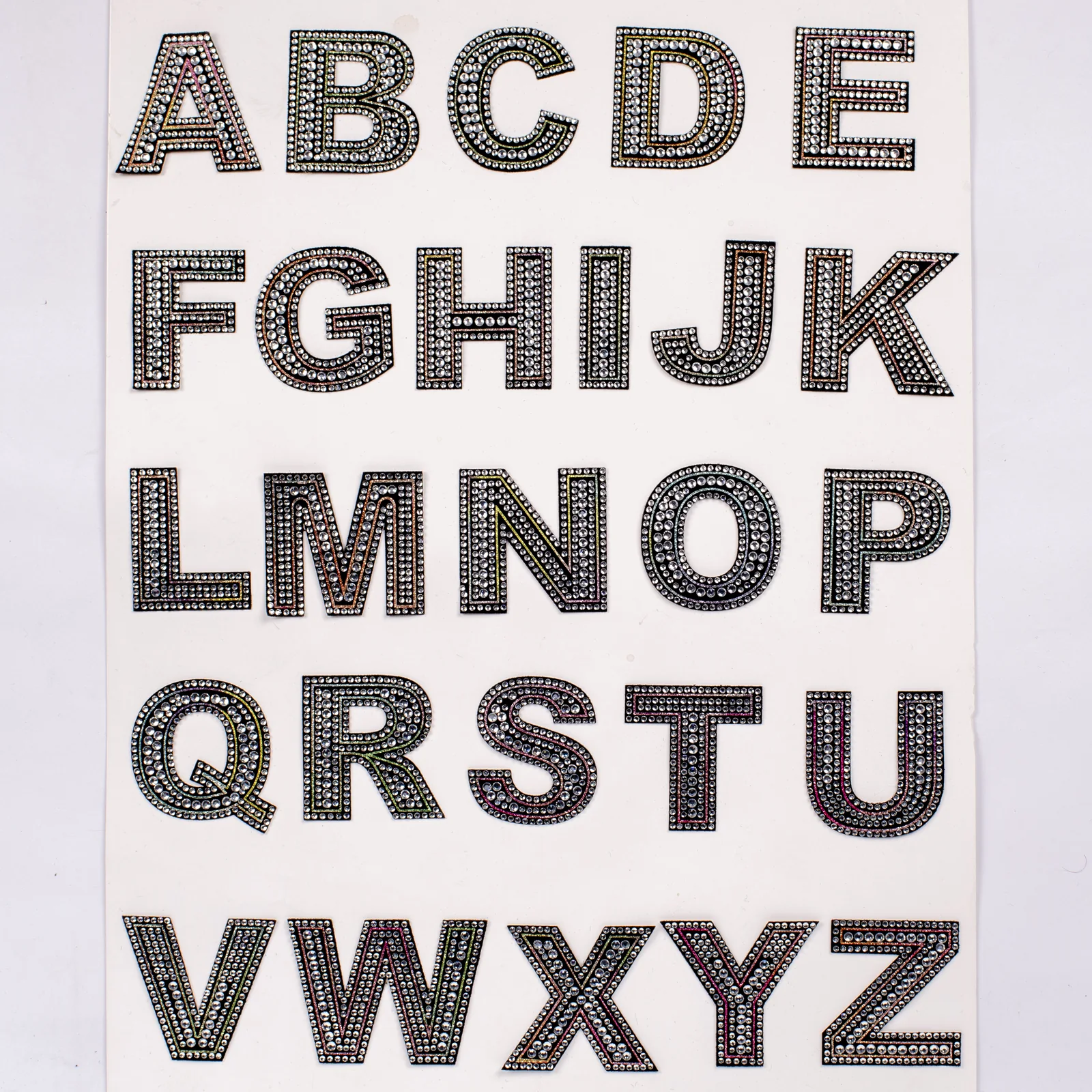
Product 207
Clear round rhinestones on a black textile base, current MOQ 100, with no recorded finished size.
A name program is not one repeated artwork. Count exact outputs, construction changes, colorways, physical sizes and pack destinations before asking how a minimum can be allocated.
The phrase custom name patches no minimum wholesale describes a buyer's desired purchasing model, but it does not prove that such a service is offered. The database references used here record minimums of 50 or 100 pieces. A current quotation must explain what the minimum attaches to: the total project, a construction, a base color, a physical size, an artwork family, an individual name or another production grouping. Write the desired allocation clearly and let the supplier confirm feasibility. This avoids advertising a no-minimum option that has not been evidenced.
An alphabet crystal patch, a sew-on embroidered letter and a crown monogram transfer are not interchangeable. Use the following catalog records as separate sourcing directions, then request current construction, size and allocation in writing.
Clear round rhinestones on a black textile base, current MOQ 100, with no recorded finished size.
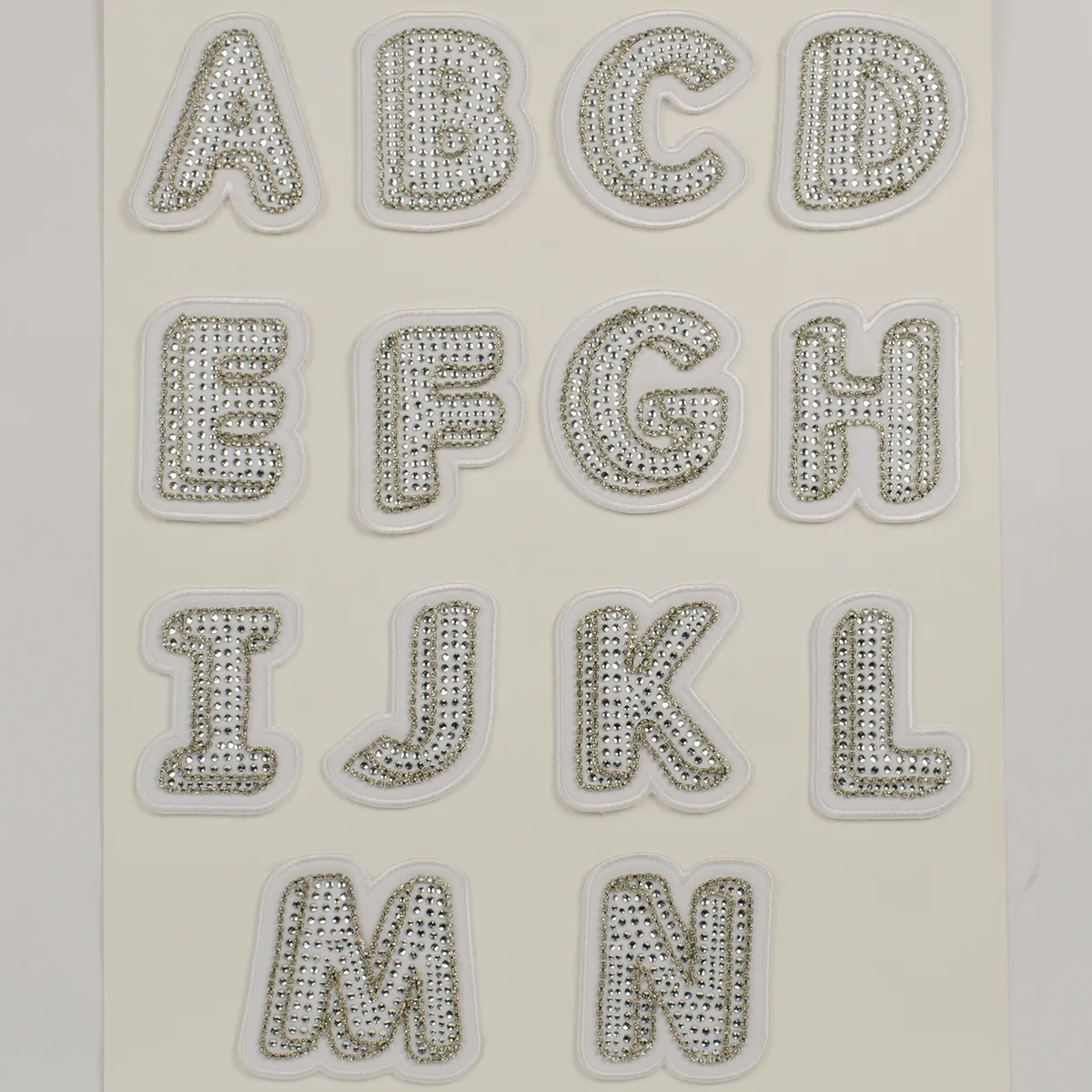
Clear rhinestones with white embroidered textile edging, current MOQ 100, and no recorded finished size.
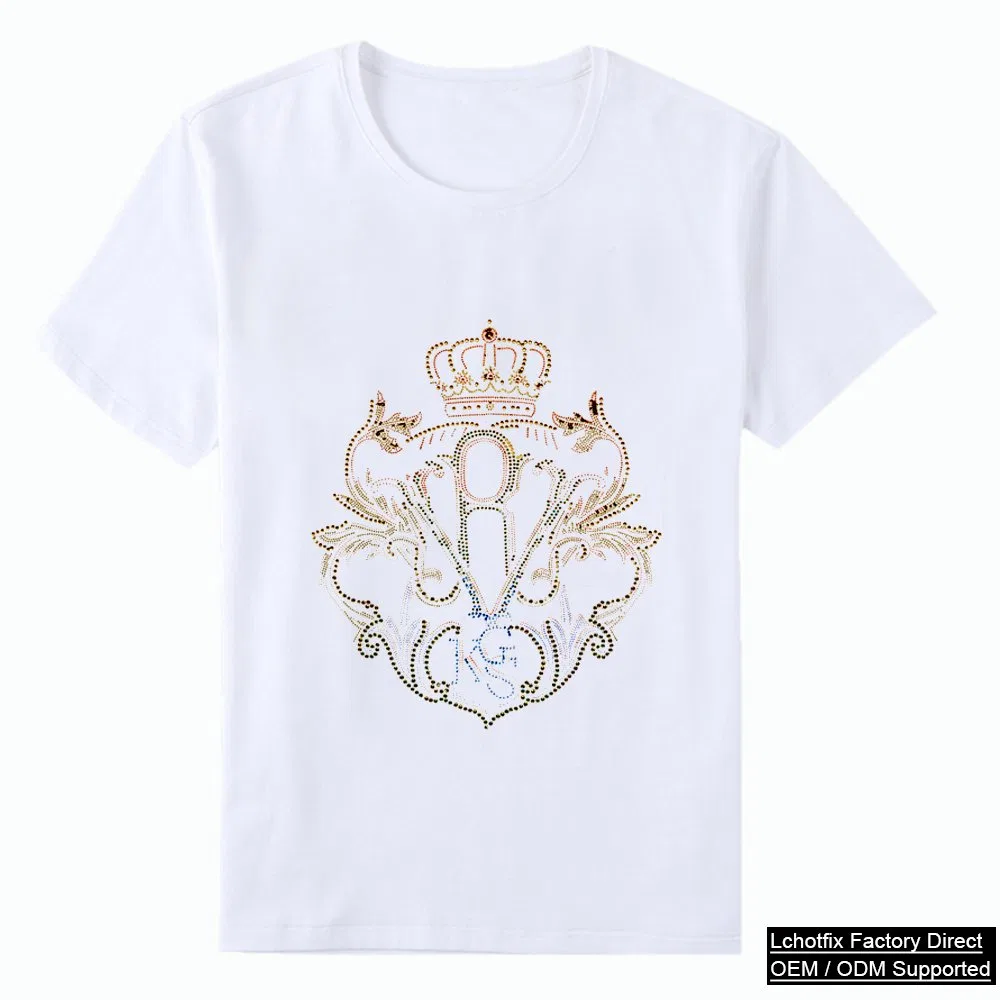
Rhinestones, current MOQ 50 and no recorded size. The record does not prove variable-name production.
Give every requested name or initial a stable row ID. Preserve exact spelling, capitalization, punctuation and accents, then attach construction, size rule, color direction, quantity and destination. Mark drafts and approvals separately. A spreadsheet total is useful only when every row has an accountable status and one revision owner. If the request concerns an embroidered T-shirt badge, identify that format instead of hiding it inside a generic “name patch” label.
Start with the buyer's desired grouping, not an assumed factory rule. Separate the roster by physical construction, material direction, base color and size family. Then ask which variations can share a current minimum. A black textile letter and a white embroidered sew-on letter may belong to different processes even when they spell the same name. Likewise, searches for personalized rhinestone iron on transfers wholesale describe a transfer-led intent that should not be merged automatically with loose alphabet patches.
Loose patch, sew-on letter or quoted heat-transfer format.
One fixed size, a limited size family or separately reviewed outputs.
Face, base, edge and receiving-product contrast directions.
Decorator, store, team, event or fulfillment allocation.
Letter count alone does not determine physical width. Compare narrow and wide characters, repeated letters, punctuation, inner spaces and any crown or frame that remains fixed. Choose a documented size rule, such as a fixed height with a maximum width, and ask whether the selected patch construction can preserve readable counters and consistent spacing. Proof the shortest, a typical and the longest output. Do not infer dimensions for products 207, 212 or 169 because those fields are not recorded.
Check whether initials remain balanced without excessive open space.
Use a common roster length to approve everyday spacing and placement.
Confirm maximum width, line-break policy and readable detail.
Every roster row needs a content proof, while the sample plan should identify representative construction risks. Approve spelling and geometry first. Next review a physical specimen for material, edge, reverse, dimensions and the supplier-confirmed attachment direction. Finally connect the accepted sample revision to every roster group it actually represents. One successful sample does not validate a different base, scale or receiving product. Archive superseded proofs rather than overwriting them.
Roster ID, exact text, version, proof owner and date.
Face, base, edge, reverse, size and representative application evidence.
Approved groups, quantities, allocation answer and packing map.
Define whether patches arrive by character, complete name, recipient, garment kit or destination. The outer label should carry the roster revision and a control total; the inner identity should prevent visually similar names from being confused. Protect crystal faces, embroidered edges and any quoted reverse according to the supplied construction. Keep replacements and spelling corrections in an exception pack so they cannot be mixed into the normal run.
Roster ID, approved output, construction, quantity and destination.
Correction reason, superseded revision, new approval and controlled count.
Send the frozen roster, proposed groups, product references, requested dimensions, receiving product, placement, proof status, quantity totals, packing logic and destinations. Ask Teebling to state which changes create separate minimums and how the current terms apply. The personalized transfer guide covers variable transfer records, the alphabet crystal patch guide covers letter assortments, and the transfer MOQ guide provides a transfer-only quantity framework. Use the badge backing comparison when an embroidery construction needs its own reverse-side decision.
These answers preserve the line between a buyer's requested allocation and the supplier's confirmed production terms.
This page does not claim a no-minimum service. The cited products record minimums of 50 or 100 pieces, and the quotation must state whether a minimum applies to the program, construction, artwork, letter, colorway or another production grouping.
Products 207 and 212 are crystal letter patch references with current MOQ 100 and no recorded finished size. Product 169 is a crown monogram rhinestone heat-transfer patch reference with MOQ 50 and no recorded size.
Submit a roster that identifies every output, construction, size rule, color direction and quantity. Teebling can then confirm which changes create separate production groups instead of the buyer assuming one MOQ rule.
Give each name a stable roster ID, exact spelling, capitalization, punctuation, artwork revision and approval status. The proof owner should release a dated frozen roster before production quantities are reconciled.
Include product references, requested construction, name roster, dimensions, garment or accessory placement, quantities by output, sample plan, packing logic and destinations. Ask for current allocation and commercial terms in writing.