


Fixed layer
Document the crown, frame, brand mark, color palette or other elements intended to remain identical across the program.
Names, initials and variable rhinestone designs multiply the chance of a spelling, scale, quantity or packing error. Connect every requested output to an approved proof, garment placement and destination before treating personalization as one bulk design.
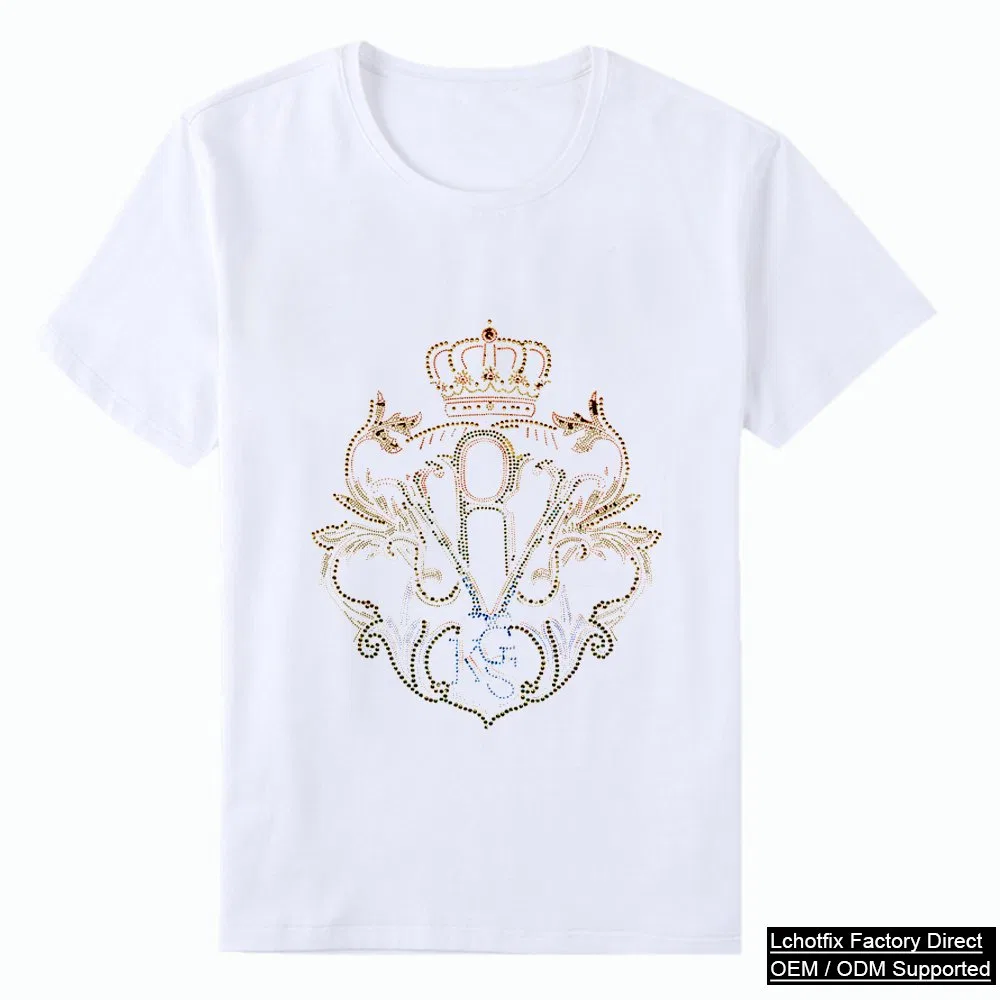
A static logo repeats one approved stone map. A personalized rhinestone iron-on transfer program may change a name, initial, number, title or other authorized field from piece to piece. That difference affects artwork generation, proof ownership, counts, labels and packing even if the underlying construction remains consistent. Begin the inquiry by stating exactly which field changes and which elements stay fixed. Define whether personalization is unique per recipient, repeated by team member, divided by store or limited to a controlled menu. Ask Teebling to confirm the feasible variation method, physical construction and commercial basis. Do not assume that a catalog monogram image proves every name, font, stone size or output can be manufactured.
Document the crown, frame, brand mark, color palette or other elements intended to remain identical across the program.
Name the exact changing field, allowed characters, capitalization, punctuation and who owns final spelling approval.
Connect each output to quantity, receiving item, placement, destination and pack identity before requesting price.
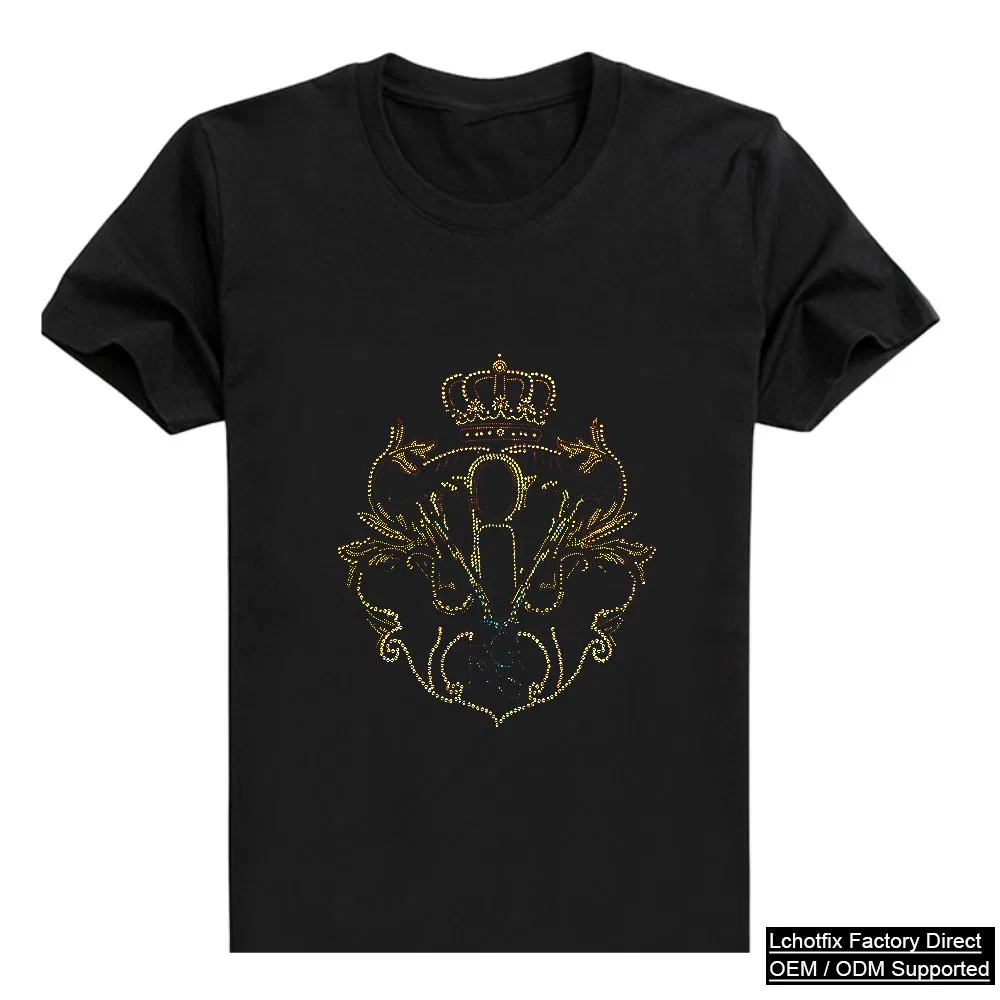
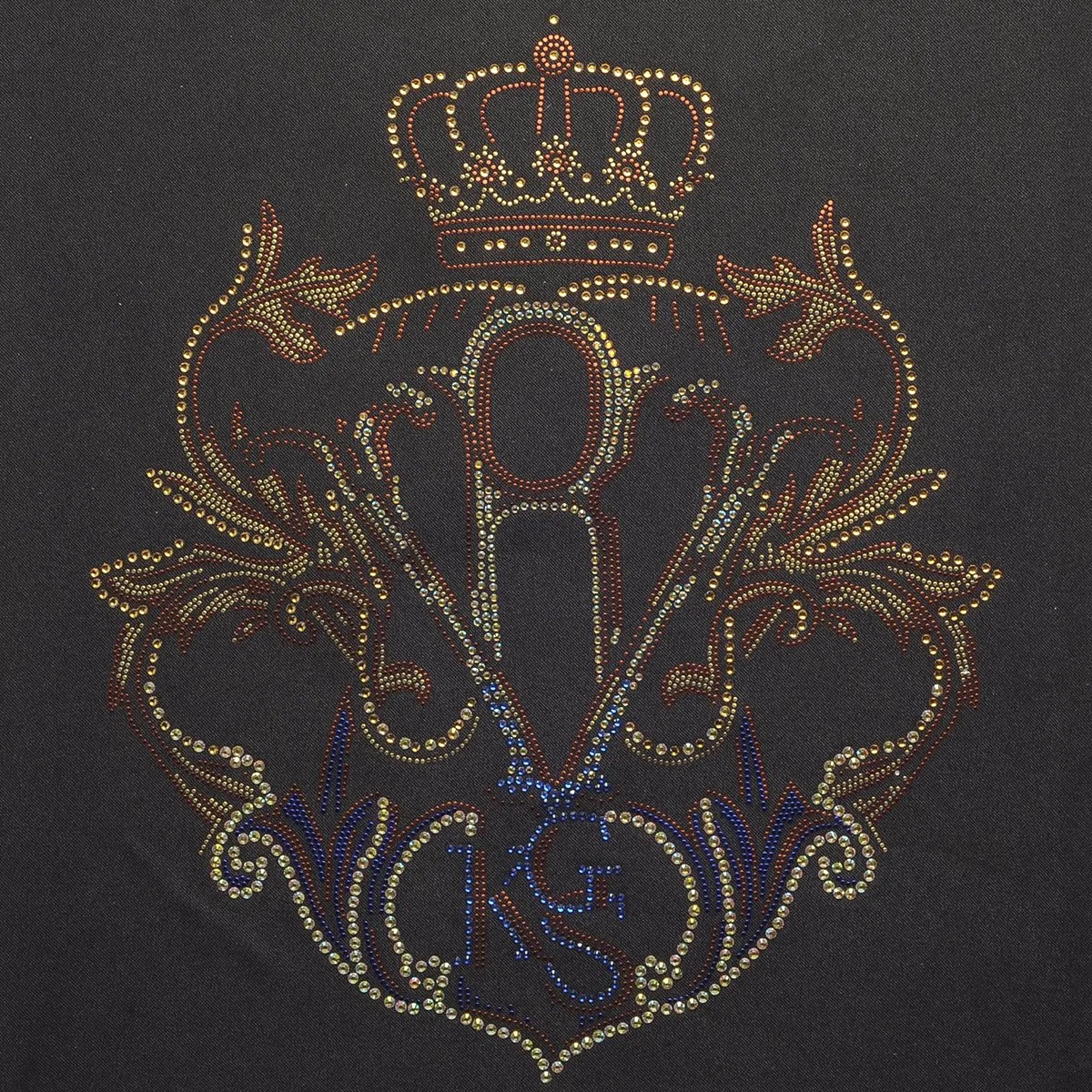
Product 169 is named as a Crown Monogram Rhinestone Heat Transfer Patch for T-Shirts. Its material field records rhinestones, its current minimum order is 50, and no finished size is recorded. Those facts make it a useful reference for discussing a crown-and-monogram direction. They do not state the backing composition, carrier, application settings, font library, name-production method, available colors or how minimum order applies across different outputs. Reference the product number and selected image, identify the feature you want to carry into a personalized program, and ask for written confirmation of feasibility, dimensions, construction, sampling and allocation.
Build a master roster before artwork begins. One row should represent one unique output and retain its identifier through proof, production, packing and receiving. Preserve spelling exactly as approved, including spaces, accents, punctuation and case. Store quantity as a number rather than phrases such as “same as last order.” Add a separate status field so a draft entry cannot be mistaken for an approved design. Restrict editing ownership, date every release and archive superseded versions instead of silently overwriting them. If personal data is involved, collect only what the operational workflow needs and control who receives the final roster.
A spelling can be correct while the final rhinestone map is unsuitable, so each proof needs more than a text check. First confirm the content against the roster. Next inspect character shape, spacing, alignment, crown relationship, finished outline and requested physical size. Then review the proposed stone and base construction at full scale. The approval screen or PDF should show roster ID and revision, not only a decorative image. Assign one accountable approver and record the date. If one output changes, issue a new revision for that output without reopening already approved entries unless the shared construction also changes.
Exact spelling, character order, capitalization, punctuation and authorized recipient or program reference.
Font or lettering direction, spacing, line breaks, maximum width, placement anchors and orientation.
Rhinestone map, visible base if any, edge, reverse, attachment direction and representative physical sample.
Different names do not occupy the same space. A fixed height may cause long outputs to exceed the garment zone, while a fixed width can make short initials appear disproportionately large. Choose a buyer rule, then ask Teebling to review it against the proposed material and minimum readable detail. Useful directions include one fixed height with a maximum width, a small family of approved physical sizes, or a locked width with clearly documented scaling limits. Prove at least the shortest, a representative middle and the longest output. Include narrow and wide characters because letter count alone does not predict physical width.
Check whether two initials remain balanced beside fixed crown or frame elements without oversized spacing.
Use a common-length output to approve everyday appearance, placement and the shared construction direction.
Verify maximum width, readable character shapes, line-break policy and clearance from seams or garment edges.
Request the quoted construction and supplier-directed application in writing. Use the intended shirt or other receiving product, including material, finish, color, placement and representative size. Do not copy a generic iron-on setting or treat the word “patch” as a complete backing specification. Record the equipment, protective arrangement, sequence, cooling or release direction supplied for the item, operator and result. Inspect transfer position, character integrity, stone map, edge or carrier behavior and the receiving surface. Any authorized variation should change one recorded factor at a time and create a new sample identity.
Confirm the complete supplied layers, face, reverse, finished dimensions and representative personalized geometry.
Apply to the exact garment or a genuinely representative panel following the item-specific written direction.
Approve the complete appearance, placement and chosen buyer checks under a dated revision and retained record.
Freeze an approved production roster and calculate totals by unique output, shared style, receiving product and destination. Keep that control total separate from the current minimum order until Teebling confirms how the 50-piece MOQ for product 169 relates to the requested personalized scope. The final commercial offer may organize variants differently, so submit the desired allocation rather than claiming it is available. For packing, place the roster ID, approved output, revision, quantity and destination on the unit or controlled inner pack. A recipient name alone may not be enough when two people share the same name or privacy rules limit visible labeling.
Approved rows plus quantities must equal the requested purchase total and every destination subtotal before release.
One unique design, stable ID, revision and controlled count; keep visually similar outputs separated.
Group by factory, event, team, store or fulfillment point and preserve the mapping back to the source roster.
Quarantine replacements, corrected spellings and overage under separate status so they cannot enter the normal dispatch unnoticed.
Reference product 169 only as the desired crown-monogram or rhinestone patch direction. Attach the authorized fixed artwork, controlled roster, width rule, placement drawing, receiving-product specification, physical sample request, quantity reconciliation, packing map and destination plan. Ask Teebling to confirm variable-output feasibility, recorded and requested dimensions, quoted construction, attachment direction, proof process, MOQ allocation and current commercial terms. Use the rhinestone number and letter transfer guide for character-set planning, the custom rhinestone logo transfer guide for the fixed brand layer, and the rhinestone transfer artwork file guide for source-file preparation. Keep those scopes distinct so the personalized roster remains the authority for variable outputs.
These answers protect the boundary between a recorded catalog reference and a feasible variable-data order. The approved roster, proofs, physical sample and written quotation remain the controlling documents.
For personalized rhinestone iron on transfers wholesale, Product 169 is only a crown monogram visual reference with a current minimum order of 50 and no recorded finished size. Each name, initial or variable-data program requires a separate feasibility review and written quotation.
Personalization adds a roster, individual proofs, version counts and pack identification to the common construction and application decisions. Give every unique output a stable ID, exact approved spelling, artwork code, quantity, placement, size rule, destination and approval status.
Rhinestone iron-on transfers for T-shirts need a documented sizing rule such as fixed height, maximum width or a limited approved size family. Ask Teebling to confirm feasibility, then proof short, medium and long cases because width and spacing change.
A representative sample can validate a defined construction and application pair, but it does not automatically validate every spelling or geometry. Use artwork proofs for every output and physical samples for the risk cases agreed in the approval plan.
For bling iron-on transfers wholesale orders, link each transfer or controlled set to the roster ID, approved text, revision, quantity, size rule and destination. Keep recipients, teams or stores separated so application staff never identify designs by sight.