


Alphabet set
Identify case, accents and punctuation. Check wide, narrow, curved and diagonal letters rather than approving only a visually easy character.
Build alphabets, numbers, initials and roster graphics as one controlled character system. Teebling helps buyers define the type style, finished scales, row logic, character demand, receiving product and sorting brief needed to review a wholesale number-and-letter transfer request.
Define the complete usable set before approving a favorite letter. An alphabet for initials, a numeric roster and a merchandise phrase library have different requirements. List uppercase, lowercase, numerals, punctuation and symbols separately, then remove characters the actual program will not use.
Identify case, accents and punctuation. Check wide, narrow, curved and diagonal letters rather than approving only a visually easy character.
Confirm whether single digits, paired numbers or fixed team-number combinations are needed and how they align.
Define one-, two- or three-character arrangements, spacing rules and the treatment of repeated letters.
List every approved symbol explicitly. Do not assume punctuation or language-specific characters are part of the base artwork.
A typeface must remain recognizable after its strokes become spaced stones or another approved rhinestone arrangement. Review the authorized type artwork at finished size and protect the features that distinguish similar characters. Small serifs, sharp terminals and thin joins may require controlled adjustment.
Prioritizes clear strokes and open counters. Define corner treatment and spacing instead of assuming every block font maps the same way.
Requires careful joins, entry strokes and separation. Approve representative pairs so connected forms do not become ambiguous.
Distinctive outlines may work at a larger scale. Retain only the decorative features that survive the mapped-stone proof.
Create sizes from real placement zones, not from arbitrary enlargement percentages. Measure the available area on each garment or product, define a consistent cap height or overall box and decide whether width varies naturally by character. Every approved scale should have its own proof.
For initials or small accessory placements, test counters, spacing and individual character recognition at one-to-one scale.
For chest, sleeve or merchandise layouts, review the complete word or number group on the shaped product.
For larger back or event placements, confirm equipment fit, carrier handling and consistent alignment across product sizes.
Map strokes with a consistent visual logic, then inspect the hard characters. The open centers of A, B, D, O, P, Q, R, 0, 6, 8 and 9 need enough space to remain distinct. Diagonals and curves should feel related to straight strokes without forcing identical spacing where geometry differs.
Do not publish a fixed stone count before the artwork and selected stone direction are confirmed. The approved mapped proof should show every coordinate, the outside dimensions and the relation between adjacent rows. Retain this map with the character-system revision.
Normalize names and numbers before asking for production. One row should represent one required output, with spelling, case, number, garment or product identifier, size or placement version, quantity and any exception. Freeze the approved roster revision and route later changes through a visible correction log.
FIELD 01Exact spelling, case, punctuation and number as it should appear.
FIELD 02Receiving garment or merchandise line tied to the correct placement.
FIELD 03Approved character height or artwork-box code for that product.
FIELD 04Units required for the exact roster line, including approved replacements.
FIELD 05Submitted, checked, approved or changed with a named revision.
Convert the roster into individual character totals when transfers will be supplied loose or sorted by symbol. Count repeated letters and numbers, separate scale and color versions, and retain the calculation. A small approved contingency can be requested, but it should be explicit rather than hidden in rounded totals.
Cross-check the ledger against the roster total and intended grouping. If Teebling is asked to collate player, name or word sets, define that service separately and confirm its availability in the quote.
Quantity from approved roster plus any stated replacement allowance.
Keep visually similar size versions in separate identified lines.
Count punctuation and separators rather than assuming they accompany letters.
Reconcile character totals with complete output sets and order quantities.
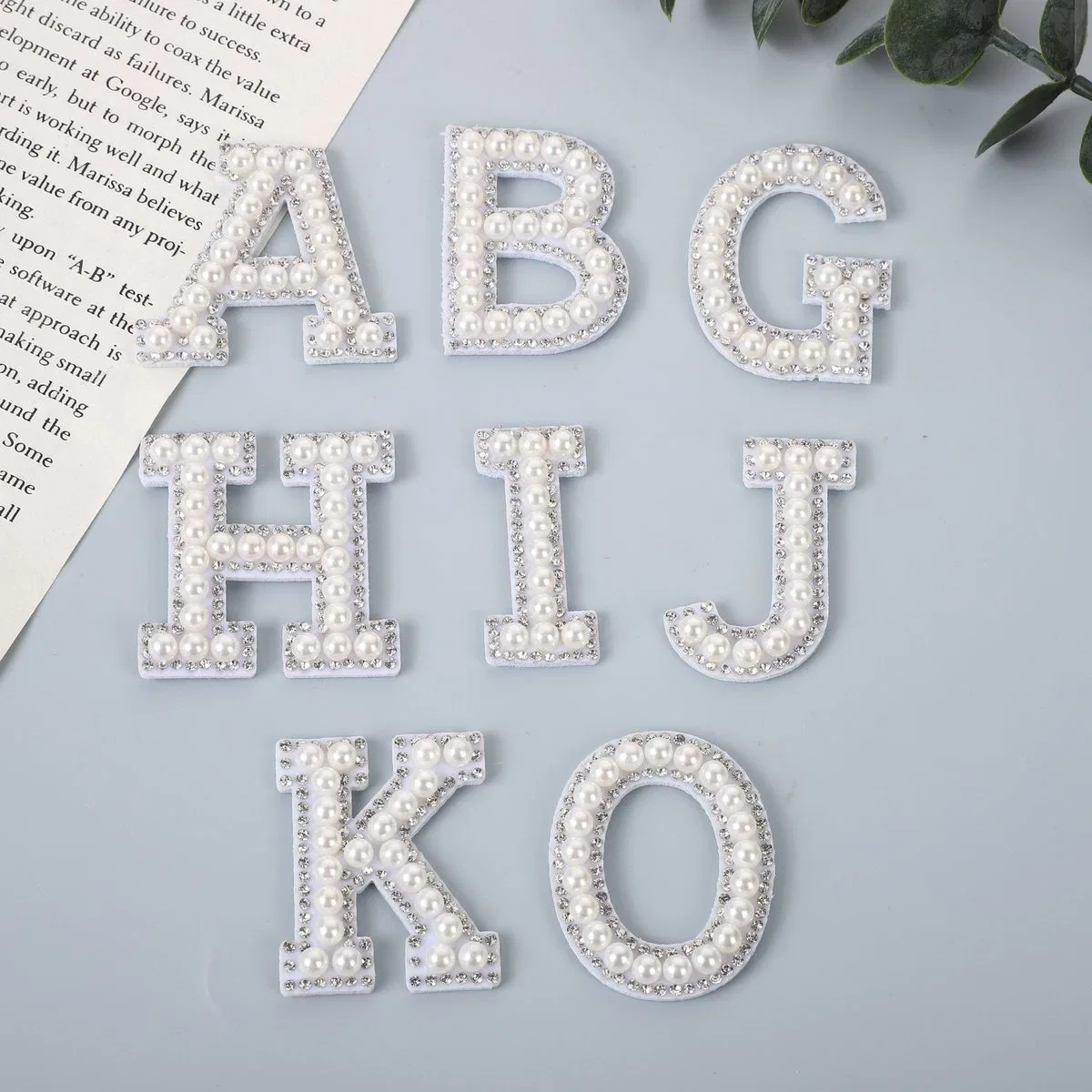
Choose a test string or set that exposes the system’s difficult geometry: a wide letter, narrow letter, curve, diagonal, enclosed counter, repeated pair and relevant numeral. Review those characters individually and as a real word or roster number.
Approve finished dimensions, baseline, spacing, row behavior, carrier orientation and the application on the intended receiving product. Record the selected stone and color direction as quoted without assuming a material identity from screen appearance.
Packaging should reduce misidentification at the next step. Decide whether the buyer needs character bins, alphabet packs, roster sets, word sets or ordinary item bundles. State who performs final assembly and how every pack maps back to the approved ledger.
Separate symbol, size and color versions with a readable item code and count. This supports local personalization from loose inventory.
Request one identified set per name or number only when custom collation is part of the quoted scope.
Group outputs by garment style, team or event when that structure helps application and receiving control.
These answers help buyers prepare variable data without assuming font conversion, character coverage or custom sorting.
Provide the authorized type artwork or selected character reference, finished size by use, stone and color direction, complete character set, quantity for each character or roster line, receiving product, placement, packing rules and destination.
Font conversion needs a physical-scale review first. Thin strokes, small counters, close joins and complex serifs may need adjustment at the finished size. Teebling can review authorized artwork, and the approved mapped-character proof should govern the final system.
A named roster is useful for assembled personalization, while a character ledger is useful for loose sorted transfers. State who performs sorting or application and provide both views when possible so totals can be cross-checked.
Choose a representative set that includes wide, narrow, curved, diagonal and enclosed characters relevant to the program. Review finished size, row logic, counters, baseline and the selected receiving product before approving the full system.
Describe the required grouping, identifier, sequence, inner quantity and responsibility for roster assembly. Teebling can confirm applicable sorting and packing options for the quoted order; do not assume custom collation from a catalog image.
Send authorized type artwork, character inventory, finished sizes, stone and color direction, roster or character ledger, receiving product, sample requirements, sorting brief, quantity and destination. Teebling will review the actual system and quote the confirmed scope.