


Face frame
Full badge, color, embroidery fields and visible base under named lighting.
A wash result is meaningful only when the badge, garment, attachment, care inputs and checkpoint are traceable. Build the protocol before exposure and keep every conclusion inside the tested scope.
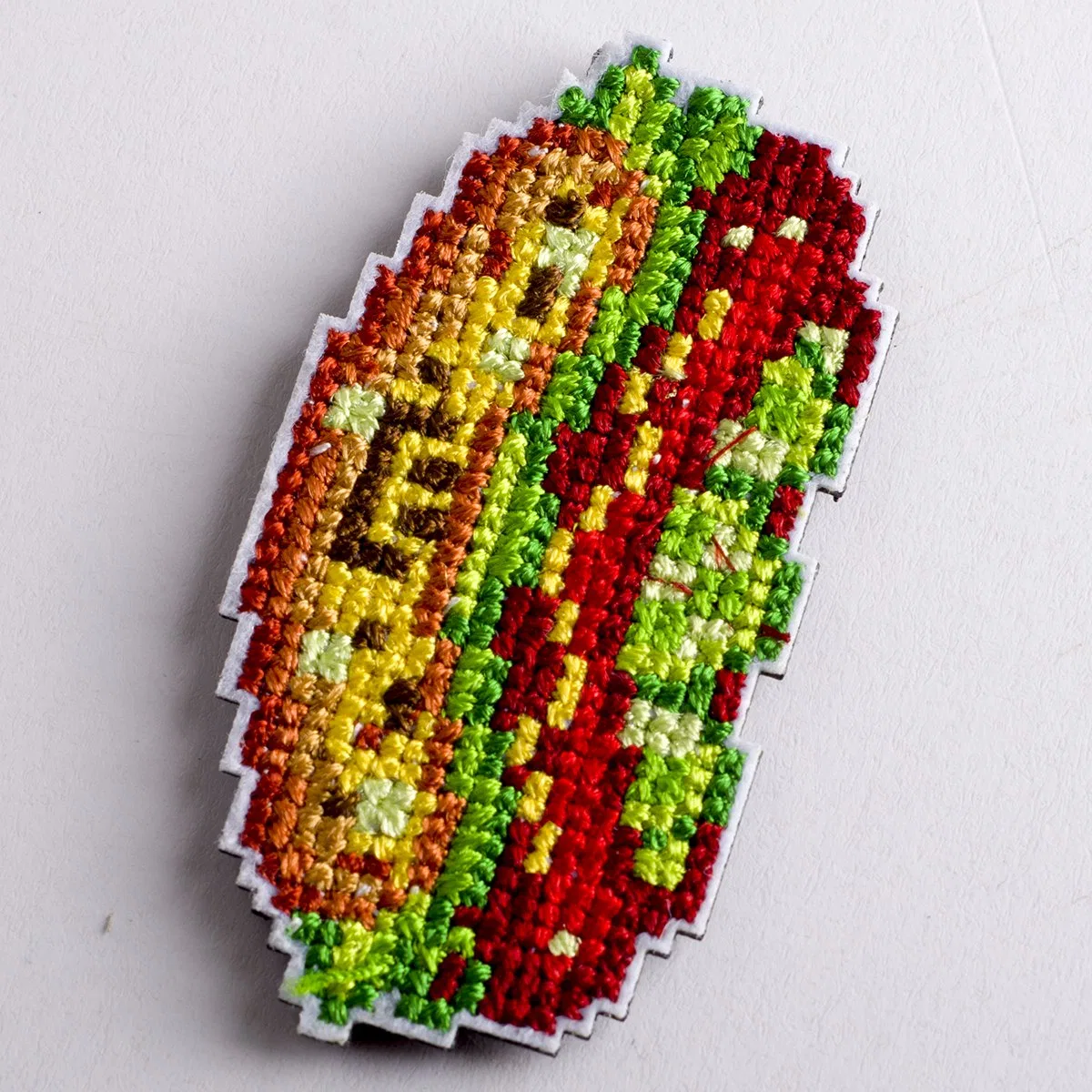
An embroidered T-shirt badge heat seal test cannot be identified by artwork name alone. Assign a test code to the badge sample, production or sample lot, artwork revision, dimensions, construction statement and quoted reverse. Pair it with the receiving garment style, color, size, fiber statement, placement and application instruction revision. Record who performed the application, which equipment was used and the actual process inputs. If the supplier uses heat-seal terminology, preserve its exact wording; do not infer adhesive chemistry or settings from the phrase. Photograph the unopened sample, face, reverse and garment before application.
Database item TB-2FEE31D63C73 is Product 12: its recorded construction is thread, its reference size is 5 × 6 cm, and its MOQ is 100. Product 16 records thread embroidery, 2.3 × 2.5 inches, MOQ 100 and item code TB-65DA4FC5D5C9; its product name includes iron-on wording. Neither database record supplies a wash protocol, cycle result, adhesive chemistry, low-melt classification or universal application setting. The images below are relevant construction references, not before-and-after test proof. A valid baseline must document the specific applied specimen used in the project.
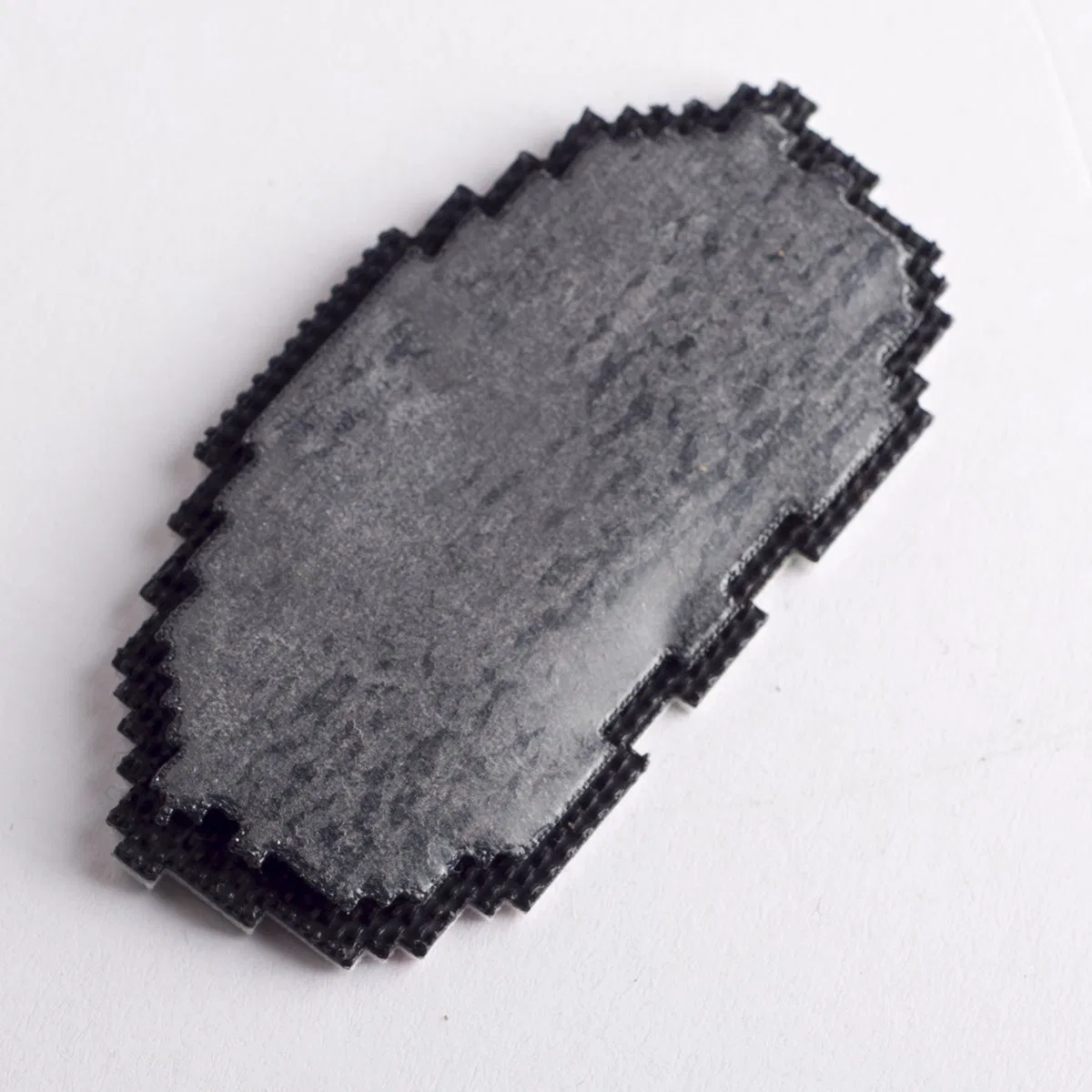
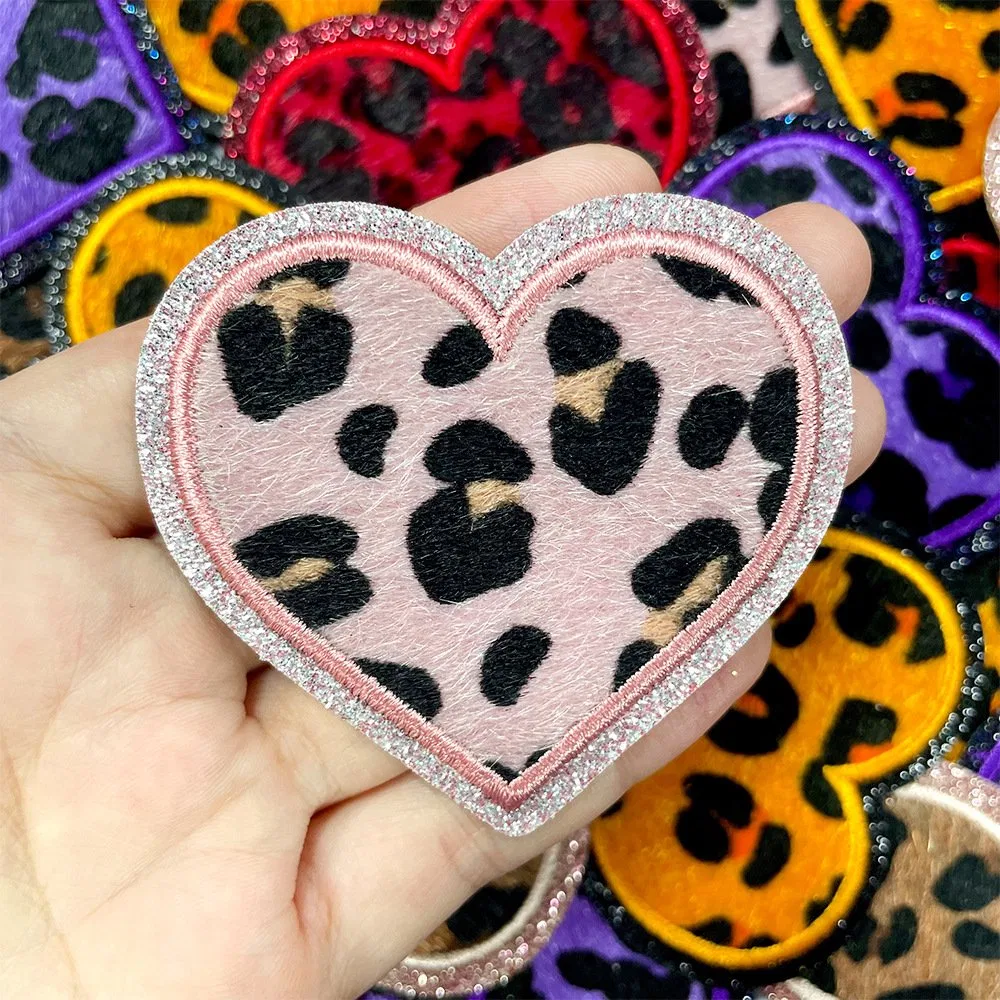
Condition specimens according to the buyer's documented plan, then photograph the garment flat under repeatable lighting. Include an overall placement view, close face view, each edge, corners and surrounding fabric. Measure badge width and height using one stated method. Record placement distances from stable garment landmarks. Note baseline puckering, color variation, loose threads, edge gaps, surface marks or misalignment without deciding that a catalog image represents the sample. Prepare an untested retention specimen where the plan allows. That control helps reviewers distinguish changes from features that were present at the start.
Full badge, color, embroidery fields and visible base under named lighting.
Each side and corner photographed close enough to compare later.
Placement, surrounding surface, seams and any pre-existing distortion.
Method, tool, values, operator and units recorded with the specimen code.
Define the evaluation purpose, care-label relationship, equipment, load composition, detergent, water or process setting, cycle selection, drying method, conditioning interval and checkpoint schedule according to the buyer's requirement and any applicable qualified guidance. This page does not prescribe values because a universal recipe would be unsupported. Record actual inputs and any deviation during the run. If the request uses embroidered garment badge low melt or embroidered garment badge sticky, treat those as unresolved search terms until the supplier provides a construction statement; they do not alter the protocol by themselves.
Approve the written sequence, acceptance rules and deviation handling before exposure.
Record equipment, load, actual settings, timing, operator and unexpected events.
State when and how specimens are prepared for each observation checkpoint.
Recreate the baseline views using the same garment orientation, lighting, camera position and scale reference as closely as practical. Compare the face, all edges, corners and surrounding textile. Record observations without vague pass language: location, extent, direction and image reference are more useful. If measurement is repeated, use the same method and document uncertainty. Do not crop away the garment context. An embroidery heat transfer label inquiry can involve different edges and reverses, so its test file must retain the exact sampled construction rather than borrowing Product 12's identity.
An unexposed badge can help identify original color, edge and embroidery features, while an applied but unwashed control can help separate application observations from care exposure. The exact control design depends on the project's question. Label every control so it cannot enter sellable stock or be confused with a tested specimen. Record machine interruptions, load changes, accidental delays, photography changes or other departures from the protocol. A deviation does not automatically invalidate a result, but it must be considered by the named reviewer. Never omit an inconvenient event to preserve a preferred conclusion.
Unapplied component, applied control, garment control or other defined comparison specimens with stable IDs.
Event description, affected checkpoint, immediate action, reviewer assessment and disposition.
Compile the baseline, protocol, run logs, checkpoint images, measurements, observations and deviations. The reviewer can mark accepted, revise, reject or further testing, but the conclusion must name the badge, garment, application and protocol it covers. Separate visual change, edge change and attachment observations instead of issuing an unexplained overall score. Link production release to the accepted specimen code. Use private-label accessory sample approval for preproduction control, the backing comparison to frame reverse questions, and the embroidered heat-transfer badge guide for quotation details.
“This decision applies only to the identified badge, garment, application record and care protocol through the stated checkpoint; any changed variable requires review.”
SCOPE RECORDEDThese answers keep the embroidered T-shirt badge heat seal request tied to a named specimen, garment, process and protocol.
No. It provides a project-specific observation framework. A result applies only to the coded badge, garment, attachment, care protocol, equipment and evaluation interval that were documented.
Record badge and garment identities, artwork revision, construction wording, dimensions, placement, attachment instructions, actual application inputs, conditioning, baseline photographs, measurements and pre-existing observations.
No. The phrases embroidered garment badge low melt and embroidered garment badge sticky are treated as buyer search language. The referenced records do not provide an adhesive chemistry, melt classification or universal application setting.
The buyer should define a protocol that reflects the project requirement and any applicable qualified guidance. This page does not prescribe a universal cycle count, temperature, detergent, drying method or acceptance limit.
Link the disposition to the specimen code, garment, protocol revision, checkpoint images, measurements, observations and named reviewers. State accepted, revise, reject or further testing, and limit the conclusion to the tested combination.