


Textile bank
Embroidery, fabric bases, borders and sewn interfaces.
Route every requested component through a named capability bank. The collection is sourceable only when process ownership, material identity, sample evidence, inspection and logistics can be traced for each construction.

Before evaluating a garment accessories manufacturer, list every component the collection needs: patch, label, trim, bow, transfer, hardware, bag element or other defined accessory. Give each line buyer SKU, function, receiving product, placement, dimensions, material direction, artwork status, quantities, destinations and requested date. Separate a catalog reference from a custom development. Mark the attributes that are fixed and those requiring technical review. A supplier should answer line by line; one broad “yes” cannot establish capability across unrelated materials or attachment routes.
Embroidery, fabric bases, borders and sewn interfaces.
TPU, silicone or rubber directions requiring explicit construction review.
Ribbon, rhinestone, trim and multi-component assemblies.
Quoted reverse, receiving material and validated application route.
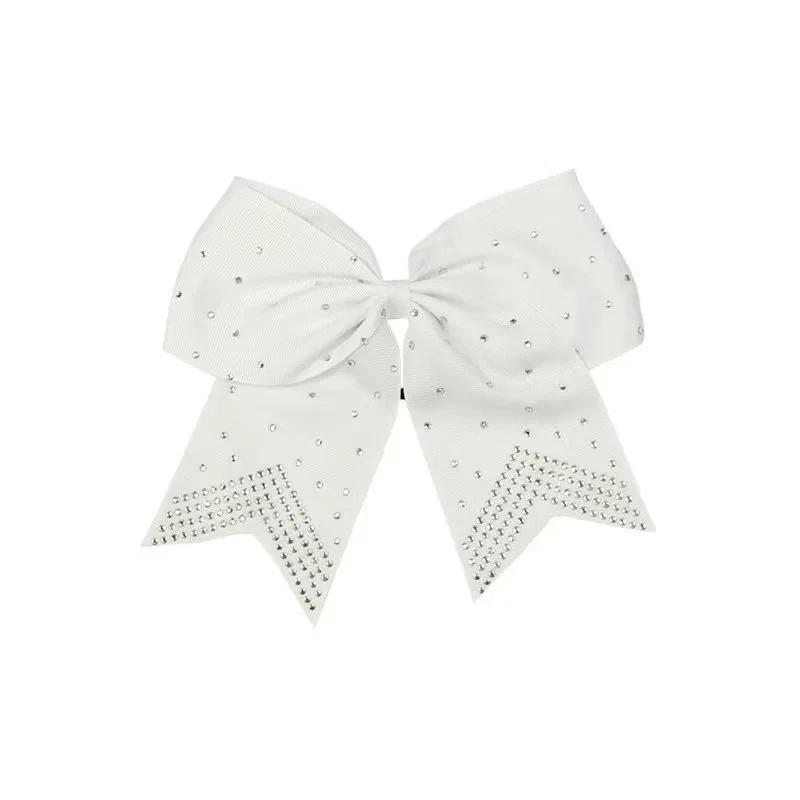
Product 8 is a custom-size embroidery-thread patch reference with a 100-piece minimum. Product 35 records TPU, 7.5 cm, MOQ 100 and DG-ZK-001; its row does not establish an attachment method. Product 38 records rhinestone and ribbon, 6.88 by 7.08 inches, MOQ 100 and DYHH-KB-003. These are three product directions, not evidence that one facility owns all machinery or processes.

For each construction line, map artwork preparation, material purchasing, component formation, decoration, attachment, finishing, inspection and packing. Record the legal entity and physical location responsible. If an external partner performs a step, ask how it is selected, instructed, monitored and accepted. Identify who controls changes and who carries nonconformance responsibility. A private label accessories factory can coordinate external processes transparently; consolidation becomes risky only when ownership is hidden or return evidence is weak. Use the factory audit guide for deeper site questions.
Ask for equipment or tooling evidence relevant to material, dimensions, detail, volume and finish. Record asset type, working range, software or tool revision when important, maintenance status and trained operator availability. A photograph of equipment does not demonstrate that it can produce the proposed accessory. Review a recent comparable work order and its output. For external operations, request equivalent capability information and acceptance controls. The raised-logo comparison helps distinguish TPU, silicone and rubber questions, while final feasibility belongs to supplier review and physical samples.
| Capability claim | Required evidence | Limit to record |
|---|---|---|
| Construction | Comparable product and process route | Material, size and detail envelope |
| Capacity | Planned load and staffing basis | Dates and assumptions |
| Special process | Tool, instruction and qualified owner | External handoff if applicable |
List the material attributes that matter to each custom clothing accessories line and ask how the manufacturer translates them into purchase requirements. Review receiving identification, acceptance status, storage location, issue record and substitution control. Follow one selected batch into the work order when the site's system permits. Similar colors or surfaces should not be treated as interchangeable without authorization. Ask how supplier changes are communicated and whether samples or tests must be repeated. Do not invent shelf conditions, certifications or material performance; request the records applicable to the quoted inputs.
Material name, source requirement and approved attributes.
Identity, condition, quantity and acceptance state.
Connection between input and production order.
Authorized review before substitution or new source use.
Define sample stage, purpose, product identity, artwork revision, materials, dimensions, receiving product and pack scope. Mark high-risk windows: small detail, narrow joins, color transitions, edge, hardware connection or attachment interface. Approve physical evidence through a numbered decision and state represented variants. When a change affects tooling, material, dimensions or receiving use, ask whether resampling is required. The manufacturer should explain how the approved sample becomes a controlled production reference. An attractive prototype without a revision chain is weak evidence for repeat private label clothing accessories.
The sample approval checklist supplies additional control prompts.
Ask the supplier to show how product identity, sampling basis, characteristic, method, result, reviewer and disposition appear in one inspection trail. Confirm that approved visual references and measurement boundaries are available to the people making decisions. Review how nonconforming units are identified, separated, counted and resolved. Select a past issue and trace containment, cause analysis, corrective action and effectiveness review. Record customer complaint ownership. Capability includes the ability to detect and manage failure, not merely the ability to produce a good display sample.
| Quality bank | Question | Evidence output |
|---|---|---|
| Incoming | How is supplied material accepted? | Status and receiving record |
| In process | Where can a defect be contained earliest? | Check and affected quantity |
| Final | Who releases the packed line? | Signed result and disposition |
Map where separately made accessories converge, who reconciles quantities and how late or rejected components are handled. Specify unit protection, inner identity, assortment, carton marks, destination splits and document ownership for every line. Review the facility's ability to keep look-alike SKUs separate and to preserve lot or batch identity through partial packs. Ask for current schedule and capacity assumptions rather than accepting a generic promise. The garment accessory supplier guide and embroidered patch guide help prepare category-specific follow-ups.
Construction scope, owner map, equipment evidence, material controls, approved sample, quality route, pack plan, limits, open actions and review date form one decision packet.
These answers turn broad capability language into product-specific evidence and declared ownership.
It connects each requested construction to named people, equipment, process ownership, material controls, samples, inspection records and external handoffs. It does not certify unobserved capability.
Possibly, but the supplier must describe which operations it performs, which it sources externally and how it controls every transition for the proposed collection.
Product 8 supplies an embroidery-thread patch direction, Product 35 supplies a TPU badge direction, and Product 38 supplies a rhinestone-and-ribbon clothing accessory direction. The database assigns a 100-piece minimum to all three rows.
Record provider identity, qualification, outgoing specifications, transport control, returned-work acceptance, nonconformance responsibility and change communication.
Only after the buyer links it to observed or documented evidence, states its limits, names the applicable product family and assigns a review trigger.