


“Sticker” request
Clarify whether this means a flexible logo, printed film, raised mark or merely a carrier-backed decoration. Record expected hand, relief, outline and permanence without assigning an undocumented material.
“Sticker” and “patch” are request words, not complete specifications. Sort the visible decoration, carrier or liner, edge profile, relief, reverse and receiving garment before Teebling prices a T-shirt sticker patch program.
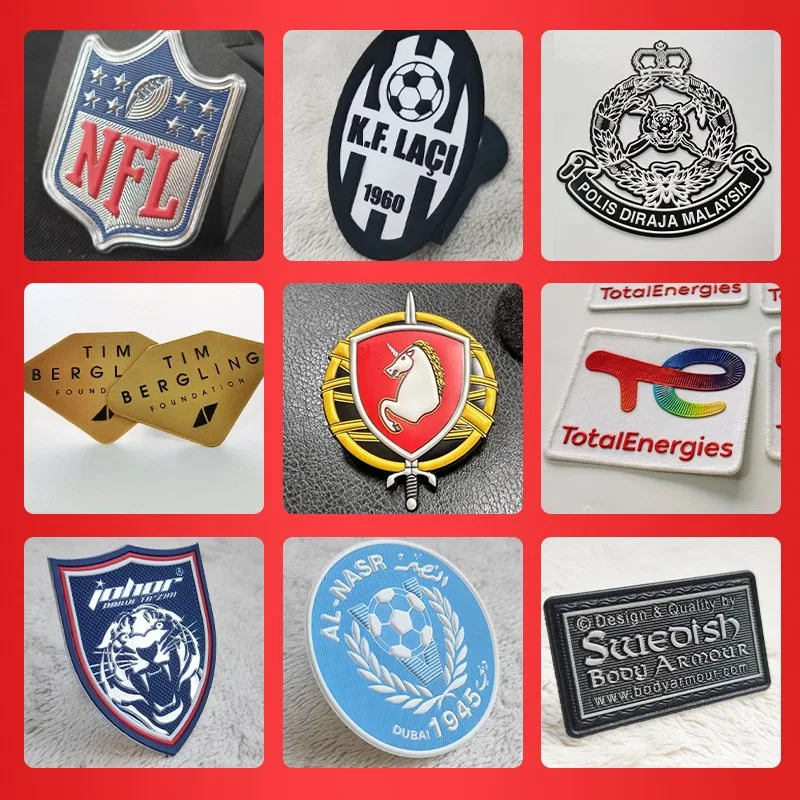
A request for iron on stickers for clothes custom wholesale might describe a thin logo element on a release carrier, while another buyer uses the same words for a shaped textile component. Neither interpretation should be assumed. Ask what the customer expects to see and feel after application, whether a border is visible, and which temporary layers should be removed.
Clarify whether this means a flexible logo, printed film, raised mark or merely a carrier-backed decoration. Record expected hand, relief, outline and permanence without assigning an undocumented material.
Ask whether the desired component has a fabric, felt, TPU, silicone or other confirmed body. Define cut edge, thickness and reverse rather than treating every patch as sew-on.
Identify what travels on the carrier and what remains on the garment. A transfer may consist of separated elements rather than one contiguous patch body.
Draw a cross-section from the visible face to the garment. Mark each layer as present before application, present after application, or removed during the process. This simple diagram prevents carrier terminology from being substituted for the visible decoration and exposes missing questions before sampling.
Describe material wording supplied for the exact product, color zones, relief, surface finish, outline and finished dimensions. Do not infer composition from appearance.
Request a labeled back view and supplier-confirmed method. The intended route may affect edge geometry, garment choice and the trial sequence.
State whether a carrier or liner is supplied, how it is oriented and when it is removed. “PET film for clothing stickers” is a search phrase, not proof that a particular catalog item includes PET.
Record fiber content, knit or weave, finish, texture, color, stretch, thickness and placement access for the representative production item.
Record 47 states TPU and PU, 6 by 8 cm and MOQ 100. Record 44 states TPU and silicone, 5 by 3 cm and MOQ 100. Record 168 states fabric, rhinestones and holographic crystal with MOQ 50, while its size field is blank. These facts support comparison; they do not make the constructions interchangeable.
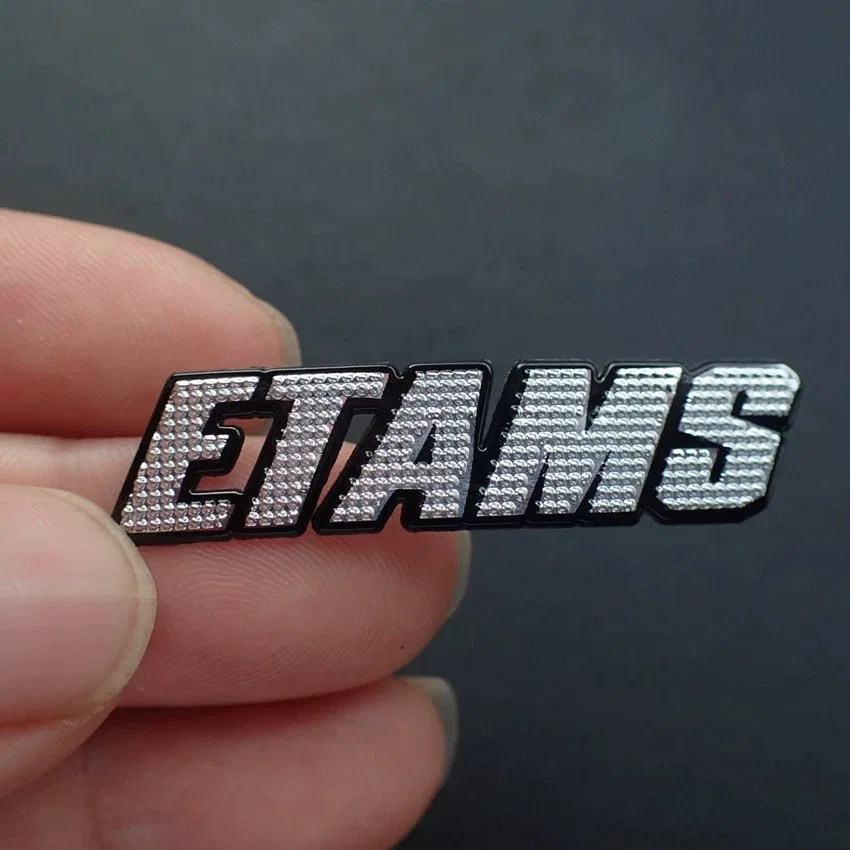
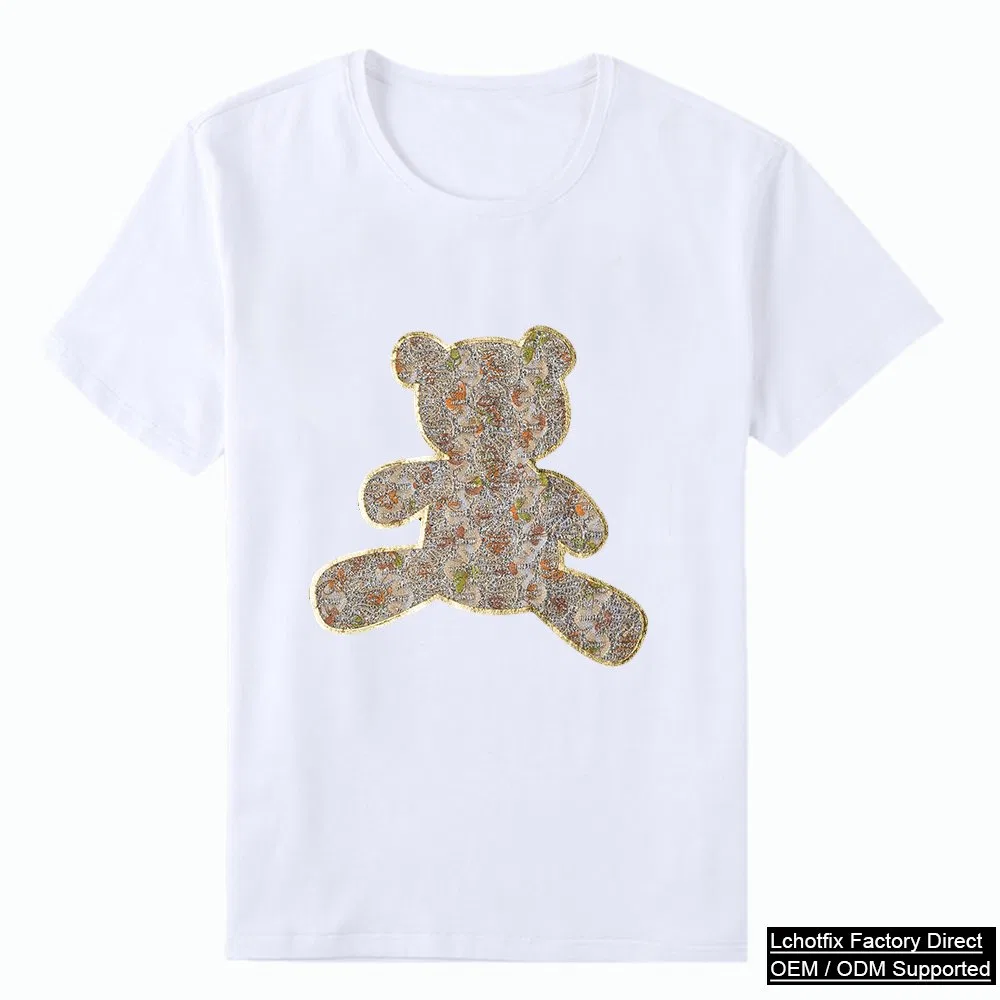
A contiguous logo body, separated transfer elements and a laser-cut textile shape demand different production questions. Submit editable source artwork when available, a full-color visual, physical dimensions, color labels and a placement mockup. Ask the supplier to identify manufacturability limits for the chosen process instead of importing limits from another component family.
Mark the intended perimeter and whether open internal spaces remain garment-visible. For a patch, show the desired border; for separated elements, show the complete carrier boundary.
Use a labeled elevation drawing when raised or recessed zones matter. Do not communicate height only through shadows in a rendering.
Assign one code to the art, size and construction proposal. Any material, edge or layer change should create a traceable revision before approval.
Supplier instructions, production equipment and receiving textile belong in one trial record. Do not transfer settings from a TPU heat transfer sticker to a fabric patch, or from one garment finish to another. Preserve the complete sequence and inspect the result only after the specified release or cooling step has been completed.
Verify SKU or revision, dimensions, face, reverse, carrier and garment lot before processing.
Document platen access, placement, protective layers and supplier direction for the exact sample.
Record equipment, operator and complete sequence without silently adjusting an approved test.
Photograph face, edge, surrounding textile and reverse where accessible; report facts rather than a broad durability promise.
Reviewers should handle the sample and look at the profile, not only the face. A thin contiguous logo can still have defined relief; a fabric patch can have a pronounced cut edge; a separated transfer may leave garment visible between elements. Record these observations in neutral language and compare them with the approved specification.
When attachment performance matters, apply the buyer's documented evaluation protocol to representative units. The page establishes no universal wash count, stretch limit or service life. Any acceptance statement should name the tested component, garment, process and evaluation window.
State the project code, visible construction, supplied temporary layers, finished dimensions, colors, relief, edge, reverse, intended attachment, receiving product, quantities by variant, sample requirement and packing label. Ask Teebling to repeat those fields in the quotation so both parties can identify the same build.
For a carrier-versus-visible-layer investigation, use the PU film and PET carrier terminology guide. For dimensional components, compare TPU patch attachment methods. For fabric-and-crystal constructions, continue to laser-cut rhinestone heat transfer patches. These pages answer different specification questions rather than serving as interchangeable names.
Use these answers to remove ambiguous nouns before artwork, application trials and commercial terms are approved.
No. The phrase can refer to different visible decorations, carriers and attachment systems. A quote request should describe the finished component, reverse, edge, garment and intended application rather than relying on that nickname.
No. Record 47 states TPU and PU, a 6 by 8 cm reference size and a recorded MOQ of 100. PET is not confirmed as its material or carrier, so any PET role must be identified in writing by the supplier for the exact quote.
Request a front view, edge profile, reverse view, any removable carrier or liner, written material description and application direction. A representative garment sample then shows how the quoted component behaves in context.
No universal setting is established here. Follow the supplier direction for the exact SKU and run a controlled trial with the production garment, equipment and protective sequence.
Name the approved product record or custom revision, visible material, finished dimensions, edge, relief, colors, reverse construction, carrier or liner role, garment, attachment route, quantities and packing identity.