


Finished fabric silhouette
Use one unambiguous closed outline and identify holes or separate pieces. Add width, height and orientation in a stated unit.
Evaluate cut fabric, crystal field, edge clearance, reverse and receiving surface as one component. This production-planning page keeps heat transfer patches wholesale grounded in recorded evidence and dimensioned sample approval.
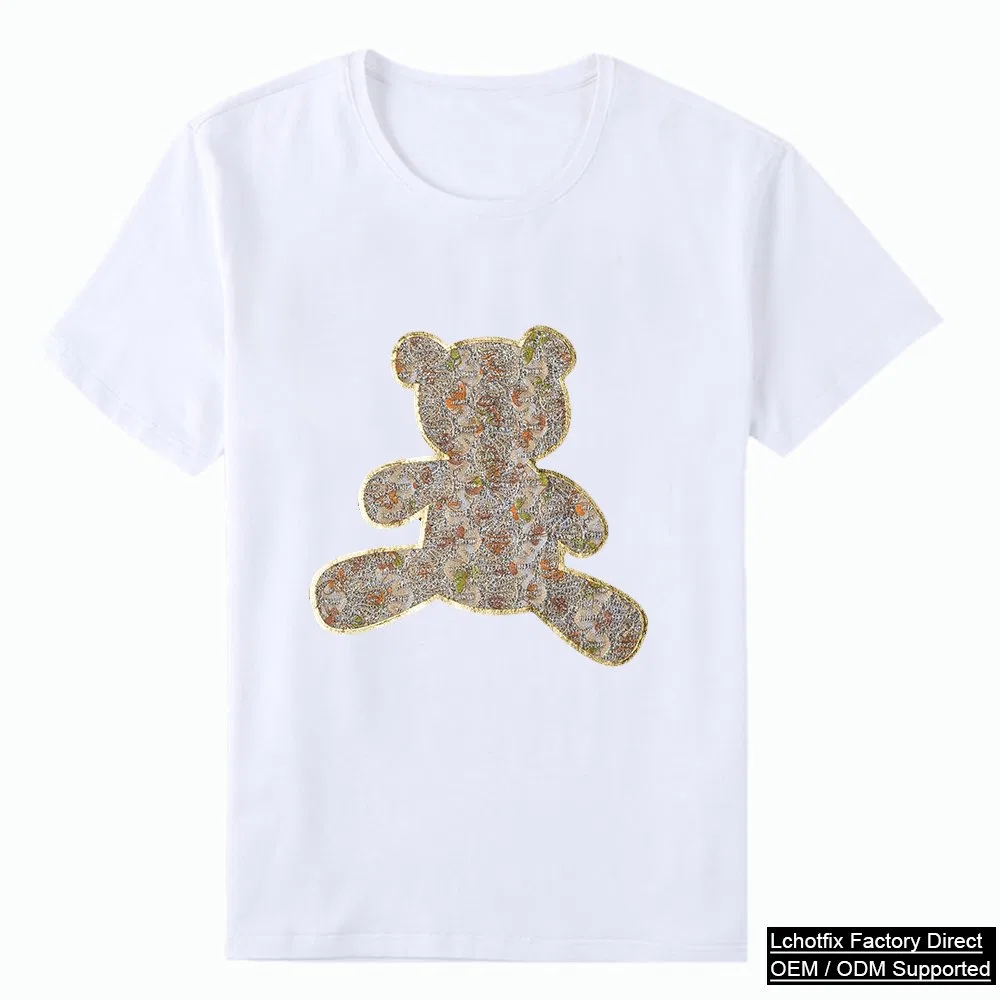
Supply editable artwork, a dimensioned visual and legal authorization for the requested mark. Put the outer cut path, internal openings, stone centers, color references and placement mockup on named layers. A screen rendering alone cannot establish which contour is cut, printed, stitched or simply a shadow.
Use one unambiguous closed outline and identify holes or separate pieces. Add width, height and orientation in a stated unit.
Show every intended center or zone independently from the cut line. Mark different sizes or colors using a clear legend.
Name face color, surface expectation and any garment-open area that should remain visible between elements.
Place the true-size outline relative to seams, pockets, edges and the usable application area.
Nesting can improve packing efficiency, but rotated motifs, mirrored pieces and mixed revisions can create receiving mistakes. Define whether the design has a top, left-right pair or required grain direction. Ask Teebling to propose a sheet or pack configuration only after individual patch geometry is approved.
Keep directional text, crowns or asymmetric shapes upright and labeled.
Assign separate identities and counts when left and right components differ.
Separate rows by dimensions even when the same artwork is scaled.
Let the supplier confirm feasible spacing and cut behavior for the selected material.
Record 168 states fabric, rhinestones and holographic crystal, item RJX-501 and MOQ 50; its generic size field is blank, but its recorded design area is 8 × 10 inches. Record 169 states rhinestones, item RJX-502 and MOQ 50; its generic size field is blank and its design area is also 8 × 10 inches. These catalog decoration footprints do not become an automatic finished size for a new custom build.
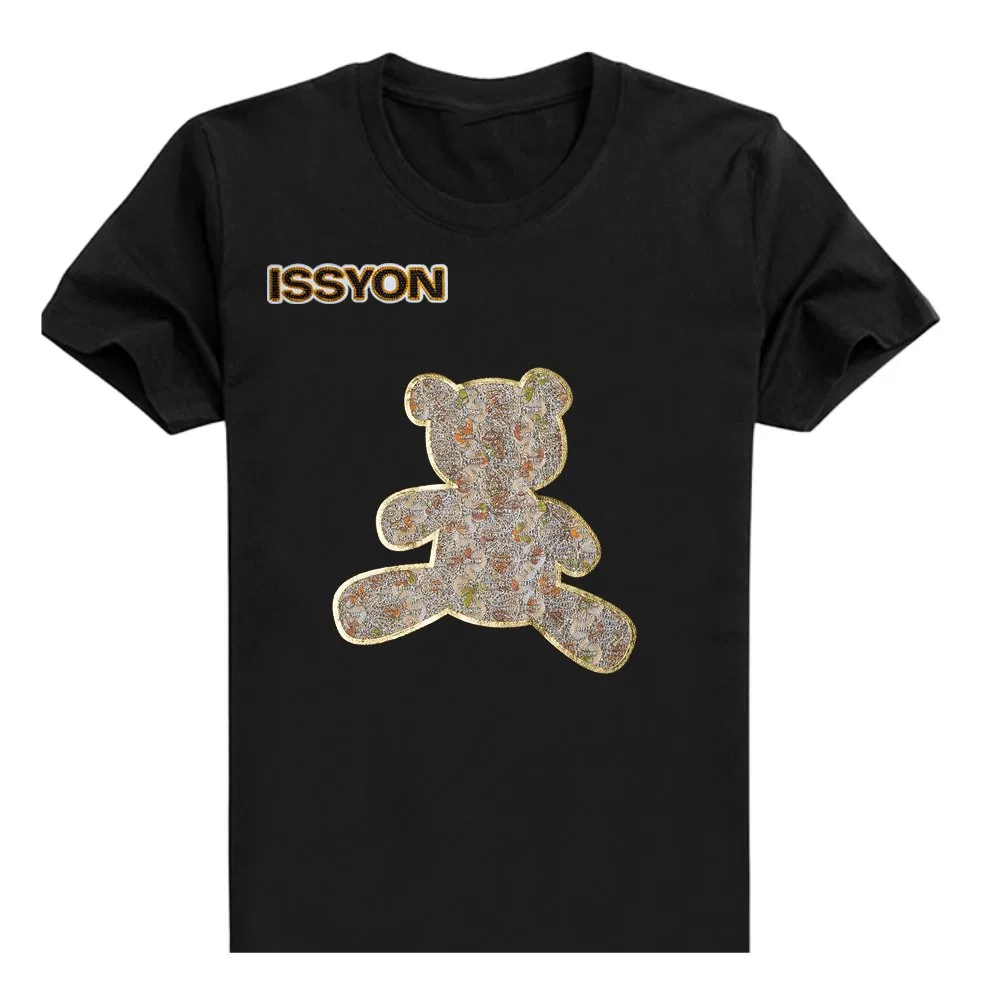
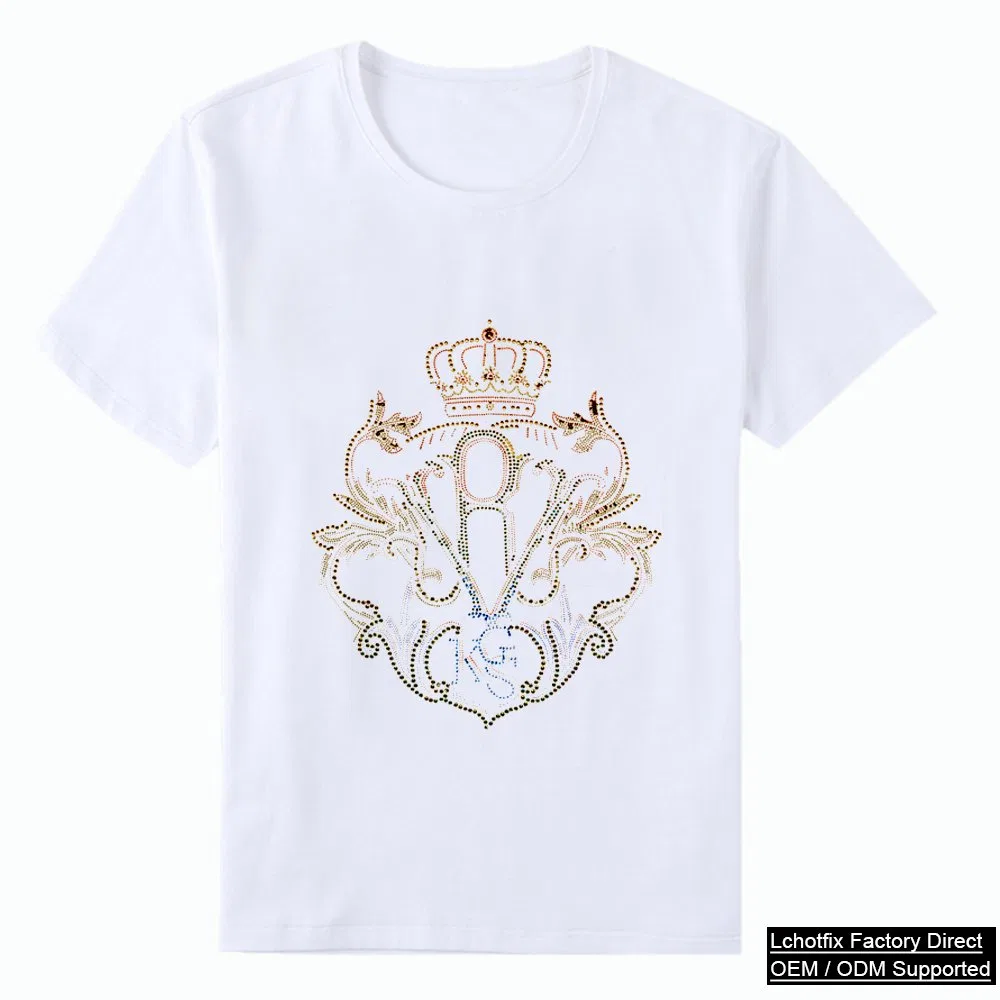
Review smooth curves, internal corners, pointed tips and narrow bridges at the proposed physical size. Identify the intended visible border around the rhinestone field. Ask Teebling to confirm process-specific edge behavior for the exact fabric and artwork rather than assuming every laser-cut base produces the same finish.
A proof should display the cut path over the face artwork and include a scale bar. The physical sample should be photographed face-on and in profile against a contrasting background so reviewers can see the entire perimeter.
The closest rhinestone, internal opening and narrow fabric bridge should be visible in the same production view. Do not publish a universal edge clearance; ask the factory to assess the actual stone size, base, cut process and patch dimensions. If the stone map changes, advance the shared revision rather than altering only one layer.
Trace the complete cut line and label the intended border treatment.
Use symbols or coordinates tied to a legend for sizes and colors.
Mark holes and garment-visible gaps so they are not mistaken for unfilled fabric.
Overlay cut and stone layers at physical size and retain the accepted file.
A TPU heat transfer patch uses a different material direction and should not inherit the same cutting assumptions. Likewise, “iron on diamante” is not a complete specification for fabric, crystal type, edge or reverse.
Choose whether patches arrive individually protected, grouped on sheets or packed by garment destination. Record the number of components per unit, orientation, artwork revision and variant. Keep layers or separators in the specification when they prevent crystal faces or cut edges from contacting one another.
| Pack ID | Patch revision | Orientation | Units | Destination | Checker |
|---|---|---|---|---|---|
| Sheet or bag code | Approved art and size | Upright, L or R | Counted quantity | Garment or order group | Receiving field |
| Reserve code | Same controlled build | Clearly marked | Separate spare count | Held reserve | Authorized owner |
Use the heat-transfer patch bulk packing guide for carton detail, prepare files through the rhinestone transfer artwork guide, and compare non-fabric systems with TPU patch attachment planning. A bling iron on transfers wholesale request should still distinguish transfer-only sheets from the shaped fabric component described here.
These answers keep artwork, edge, crystals, reverse, garment evidence and packing under one revision-controlled order brief.
Record 168 states fabric, rhinestones and holographic crystal, with a recorded MOQ of 50. Its generic size field is blank, while its separate design-area fields record 8 by 10 inches. Record 169 states rhinestones and MOQ 50; its generic size field is also blank and its design area is likewise 8 by 10 inches.
No. The catalog images are not measuring tools, although both records document an 8 by 10 inch design area. State the required finished component dimensions and obtain a dimensioned proof for the exact quotation instead of treating that catalog footprint as a universal custom size.
Show the cut path and stone centers on separate artwork layers, then ask Teebling to confirm process-specific clearance and registration for the selected fabric, crystal field and scale.
No universal recipe is supplied. Confirm the reverse and SKU-specific directions, then trial the exact patch on the intended receiving surface with production equipment.
Identify project, artwork revision, patch size, colorway, orientation, quantity, sheet or bag number and destination. The packed count should reconcile to a buyer-approved ledger.