


Boundary
Draw the full mapped field, orientation and origin used for every coordinate.
Plan each crystal as a coordinate and each intentional gap as part of the artwork. A readable map balances point density with open routes through letters, curves and color regions, then proves that relationship at the requested physical size instead of choosing a universal gap.

Stone spacing changes meaning when artwork is scaled. Begin with the complete requested width and height, garment placement and viewing purpose. Place a dimension bar on the locked proof and prohibit automatic fit-to-page output. If the order needs more than one decoration size, create independent coordinate maps rather than scaling a single carrier informally.
Draw the full mapped field, orientation and origin used for every coordinate.
Mark letters, eyes, corners or symbols whose recognition cannot drift.
Identify negative channels that must remain open at normal viewing size.
Separate color or stone-size zones with a readable legend.
Show seams and usable placement space around the complete carrier.
Rhinestone transfer stone spacing belongs to this scaled map. Teebling must confirm process-specific feasibility for the selected stone and construction; this guide publishes no universal center-to-center or edge-to-edge number.
Product 26 is Custom Hotfix Rhinestone Transfers for T-Shirts, recorded as DMC rhinestone at 30 × 21 cm, MOQ 50 and code TB-65107DD80631. Product 31 is Men's Hotfix Rhinestone T-Shirt Transfer, also recorded as DMC rhinestone at 30.2 × 30.2 cm, MOQ 50 and code TB-64B86AE2A1E1. Neither row identifies SS1.
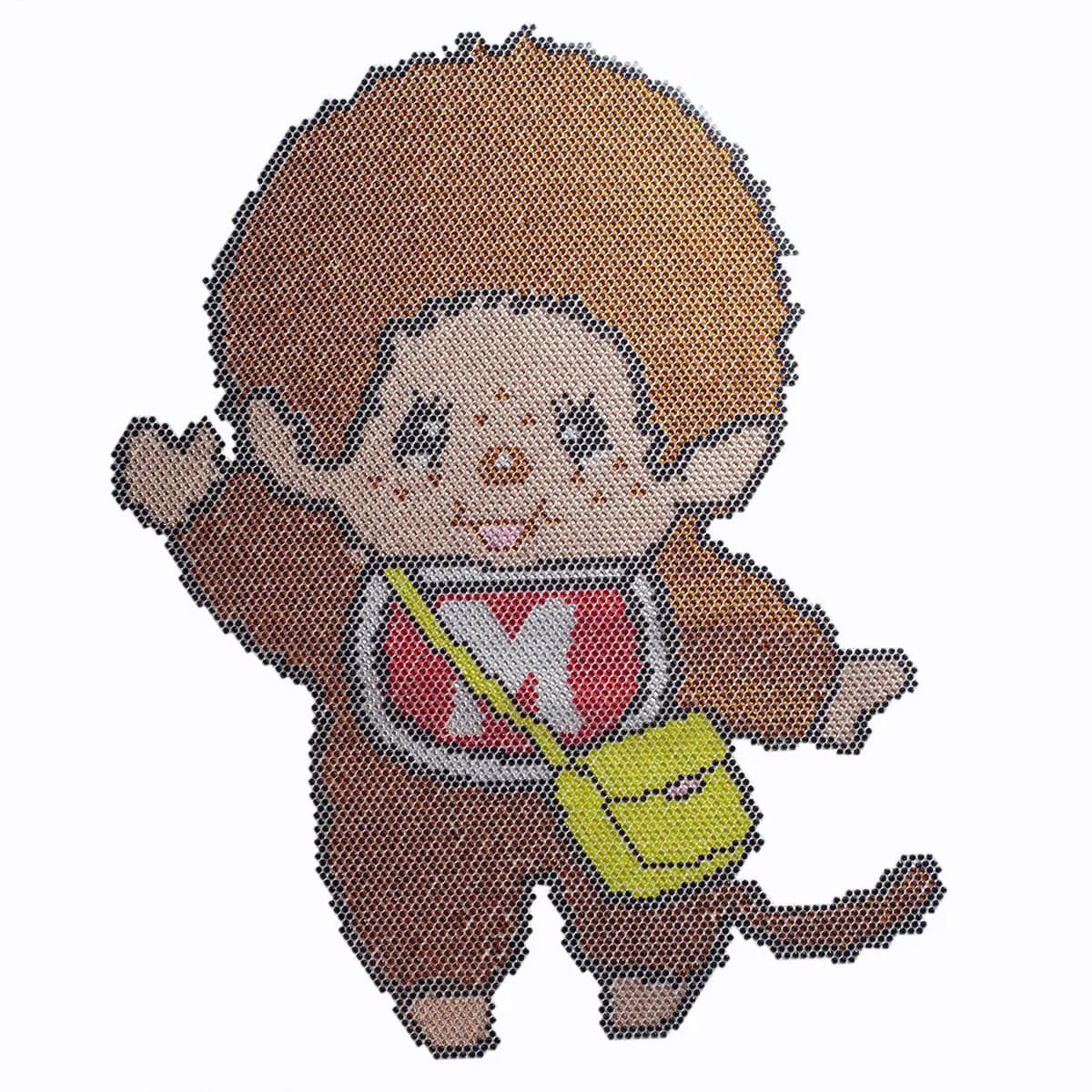
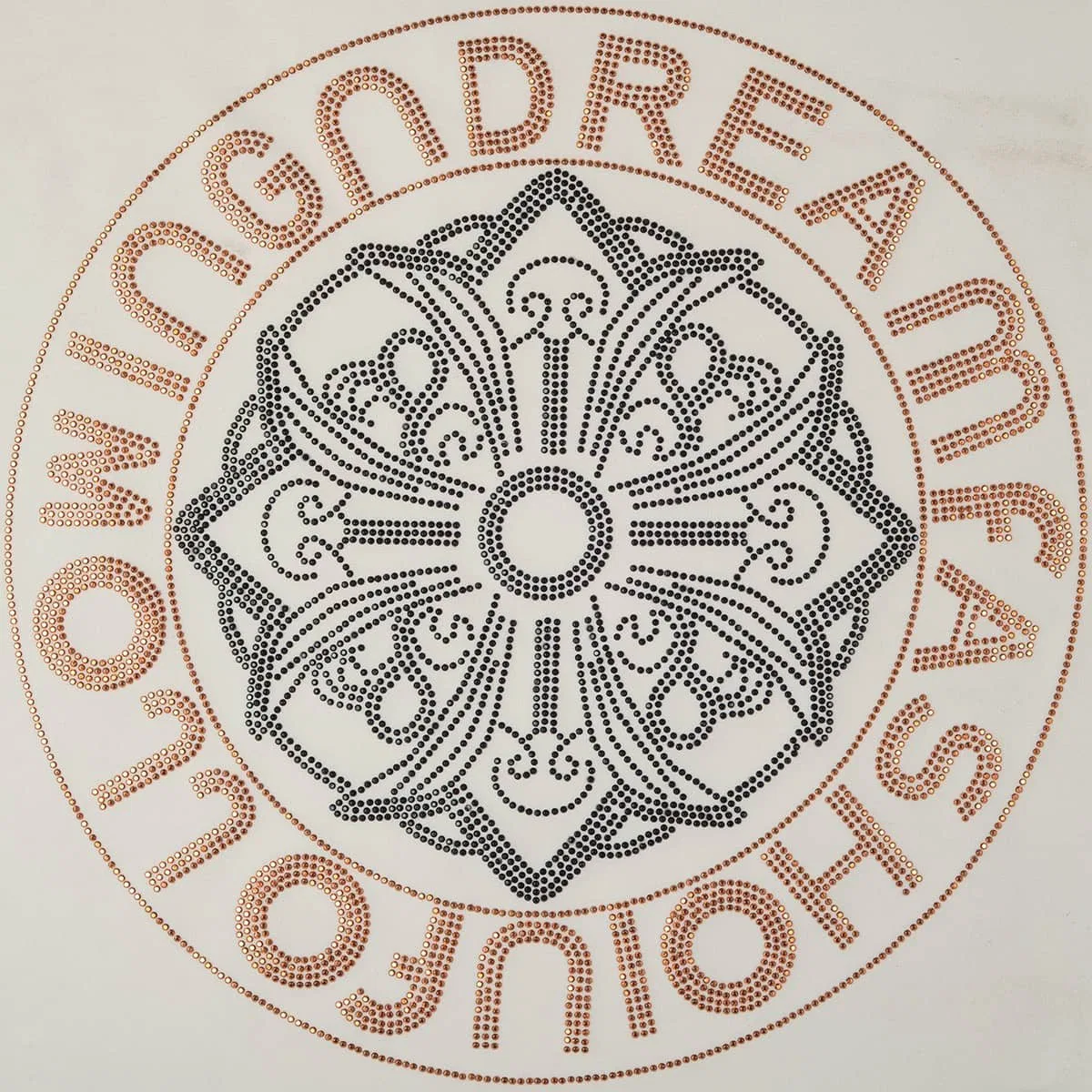
Open Product 29, Product 26 and Product 31 for their catalog contexts.
A stone map is not complete when every visible area is filled. Open streets separate letter strokes, preserve facial features and create turns that can be read from normal distance. Mark these channels on the artwork so a later density adjustment cannot close them without review.
Protect the interior of rounded and enclosed characters after stones are placed along the stroke.
Keep adjacent outlines visually independent instead of merging into one bright band.
Show whether different crystal zones touch, overlap visually or retain a garment-visible gap.
Reserve undecorated space around a focal symbol so hierarchy remains clear.
Buyers asking how to make bling transfers should start with recognition and evidence, not a maximum count. The pattern selection guide connects these street networks to motif and assortment roles.
Straight rows can look orderly while corners and curves accumulate visible errors. Magnify the coordinate proof, then return to a normal-size preview. Identify where a line changes direction, where three paths meet and where an inner radius becomes crowded. Ask the supplier to show any adjusted coordinates on the proof rather than correcting them only on the physical sheet.
Compare the spacing rhythm along the full arc and check that the silhouette does not flatten unexpectedly.
Preserve the counter or channel instead of forcing another point into a tight junction.
Decide which path carries visual priority and prevent accidental stone contact between routes.
Review apparent step rhythm at actual size rather than smoothing it only in a zoomed display.
End strokes intentionally so tails, serifs and sharp tips remain recognizable.
Show where one stone size or color gives way to another with a controlled legend.
A custom hotfix T-shirt design needs these junction decisions before the carrier and application trial are approved.
When mixed sizes are proposed, use separate symbols and a counted legend. State whether larger stones create focal points, outline changes or isolated highlights. Do not infer the size mix of a new artwork from a catalog photograph, and do not call Products 26 or 31 SS1 because their stored records do not support that claim.
Define the main coordinate language for broad contours and repeated strokes.
Assign only where fine turns or small counters require a distinct map proposal.
Use deliberately at focal nodes, with boundaries visible on the approval proof.
Label palette references and garment contrast independently from size symbols.
Ask the returned proof to state the proposed quantities by named zone when required.
The SS1 planning guide explains the evidence boundary around Product 29. Best rhinestone heat transfer patterns still depend on artwork-specific hierarchy, not one preferred density.
The macro view exposes displaced coordinates, touching points and inconsistent turns. The normal-size view tests whether letters, symbols and focal order remain visible. Approve both against the same finished dimensions; never let a dramatic close-up become the only evidence for a shirt-scale design.
Show coordinate symbols, zone legend, dimensions, origin and revision without garment photography.
Print at 100 percent and inspect the smallest important gaps with a scale reference.
Place the complete field on the intended color and size group using measured landmarks.
Photograph the sample from the merchandising or conversational distance defined by the buyer.
Rhinestone shirt transfers should be approved as both mapped components and applied garments. A screen zoom cannot settle carrier behavior or application results.
Assign one code to the approved map and follow it through receiving and application. First compare the carrier with the coordinate proof under consistent orientation. Then apply a representative unit under current product-specific instructions and inspect the same named windows on the garment. Separate mapping concerns from adhesion or textile response.
MAP REVISION → RECEIVED CARRIER → GARMENT TRIAL → SIGNED DECISIONMeasure the overall field, inspect open streets, check curves and junctions, count any visible missing or displaced points in the defined sample windows, and photograph the result. If the supplier proposes a coordinate correction, update the map before accepting a replacement sheet.
Use the rhinestone artwork file guide to preserve source and approval formats around this inspection permit.
The answers keep physical scale, negative space, stone identity and sample evidence attached to one coordinate map.
No universal gap is stated here. Spacing must be proposed for the selected stone, artwork scale, carrier and process, then approved on a measurable proof and representative sample.
The Product 29 evidence row carries the name 1.2 mm SS1 Czech Rhinestone Heat Transfer. It records Rhinestone Czech, 30.4 by 30.4 cm, MOQ 50 and item code WF-019.
Open counters and channels preserve letters, turns and separate color regions. A high stone count can make a map less readable when the intended street network closes at final size.
No. Their material fields say DMC rhinestone and neither record states SS1. They are useful composition references with their own recorded sizes and codes.
Compare the approved coordinate proof with the received carrier and applied garment, checking field dimensions, open gaps, curves, junctions, colors, displaced points and overall recognition.
Send authorized artwork, finished dimensions, coordinate file, stone-size and color legend, required open-space callouts, garment placement, quantity by map version and sample milestone. Teebling can return a process-specific proposal and identify any spacing changes required for the selected construction.
The signed record should connect the final map to its carrier sample and garment trial. New dimensions, stone directions or receiving garments require a named revision rather than silent scaling, keeping the street network intact from artwork through production.