


Audience
Record age range, styling direction and purchase occasion without relying on stereotypes. Use actual buyer or retailer input to establish whether the decoration should feel restrained, graphic, celebratory or collectible.
The best rhinestone heat transfer patterns are the ones that answer a defined merchandise brief. Use this buyer-led library to compare silhouette, density, finished scale, placement, garment contrast and assortment purpose before commissioning a proof.
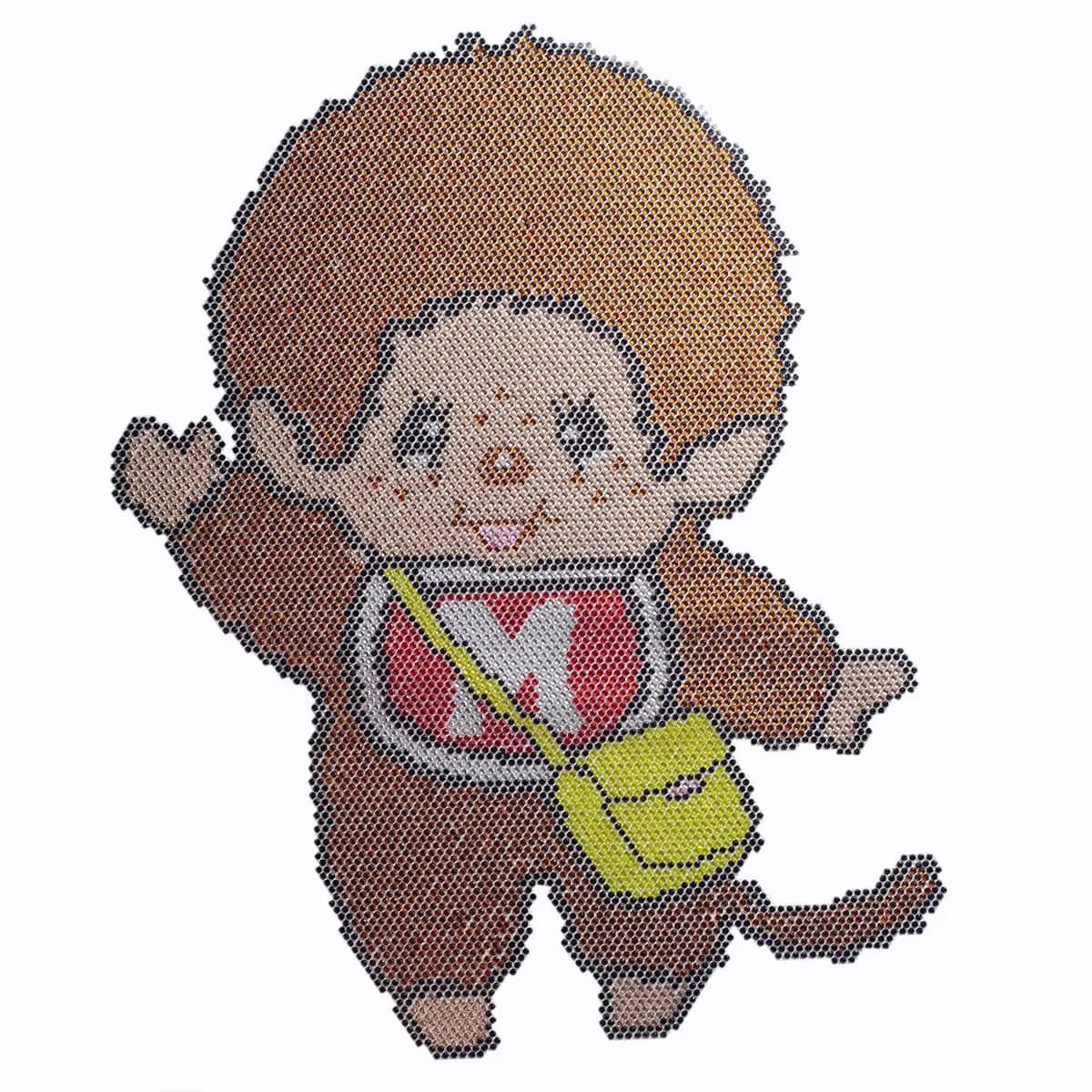
Begin with the selling context: audience, garment, placement, price position, collection season and expected visual role. A chest emblem for a dance team and a broad front graphic for tourist retail may both use stones, yet their scale, reading distance and assortment responsibilities differ. A useful brief also identifies who owns the original artwork and which elements may be adapted.
Record age range, styling direction and purchase occasion without relying on stereotypes. Use actual buyer or retailer input to establish whether the decoration should feel restrained, graphic, celebratory or collectible.
State style, fabric, color, available decoration zone and whether the transfer is applied to a panel or finished item. The chosen reference does not prove compatibility with an untested textile.
Supply a measured box from stable garment landmarks. Include seam, pocket, neckline and hardware constraints so the proposed outline is judged in the real usable field.
Label the design as a hero style, core repeat, seasonal accent or limited test. That role guides quantity allocation and how much novelty the wider assortment can support.
At normal viewing distance, the outer contour and large negative spaces usually establish recognition first. Sort candidate heat transfer designs for T-shirts by their visual architecture, then inspect whether the smaller crystal decisions support that architecture. Avoid calling a motif universally effective when the result depends on size, garment contrast and the original drawing.
A contained mark can suit pocket, sleeve or cap-scale use when its interior remains legible. Check whether narrow gaps close visually and whether rotation is obvious before requesting detailed production art.
A horizontal phrase or scene needs a garment-width map, clear line breaks and an intentional reading order. Verify that the design does not collide with armhole curvature or extend beyond the pressable zone.
A narrow arrangement can follow a placket, side panel or tote edge, but every point needs adequate clearance from seams and folds. Inspect top-to-bottom balance on the selected product.
Distributed elements create movement yet demand disciplined registration and carrier handling. Define the overall boundary even when the composition contains intentional open space.
Teebling's catalog records show meaningful variation without creating a promise that every new design shares the same construction. Record 26 lists DMC rhinestone at 30 by 21 cm, record 27 lists DMC rhinestone at 28 by 25 cm, and record 28 lists DMC rhinestone at 20 by 18 cm. Each has a recorded MOQ of 50; current pricing, tolerances, carrier and application directions belong in the quotation.
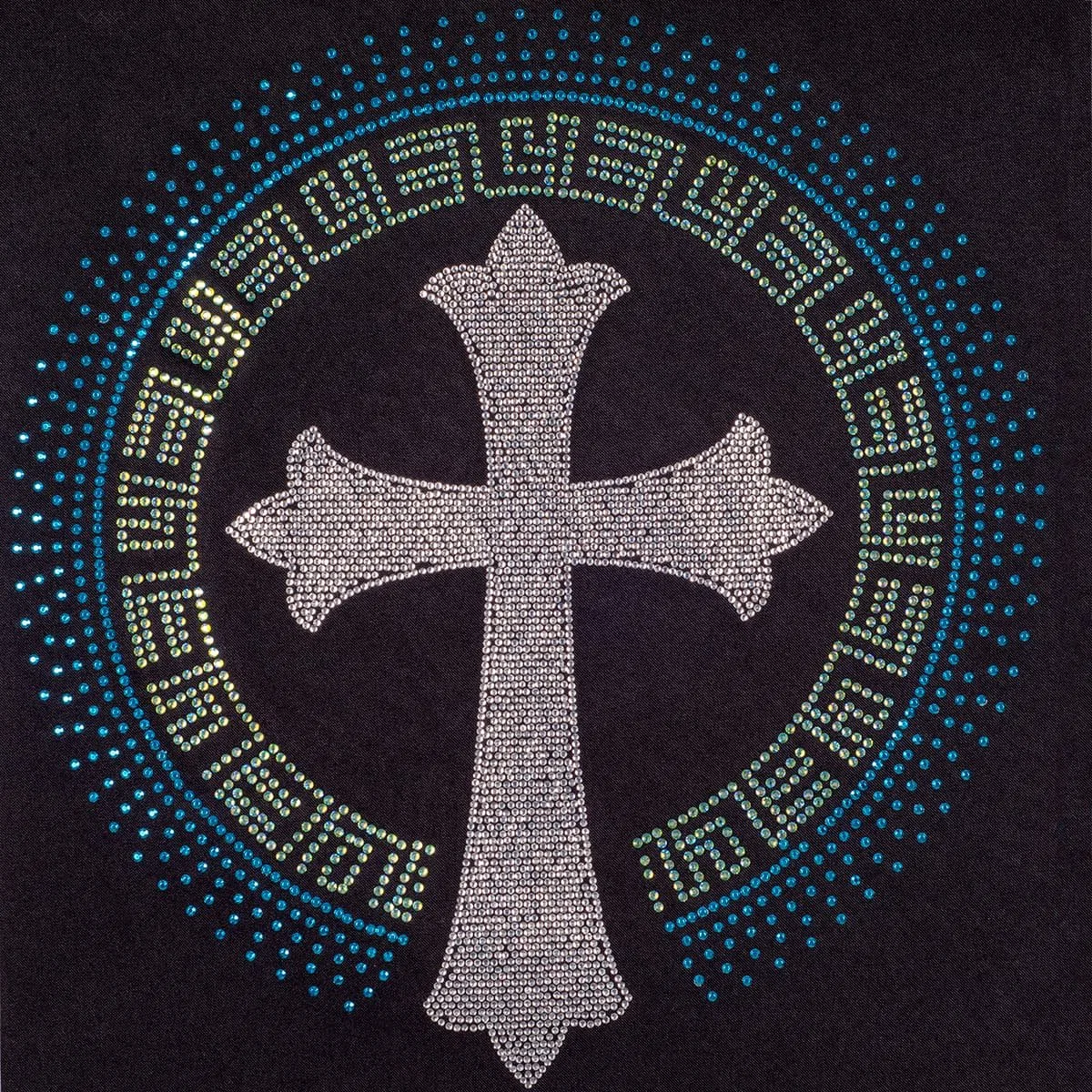
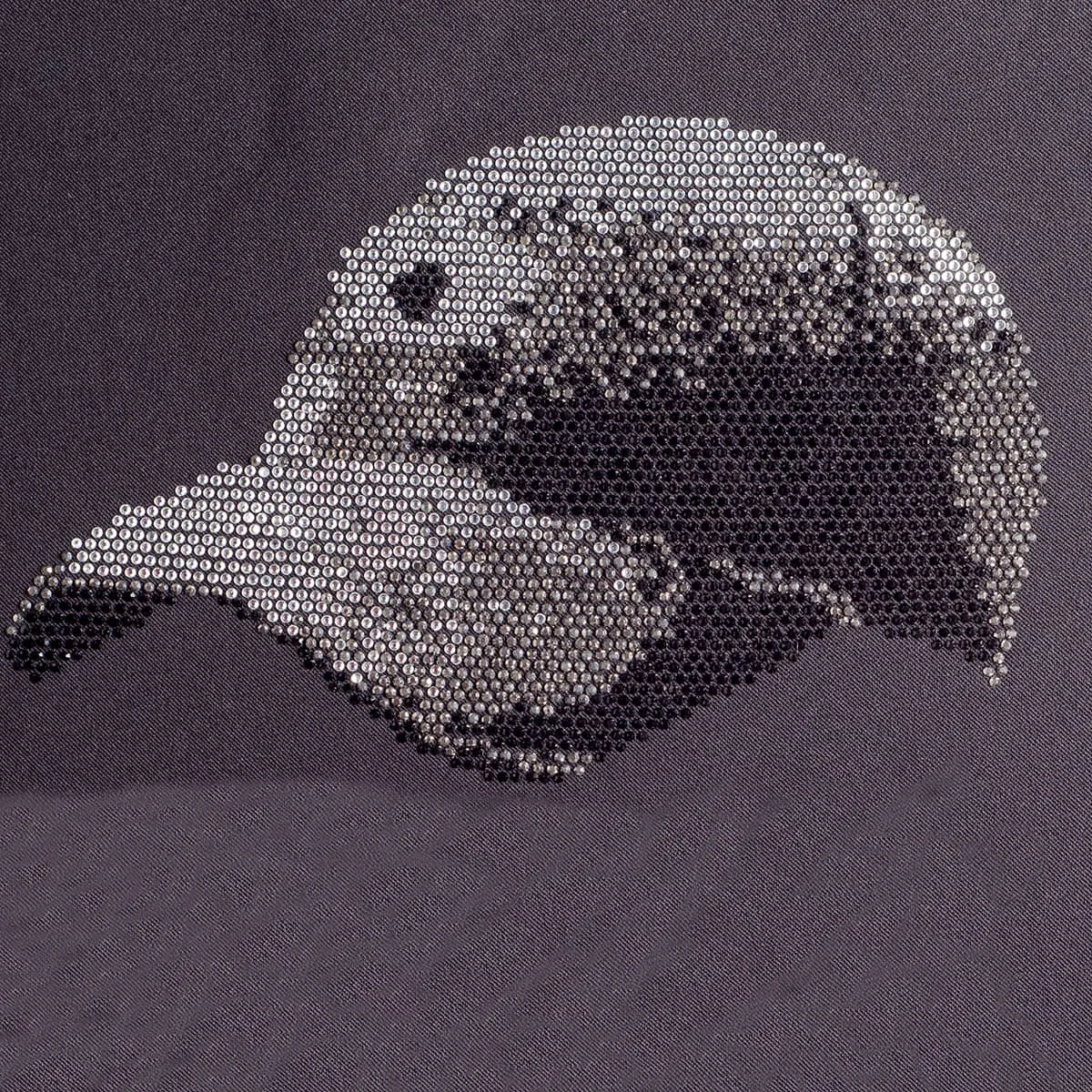
Print a boundary outline at the proposed dimensions or place a measured digital mockup on a photograph of the exact garment style. Review from close range and the distance at which the item will normally be seen. A motif that appears elegant in a cropped image can become crowded at its actual size, while a sparse arrangement can disappear against a large garment front.
Check spacing, line endings, small counters, stone-color transitions and visible carrier concerns. Mark any detail that requires a physical production judgment rather than a screen assumption.
Stand back to evaluate recognition, contrast and balance with garment features. Compare light and dark colorways separately because the same stone field can read differently.
Observe the intended zone on a worn or shaped sample. Curvature, folds and stretch may alter how separated elements align even when a flat proof looks correct.
Separate the artwork into focal, supporting and quiet zones. Name garment colors, desired stone-color direction and any print or embroidery that shares the composition. Density should serve hierarchy: a focal area may need stronger concentration, while open spacing can preserve the silhouette and reduce visual competition.
Create a dated inspection sheet for the physical sample and representative garment trial. The reviewer should know which artwork, transfer, garment and process produced the result. Record observations as accepted, revise or reject, then state the change required. This approach turns aesthetic feedback into traceable production input.
| Review field | Evidence | Decision prompt |
|---|---|---|
| Identity | Project code and artwork revision | Is the received pattern the requested version? |
| Scale | Measured width, height and placement | Does the motif occupy the approved garment zone? |
| Reading | Near and merchandising photographs | Are focal shapes recognizable at intended distance? |
| Construction | Face, carrier and supplier statement | Are the documented materials and format consistent? |
| Trial | Garment, equipment and process record | Is the result limited to the tested combination? |
A balanced offer does not require every motif to carry equal units. Assign each design a line role, colorway, garment destination, planned quantity, sample status and reorder trigger. Teebling can quote the stated matrix and clarify how minimums apply; the recorded MOQ on a reference does not establish allocation across unrelated new artworks.
The campaign image or strongest statement. Protect its approved scale and colorway from silent substitution.
A repeatable design expected to carry broader demand. Define its base garments and replenishment identity.
A smaller or quieter companion that adds range without duplicating the hero's visual purpose.
A controlled quantity used to learn from a new pattern. Record results before expanding the commitment.
Continue with the rhinestone transfer artwork file guide, inspect incoming sheets through the ready-to-press bling receiving routine, and prepare application evidence using the rhinestone transfer heat-press test guide.
These answers keep creative selection connected to measured product evidence, sample control and a named assortment role.
Suitability depends on the buyer brief, legal artwork ownership, target customer, garment color, finished placement, readable scale, decoration role and an approved sample. There is no single motif that is best for every collection.
No. A screen view helps shortlist silhouette and color direction, but the selected design should be reviewed at physical size and on a representative garment before a bulk decision.
Send the quantity, size, colorway and garment destination for each design. Teebling can then confirm whether the proposed assortment can share commercial terms or requires separate line items.
Catalog records 26, 27 and 28 are shown as distinct DMC rhinestone transfer references. Their recorded sizes are 30 by 21 cm, 28 by 25 cm and 20 by 18 cm, and each has a recorded MOQ of 50.
Retain a revision-coded artwork proof, scale drawing, carrier view, representative garment trial, inspection photographs and a signed decision identifying exactly which pattern and colorway were accepted.