


Upper boundary
Measure from the chosen artwork field to the neckline, yoke or shoulder construction. Note whether the upper edge follows a curve or a stable horizontal reference.
An oversized crystal graphic must fit more than an artwork canvas. It must fit the garment panel, avoid construction barriers, match available press access and remain controllable during alignment and handling. Teebling helps buyers measure those constraints before a full-back or statement transfer becomes a production specification.
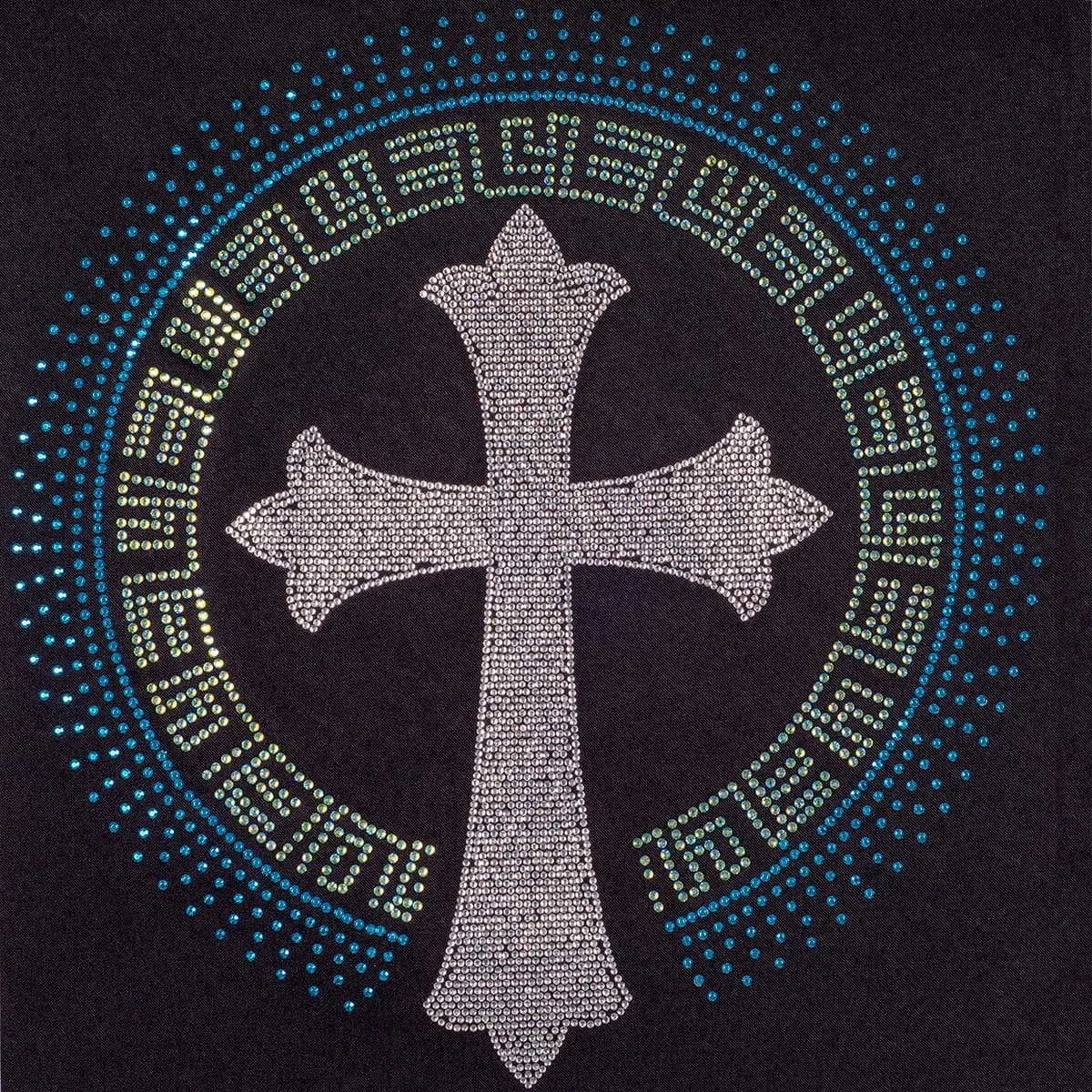 AVAILABLE WIDTH / BUYER TO MEASUREAVAILABLE HEIGHT / BUYER TO MEASURE
Start with the physical product and the size represented by the sample. A large transfer should be dimensioned against a usable field bounded by real garment landmarks, not scaled from a blank T-shirt illustration.
Measure from the chosen artwork field to the neckline, yoke or shoulder construction. Note whether the upper edge follows a curve or a stable horizontal reference.
Record clearance from side seams, armholes and panel changes. The visual center of a cut garment may differ from the simple width midpoint.
Identify hems, pockets, vents or intended tuck areas. Confirm how much surrounding garment should remain visible below the graphic.
Compare representative garments across the intended size range. Decide whether one map remains proportionate or whether grouped configurations require separate approval.
Place the garment flat without distorting it and record measurements in a named worksheet. Add a photograph with the field marked. If a later blank style or pattern changes, reopen the placement review rather than assuming the old dimensions still apply.
Large-format transfers often approach garment construction features that a smaller chest graphic never reaches. Mark every seam, zipper, pocket, placket, rib panel, curve or hardware element inside and around the proposed field.
Do not hide an obstruction beneath a mockup. Decide whether the artwork clears it, is intentionally divided around it, or moves to another position. Equipment access also matters: the intended area must be presented to the platen and handled without forcing unrelated garment parts into the application zone.
A measured obstruction map should name the garment style and size. Keep the map with the artwork revision so later alignment comments refer to the correct product construction.
“Full back” and “oversized front” are creative directions, not dimensions. Translate the direction into a measured elevation that shows the artwork against stable garment reference points.
Balance the graphic between shoulder and lower boundaries while preserving the intended surrounding space. Review the full garment rather than cropping tightly around the stones.
Map the relationship to neckline, center line, side seams and any front opening. Consider how the design appears when the garment is worn, not only when flat.
For a leg, sleeve or narrow body panel, define orientation and width constraints first. Long art may need a different rhythm or segmentation plan.
For each plan, state finished width and height, the reference size, centerline and distances from named garment landmarks. A printout or projected outline at actual size can help the buyer judge visual impact before stone mapping is locked.
A single carrier can simplify visual continuity, while a segmented plan can support equipment access or handling. Neither route should be chosen from sheet size alone; the artwork joins and operator sequence must also remain clear.
Confirm that the mapped width and height, carrier, garment access and press arrangement can be handled as one controlled placement. Identify center and orientation marks that remain visible to the operator without becoming part of the decoration.
Divide artwork only with an intentional plan. Show the boundaries on the full image, define the sequence and explain how neighboring sections align. Avoid placing a join through critical lettering or a feature whose continuity is difficult to judge.
Give every segment a stable identifier and orientation. The complete set should still carry one master artwork revision and be sampled together on the intended garment.
The test record should identify the actual press and platen used by the buyer or assembler. Large artwork may interact with equipment edges, garment thickness and areas that cannot lie flat.
Record usable width and height and compare them with the transfer, carrier and required clear handling area.
Plan how seams, sleeves, collars, pockets and other layers are kept away from the application field without distorting placement.
Describe how the transfer is positioned, checked and moved if segmentation is used. The method should be testable, not improvised during a run.
A large design magnifies small placement errors. Establish a registration language that connects the artwork, carrier and garment reference points.
Mark the intended vertical or horizontal axis and define which garment landmarks establish it.
Measure key outer points from seams or edges before application, especially when the silhouette is asymmetric.
When multiple sheets are used, show how each piece aligns to the master map rather than only to the previous segment.
Capture the positioned carrier and final garment from a consistent full-product view for the approval record.
Registration marks and carrier notes must not be confused with the decorative map. Identify which guides are removed during the process and which features remain visible. Record any operator aid as part of the approved application workflow.
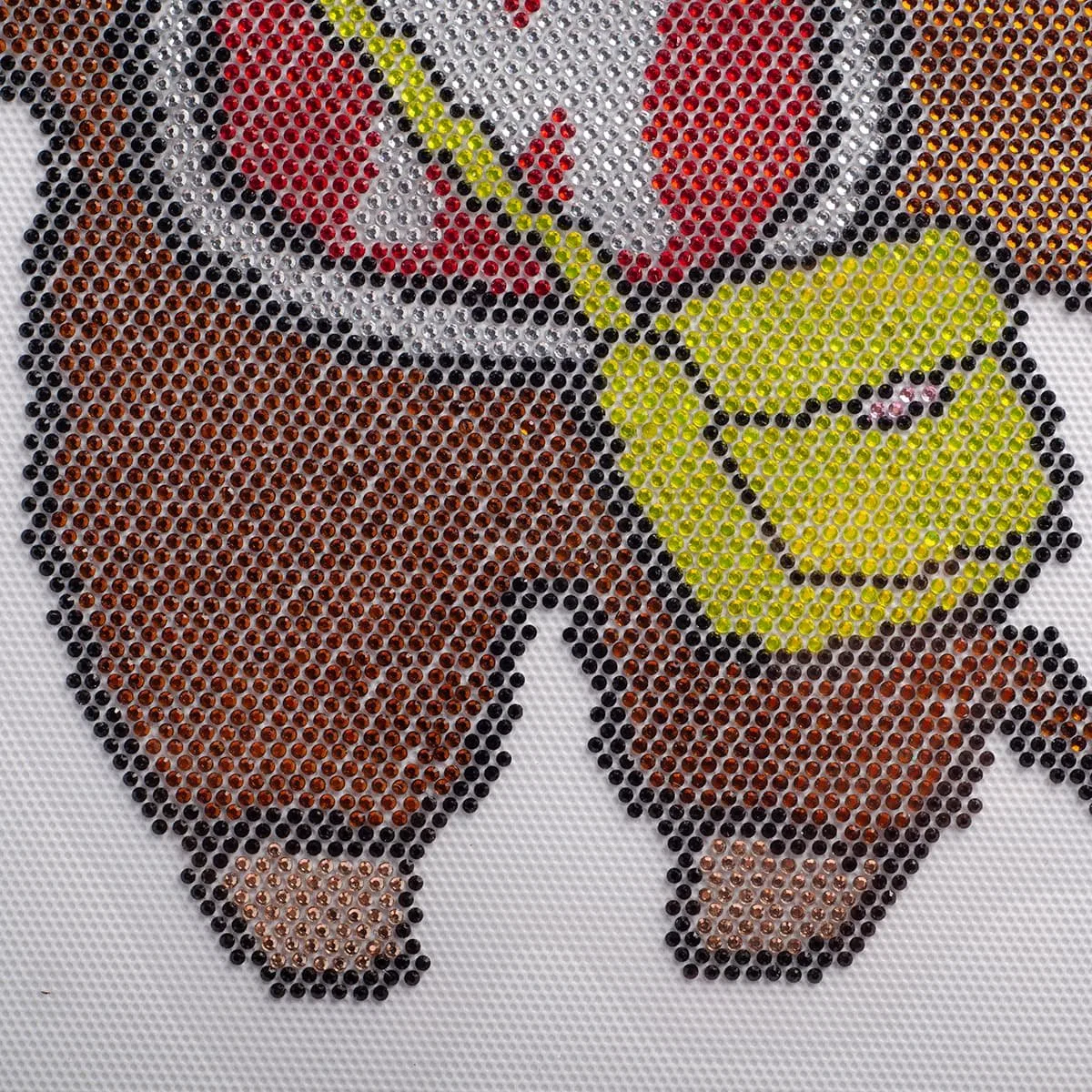
A reduced sample cannot resolve full-size handling, placement or visual proportion. Review the intended map on the actual garment style and a representative size before release.
Name the artwork revision, dimensions, segmentation and color configuration.
Record garment, press, platen, placement and the tested process fields without publishing universal settings.
Inspect full silhouette, balance, joins, edges, stone layout and any visible fabric change.
State which garment sizes and configurations the sample represents and which still need review.
Carrier condition and map identity must survive handling. Build the packing plan from actual sheet geometry and the buyer’s receiving workflow rather than assuming a small-transfer method will scale.
State the permitted flat, supported or other agreed handling direction and identify the decorative face.
Define how individual sheets or segment sets remain distinct and protected from contact or accidental mixing.
Connect every unit or set to artwork revision, dimensions, garment program and configuration quantity.
Group variants in a way the receiving team can reconcile with the purchase line list and destination plan.
If sheets are segmented, pack the complete set under a shared master identity while retaining segment labels. Include handling notes only after the actual construction and pack arrangement have been approved.
These answers help buyers prepare a measurable inquiry without assuming that one artwork, press or garment represents every oversized program.
Measure the usable garment field rather than only the transfer idea. Record width and height between relevant seams, openings, pockets and edges, plus the intended centerline and distance from stable landmarks. Provide the garment size represented by those measurements.
Segmentation may be considered when the artwork, carrier, press bed, garment geometry or handling process makes one sheet impractical. The proposed joins, overlap rules and alignment marks should appear in a full-scale proof and be validated on the intended garment.
Not without review. The available field and visual proportion can change across a size run. Buyers should compare the map against representative garments and decide whether one size, grouped sizes or separate configurations best preserve placement.
Platen dimensions, access, pressure behavior and the operator workflow influence how a large transfer can be positioned and applied. Equipment information helps frame a realistic test plan, but accepted settings still belong to the specific transfer and garment pairing.
Packing should preserve the approved map, carrier condition and configuration identity through handling. Define the permitted orientation, separation, protective support, unit labeling and carton grouping from the actual sheet dimensions rather than a generic transfer instruction.
Send Teebling the source artwork, proposed dimensions, marked garment measurements, representative size range, obstruction map, equipment and platen details, quantity by configuration and packing needs. We can use that evidence to frame an order-specific review.