


T-shirt
Check stretch, surface texture, heat sensitivity, size grading and unobstructed platen access.
Choose patch backing for clothing from the receiving product outward. A jacket, T-shirt, cap, bag and removable uniform panel create different access, movement and permanence questions, so a popular backing name cannot replace a garment-specific route.
Write the garment or accessory specification before choosing the reverse. Fiber content alone is insufficient: record weave or knit, coating, padding, stretch direction, seam layout, curvature, care pathway and whether an operator can reach the back of the placement. A structured cap front differs from a flat bag panel even when both appear to be fabric.
Check stretch, surface texture, heat sensitivity, size grading and unobstructed platen access.
Map lining, insulation, waterproof treatments, pockets and whether sewing access remains available.
Identify coatings, reinforcement, foam, internal compartments and assembly stage.
Trace crown seams, curvature, sweatband and support geometry before attachment.
Confirm the mating field, peel direction, edge exposure and replacement routine.
The correct route is the one supported by an approved component-and-garment sample. A nickname such as embroidered garment badge sticky should become a measurable request for face, edge, reverse and destination.
Catalog records can frame the inquiry only when their stored facts stay distinct. Product 17 is Star Hotfix Rhinestone Felt Patch, recorded as rhinestone and felt fabric at 4.8 × 4.8 cm, MOQ 100 and code TB-F00E8509646E. Product 12 is an embroidery garment badge recorded as thread, 5 × 6 cm, MOQ 100 and code TB-2FEE31D63C73; its backing is not recorded.
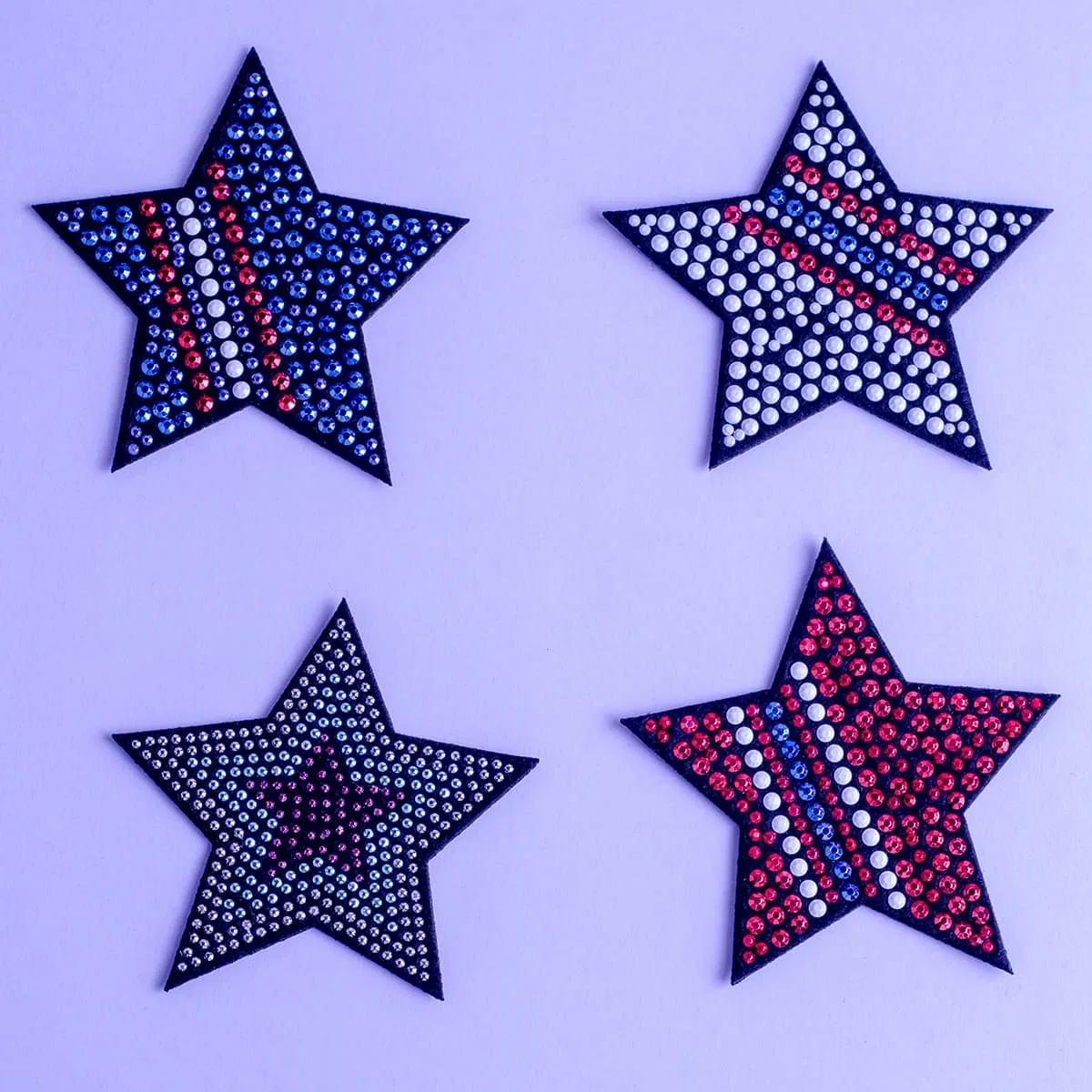
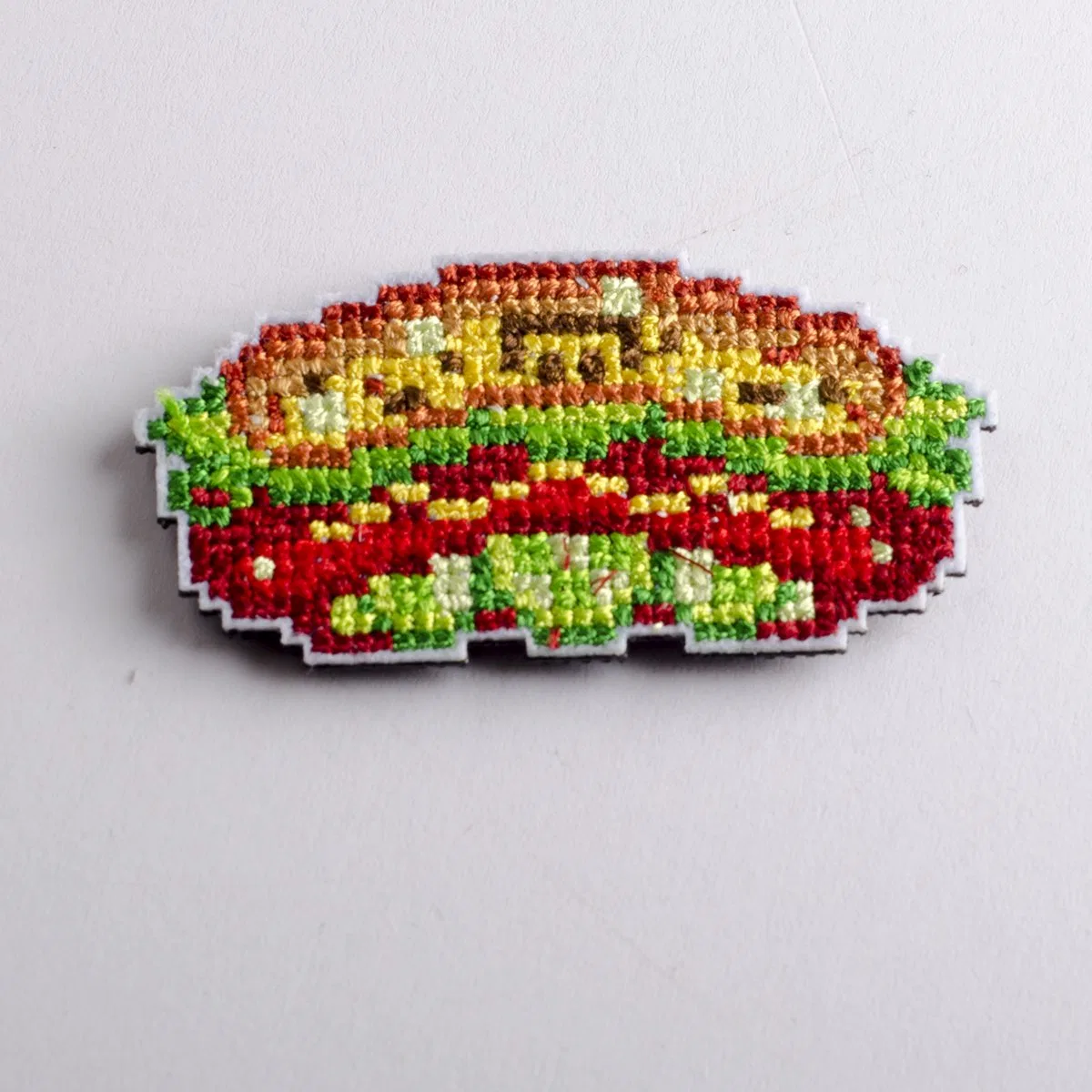
Review Product 10, Product 17 and Product 12 before quoting their facts.
A uniform identifier that changes by role may need deliberate removal, while a retail chest badge may be expected to remain fixed. State the intended replacement frequency, who performs removal, how the garment should look afterward and whether the mating surface is part of the supplied system. That decision narrows viable routes before appearance is approved.
Specify both sides, edge coverage, mating-panel dimensions and retention expectations. Product 10 supplies a catalog example, but the new garment still requires a test.
Request the exact reverse and current application instructions. Do not convert a title containing hotfix into a temperature, pressure or dwell claim.
Draw the stitch path, verify edge allowance and confirm rear access. A decorative face does not prove that its base accepts the proposed needle path.
The hook-and-loop patch guide expands removable system questions, while the badge backing comparison keeps unrecorded options conditional.
Backing selection changes when a lining blocks sewing, a pocket prevents flat support or a zipper interrupts the application field. Photograph the front and accessible reverse, mark seams and hardware, and note whether attachment occurs on a cut panel or finished product. If production access differs from the sample room, reproduce the production arrangement during approval.
Document usable support area and how alignment will be repeated before assembly closes the product.
Identify platen, hoop or sewing-foot access without assuming the component can bridge raised construction.
Move the patch, change its scale or evaluate another route when equipment cannot contact the intended field consistently.
A private label hook and loop program still needs an accessible mating-panel installation method. The visible patch can be removable even when the receiving panel is permanently integrated.
Use a production-representative garment, not a generic cotton swatch, when coating, stretch, pile, thickness or dye can alter the result. Record the supplier style and lot where practical. State the buyer's evaluation method for appearance, edge behavior and attachment after the applicable care sequence, but do not publish a universal wash count or lifetime.
Observe distortion, shine and stretch recovery around the complete patch boundary.
Inspect contact at high and low surface points under the approved method.
Ask whether the finish changes feasible attachment before any production trial.
Check support, compression and rear accessibility on the actual layered build.
Evaluate edge lift and alignment on the shaped product rather than a flat proxy.
For a star program described by the query patches hot melt adhesive star, use the star backing guide to separate catalog naming from verified reverse evidence.
Assign one sample code to the patch, verified reverse, garment, placement and method. Capture the operator, equipment, supplied instructions and observed outcome. If a change is made, issue a new ticket instead of overwriting the failed condition. The goal is not to prove a backing universally good; it is to approve one named component-product pairing.
Custom fabric patches should be compared only after the proposed reverse is attached to the line item. A face photograph cannot carry the missing construction evidence.
These answers keep attachment language tied to database evidence, the receiving garment and a controlled approval record.
No backing is universal. Identify the exact garment, surface finish, stretch, available rear access, intended permanence and care route, then ask for a construction-specific sample and attachment instructions.
Product 10 records embroidery thread plus full polyester hook and loop, custom sizing, MOQ 100 and item code TB-B42D1AA00971. It is a useful removable-patch reference, not proof of compatibility with an untested jacket panel.
The inspected row identifies thread, 5 by 6 cm, MOQ 100 and code TB-2FEE31D63C73, but it does not state a backing. Request the reverse construction rather than inferring it from the badge face.
No. Product 17 names a hotfix rhinestone felt patch, yet the receiving textile, equipment, access and current supplier directions still belong in a representative application trial.
Retain the patch code, artwork revision, finished dimensions, verified reverse, garment identity, placement, attachment sequence, sample result, quantity split and any sewing or removal requirement.
Submit authorized artwork, finished dimensions, face and edge direction, requested reverse, exact receiving product, placement map, permanence objective, quantities and sample milestone. Teebling can return a construction proposal and current commercial details for that defined route. Keep any alternative as a separate line so a lower-cost or faster option cannot silently replace the tested build.
The release packet should show what is recorded, what the supplier confirmed and what the physical sample demonstrated. Purchasing then cites the accepted component-garment code, while production receives the same backing identity and application reference. This closes the route without suggesting that another fabric, size or placement inherits the result.