


Tip shape
Compare the five ends for clean, intentional geometry. Note folded, blunted or irregular tips with the point position identified.
A star patch narrows into five vulnerable points, so the outline, stone map, textile base and attachment must be reviewed together. Compare two active star references, keep an explicit hot-melt example in its proper evidentiary role, and release only the patch-and-garment combination that passes a recorded trial.
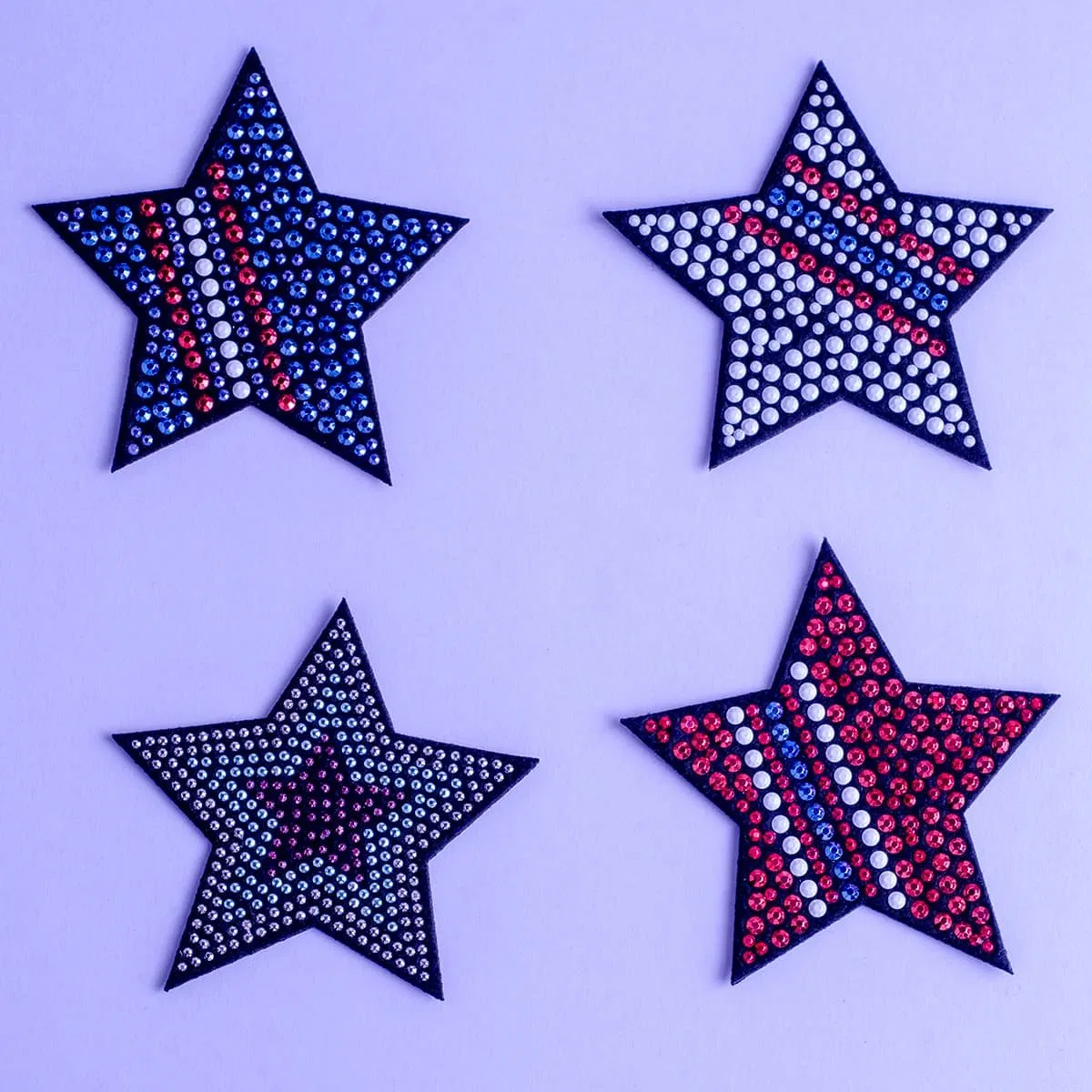
The outside silhouette determines how the motif reads and where edge contact can be challenged. A product image helps establish direction, but a physical sample reveals point shape, textile visibility and actual symmetry. Use the following five observations as separate entries rather than one vague quality comment.
Compare the five ends for clean, intentional geometry. Note folded, blunted or irregular tips with the point position identified.
Review how the stone rows narrow toward each point and whether spacing remains visually balanced.
Observe the felt around the crystal field. Confirm whether the visible border matches the approved sample.
Check the relationship among the five arms so the motif does not appear tilted before it is placed.
Judge the physical 4.8 cm or 4.2 cm reference on the actual garment zone instead of enlarging the screen image.
Both active products use a star outline and record a 100-piece minimum, yet they do not share an identical product description. The names, measurements and backing evidence must remain attached to the correct item.
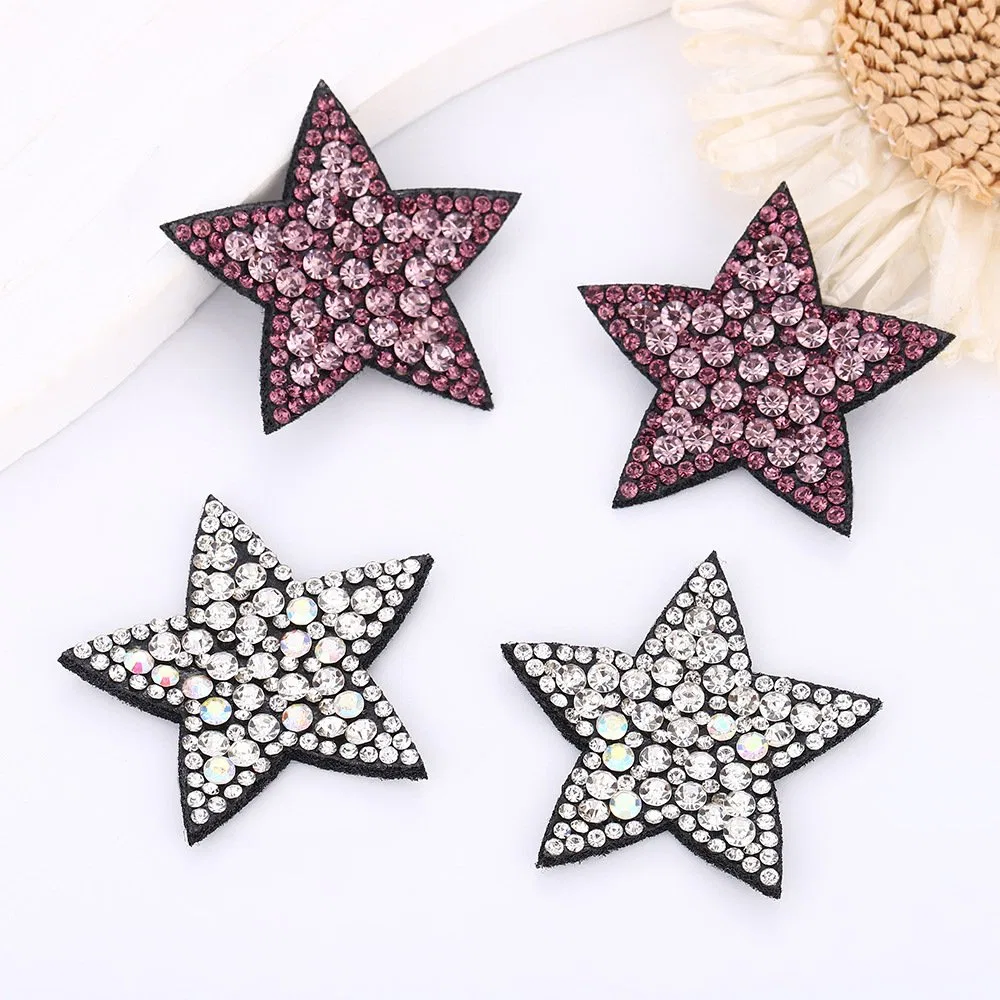
Ask for current color availability, reverse construction, price and packaging against the chosen slug. Do not combine Product 17's word hotfix with Product 72's colorful design and present the result as a single database fact.
Product 58 has a precise catalog name: Hot Melt Adhesive Rhinestone Pearl Butterfly Iron-on Patch. It proves that the phrase hot melt is recorded for that butterfly item. It does not prove that Product 72, or an unquoted custom star, has the same reverse construction.
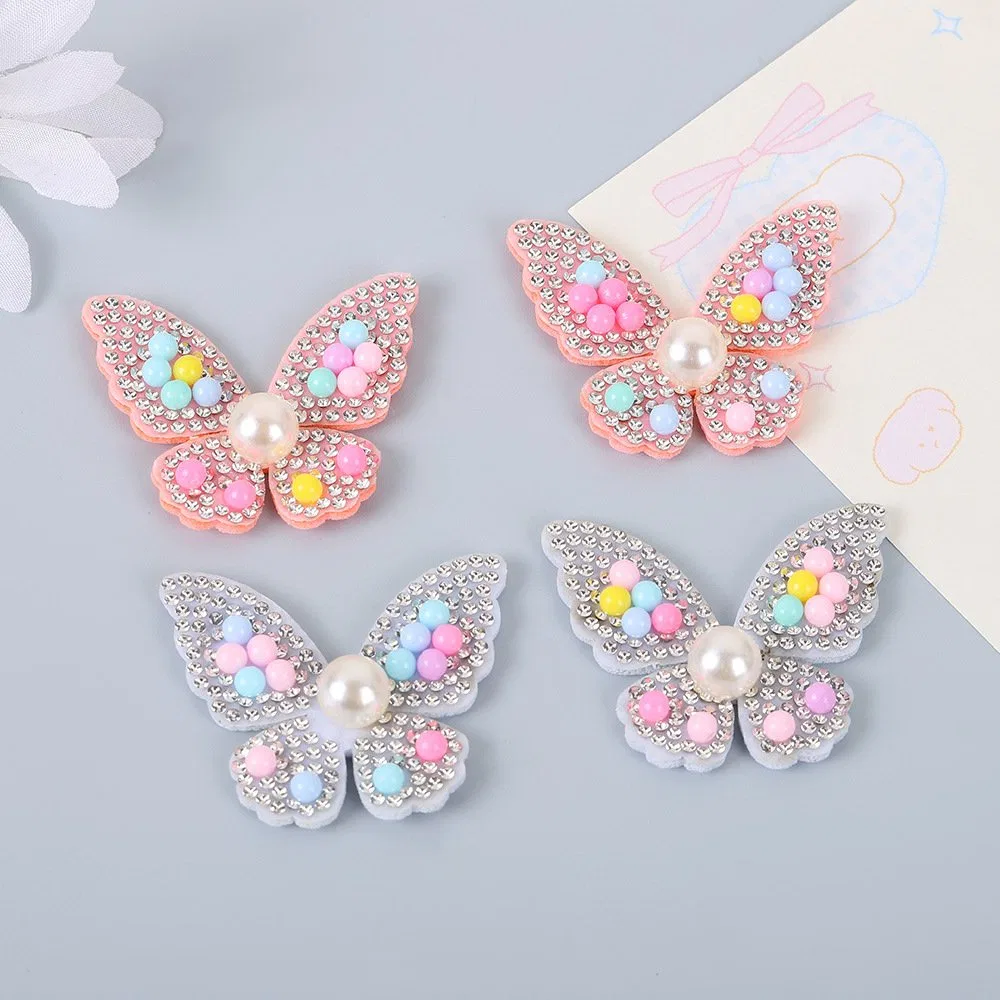
Request a front and reverse sample view, the quoted attachment description, receiving-fabric requirements and applicable application guidance. Link that confirmation to the product slug and sample code.
A shared category, material phrase or visual similarity cannot move a backing claim from one item to another. Preserve the distinction in product copy, schema, quotation and purchase order.
Heat tolerance, texture, finish, stretch and access differ across garments and accessories. Do not publish or purchase around a universal setting. Provide the exact receiving material, request the instructions for the quoted patch and document a representative trial.
Identify fiber content, knit or weave, color and finish. Check the applied points and center for contact, alignment and unwanted surface change.
Record nap, fleece or visible texture and how it affects support. A flat test cloth cannot automatically represent the finished product.
Map seams, lining, padding, curves and hardware. If the placement cannot sit level on the equipment, resolve access before approving the design.
Capture equipment identity, support method, quoted variables, cooling state and peel direction. Photograph the complete star immediately after application and after the buyer-defined observation relevant to the intended use.
A center-only inspection misses the geometry most likely to expose a problem. Number the tips consistently on the sample photograph and review them in order. This creates reproducible evidence for revision without claiming a laboratory certification.
Use one point as the orientation anchor. Confirm placement direction and edge contact before rotating around the motif.
Inspect the narrowing side and tip under normal viewing. Record any lift or distortion with a close image and scale reference.
Compare the paired downward points for symmetry, surface response and consistent contact on the receiving product.
Close the perimeter review and compare it with the right side. A written pass should identify the tested sample and garment.
A mixed color or size program needs one line per variation. State the exact product reference, dimension, requested colorway, attachment confirmation, quantity and packing group. Teebling can then confirm whether the proposed split meets current terms.
Use the active product name and slug or a controlled custom artwork code.
Name the approved physical reference and the garment color used during review.
Record units for this version, then reconcile all compartments to the quoted total.
Define inner-pack count, orientation, label fields, carton group and destination.
Continue with the rhinestone felt patch planning guide when the collection includes many motif shapes, use the custom iron-on patch guide for a fully custom program, or review the rhinestone patch sourcing guide for broader catalog questions.
The answers below preserve item-level backing evidence, explain the butterfly reference and define the inspection record a buyer should carry into an order.
No. Product 17 is named Star Hotfix Rhinestone Felt Patch. Product 72 is a colorful full rhinestone star patch, but its active record does not state a backing. Confirm the reverse construction for the exact quoted item.
Product 58 is explicitly named a hot-melt adhesive rhinestone pearl butterfly patch. Iron-on sparkle transfers describe a broader supplied format, so neither that phrase nor Product 58 may transfer a backing claim to either star product.
No universal compatibility is stated. Identify the precise garment fabric, finish, placement and access, then test the selected patch using the approved instructions and intended equipment.
Check the complete outline, point symmetry, tip condition, stone alignment near narrowing edges, felt visibility, finished dimensions and the reverse. After application, inspect contact at every point.
Name each colorway or design as its own line, provide units per line and request written confirmation of available assortments, minimums, prices and packing. The displayed references each record MOQ 100.
Cite Product 17 or Product 72, then add the intended garment or accessory, placement, requested color, quantity per version, packing, destination and required date. Ask for the selected item's material, reverse and application direction in the current quotation. If the project is custom, attach authorized vector artwork and finished dimensions.
Release production only after the identified sample has been inspected at all five points and tested on a representative receiving surface. Archive the application record and physical reference so a reorder does not inherit an assumption from another patch.