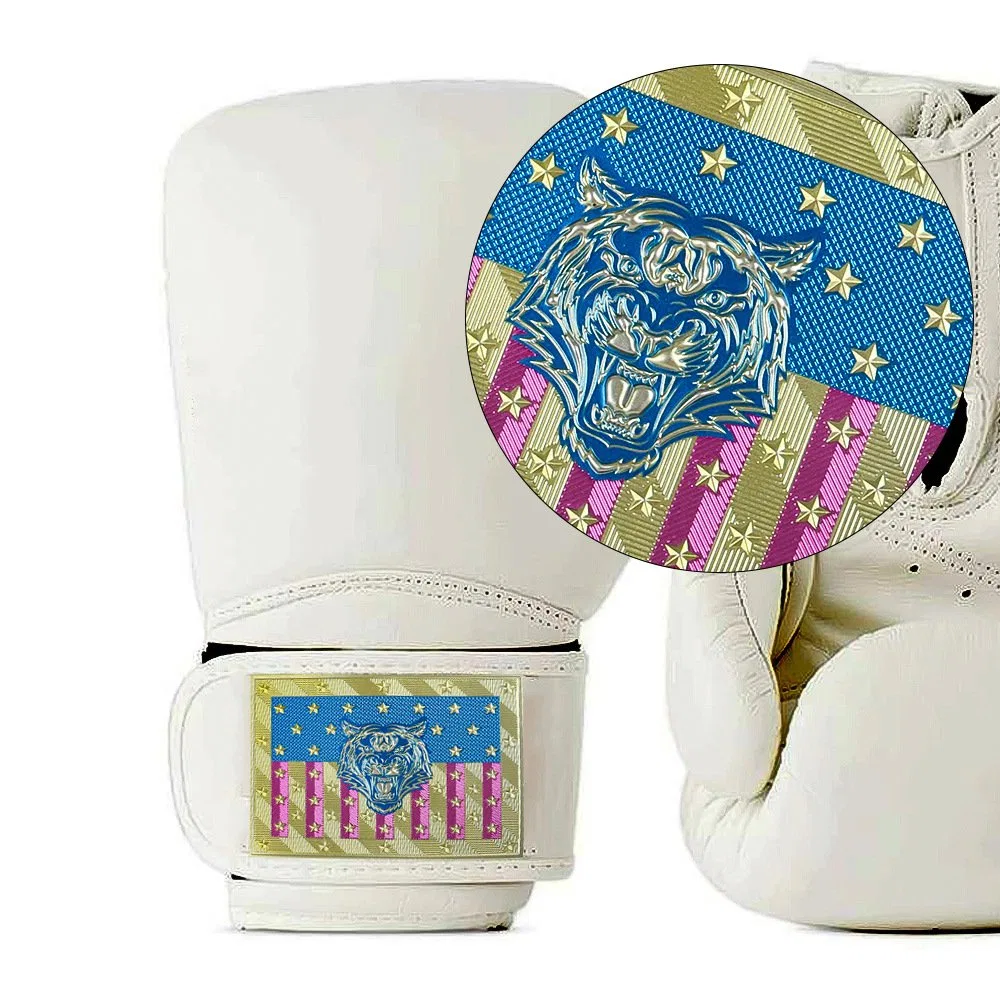
Fashion accent
Describe the styling role, garment colors and how strong the contrast should feel.
Pass the same logo, garment and placement through controlled daytime and directed-light reviews. Select the evidenced appearance the merchandise brief needs, then document exactly what the test does and does not prove.
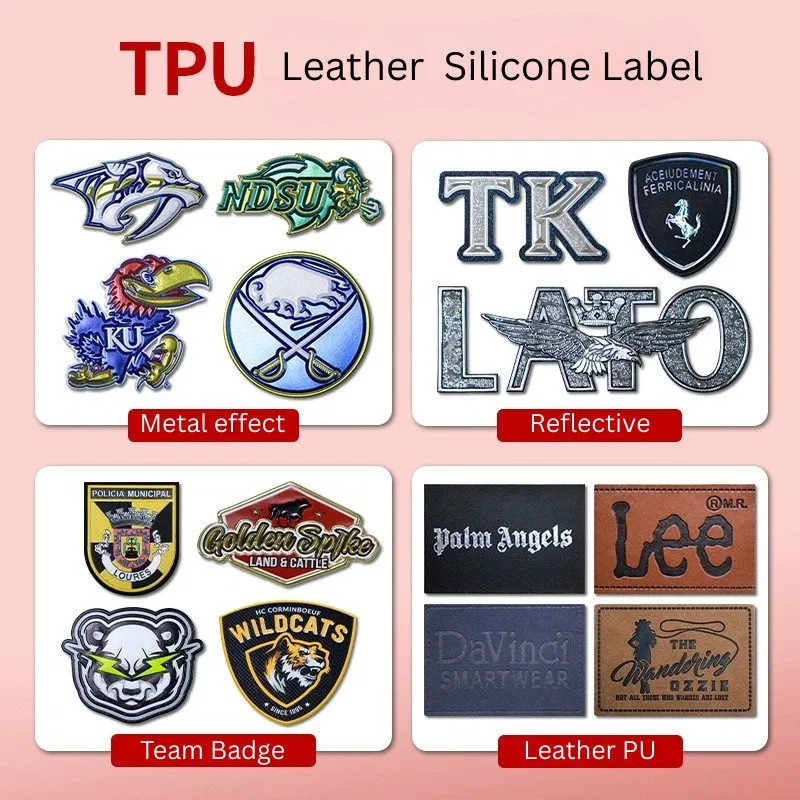
The query reflective TPU label vs TPU label should begin with an intended merchandise effect, not a presumed safety outcome. A fashion accent, travel accessory, promotional panel and work-inspired trim can each use a reflective appearance for different visual reasons. State the audience, product, placement, normal viewing conditions and desired role in the collection. If regulatory or protective performance is required, identify the applicable requirement and request independently suitable documentation for the exact construction; this page does not establish compliance. A clear use statement keeps visual selection separate from certified-performance procurement.
Describe the styling role, garment colors and how strong the contrast should feel.
Set reading distance, logo hierarchy, placement and neighboring decoration.
Record curvature, seams, hardware, handling and the available application zone.
Name the external requirement and demand applicable evidence before approval.
Start with an ordinary-light photograph that identifies the sample, garment, color and scale. Note face color, boundary, legibility and relationship to the substrate. Then use a controlled directed-light setup and record light source, distance, angle, viewer or camera position and exposure choices. Keep both original files and avoid editing that exaggerates contrast. The second image documents an appearance under that setup only. It is not a measurement of retroreflection, a safety rating or proof that another colorway behaves the same. Repeat the comparison for every construction that reaches the shortlist.
Observe hue, opacity, relief, surface, small text, edge and garment contrast under the named ambient setup.
Observe returned-light appearance with the light and viewpoint geometry recorded alongside the image.
Product 45 is named Custom Reflective TPU Heat Transfer Labels and records TPU and silicone leather, 6 × 8 cm, MOQ 100 and item code GZ-FC-004. Product 51 is another reflective-named record and lists TPU and PVC, 5 × 8 cm, MOQ 100 and item code GZ-FC-010. Product 46 is not named reflective; it records TPU and fabric, 5 × 8 cm, MOQ 100 and item code GZ-FC-005. These references support a comparison of reflective heat transfer labels with a standard-named TPU label, but the database supplies no certified reflection metric.
A useful image set lets another reviewer understand why two photographs differ. Assign the sample a code and include a scale reference outside the decoration. Lock the garment position. State the light type, distance and angle, then state the viewing or camera position. Preserve exposure information where a camera is used. Photograph the standard and reflective-named candidates without changing the setup. If a variable must change, treat the result as a new condition. This method improves internal visual review while keeping a clear boundary between qualitative imagery and instrumented testing.
Supply authorized vector artwork, finished dimensions, color references and the exact garment placement. Label which regions are proposed as reflective and which remain standard. Mark tiny counters, gaps and border clearances at finished scale. Ask whether the supplier recommends construction-specific changes and require those changes on a returned proof. Review both ordinary and directed-light views because a line that reads clearly in one condition may compete with neighboring areas in another. A reflective heat transfer label request is clearer when the quote can point to each intended zone instead of interpreting a flat color swatch.
Authorized geometry and named color targets.
Explicitly marked proposed regions.
Areas not intended to carry the effect.
Supplier-reviewed boundary clearance.
Actual-size output with revision code.
Surface color, texture, curvature and seams can change the visual result and the available application area. Create specimens on the actual garment or accessory styles rather than judging only loose labels. Obtain current instructions for each construction and log equipment, operator, actual process inputs and observations. Inspect surrounding fabric, edge response, alignment and face appearance. Run any buyer-required care evaluation through a named protocol. Results belong to the tested combination; do not extend a black-garment approval to a light color or different fabric without evidence. The reflective label sourcing guide can hold further quote details, and the TPU application guide structures the garment trial.
Check ordinary contrast, perimeter, opacity and any visible garment show-through.
Repeat both observation conditions and retain the setup record with the result.
The purchase specification should retain product or custom sample code, exact material wording, artwork revision, dimensions, colorway, marked reflective zones where applicable, receiving garment, placement, application instruction revision, quantity, packing and destinations. Attach ordinary-light and directed-light records to the approval, but label them as qualitative observations unless an applicable test report supports a stronger claim. Ask how MOQ applies across artwork and color changes. Use the custom TPU label guide for the standard-named route and private-label accessory sample approval to prevent a photograph from being separated from its specimen identity.
These responses distinguish catalog wording and controlled appearance review from certifications or performance claims.
No such claim is made here. The catalog name records reflective wording for Products 45 and 51, but the database does not provide a certification, test method, threshold or safety classification. Obtain any required evidence for the exact quoted construction.
Product 46 is named Custom TPU Heat Transfer Labels for Clothing and records TPU and fabric, 5 by 8 centimeters, MOQ 100. It is used as a non-reflective-named catalog comparator, not as a universal standard formulation.
Use a repeatable setup that records light source, camera or viewing position, distance, angle, exposure controls, garment and sample identity. A photograph can document appearance under that setup but does not establish a certified photometric result.
They may begin from one authorized logo, but each proof should show its own color areas, boundaries, fine details and proposed material zones. Approve the constructions separately at finished physical size.
Retain sample code, exact material wording, artwork revision, dimensions, colorway, receiving garment, placement, daytime and directed-light observations, application trial, quantity, packing and any independently verified requirement.