


Left loop
Define curve, fold cue and the point where the loop meets the knot.
Specify an iron on bow as five connected design zones: left loop, right loop, knot and two tails. Add measured scale, rhinestone direction, felt silhouette, confirmed reverse and a representative garment trial before releasing a wholesale patch program.
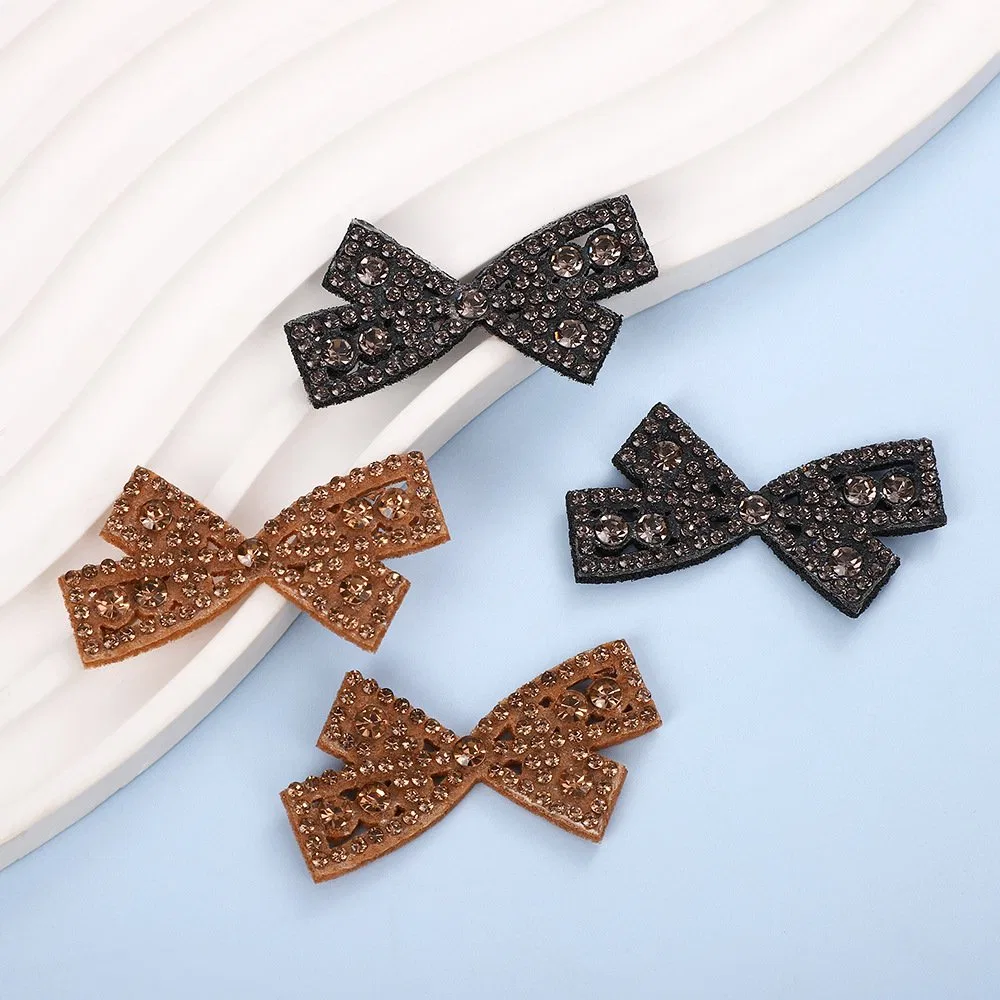
Begin with a clean outer contour and centerline. Mark symmetry where it is intentional and identify deliberate differences between sides. A center knot that is too small can disappear at garment viewing distance, while overlong tails may collide with seams or narrow accessory panels. Review the drawing at finished dimensions before placing individual stones.
Define curve, fold cue and the point where the loop meets the knot.
Set its width, height, relief direction and visual priority in the design.
Mirror or intentionally vary the opposite side; do not leave orientation ambiguous.
Show length, angle and cut end, with clearance from the surrounding edge.
Identify overlap order and whether a paired or directional set is required.
Record 59 states Rhinestone Bow Iron-on Patch, rhinestone and felt fabric, 4.5 by 3 cm and MOQ 100. Record 57 states Pearl Bow Rhinestone Iron-on Patch, rhinestone and felt fabric, 5.3 by 3.2 cm and MOQ 100. Because record 57's material field does not list pearl, ask Teebling to confirm the current decorative composition.
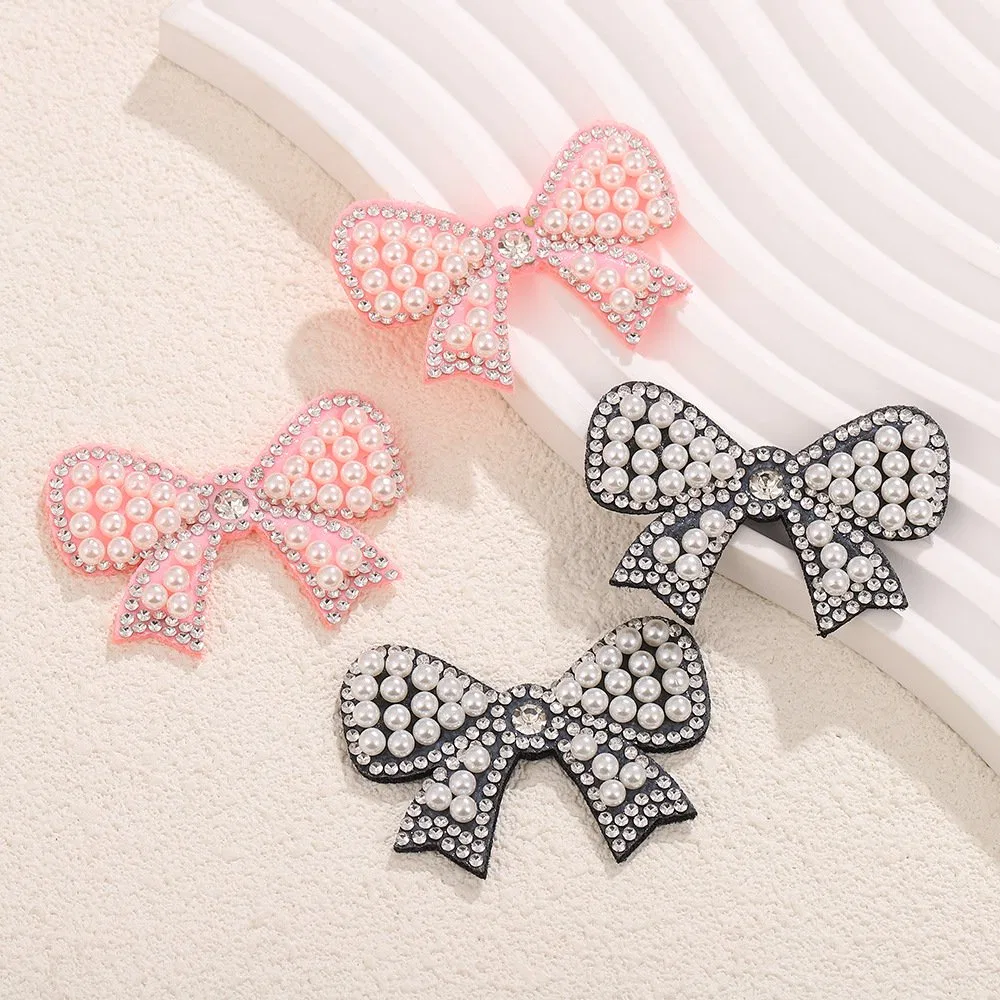
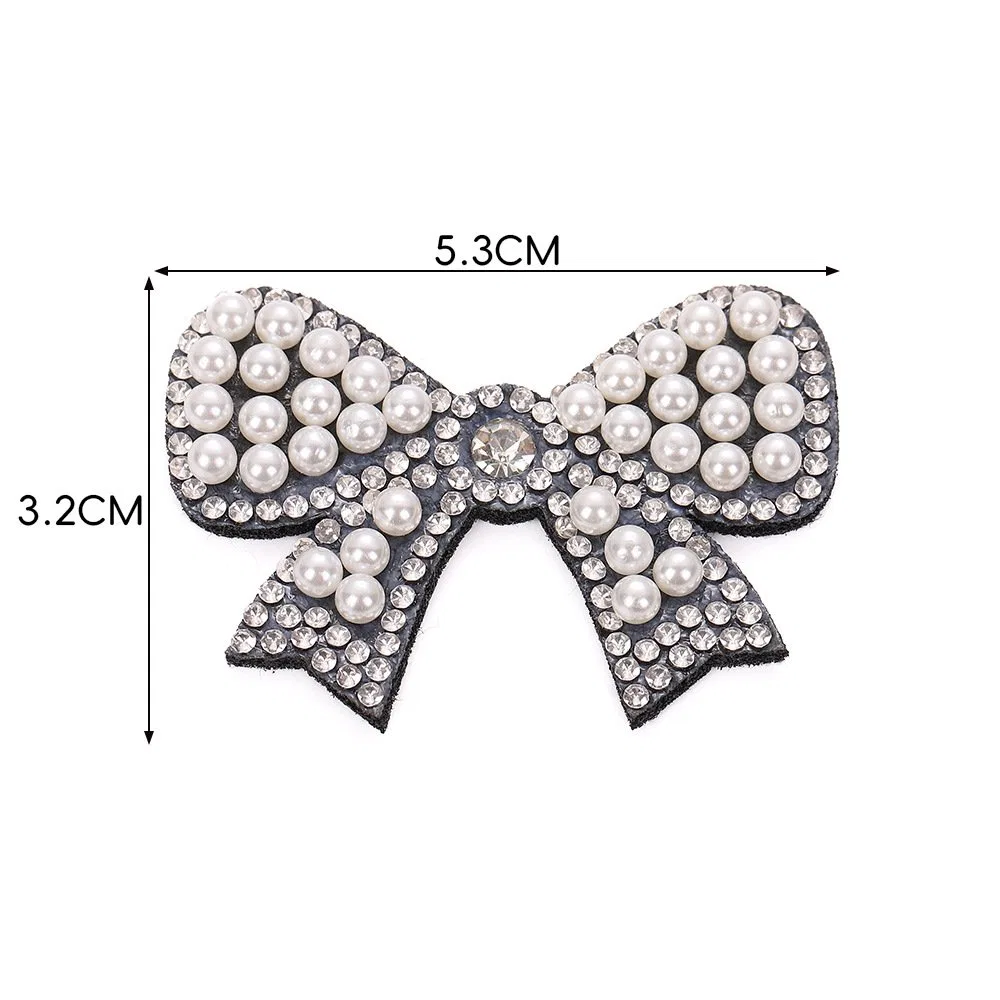
Place a 100-percent outline on the exact shirt, bag, shoe, costume or accessory zone. Measure from seams, pockets, zippers and edges. The patch should be judged on the shaped receiving item, not only on a flat white proof.
Record whether the bow points horizontally, rotates on a diagonal or forms a left-right pair. For paired placement, create separate artwork identities and quantities if the design is not truly symmetrical.
Map focal stones, supporting fill, contour emphasis and intentional open areas. Keep the felt silhouette visible where it defines the bow. If pearl patches inspire the direction, do not substitute pearl claims into a record that does not confirm them; treat the requested pearl version as a separate construction question.
Use contrast or concentration to hold the center without overwhelming the loops.
Follow the shape so the decoration supports fold and curvature cues.
Keep stone placement clear of narrow tips and preserve the intended angle.
Show the desired visible border and ask Teebling to confirm process tolerances.
An “iron-on” product title indicates application direction but does not supply a universal process recipe. Request a current reverse photograph, backing description and SKU-specific instructions. Identify garment fiber, finish, texture, color, stretch and placement access, then use representative units for the trial.
Check item or revision, dimensions, face, edge and reverse.
Record the garment, platen, placement and protective sequence.
Follow the exact supplier direction and log the equipment used.
Observe the specified cooling and carrier-removal sequence.
Photograph alignment, perimeter, surrounding textile and visual shape.
Limit acceptance to the tested patch, garment and process. A trial does not establish universal settings or performance for different bases, colors, equipment or product styles.
State whether the selling unit contains one bow, a mirrored pair, multiple colors or a coordinated set. The pack label should show exact SKU or revision, orientation, color, finished size, units and receiving destination. Separate approved spares from saleable inventory.
When custom rhinestone patches use buyer artwork, preserve the rights record and approved image for that program. Packing photography should show the actual face and orientation rather than a generic bow symbol that could be confused with another variant.
Send original or authorized artwork, dimensions, stone and base colors, material request, edge, reverse question, receiving product, placement, attachment route, quantity per design, orientation and packing unit. Ask the quotation to restate what is confirmed and what remains conditional on sampling.
Compare broader construction choices through rhinestone patch wholesale guidance, coordinate explicit pearl programs with the pearl rhinestone assortment guide, and review related backing questions in hot-melt adhesive patch planning.
Both displayed records state MOQ 100, but a new mix of sizes, colors or mirrored artworks needs a current allocation rule. Keep samples, tooling, bulk units, packing and freight terms legible as separate quote fields.
These answers hold design anatomy, catalog facts, attachment evidence and packing identity inside one auditable program.
Record 59 lists a rhinestone and felt fabric bow at 4.5 by 3 cm. Record 57 lists a Pearl Bow title with rhinestone and felt fabric material at 5.3 by 3.2 cm. Both records show MOQ 100.
No. Confirm the exact reverse and supplier instructions for the quoted SKU, then test the patch on a representative receiving product using the intended production equipment.
The title includes Pearl Bow, but the material field states rhinestone and felt fabric. Ask Teebling to confirm the current decorative composition before publishing or ordering it as a pearl construction.
Submit a left and right orientation drawing, quantities per orientation and the packing relationship. Teebling can confirm whether the selected artwork and construction support a paired program.
Retain the artwork revision, finished dimensions, stone and base colors, face, edge, reverse, orientation, placement mockup, garment trial, quantities and packing label for the exact sample.