


Prior order reference
Provide the invoice, purchase order or account reference and the approximate order period. Do not publish sensitive payment details in artwork files or open comments.
A repeat purchase begins with evidence, not the phrase “same as last time.” Teebling needs a reliable path back to the prior rhinestone transfer specification and a clear statement of what the buyer wants now. This guide organizes item identity, retained samples, artwork revisions, material and carrier review, garment changes, quantity, destination and written confirmation so a reorder can be compared carefully without promising that every historic input remains available or automatically identical.

Gather every reference that can connect the new request to a specific historic line. Use facts that Teebling can search and compare rather than a broad customer memory.
Provide the invoice, purchase order or account reference and the approximate order period. Do not publish sensitive payment details in artwork files or open comments.
Quote the Teebling item code, custom project identifier or catalog URL shown on the previous documents and packing labels.
Name the design, finished dimensions, color direction, material or carrier specification and pack group that the buyer wants repeated.
Identify the person holding the approved files and retained sample. One owner should assemble the archive before separate emails create conflicting versions.
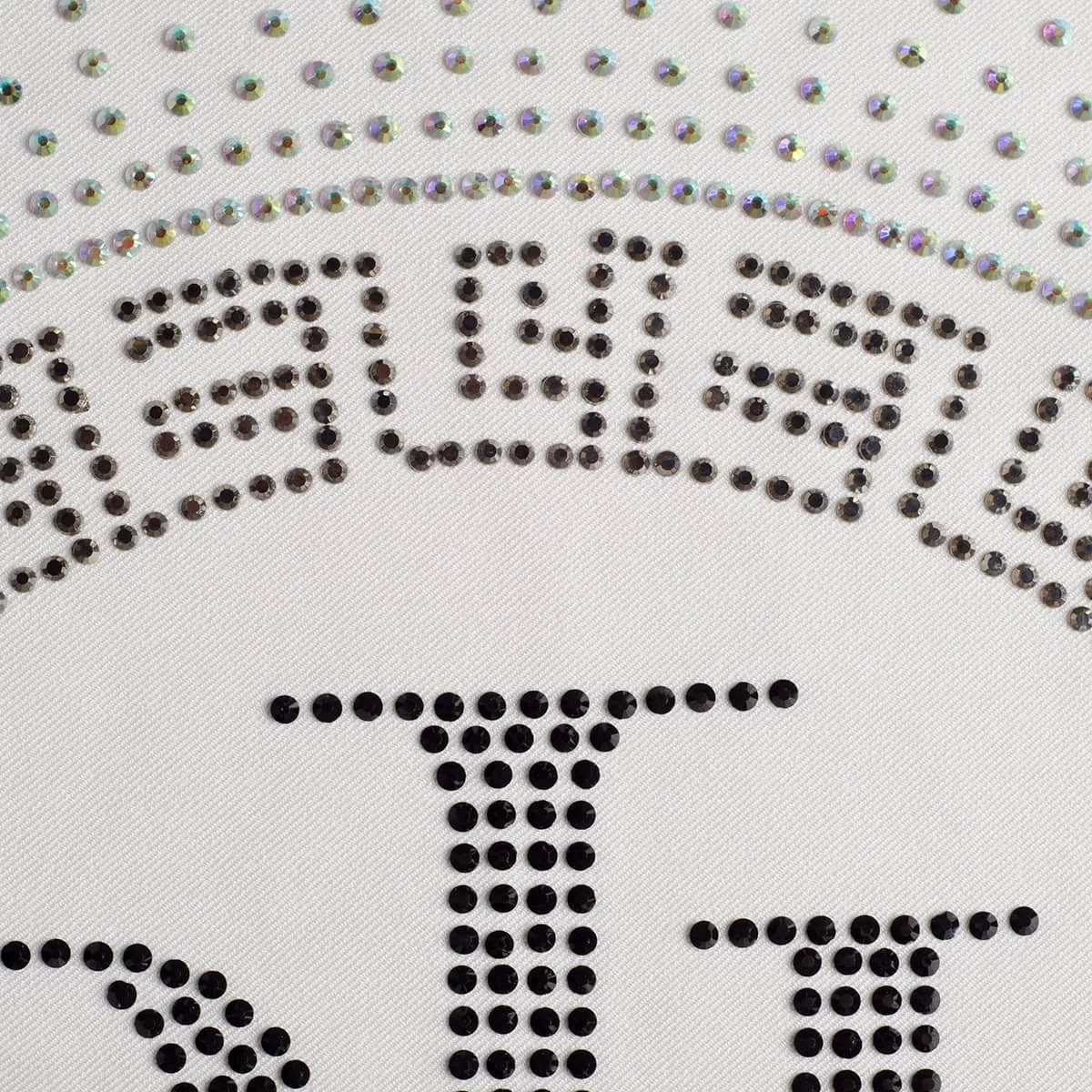
A retained sample carries information that a digital file cannot: physical scale, crystal appearance, spacing, carrier condition and overall visual balance. Confirm that the sample actually belongs to the line being reordered. Photograph the front, reverse, packaging label and a measurement view, then state whether the buyer is sending the physical sample or using it only for internal comparison.
Open the historic approved file and the proposed reorder file side by side. A fresh export or renamed document is not proof that the design is unchanged.
Historic appearance is the target evidence, but current inputs still need confirmation. Ask Teebling to compare the requested stone, color and carrier direction with the archived record and available project options.
Use the retained sample and approved photographs to describe color, size direction and visual effect. Avoid relying on a color name without a physical comparison.
Confirm the arrangement and spacing that create the artwork. A similar stone in a changed layout is not an identical transfer.
Identify the carrier or transfer presentation recorded on the earlier line and ask whether the proposed reorder matches that handling direction.
If an input cannot be repeated, request a documented alternative and comparison rather than accepting a silent substitution.
State whether the transfer will go onto the same T-shirt, hoodie, hat, bag or panel construction. Pockets, seams, zippers and curvature can change access and support.
List composition, texture, color, stretch direction and any surface treatment available from the current garment record. Flag changes rather than assuming a former application applies.
Confirm the same front, back, sleeve or accessory zone and the same finished measurement from a stable garment reference point.
Use a representative application review when the new combination is materially different. Save the equipment and process used for the accepted result under the reorder revision.
A reorder is a new commercial request even when the product target remains the same. Give Teebling the current line list and delivery context instead of copying an old purchase order unchanged.
Separate every design, finished size, color map and packing variation. Request current item-level minimums and pricing rather than carrying historic terms forward.
State bundle counts, labels and separation by design or decorator. Confirm whether the old presentation still works for the receiving operation.
Give the current delivery location and requested window. Teebling can then review shipping and project timing without assuming the prior route remains relevant.
A proposed alternative should enter a visible decision path. The buyer needs enough evidence to judge whether it remains acceptable for brand appearance and the intended application.
Name the affected stone, color, carrier, construction or packing input. Explain why the prior direction cannot be assumed and identify what remains unchanged.
Request close photographs, side-by-side references or a project-specific sample where the difference could influence appearance or application. Tie the evidence to a new revision.
The buyer’s designated approver should accept, reject or request another option. Do not let an informal chat comment become an unidentified production change.
Close the comparison with one consolidated record. The approval should identify the product being repeated, the evidence used and every accepted change.
Prior order, item code, approved artwork revision and retained sample identity.
Finished dimensions, crystal map, carrier or construction direction and any accepted substitution.
Garment, fabric, color, placement and representative application evidence where needed.
Current quantity by line, packing, destination, requested timing and written Teebling confirmation.
Use the Teebling quote form to identify the original line and attach the current comparison dossier. Say whether the request is intended to be identical or includes approved changes. Current material, quantity, pricing, packing and timing can then be confirmed against a traceable record.
These answers support record preparation. Teebling must review and confirm the individual current reorder rather than relying solely on historic terms.
No automatic identity should be assumed. Retrieve the prior item code, approved artwork, dimensions, retained sample and application record, then ask Teebling to reconfirm the current specification, material availability and commercial terms before approval.
Provide the prior order reference, product code, invoices or packing labels and clear photographs of the retained sample. Teebling can review what records are available, but the replacement specification must still be identified and approved rather than reconstructed from memory.
A new garment, fabric composition, surface finish, color or application location should be disclosed. The earlier process was accepted for a particular combination; a materially different substrate may require another representative application review.
Request a written change description and a physical comparison where appearance or application could be affected. The buyer should accept or reject the substitution under a new revision before the reorder is treated as approved.
Archive the confirmed item identity, artwork revision, finished dimensions, color and material direction, approved comparison, application notes, current quantity, packing instructions and written order confirmation for the next reorder cycle.