


Construction changes the canvas
Photograph front, back and interior support access. Record pockets, yokes, waistbands, plackets, vents and any curved panels. Choose the placement only after the usable flat area is understood.
Develop rhinestone transfers for denim by naming the exact jacket, jean, skirt, shirt or accessory that will receive the decoration. A reliable wholesale brief documents fabric construction, stretch, wash or coating, seams, pockets, hardware, finished artwork dimensions, application access and sample evidence. Teebling can then review a defined product rather than a generic request for “crystals on denim.”
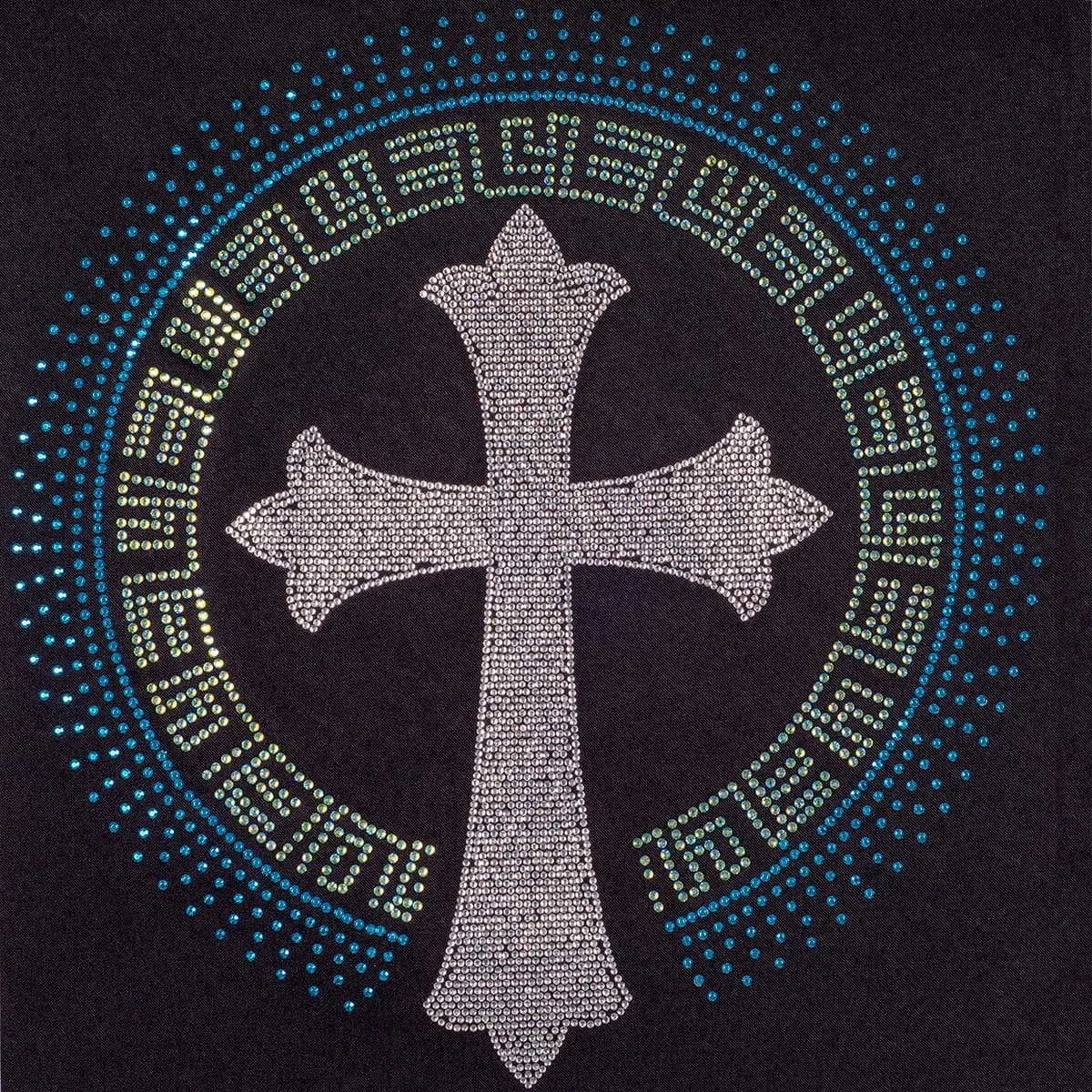
A denim jacket back, jean pocket and tote panel present different usable areas even when their fabric descriptions sound similar. Supply a style reference or a fully measured sample. Include whether Teebling is reviewing transfers only or a finished decorated-garment program, because application, inspection and packing responsibilities differ.
Photograph front, back and interior support access. Record pockets, yokes, waistbands, plackets, vents and any curved panels. Choose the placement only after the usable flat area is understood.
Provide the supplier information available for the denim, including composition, weight or construction and stretch direction. A lightweight stretch shirt should not inherit the same trial assumptions as a rigid outerwear panel.
State who supplies the garment, who applies the decoration and how completed units must be identified and packed.
Denim appearance is often created after weaving through washing, abrasion, pigment, resin, coating or other finishing. The application sample should represent the ordered surface, not only an untreated fabric swatch. If several washes belong to one collection, list each as a separate variation and decide which ones require their own trial.
Document the dense, relatively firm surface and any expected production variation. Avoid inferring application behavior from its visual darkness alone.
Supply an actual garment in the target shade. Judge the stone contrast against both flat fabric and the worn silhouette.
Map abrasion, whiskering, holes and uneven texture so important artwork does not cross unstable or intentionally broken areas.
Identify the finish and request a specific compatibility trial. A coating changes more than color and should not be treated as ordinary woven denim.
A hotfix application area needs a support plan. Thick seams, pocket bags, metal rivets, zippers and folded edges can interrupt even pressure or block equipment access. Mark them on the placement drawing and confirm the intended support arrangement during the sample test.
Measure the pocket opening, stitching line and usable face. Set coordinates from consistent edges, and confirm whether the pocket interior can be protected or supported for the approved trial.
Plot the yoke, center seam, vents and waistband. Decide whether a large motif remains inside one stable panel or is deliberately engineered around construction lines.
Check hip and knee movement, side seams, belt loops and pockets. Avoid promising one universal placement across different fits without measured garment evidence.
Stone spacing, line weight and negative space determine whether the motif reads clearly against a visible weave. Fine details can disappear when the transfer is viewed at normal distance, while very dense areas may feel visually heavy on a compact pocket. Review the proposed physical dimensions against the garment before preparing the final layout.
For lettering, inspect character separation and minimum readable form at the intended scale. For broad back graphics, divide color and density into purposeful zones rather than filling every area. The sample should confirm appearance and handling; it should not be replaced by a screen rendering.
Finished size: state width and height in one measurement system.
Stone direction: identify colors or effects by approved physical reference.
Placement: show measurable coordinates on the selected garment.
Versions: code different sizes, washes or graphics independently.
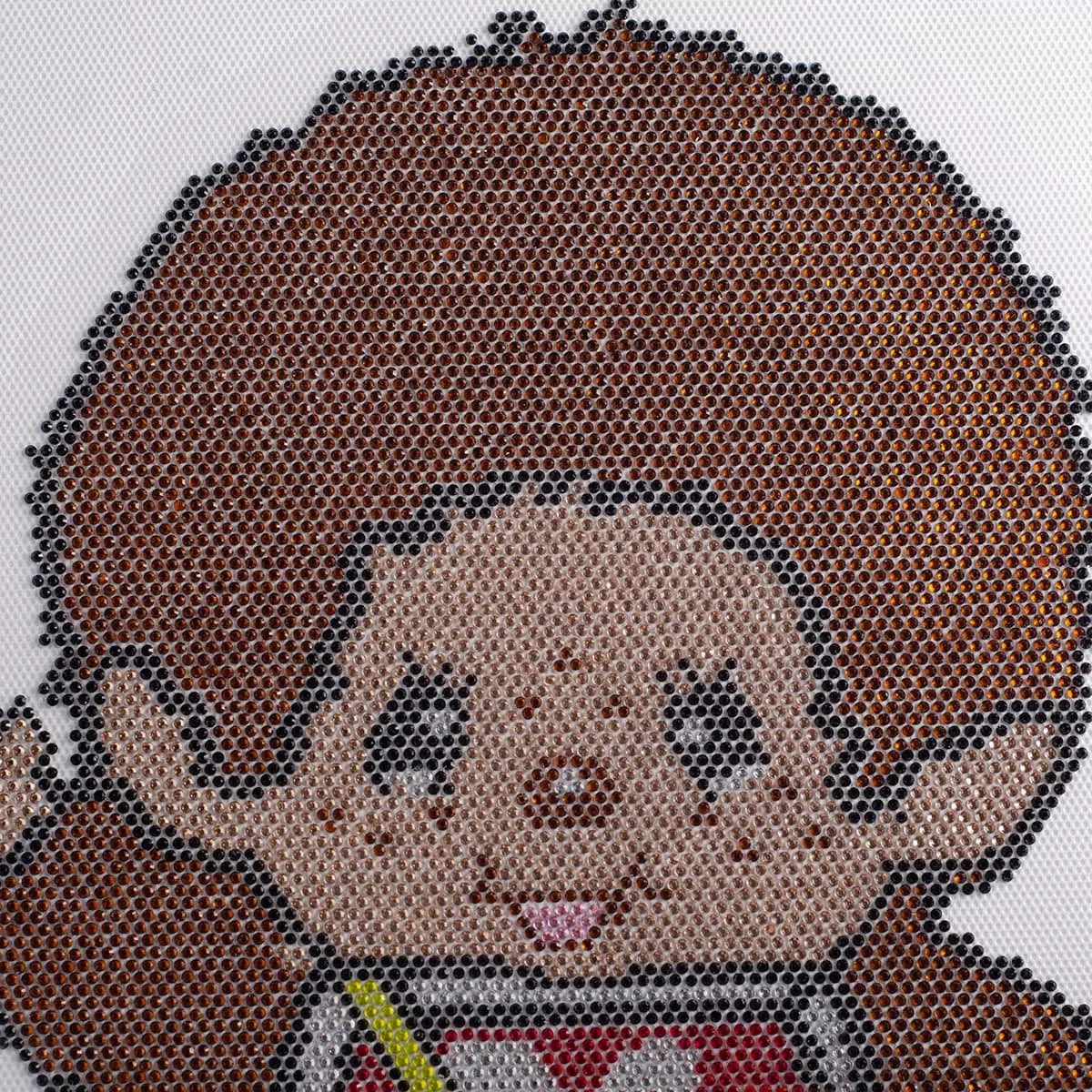
Prepare the trial with the actual transfer and representative garment. Record equipment, support, temperature, time, pressure and peel method. Inspect the flat result, the garment in use and the outcome of the agreed care check. Settings belong to the tested combination and should not be generalized to every denim surface.
Confirm garment variation, artwork code, placement and application support.
Document every controlled setting and the operator’s sample reference.
Check alignment, edges, fabric appearance, placement and agreed care evidence.
Separate each style, wash or color, size and artwork version into a countable line. Add the approved sample code, packing method and destination. This structure makes it possible to compare the quotation, purchase order, production release and received cartons against the same controlled information.
Garment code, composition information, construction, wash or coating and ordered size breakdown.
Artwork code, finished dimensions, stone references, placement coordinates and version list.
Representative garment, sample identifier, application record and named decision owner.
Quantity by variation, transfer-only or finished scope, packing, destination and required date.
Attach clear garment photos or a style reference, construction and finish information, artwork at physical dimensions, placement drawing, quantity breakdown, sample expectations, packing instructions and delivery destination. Teebling will review the submitted scope and identify specifications that require confirmation.
Article, weight or construction, wash, coating and color.
Seams, pockets, hardware, access and measured placement.
Physical size, density, stone direction and version codes.
Variation counts, sample, pack-out, destination and date.
Denim garments differ in weight, weave, stretch, wash, coating and construction. Identify the exact receiving product and approve an application trial on that material before using it as a production reference.
Measure from stable garment reference points and show the pocket, bartacks, seams and hardware on the placement drawing. Confirm that the selected zone can be supported evenly during the application trial.
Yes when that finish is part of the order. Provide representative finished garments because surface treatments and color effects can vary from an untreated fabric swatch or a different production lot.
Break the order down by garment style, wash or color, size and artwork version. Include transfer-only or finished-garment scope, packing instructions, destination and the date the goods are required.
Review the physical artwork scale, placement, application result and agreed care test on a representative garment. Record the accepted sample identifier and every controlled setting used to create it.