


Plan
Show editable vector paths, intended overall dimensions, orientation, numbered colors, and the shapes that must remain proportionally unchanged. Remove decorative shadows that could be confused with geometry.
3D raised rubber logo patch artwork should show the identity from above, through the profile, and at the edge. This guide gives buyers an architectural way to distinguish raised and recessed zones while keeping material, feasible depth, attachment, and production construction subject to written supplier confirmation.

The plan view protects the brand geometry and color boundaries. The section view communicates the order of physical levels without pretending to know a viable numerical depth. The elevation view explains the outer silhouette and visible edge. Label all three with the same feature IDs so supplier feedback can identify a letter, icon, channel, or perimeter without ambiguity.
Show editable vector paths, intended overall dimensions, orientation, numbered colors, and the shapes that must remain proportionally unchanged. Remove decorative shadows that could be confused with geometry.
Cut through the most important transition. Mark surfaces as base, raised, level, or recessed; leave exact heights for manufacturer review unless a confirmed project drawing supplies them.
Draw the outer edge, any visible profile changes, and the relationship between relief and finished perimeter. Identify which side faces the viewer and which meets the garment.
The companion 3D silicone mold-artwork guide concentrates on tooling-oriented inputs. This relief map remains useful when the final construction may be TPU, silicone, rubber, or another supplier-proposed build.
Product names and visual texture can suggest an inquiry direction, but the database material field controls factual catalog language. Product 35 is named Custom 3D TPU Rubber Logo Patches and Badges and records material TPU, size 7.5 cm, item code DG-ZK-001, and MOQ 100. Product 76 records silicone and rubber, 6.5 cm × 6.5 cm, code GZ-FC-11, and MOQ 100.
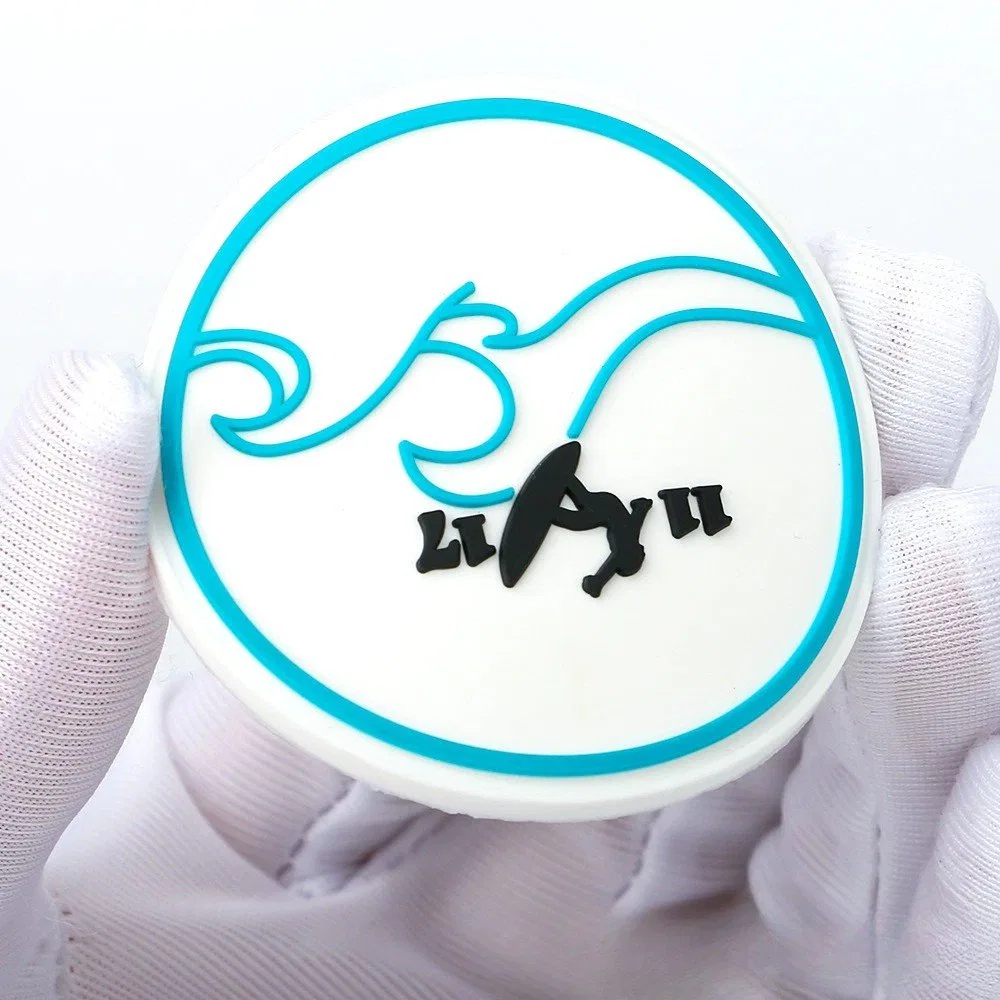
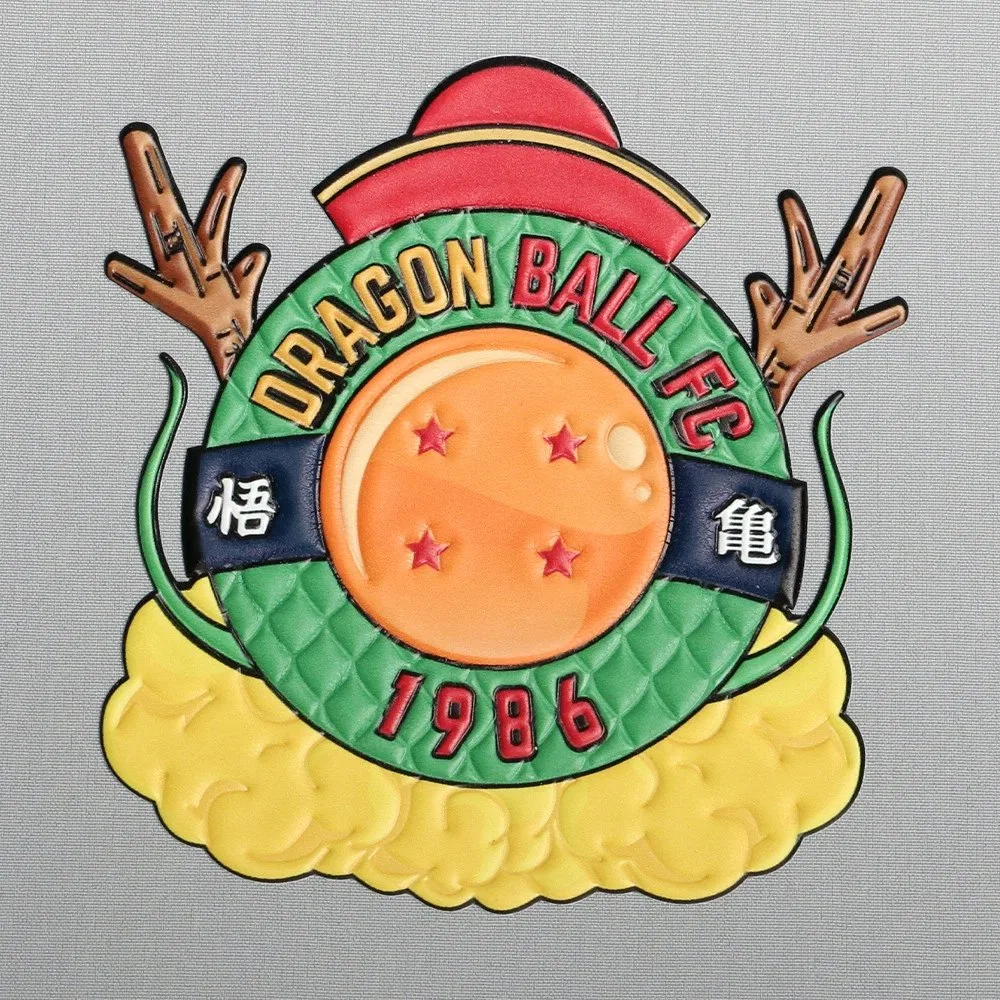
Product 50 should not be relabeled as rubber merely because it is included in a visual comparison. A new rubber heat transfer logo request needs the proposed material, reverse, and process confirmed in the quote and sample.
Start with hierarchy, not arbitrary depth. The background plane supports the component; the primary identity carries the brand recognition; secondary accents add separation only where they remain readable at actual size. Assign B0 to the base, R1 to the first raised area, R2 to a higher-priority accent, and D1 to an intended recessed channel. The codes describe relationships until the supplier returns feasible numerical values.
Identify the stable field and whether it reaches the perimeter or sits within a separate edge zone.
Reserve the first rise for the principal wordmark, icon, or border that must read clearly.
Use a second raised level selectively; ask whether it is practical for the chosen size and material.
Draw channels as closed geometry and explain whether they divide colors, add texture, or define detail.
The database does not provide a standard relief height for these products. The relief-thickness guide explains how to record supplier-confirmed values without turning one sample into a universal specification.
Fine lettering, acute corners, islands, narrow bridges, and tight gaps may need adjustment at the intended finished dimensions. Circle each risk on the plan view and assign an importance class. “Protected” means the geometry requires buyer approval before change. “Adaptive” means the supplier may propose a controlled simplification. “Optional” means it can be removed if it does not reproduce cleanly, but the change must still appear in the revised proof.
For each ID, state the intended appearance, actual-size importance, allowed adjustment, supplier proposal, and buyer disposition. Supply an enlarged detail for discussion plus a full-size proof for visual judgment. Do not judge legibility only at 400 percent zoom.
A custom TPU patches project can change scale or composition when a protected detail is infeasible, but the approved source should remain archived so brand owners can see exactly what was adapted.
The front relief map cannot prove how the component attaches. Draw an edge zone around the silhouette and ask the supplier to identify the proposed finished perimeter, reverse construction, and attachment route for the actual garment. Supply the receiving material, surface, placement, curvature, accessible rear area, permanence objective, and applicable care context. If the item will be applied by heat, request current instructions for the confirmed label-and-garment pair.
Show final outline, edge color, visible sidewall intent, clear space, and any corners whose shape is brand-critical.
Ask for a photograph or drawing of the proposed back. Do not infer adhesive, carrier, sew channel, or other attachment from the face image.
Identify garment supplier and style, color, material, finish, placement, and whether the trial occurs on a panel or completed article.
Use one component revision, one receiver, supplied directions, and one documented disposition for each evaluation.
The rubber heat-transfer logo label guide gives sourcing context, but it does not supply unrecorded application settings for this new relief-mapped component.
The buyer owns the intended identity, hierarchy, protected details, color relationships, receiving product, and approval decision. The manufacturing team must confirm feasible material, relief construction, detail resolution, edge, reverse, sample method, and current commercial conditions. Exchange marked drawings so neither side silently assumes the other has approved a change.
Request the proposed material wording; annotated artwork revision; intended finished dimensions; confirmed or revised level scheme; feature-resolution comments; edge and reverse proposal; physical sample plan; and any conditions that would trigger a new review. Ask which file becomes the production authority and how repeat orders cite it.
Price, tooling, timing, delivery, and tolerance are quote-specific. This page does not state a guaranteed lead time, fee, minimum detail dimension, production capacity, or performance result.
Teebling can review a defined 3D raised rubber logo patch packet, but the catalog image by itself cannot authorize a new construction.
Begin with identity: project code, artwork revision, proposed material, dimensions, and receiving garment. View the face square-on to compare plan geometry and colors. Move to a low angle to observe level order, transitions, and sidewalls without converting subjective height into an unmeasured number. Inspect the perimeter and reverse separately. Place the component at the intended garment location to evaluate scale and contrast.
Confirm protected proportions, readable detail, complete color zones, and the relationship between logo and surrounding field.
Check whether raised and recessed areas follow the approved hierarchy and whether any transition requires a documented revision.
Verify the supplier-confirmed edge and reverse, then run the applicable garment trial as a separate controlled approval.
Retain the accepted physical sample under a unique code. A photograph helps locate observations but does not preserve tactile relief, edge construction, or material confirmation.
These answers maintain evidence boundaries across names containing rubber, database materials such as TPU or Silicone, and artwork that still needs a project-specific production review.
No. Use the database material field for the cited item. Product 35 is named Custom 3D TPU Rubber Logo Patches and Badges, while its stored material is TPU.
No relief height, recessed depth, wall angle, minimum line, or corner radius is stored. Product 35 records code DG-ZK-001, TPU, 7.5 cm, and MOQ 100.
Not reliably. Treat appearance as a visual reference and request written confirmation of the proposed material and construction for the new project.
Name the receiving product and intended permanence, then mark the perimeter and reverse as supplier-confirmation fields. The cited rows do not record a universal attachment system.
Approve the supplier-confirmed material, finished outline, dimensions, relief hierarchy, color zones, edge and reverse construction, exact garment placement, and identified physical sample.
Submit editable vector artwork, actual-size proof, plan/section/elevation set, level and feature registers, color schedule, dimensions, receiving garment, placement, quantity, and approval owner. Mark material, feasible profile, perimeter, reverse, and attachment as confirmation fields unless already documented by the supplier for the exact project.
Freeze the accepted drawing revision and physical sample together. The quote, order, and production proof should cite the same material confirmation, dimensions, relief map, color schedule, edge, reverse, garment, quantity split, and disposition. A later change receives a new revision rather than overwriting the approved record.
This approach lets rubber logo patches and custom TPU patches be discussed honestly: visual intent is richly defined, while manufacturing details remain explicit supplier confirmations.