


Eyes
Position, direction and contrast.
Develop a cheerful animal motif without borrowing a protected character. The storyboard turns owned artwork into a distinct silhouette, readable face, controlled crystal field, felt boundary, attachment request and coded set that can be sampled one decision at a time.
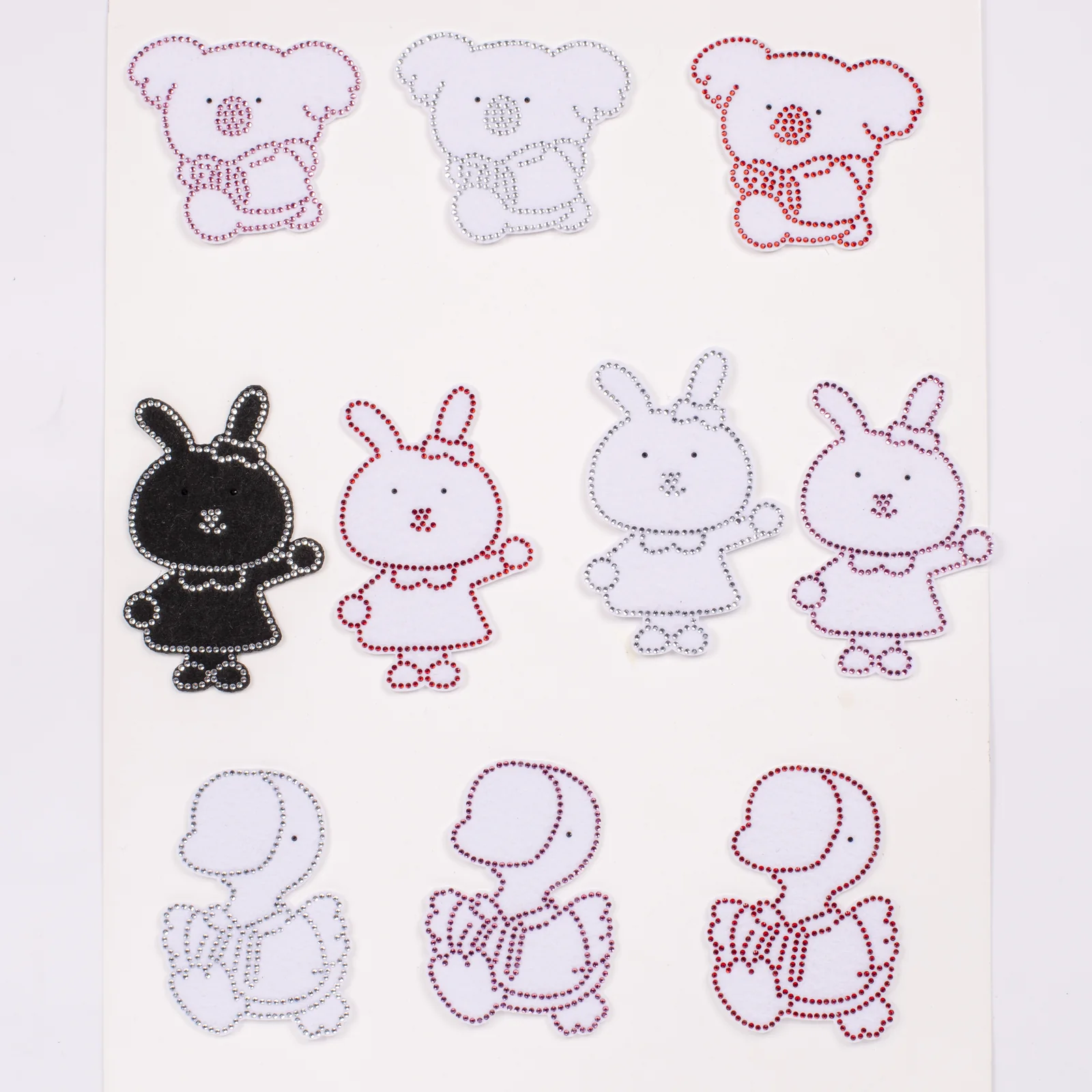
Write an original character brief before drawing crystal positions. Identify species, age impression, mood, body view, key expression and brand role without referencing a famous mascot. Submit artwork you created, commissioned with production rights or are otherwise authorized to use. Remove protected names, costumes, badges, catchphrases and signature poses from the request unless documented permission covers them. A generic fox, bear, duck or frog can still feel proprietary through proportion, ear shape, facial spacing, palette and an owned accessory. Teebling can review manufacturability, but the buyer remains responsible for rights clearance. This boundary protects a DIY cartoon patch project from turning into an unauthorized character reproduction.
Owned source + rights owner + permitted markets + distinctive silhouette + excluded franchise references.
Product 209 is Color Crystal Cartoon Animal Felt Patches, code TB-MOT-CTA-003, material “Colored rhinestones on shaped textile felt bases,” MOQ 100; no active size is stored. Product 19 records TB-5B5CE5317268, Rhinestone and felt fabric, 6.3 by 6.3 cm and MOQ 100. Product 66 records YW-QS-001, Rhinestone and Felt Fabric, 4.3 by 5.2 cm and MOQ 100. Only Product 66 names iron-on attachment. Treat each record as a separate visual and specification reference.
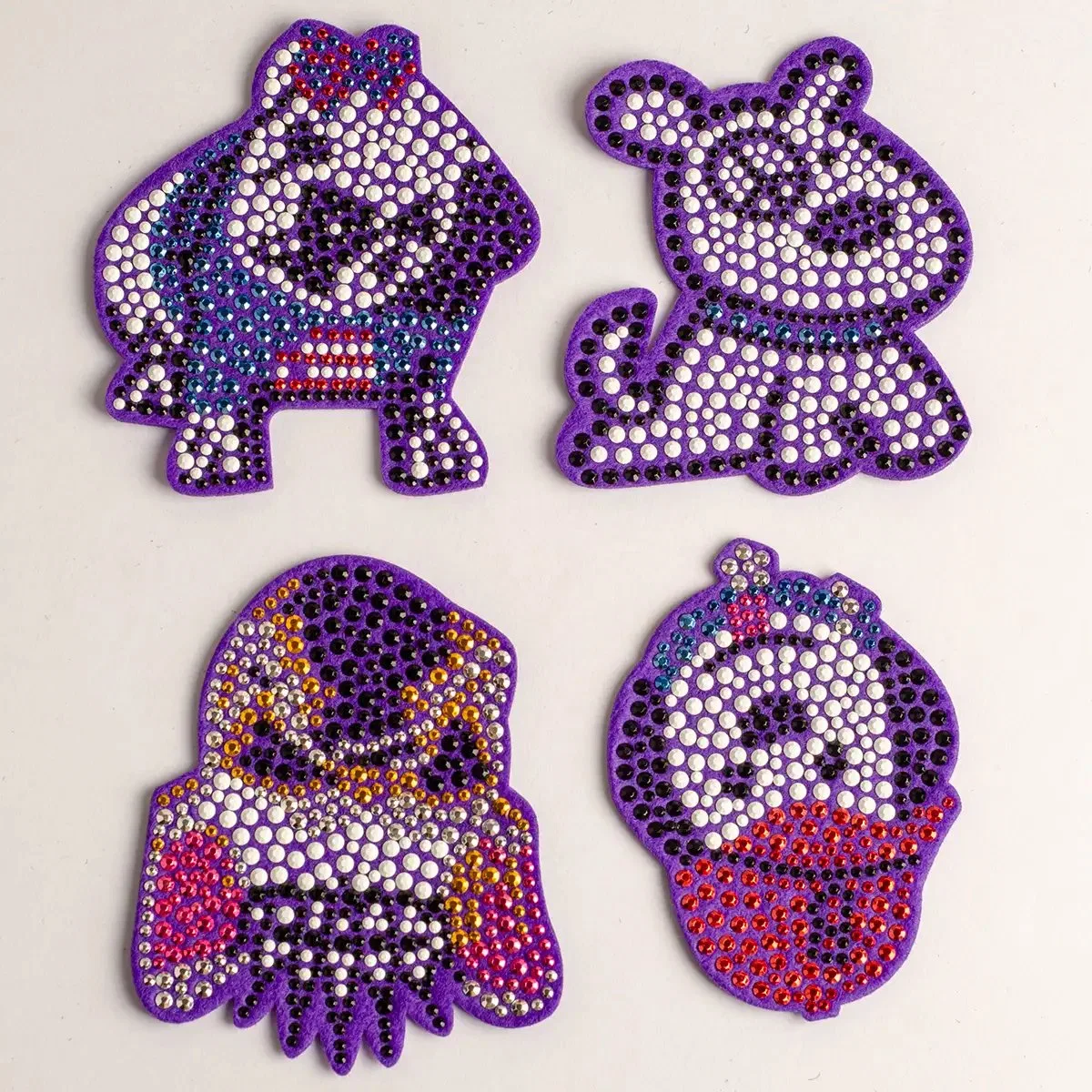
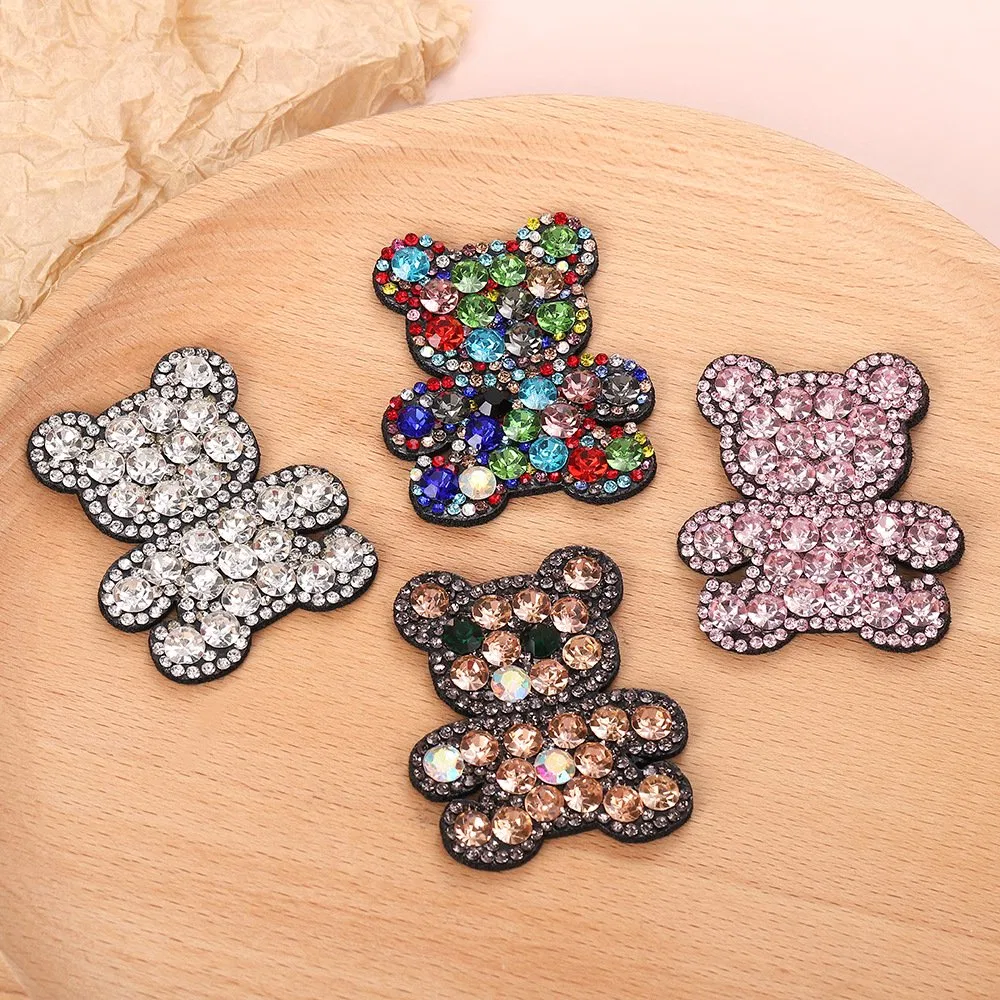
Reduce the owned drawing to a single-color silhouette at intended patch scale. Ask an unfamiliar reviewer to identify the animal without seeing the title. Preserve only features that survive that test: ear profile, tail angle, muzzle, wing, paw or body posture. Round fragile projections and inspect narrow gaps, but do not accept an automatic simplification that changes character identity. Supply target width and height as well as the garment or accessory placement. If a set includes several animals, define a shared visual weight rather than forcing equal outer dimensions. A long-eared rabbit and compact bear may occupy different rectangles while still appearing balanced. Freeze the approved outline before crystal mapping so later edits are traceable.
A cartoon patch can lose its intended emotion when every small line is translated with equal emphasis. Rank the facial features: eye spacing may carry friendliness, an eyebrow may signal mischief, while a tiny cheek mark can be optional. Provide a clean vector or source file plus a labeled preview showing mandatory and flexible details. Review the face at actual size, at arm's length and in a quick photograph on the target background. Verify contrast between facial stones, fill colors and felt. If the patch will appear on dark and light goods, request separate background simulations. Do not assume a photographed sample will reproduce monitor color exactly; use approved physical references for final decisions.
Position, direction and contrast.
Species cue and expression.
Optional sparkle or cheek detail.
Garment-color interaction.
Divide the approved art into outline, face, body fill, highlight and optional accessory regions. Number the colors on an artwork key and distinguish stone fields from printed, embroidered or exposed felt areas if the proposed construction mixes techniques. Ask the supplier to identify available components and any spacing limitations for the exact size rather than imposing settings from another crystal patch. Inspect isolated gaps, unintended tangencies and whether reflective highlights compete with the eyes. Record accepted physical color references under a revision, because descriptive names such as pink, amber or aqua can be interpreted differently. The buyer should approve substitutions in writing or prohibit them; silence is not a usable replacement rule.
State whether the visible outline should follow the crystal edge tightly or form a deliberate colored border. Approve the front face, edge shape, reverse appearance, thickness and flexibility on the physical sample. Attachment must be named for each code: Product 66 is described as iron-on, whereas Products 19 and 209 do not make that promise. Ask Teebling to confirm the backing and application route for the selected item and target substrate. If heat application is proposed, the supplier and garment owner must confirm instructions and compatibility for that combination. If sewing is requested, define placement and appearance of the stitch path. The garment backing guide helps structure that decision without inventing universal settings.
Selected SKU + backing identification + target substrate + agreed application trial + edge view + signed sample.
Create one line for each motif, colorway, dimension, attachment and sample revision. Decide whether the buyer orders individual animals or a fixed assortment, and state the ratio explicitly. MOQ 100 appears on all three cited records, but that does not prove a combined set minimum, per-color minimum, carton count or current price. Request a quotation for the actual split. Define whether unavailable colors pause the whole set, trigger a new approval or permit an authorized substitution. Packing should protect decorated faces and keep identity labels visible; ask for a feasible method for the selected construction. Compare the set plan with cartoon patch set sourcing and MOQ allocation planning.
Animal, size, colors, backing.
Independent sample and quantity.
Approved family relationship.
Ratio, label and packing map.
The answers below distinguish original artwork responsibility, catalog evidence, size confirmation, attachment identification and set-level approval.
Submit artwork you own or are authorized to use. An original animal brief avoids relying on a protected character, logo, costume, pose or other recognizable franchise feature.
Provide owned vector or source artwork, target dimensions, garment or accessory use, color references, quantity, destination and the features that must remain recognizable at patch scale.
Products 209, 19 and 66 record colored-crystal, cartoon-animal and bear felt patch examples, with stated minimums of 100; Product 209 has no active size value.
No. Product 66 is named as an iron-on patch, while Products 19 and 209 do not establish one universal attachment; confirm backing and application for the selected SKU.
Approve each animal as its own coded sample, then approve the set sheet, size relationships, color map, attachment, packing ratio and substitute policy under one revision.
Assemble ownership confirmation, editable artwork, silhouette sheet, intended dimensions, feature priorities, numbered color map, proposed materials, visible felt boundary, requested attachment, target substrate, quantities, set ratio, destination and sample deadline. Ask Teebling to identify current component options, manufacturability concerns, backing, application evidence and quotation assumptions for the exact brief. Compare the physical sample with front, edge and reverse photos at real scale. Production approval should cite each animal code and a family sheet so a change to one member cannot silently alter the rest. The rhinestone patch wholesale guide offers broader sourcing context, while bear patch planning provides a focused comparator.
Rights + silhouette + face + crystal key + felt edge + attachment + quantities + sample + signed family revision.