


Petals
Count and overlap.
Translate petals, center, stem direction and crystal fields into a flower patch brief while keeping attachment claims honest. The catalog references establish materials, sizes and minimums; the order still needs a confirmed reverse and a substrate-specific application trial.
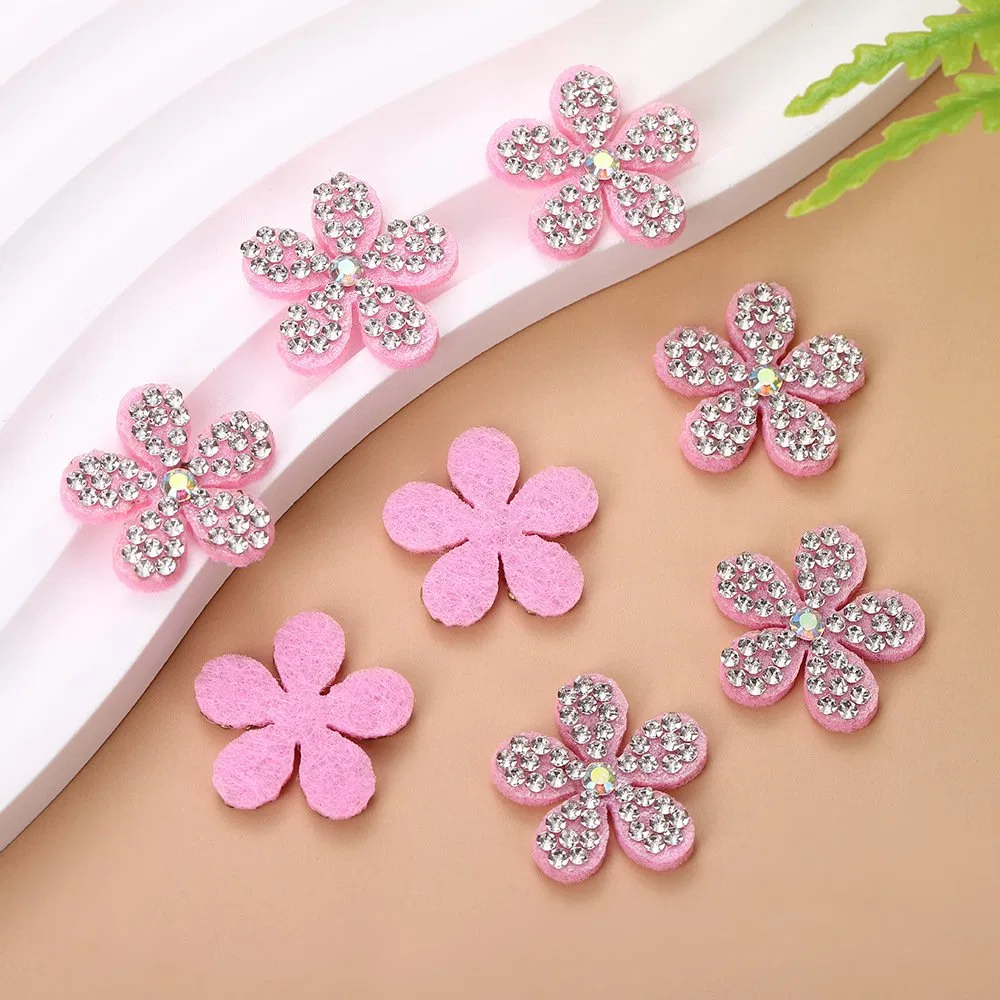
Start the rhinestone applique patch inquiry with petal count, bloom direction, center form, optional leaves or stem, intended width and height, garment or accessory, background color and placement. Supply artwork you own or are permitted to reproduce. A five-petal icon, layered rose and daisy-like disk use different negative spaces even when their outer diameter is similar. Mark the top of the motif and decide whether rotation is acceptable. Photograph the intended placement with a ruler, especially for collars, pockets, shoes or narrow accessories. Separate visual reference from manufacturing specification: an inspiration image can communicate mood, but the approved editable outline, color key, material proposal and physical sample govern the order.
Count and overlap.
Scale and focal contrast.
Top and garment angle.
Background interaction.
Width and height.
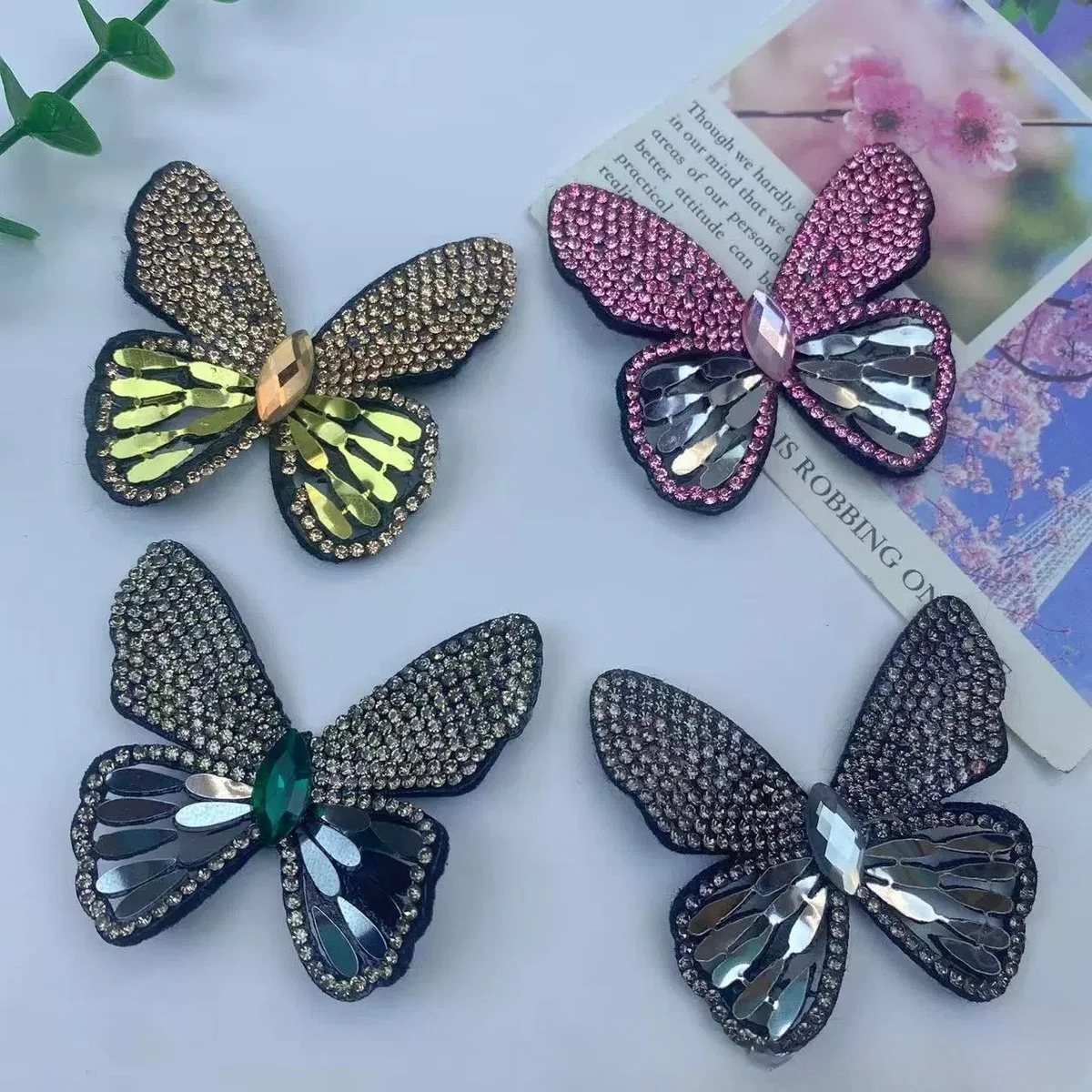
Product 70 is Korean Rhinestone Five-Petal Flower Patch, code YW-QS-005, material Rhinestone and Felt Fabric, size 2.2 by 2.2 cm and MOQ 100. Product 83 is French-Style Rhinestone Flower and Butterfly Accessories, code YW-HF-012, material recorded as rhinestone and patch felt fabric, size 5.7 by 5.7 cm and MOQ 100. Neither active row names the attachment method. The two Product 70 views and one Product 83 view below are separate evidence for scale, outline and composition questions, not proof of universal backing or application settings.
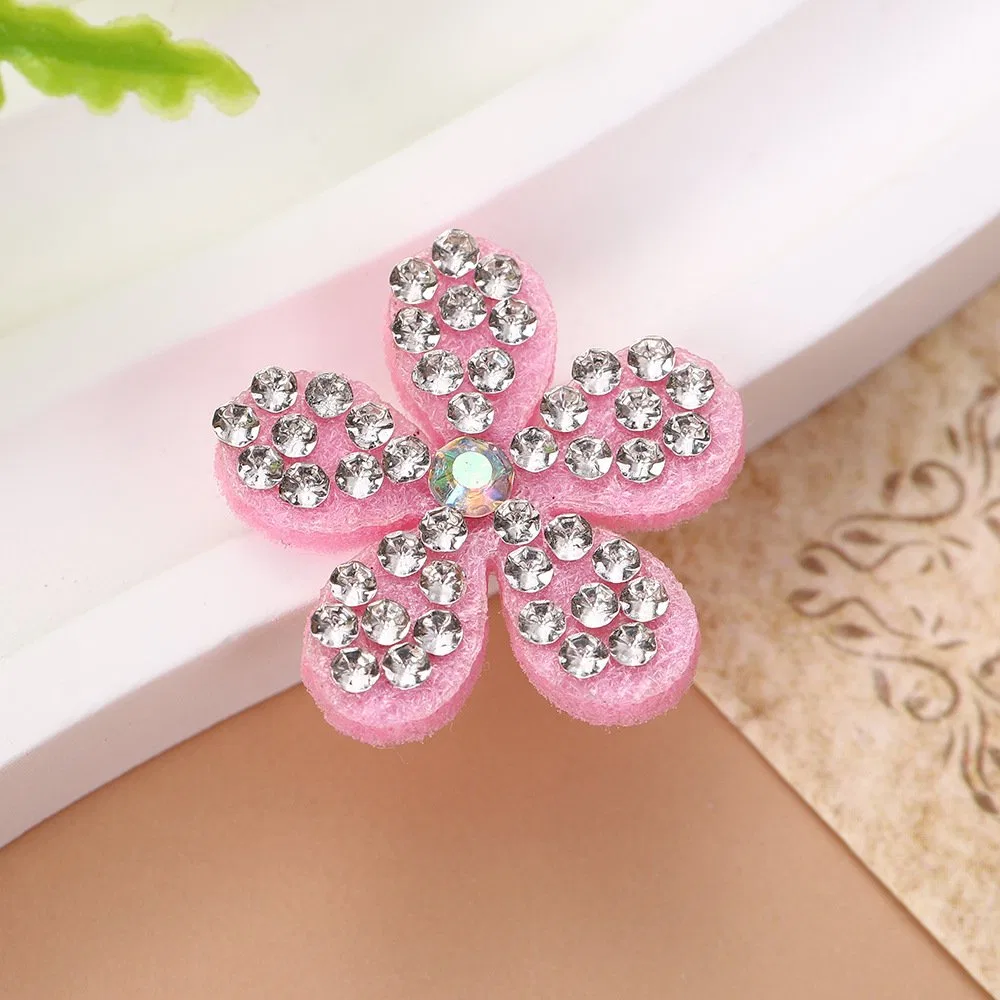
Trace the flower as one solid silhouette at intended production scale. Confirm that every petal remains distinguishable and that valleys between petals do not close. If petals overlap, identify which edge passes in front and which may be simplified. Set acceptable symmetry: geometric blooms may require repeated spacing, while an organic sketch may intentionally vary each lobe. Review exposed felt around the decoration and choose whether it is a narrow technical boundary or a visible design color. Very small points and slots should be discussed with the supplier using the exact size and proposed construction; this guide does not invent minimum feature dimensions. Sign the outline revision before mapping crystal regions or decorative centers.
Owned art + petal count + overlap order + intended dimensions + top arrow + visible felt boundary + signed revision.
Dimension the center relative to the complete bloom and show whether it is circular, clustered, open or irregular. A strong center can make slight petal variation feel intentional; a misplaced center can make an otherwise accurate patch appear distorted. Number center and petal colors separately, then review contrast on the target garment. If several sizes are planned, do not scale every component automatically. Request a separate drawing and physical sample where the smaller version needs simplified stones or a different center treatment. Photograph the approved sample square to the camera with a ruler and top arrow. That image becomes a useful inspection reference when later production pieces are compared with the signed artifact.
Shape, diameter or bounds, position, decoration region, physical color reference and approved relationship to each petal.
Create a numbered key for every visible region and identify the proposed component type rather than relying only on a color name. Distinguish clear, colored or iridescent-looking references from felt and any non-crystal detail. If the creative brief mentions pearl patches, specify whether pearl-like accents are requested and ask Teebling to confirm available components for the selected construction; neither Product 70 nor Product 83 records pearl material. Review samples under consistent light and against the intended garment. Approve physical color references and a written substitution policy. A screen can help compare placement, but it cannot establish exact appearance across different lighting, photography and display settings.
Petal decoration.
Center accent.
Visible felt edge.
Garment background.
Substitute rule.
Print the approved outline at actual size and place it on the target item before ordering a sample. Record its distance from seams, edges, zippers, folds and curved surfaces. Product 70 has a compact 2.2 cm square reference, while Product 83 records 5.7 cm square; those catalog values do not mean the motifs can be resized freely or share identical detail. Request current feasibility for each target dimension. A butterfly comparator can help evaluate visual weight: Product 56 records YW-QS-008, Rhinestone and Felt fabric, 6 by 5 cm and MOQ 100. Keep that product's construction and specification separate from the flower codes.
Garment sample + seam clearances + motif width and height + top direction + photo at wearing distance + code and revision.
The page topic reflects buyer interest in iron on sparkle transfers, but the cited Product 70 and Product 83 rows do not record iron-on attachment. Ask the supplier to identify the exact backing on the offered SKU and provide applicable instructions. The garment owner should disclose fiber content, finish, thickness, stretch, coating, seam proximity and heat sensitivity, then conduct a trial with the actual equipment and substrate. Document front, edge and reverse before and after that approved process. Do not publish a generic temperature, pressure, dwell or guarantee from an unrelated item. If sewing or another attachment is selected, write that route into the sample and purchase specification. See patch backing selection for a broader decision checklist.
SKU-specific reverse + target substrate + supplier instructions + equipment record + approved trial + named production decision.
These answers preserve the line between recorded product facts, a visual botanical brief, buyer-requested attachment and a tested application decision.
Their active rows do not state an attachment method. Use them as flower and butterfly visual references, then obtain written backing and application confirmation for the selected SKU.
It records code YW-QS-005, Rhinestone and Felt Fabric, 2.2 by 2.2 cm and MOQ 100 under the name Korean Rhinestone Five-Petal Flower Patch.
Provide owned editable artwork, petal count, top direction, target width and height, center proportions, numbered color regions, substrate and intended placement.
No universal setting is supplied here. The supplier and garment owner must confirm instructions and run a trial for the exact patch construction, equipment and substrate.
Give every motif and colorway a buyer code, approve individual front, edge and reverse samples, then sign a separate assortment sheet with quantities and packing identity.
Compile owned artwork, petal and center dimensions, top direction, numbered color map, intended visible felt, target substrate, placement photo, requested attachment, quantities, variants, destination and sample schedule. Reference Products 70 or 83 only when their recorded facts fit the request. Ask Teebling to return manufacturability comments, current materials, exact backing, application evidence, MOQ interpretation, packing proposal and quotation assumptions. Inspect each physical sample from the front, edge and reverse at actual placement scale. Use rhinestone butterfly applique sourcing for a related motif family, rhinestone patch guidance for category context and sample approval for revision control. Release only the coded, signed construction.
Artwork + dimensions + color key + substrate + reverse confirmation + application trial + quantities + packing + signed physical specimen.