


Peg wall
Measure hook spacing, card width, hang depth and sight-line overlap.
Build the display before locking the unit pack. A peg wall, counter vessel and gift rack each impose different card, hanging, barcode, facing and replenishment decisions on a sparkling keychain assortment.
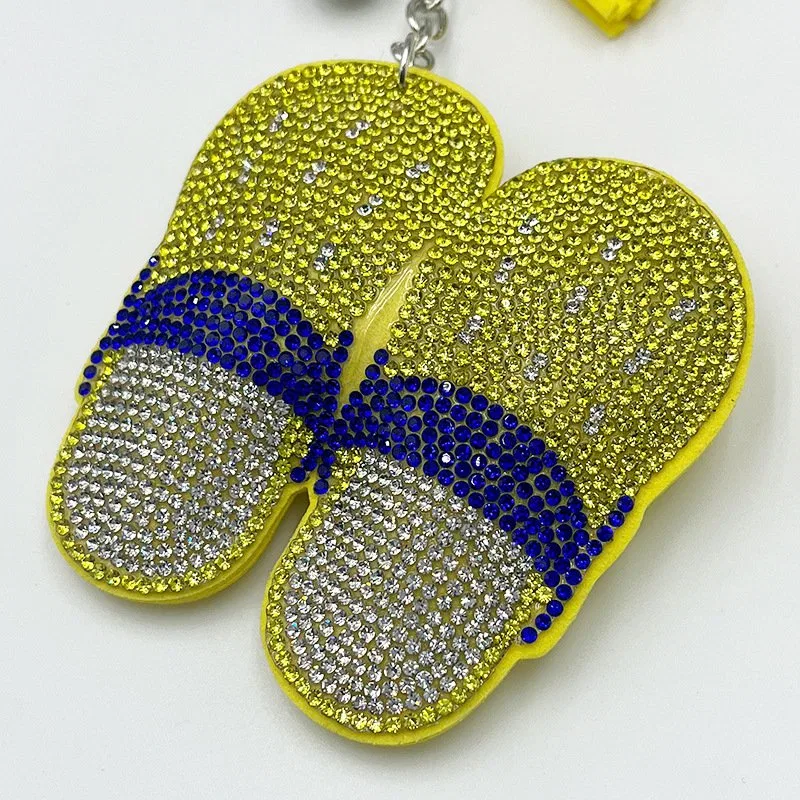
The primary search for bling keychains wholesale display becomes actionable only when the retailer names the selling environment. Record fixture type, eye level, available width and height, hook or bowl dimensions, customer access, adjacent products, lighting and stockroom distance. A peg card needs a controlled hanging point; a counter bowl needs unit protection and visible identity when pieces overlap; a gift rack may need front-facing motifs and price communication from several steps away. Photograph the intended fixture and add a scale. State whether staff or shoppers replace displaced units, because that changes how strongly the pack must preserve orientation.
Measure hook spacing, card width, hang depth and sight-line overlap.
Plan loose-unit identity, surface protection, count and refill container.
Control front orientation, grouping, price zone and seasonal changeout.
Product 93 records Rhinestone and Flat Fabric, 2.5 by 1.5 inches, MOQ 100 and code HC-YWQK-001. Product 96 records Crystal Rhinestones and Metal Hardware, 2.3 by 2 inches, MOQ 50 and HC-YWXK-002. Product 120 records Metal Alloy and Rhinestones, 2.8 by 1.5 inches, MOQ 50 and HC-YWXK-026. Those dimensions describe the listed motifs, not card sizes or complete hanging envelopes. Measure the physical sample with all hardware extended before approving retail packaging.
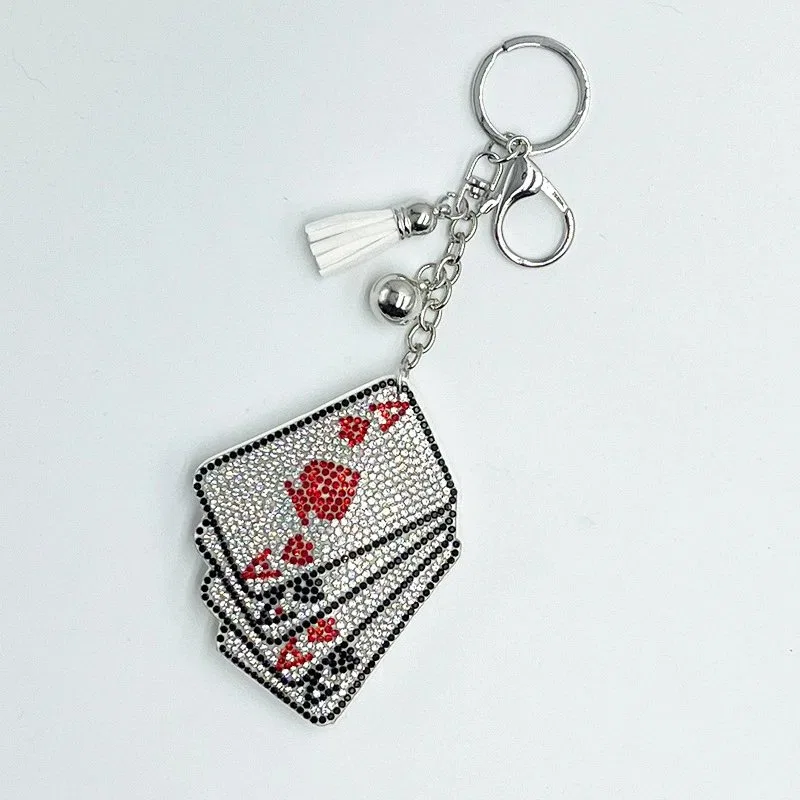
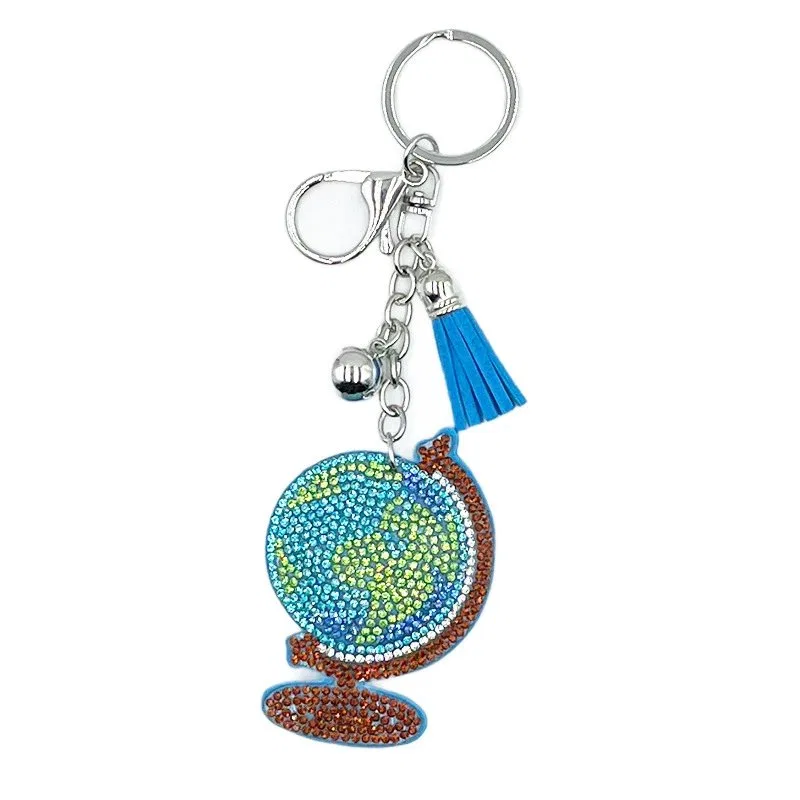
Draft a card around the keychain as it will hang, not around a cropped motif image. Include ring, connector, charm, tassel where supplied, and the lowest swinging point. Mark card width, height, corner treatment, hanging aperture, attachment slots, brand face, required copy, barcode zone and quiet margins. Test whether metal hardware rubs printed areas or allows the charm to flip behind the card. If several keychains share a card, use the largest approved envelope and confirm smaller motifs remain centered rather than appearing lost. Paper grade, finish, print method and recycled-content claims require supplier confirmation; this guide does not assign packaging specifications.
| Dieline field | Buyer input | Physical proof |
|---|---|---|
| Outer card | Width, height and fixture clearance | Fits hook and neighboring facings |
| Attachment | Slot, tie or other proposed retention | Keychain remains correctly oriented |
| Data zone | Approved copy and barcode boundary | Readable after the unit is attached |
Define which face greets the shopper, where the ring sits and how the charm rests against the card. Photograph the approved unit vertically and at the angle created by the actual fixture. Evaluate whether a tassel hides the motif, a ring twists the card, or an off-center charm pulls the pack sideways. Add an orientation arrow to the pack specification and inner label. For counter presentation, describe how the unit returns to a recognizable state after handling. The goal is not to freeze normal movement; it is to ensure the supplied attachment and display method consistently reveal product identity without staff rebuilding every pack.
Approved shopper view
Top connection point
Visible motif boundary
Declared resting zone
Copy and barcode clear
Fixture fit confirmed
Give every motif a retail role: lead item, supporting theme, gift option, seasonal test or replenishment reserve. Translate expected unit demand into facing count while respecting card width, hook depth and the complete packed thickness. A six-motif range does not automatically need six equal pegs. Map adjacent colors and shapes so similar units remain distinguishable. Reserve a defined overflow location rather than forcing extra units onto a hook. When a rhinestone keychain wholesale assortment changes, issue a new planogram revision with SKU codes and card identity. Sales forecasting remains the retailer's decision; catalog MOQ values alone do not establish sell-through.
Two facings
Two facings
One facing
One facing
Measured trial
Backstock location
Assign a buyer SKU to each keychain, colorway, card revision and assortment role. Place approved brand copy, product description, barcode artwork, country or compliance content requiring qualified review, and any internal trace reference in controlled zones. Verify barcode size and quiet area using the buyer's applicable system rather than an invented universal template. Scan a printed proof after the keychain is attached and again through any protective sleeve. Match the unit code to inner pack and carton labels. The private-label packaging guide expands copy and revision governance for broader merchandise programs.
| Identity layer | Required relationship | Approval evidence |
|---|---|---|
| Unit | Motif, variant and card revision | Attached retail sample |
| Inner pack | SKU, quantity and orientation | Counted pack photograph |
| Carton | Destination and contained inners | Reconciled packing list |
State whether staff refill by single SKU, themed assortment, store kit or event allocation. Choose inner quantities from fixture capacity and handling needs, then ask the supplier to confirm feasible packing for the selected product. Protect crystal faces and prevent rings or tassels from tangling without claiming a universal sleeve or interleaf. Number every inner, list its motif quantities and map it to a store or destination. Reconcile recorded product minimums separately: Product 93 lists 100, while Products 96 and 120 list 50. Those values do not define carton counts or force one shared order rule. Use the MOQ planning guide before releasing allocations.
Fixture code + planogram revision + buyer SKU + attached-card sample + inner assortment + carton destination + receiving count form.
These answers keep catalog dimensions, fixture planning, packaging evidence and replenishment ownership in their proper records.
Record the sales channel, fixture, usable dimensions, card or hanging method, motif assortment, facing quantity, barcode location, refill unit, destination and approval owner.
Only after the largest complete keychain, hardware and any tassel have been tested on that card without hiding the motif, barcode or required retail copy.
Products 93, 96 and 120 provide slipper, playing-card and globe references with different sizes, materials and minimums. Their records do not specify retail packaging.
Allocate facings from channel demand, motif role and physical pack size, then test the complete planogram at scale instead of assuming every peg carries the same unit count.
Release it after the coded keychain, card, attachment, barcode proof, hanging sample, inner pack, carton split and replenishment map have one signed revision.
Package fixture measurements, product references or custom motif list, card dieline, hang orientation, approved copy, barcode files, facing map, unit protection request, inner assortment, carton split, quantities and sample milestone. Ask Teebling to identify current packaging feasibility, commercial assumptions and evidence required for the exact request. The keychain sourcing guide supplies category context, while sample approval keeps the physical display unit tied to its revision. Production release should cite the signed carded sample and planogram code so a later retail change cannot silently alter packing.