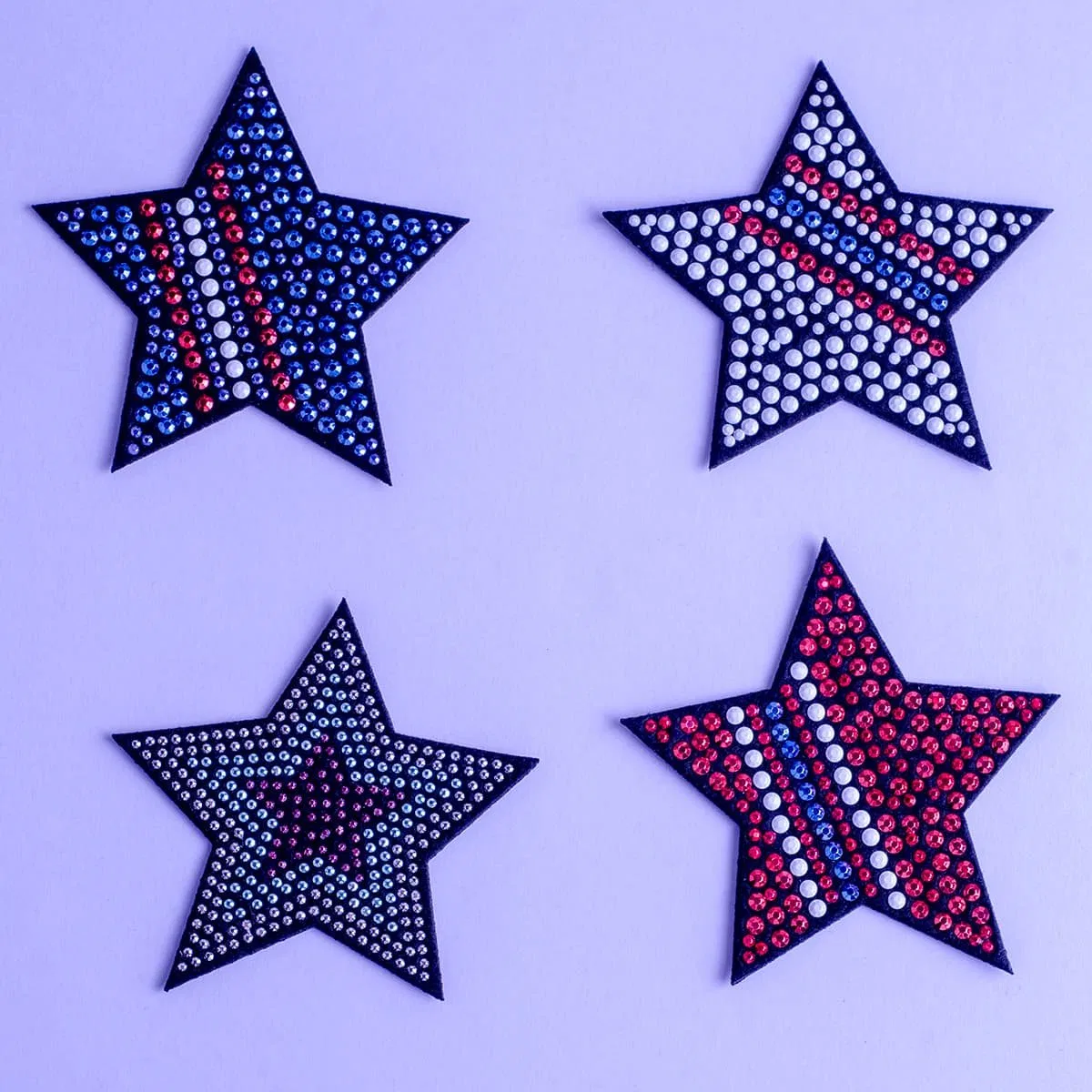
Transfer position
The visual field may include deliberate gaps between stones, so the full carrier boundary and usable motif boundary are separate measurements. Approval needs an orientation mark and a retained sample identity.
The useful decision is not which name sounds brighter. It is whether the approved decoration arrives as a mapped stone field on a carrier, a shaped base-backed component, or a documented hybrid with its own edge and reverse.
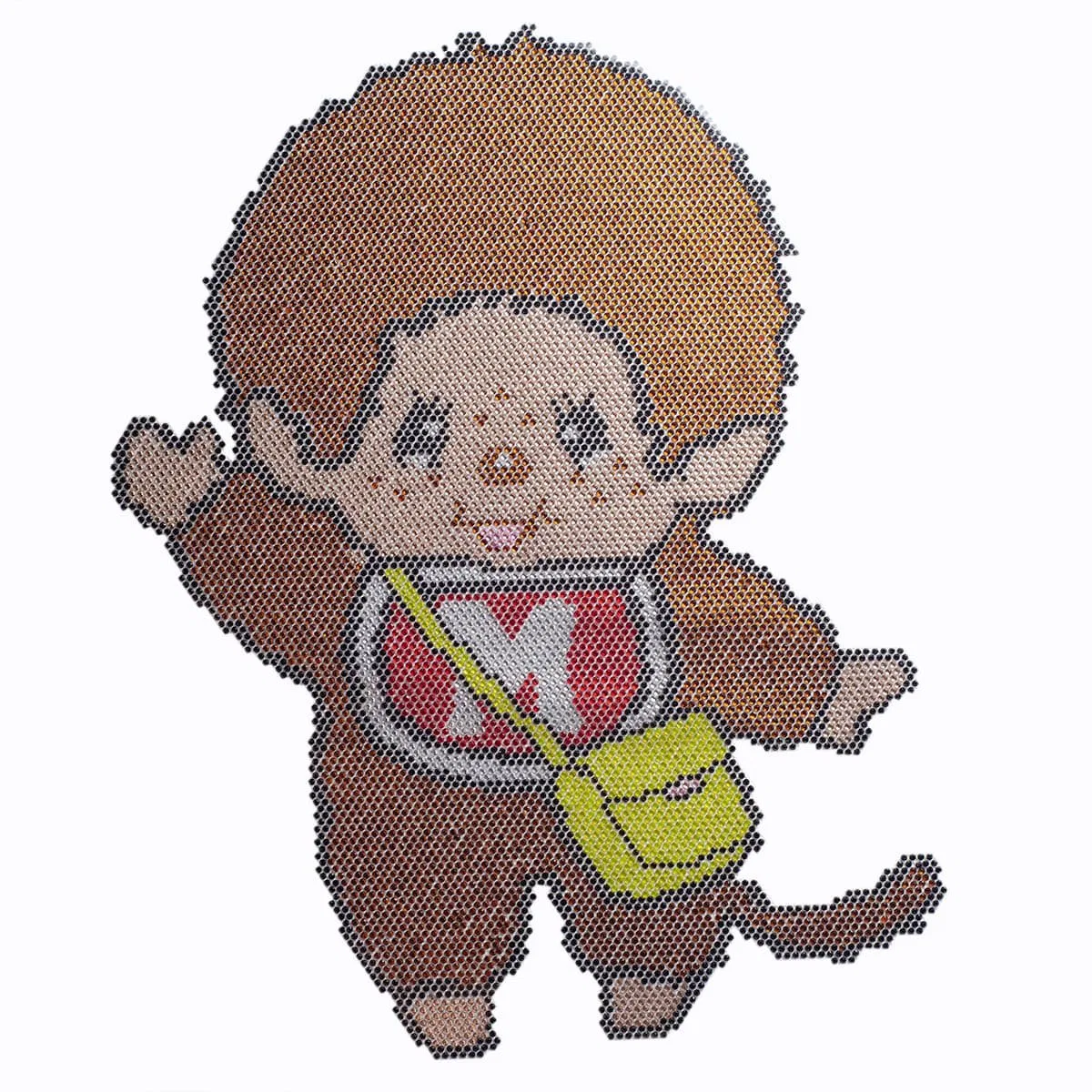
The search phrase bling transfers vs rhinestone patches joins two decorations that can look similar in a cropped photograph while behaving differently in an order. Describe the requested deliverable before discussing price. A transfer-led brief should state how the stone arrangement is supplied, its total boundary, the intended carrier orientation and the receiving garment. A patch-led brief should identify the visible base, cut perimeter, edge condition and quoted reverse. If the concept combines fabric with stones, call it a proposed hybrid and request a layer drawing. That language keeps the comparison grounded in parts that can be sampled, measured and packed.
The visual field may include deliberate gaps between stones, so the full carrier boundary and usable motif boundary are separate measurements. Approval needs an orientation mark and a retained sample identity.
The base can remain visible between crystals and around the outline. Its face material, edge and attachment must be named rather than inferred from the word patch.
A buyer may use bling transfers as a broad commercial phrase, but a production brief needs a more exact anatomy. Photograph the front, back and supplied carrier or liner. Mark the finished motif width and height independently from excess sheet area. For a rhinestone patch, trace the base perimeter and identify any area intended to remain visible after application. Ask whether the sample is delivered individually, nested on a sheet or protected by an interleaf. Do not assume that a named hotfix or adhesive construction establishes settings, fabric compatibility, removability or care performance; those conclusions require the supplier's current instructions and a controlled garment trial.
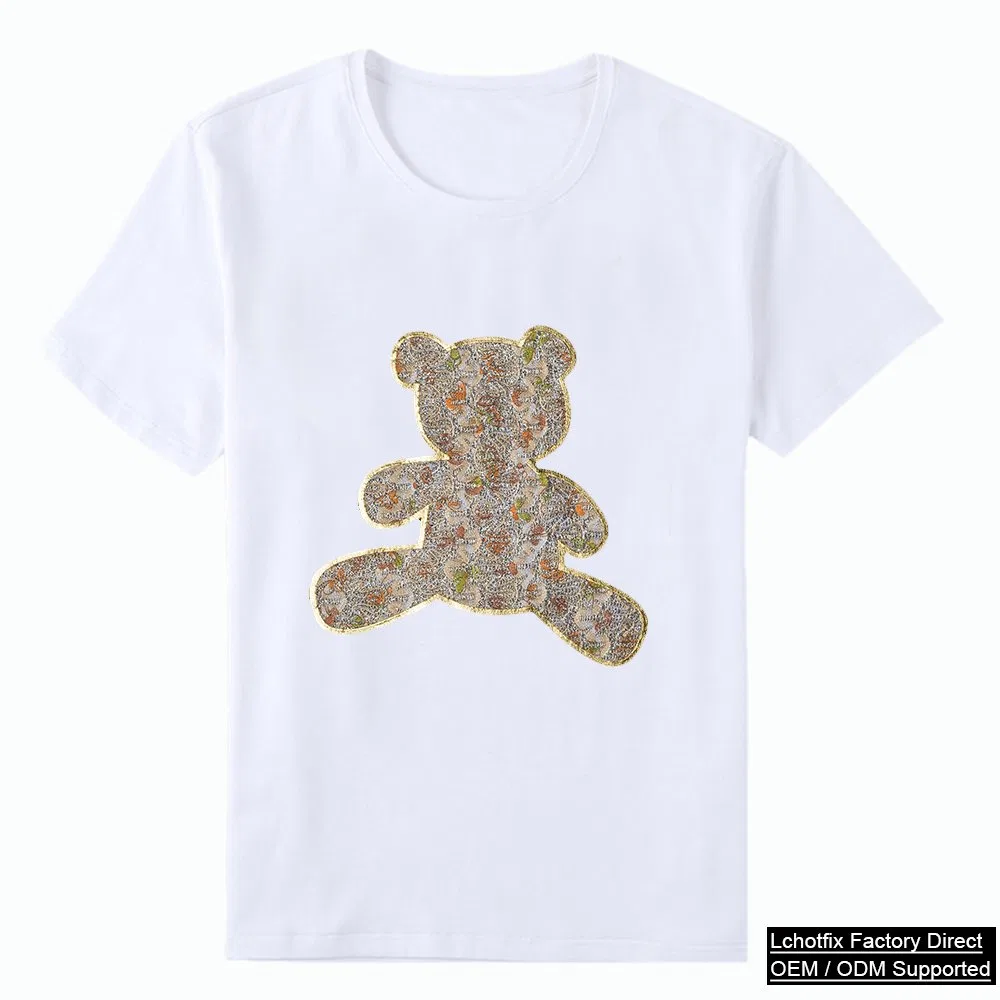
The database supplies three useful references, not a universal specification. Product 26 records DMC rhinestone, a 30 × 21 cm size, MOQ 50 and item code TB-65107DD80631. Product 17 records rhinestone and felt fabric, a 4.8 × 4.8 cm size, MOQ 100 and item code TB-F00E8509646E. Product 168 records fabric, rhinestones and holographic crystal with MOQ 50 and item code RJX-501; its finished size field is blank. The third entry demonstrates why heat transfer patches wholesale cannot be reduced to either column without inspecting the actual construction.
Place both candidates at the same proposed finished scale on the exact garment style. Observe where the decoration begins and ends, whether a textile silhouette remains visible, how the surrounding fabric folds and which seams limit placement. A loose field can create a lighter visual boundary, while a shaped component can present a deliberate outline; neither result is inherently superior. The choice depends on artwork, merchandise role and the approved specimen. Review from normal viewing distance and close range. Record the garment size, color and placement landmarks so a comparison is not distorted by two unrelated mockups.
Trace the actual visible edge, not the crop of a catalog photograph.
Measure the supplied sample if thickness affects nearby seams or folds.
Observe the tested garment and avoid extending results to untested textiles.
Approve every planned substrate color against the selected decoration.
Request current supplier instructions for each quoted specimen, then create two controlled records. Each record should identify decoration code, lot or sample revision, garment style, fiber statement, color, equipment, operator, protective layers, actual process inputs and observed result. Inspect face alignment, edge behavior, unintended marks and any movement after the buyer's chosen evaluation interval. A carrier-sheet result must not be copied into the approval for a felt-backed component. For further planning, use the rhinestone transfer heat-press test guide for transfer evidence and patch backing selection by garment to frame reverse-side questions.
Assign a code to the decoration, garment and instruction revision before testing begins.
Record the actual supplier-directed process without publishing it as a universal recipe.
Photograph the face, perimeter, reverse evidence and garment surface at named checkpoints.
Keep the source identity stable while documenting construction-specific changes. The transfer version needs a measured stone map, intentional voids, color or finish codes, orientation and total motif boundary. The patch version needs a base silhouette, cut line, safe area, exposed-base direction, edge expectation and stone clearance from the perimeter. When requesting custom rhinestone patches, do not hide those decisions inside a flattened preview. Label every proof with dimensions and revision. If the two versions are meant to look equivalent on shelf, specify the viewing goal and allow the supplier to identify changes needed for manufacturability rather than forcing identical geometry without evidence.
Stone centers, sizes, finish direction, gaps, boundary, carrier orientation and revision owner.
Base path, edge, stone zones, clearances, reverse request, measured placement and revision owner.
The final order should not say only “bling motif.” State the product reference or approved custom code, artwork revision, face construction, visible base where applicable, finished dimensions, attachment direction, garment trial identity, colorway, quantity, packing unit, interleaf requirement, inner label and destination. Ask how MOQ applies to artwork, size, base color and construction instead of multiplying a reference minimum without confirmation. The shirt-transfer sourcing guide expands the carrier-sheet path, the rhinestone patch guide develops applique questions, and the bulk patch packing guide helps preserve identity after approval.
“Please quote the identified carrier-sheet transfer and the identified base-backed patch as separate constructions, then state the evidence, sample and packing assumptions used for each line.”
These answers keep visual similarity separate from verified construction, application and commercial terms.
No universal equivalence should be assumed. A bling transfer request can describe stones arranged on a carrier for application, while a rhinestone patch can include a shaped textile base and visible perimeter. The quoted sample must identify the actual layers and attachment route.
Product 26 records a 30 by 21 centimeter DMC rhinestone transfer with MOQ 50. Product 17 records a 4.8 by 4.8 centimeter rhinestone-and-felt star with MOQ 100. Product 168 records a fabric, rhinestone and holographic-crystal heat-transfer patch with MOQ 50 and no finished size in the database.
A trial supports only the documented decoration, receiving garment, equipment, process inputs and evaluation interval. A successful carrier-sheet transfer trial does not validate a textile-backed patch, and the reverse inference is equally unsupported.
A loose-stone transfer needs an overall boundary, stone map and intentional open-space control. A base-backed applique also needs a perimeter path, base color, edge treatment and the relationship between the stone field and the cut shape.
Submit one measured placement, artwork revision, garment specification, quantities by format, selected catalog references, requested attachment, sample plan, packing identity and destinations. Ask the supplier to identify every unconfirmed construction detail in writing.