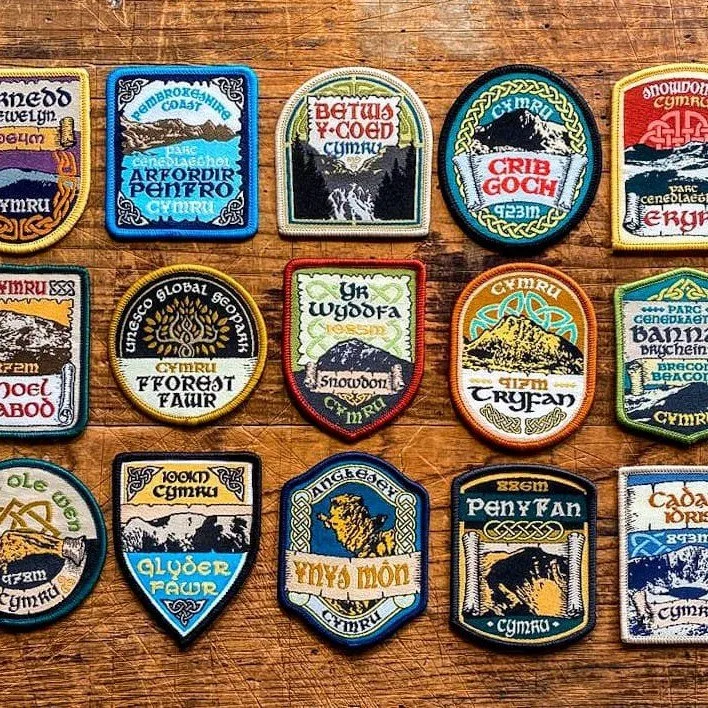
Embroidered shelf
Recorded products can anchor material, reference size, MOQ and item-code facts.
Texture, lettering and edge are consequences of an actual textile build. Compare construction-specific proofs at finished size and keep an unverified woven request separate from the embroidered records in the catalog.
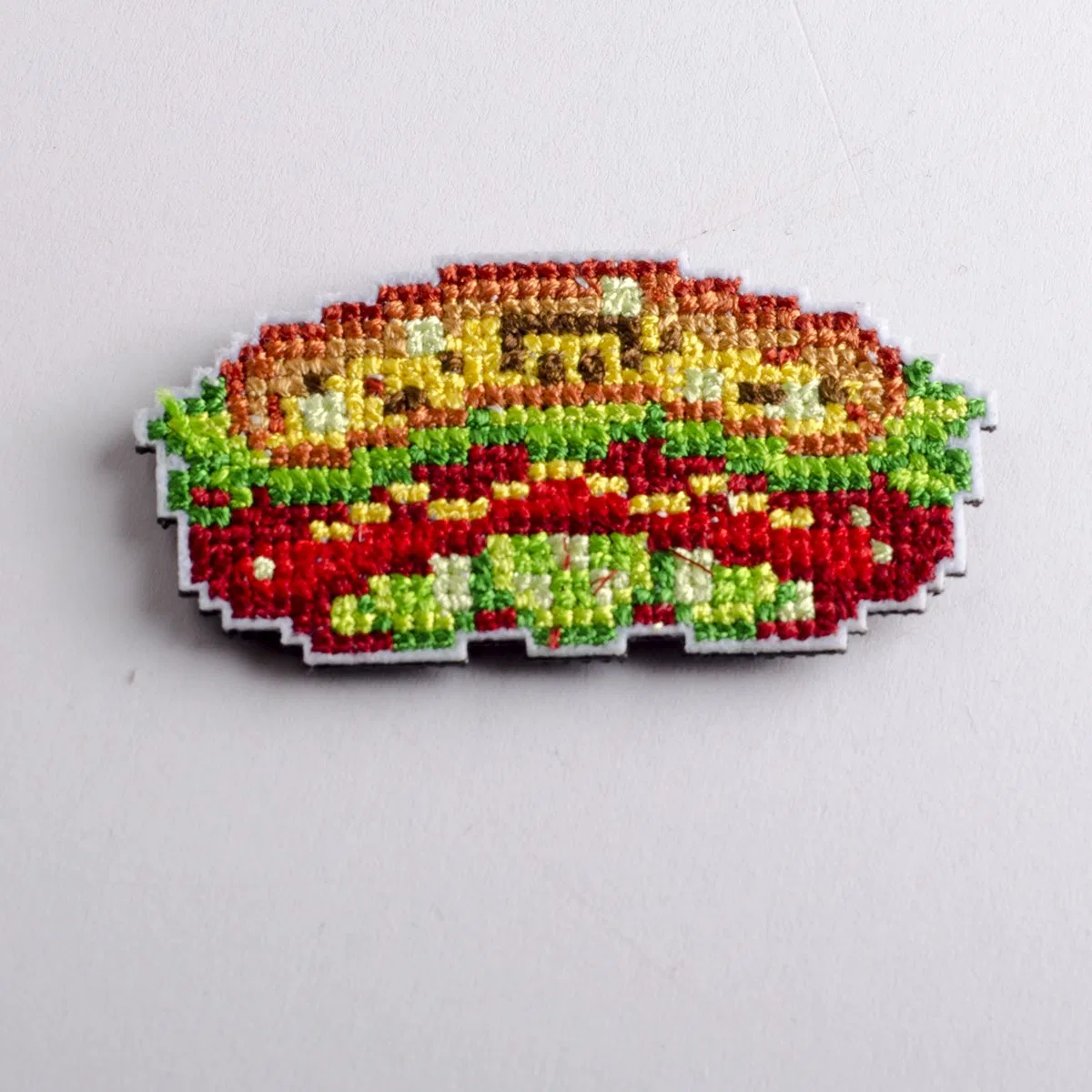
The primary query embroidered garment badge vs woven label names two thread-led ideas, but the manufacturing descriptions are not interchangeable. An embroidered proposal should identify base, embroidery thread, stitch areas, edge and attachment. A woven proposal should identify yarns, weave construction, face and reverse, edge or fold and attachment using the supplier's own specification. The current database contains embroidered badge and patch records but no product explicitly recorded as woven. This page therefore treats woven as a sourcing request awaiting evidence. It does not convert an embroidery image or a general label-category item into proof of a woven product.
Recorded products can anchor material, reference size, MOQ and item-code facts.
Supplier specification, physical specimen and construction-specific quotation remain required.
Rubber, silicone or transfer records stay labeled as their own families.
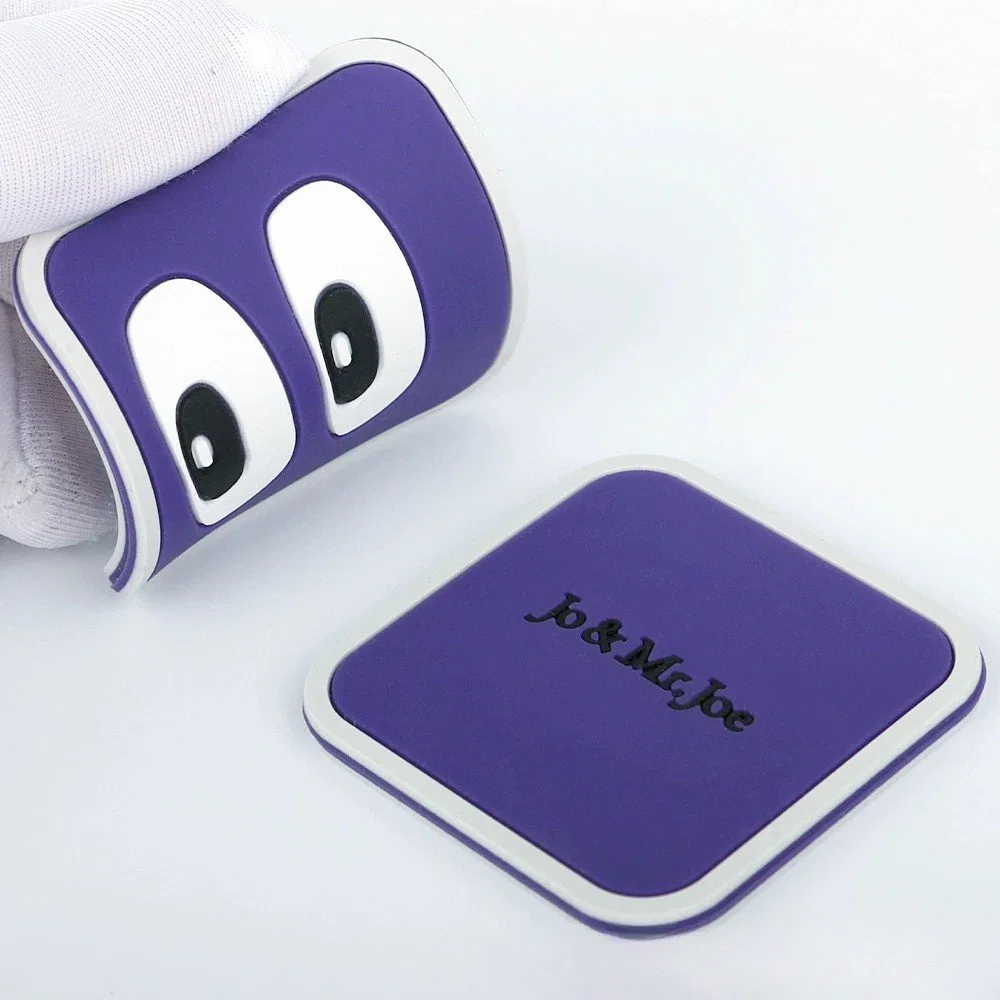
The Product 12 row lists item code TB-2FEE31D63C73 beside thread, a 5 × 6 cm reference size and MOQ 100. Under item code TB-EF3334FD9DC1, Product 8 lists high-quality embroidery thread, custom sizing and MOQ 100. These support an embroidered garment badge and broader embroidery badges discussion. Product 76 records silicone and rubber, 6.5 × 6.5 cm, MOQ 100 and item code GZ-FC-11. It is shown only as a non-woven label-family comparator. Its category placement and image do not establish woven yarns, weave, edge or attachment.
Mark the smallest letter height, stroke, gap, inner counter and border clearance on authorized artwork. Set finished dimensions and print an actual-size outline. Ask each supplier proposal to show the changes required for its construction. An embroidered badge may translate areas into stitch fields over a base, while a woven proposal may translate art through its stated interlaced-yarn construction; those are specifications to confirm, not reasons to promise one will always hold finer detail. Review physical swatches under the same lighting and at the intended reading distance. Accept simplification only when it is shown on the proof and remains consistent with brand identity.
Check whether enclosed spaces remain open and readable.
Mark the minimum visual line that carries recognition.
Inspect registration where adjacent regions must meet.
Keep critical artwork clear of the finished edge or fold.
Ask the embroidered proposal to identify the base, border treatment and reverse. Ask the woven proposal to identify straight cut, sealed edge, woven edge, fold or another supplier-confirmed finish. Photograph corners and side profile with a scale reference when thickness matters. Evaluate hand through a stated method and named reviewers instead of assigning unsupported terms such as softer or premium. The same specimen can be acceptable on an exterior jacket and unsuitable for an interior neck zone, so location and wearer contact belong in the record. Do not project results from one size or construction to every custom woven labels request.
Base visibility, border, corner shape, reverse and selected attachment.
Profile, garment movement, wearer contact, seam interaction and reading direction.
Quoted yarn construction, cut or fold, exposed dimensions and sewing path.
Exterior chest badges, sleeve emblems, hem tabs, interior neck labels and side-seam identifiers impose different visual and assembly constraints. Map the placement across the garment size range. Identify whether application happens to an open panel or finished product and who performs it. A badge may require a defined stitch or supplier-confirmed heat-applied route; a woven proposal may be sewn flat, inserted into a seam, folded or assembled another confirmed way. Do not choose the attachment from the label name. For garment labels wholesale, the packing identity should preserve orientation and prevent size or care information from being mixed across garment groups.
Assign each specimen a code tied to artwork revision, material statement, finished dimensions, colors, edge and reverse. Place the samples on the exact garment and observe face, perimeter, profile, readability and surrounding fabric. Where attachment is part of the test, record the supplier's current instructions or the approved sewing specification, equipment, operator and actual process. Define any care or wear evaluation before exposure and restrict the conclusion to the tested combination. Private-label accessory sample approval supports the badge path, while the custom woven labels guide holds questions for a future confirmed specimen.
Dated close and normal-distance photographs under the named lighting setup.
Construction statement, edge, reverse, dimensions and attachment details.
Reviewer, protocol, observations, accepted scope and required revision.
Write the purchase line around the approved specimen, not a generic technique name. Include product or custom code, exact construction, yarn or thread wording, base, artwork revision, colors, dimensions, edge or fold, attachment, placement, receiving garment, quantity by variation, MOQ allocation, packing and destinations. Ask the quote to identify every proposed field that still needs sample confirmation. Connect embroidery projects to embroidered heat-transfer badge sourcing, organize identity-label quantities with custom clothing labels wholesale, and use the heat-transfer label artwork requirements if a transfer label becomes the alternative.
These answers keep recorded embroidery evidence separate from a woven construction that still requires supplier confirmation.
No. Embroidery and weaving should be specified as different textile constructions. The database records used here support embroidered products, while no current product record identifies a woven label specimen. A woven proposal needs its own supplier specification and sample.
The primary badge reference is Product 12, whose fields list thread, 5 by 6 centimeters, MOQ 100 and item code TB-2FEE31D63C73. A second embroidery example, Product 8, lists custom sizing and MOQ 100 under item code TB-EF3334FD9DC1.
Product 76 records silicone and rubber at 6.5 by 6.5 centimeters, MOQ 100. It is expressly labeled as a non-woven comparator and demonstrates that a general label category does not prove woven construction.
Set the intended finished dimensions, mark the smallest letters and gaps, and request construction-specific proofs. Review physical specimens at normal reading distance; do not assume one technique preserves more detail for every design.
Retain exact construction wording, artwork revision, finished size, colors, edge or fold, attachment, placement, garment, sample identity, quantity, packing and test observations. Keep unverified woven requirements marked as proposed until confirmed.