


Food Fruit Rhinestone Keychains Wholesale
Merchandise a playful market without copying a snack package or attaching claims to fruit imagery. Chips, cherries and pineapple become three coded accessories with their own artwork, catalog evidence, colors, hardware, pack ratios and retail labels.
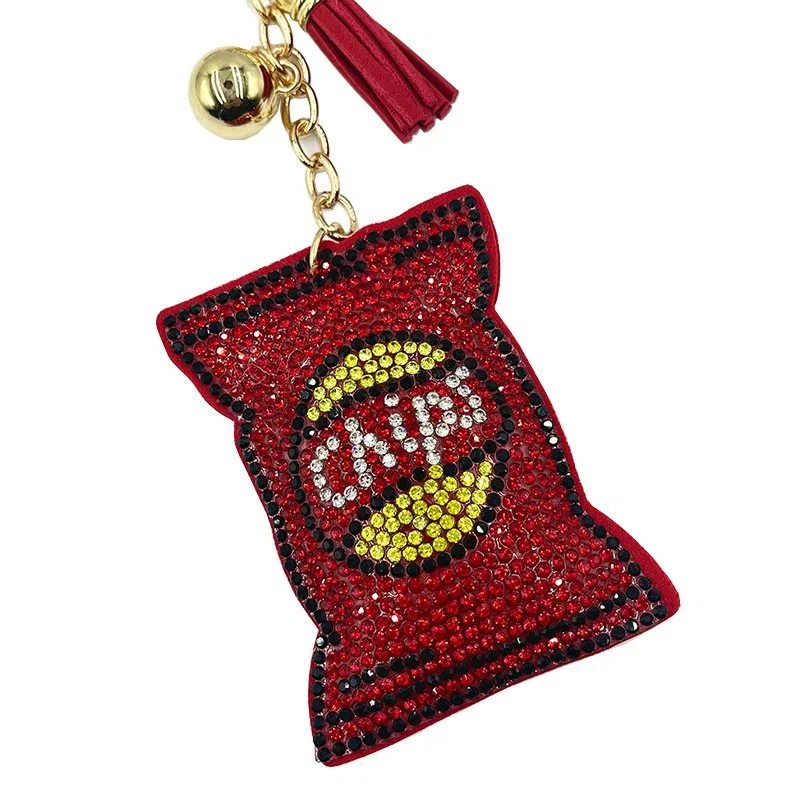
Design Generic Food Motifs Without Borrowing Packaging
A chip bag can be recognizable without reproducing a famous logo, mascot, flavor stripe or trade dress. Submit artwork the buyer owns or is licensed to use, and keep evidence of permission with the product code. For an original cartoon keychain wholesale request, define expression, silhouette, typography and palette from the buyer's own creative system. Cherries and pineapple should likewise avoid protected character faces or campaign graphics. Teebling can comment on manufacturability, while the buyer remains responsible for artwork and trademark clearance. Record excluded references in the brief so a well-intended redraw does not drift back toward a branded snack or entertainment property during sample revisions.
Market rights notice
Owned art + permitted wording + approved markets + original package silhouette + excluded brands + named rights reviewer.
Display Three Verified Catalog References
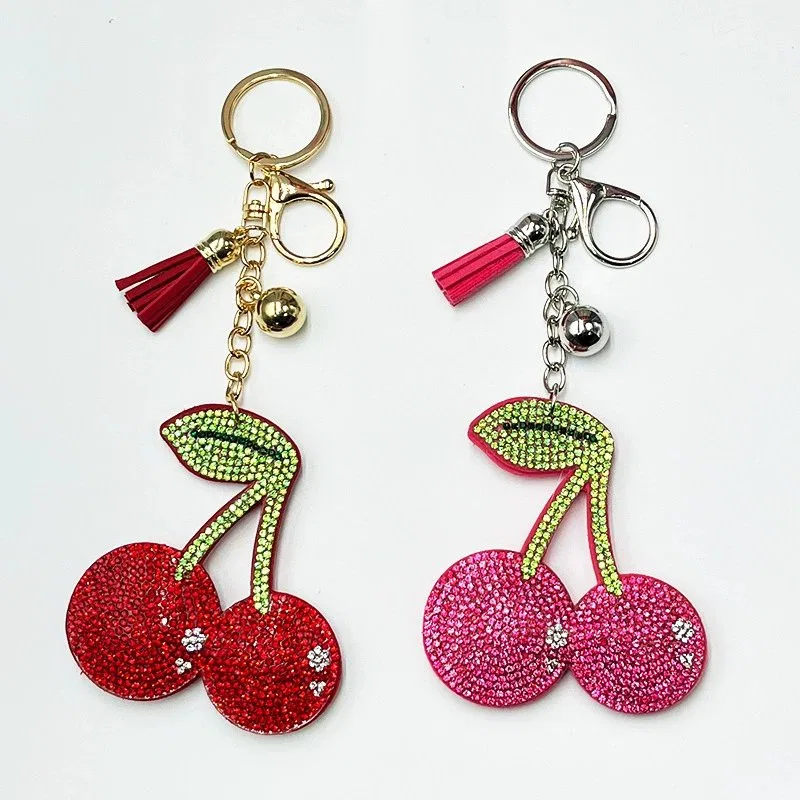
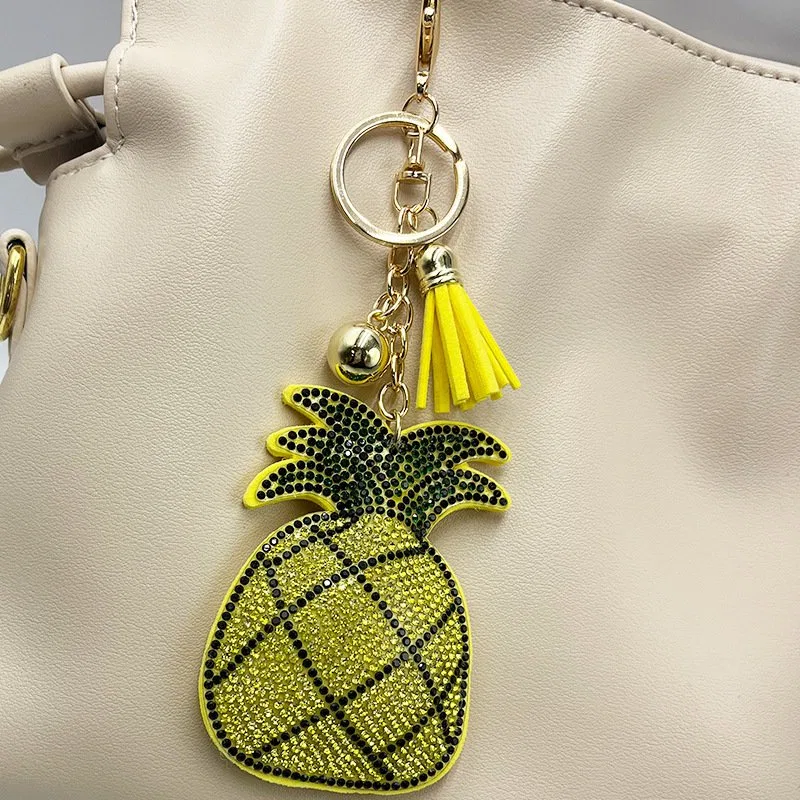
Product 104 records HC-YWXK-010, Metal Alloy and Rhinestones, 2.6 by 1.8 inches and MOQ 50. Product 118 records HC-YWXK-024, Metal and Rhinestones, 3 by 1.8 inches and MOQ 50. Product 142 records HC-YWXK-048, Crystal and Metal, 2.7 by 3.2 inches and MOQ 50. Those fields do not specify edible content, flavor, produce origin, retail packaging, color tolerance, mixed assortment, price or delivery. Ask for current confirmation on every proposed buyer SKU.
Separate Snack, Orchard and Tropical Roles
Assign a merchandising purpose to each item instead of calling the range “food shapes.” The chips motif can support novelty snack gifting, the cherry can lead a sweet or retro color story, and the pineapple can anchor tropical travel or summer retail. These themes describe visual use, not ingredient, nutrition or origin. Give every motif and colorway a buyer SKU, target audience, sales channel and requested quantity. If a campaign also includes cartoon patches, keep patch and keychain specifications independent even when they share artwork. Different constructions, dimensions, attachments and packaging require distinct samples and purchase lines. A family mood board may link them, but it must never replace product-level evidence.
Number Every Visual Field Without Calling It Flavor
Map the artwork into decoration, metal, outline, text and optional face regions. Use physical references for reds, greens, yellows and accent tones, then inspect them on the current sample under agreed light. Color wording must remain visual: a red cherry motif is not a cherry flavor, and a green package drawing does not establish an ingredient. If the chip design carries original copy, submit final editable lettering and approve legibility at actual size. State whether substitutions are prohibited or require written review. The selected database rows do not guarantee a universal palette or component availability. Preserve approved samples and numbered color maps for each buyer SKU rather than relying on photographs alone.
| Field | Buyer evidence | Sample decision |
|---|---|---|
| Primary motif | Physical color reference | Accept or revise |
| Outline and metal | Proposed material and finish | Confirm current offer |
| Original text | Editable artwork | Check real-size reading |
Measure Motif and Hardware as One Moving Article
Use recorded sizes to identify the catalog entries, then measure the current complete keychain for packaging and display work. Extend the ring and connector naturally, note maximum thickness and photograph front, back and side with a scale. Check whether the charm flips, whether metal covers text, and whether adjacent units tangle in the requested pack. Ask Teebling to identify current hardware materials and finishes for the selected products instead of inferring load, safety, corrosion or wear performance. The cherry is listed at 3 by 1.8 inches and the pineapple at 2.7 by 3.2 inches, but those dimensions do not prove equal hanging envelopes. Approve each product on its own physical evidence.
Create a Pack Ratio From the Actual Channel Plan
Specify peg card, pouch, tray, gift box or event-kit presentation and provide dimensions of the fixture or surrounding products. Reserve buyer-approved copy and barcode zones around the complete attached unit. Determine quantity per motif from store or event needs, then show the intended ratio in an allocation ledger. All three cited rows record MOQ 50, but that does not establish one shared 50-piece mixed order, inner count or carton quantity. Obtain current commercial and packaging confirmation. Ask for protection that prevents decorated faces and metal components from uncontrolled contact. The keychain packaging studio explains the proof sequence for card, retention, scan and pack-out decisions.
Basket label
Buyer SKU + motif + approved art + unit pack + quantity + assortment ratio + destination + receiving count.
Plan Reorders by Motif, Store and Campaign Window
Archive editable artwork, product code, approved color map, complete-unit views, packaging revision, physical sample and destination allocation. A summer pineapple run, cherry-themed capsule and snack novelty campaign may have different dates even when purchased together. On reorder, cite the archived specification and identify each proposed change. Ask Teebling to reconfirm product availability, current MOQ interpretation, commercial terms and any component variation rather than assuming historical conditions persist. The private label accessory MOQ plan separates demand from supplier minimums, while sample approval preserves the signed evidence. Those controls make a rhinestone keychain wholesale range easier to replenish without silently changing identity.
| Campaign | SKU set | Change field | Required approval |
|---|---|---|---|
| Snack | Chip code | Artwork or pack | New affected proof |
| Orchard | Cherry code | Color or quantity | Physical/quote review |
| Tropical | Pineapple code | Destination split | Allocation sign-off |
Food and Fruit Keychain FAQ
These answers maintain clean boundaries between original artwork, accessory imagery, verified catalog facts, mixed quantities and signed sample evidence.
Can a food keychain copy a snack brand package?
Only submit brand graphics you own or are licensed to reproduce. A generic chip bag, cherry or pineapple motif should use original shapes, wording and color arrangements.
Which product records support this market assortment?
Products 104, 118 and 142 provide potato-chip, cherry and pineapple references with separate codes, materials, dimensions and recorded minimums of 50.
Does a fruit motif support a nutrition or food claim?
No. The pieces are accessory motifs, not edible goods, and their imagery does not establish origin, ingredient, health or sustainability claims.
How should a mixed food and fruit pack be quoted?
Submit quantity by buyer SKU and colorway, unit presentation, inner ratio and destination. A combined minimum and pack configuration require current supplier confirmation.
What should be signed on the assortment sample sheet?
Approve original artwork, motif dimensions, physical colors, complete hardware, front and reverse views, retail identity, protective method and the exact assortment ratio.
Send a Three-Crate Food Motif RFQ
Provide rights-cleared artwork, product references, requested dimensions, numbered colors, hardware questions, quantity per buyer SKU, retail presentation, assortment ratio, destination split and sample milestone. Ask Teebling to return current construction, feasibility, MOQ interpretation, packing proposal and quotation assumptions for the defined range. Sign each complete unit and the shared market ledger before purchase release. Use bling keychains wholesale guidance for category context, private label merchandise packaging for broader identity controls and promotional sourcing governance where the assortment enters a campaign. Clear evidence gives private label accessories buyers a repeatable market without borrowed brands or food claims.
Opening inventory
Rights + three codes + color maps + complete hardware + retail units + ratio + destinations + signed physical samples.