



DTF vs DTG Printing: How to Compare Two Apparel Samples
Compare direct-to-film and direct-to-garment printing for your exact fabric, design and order size.
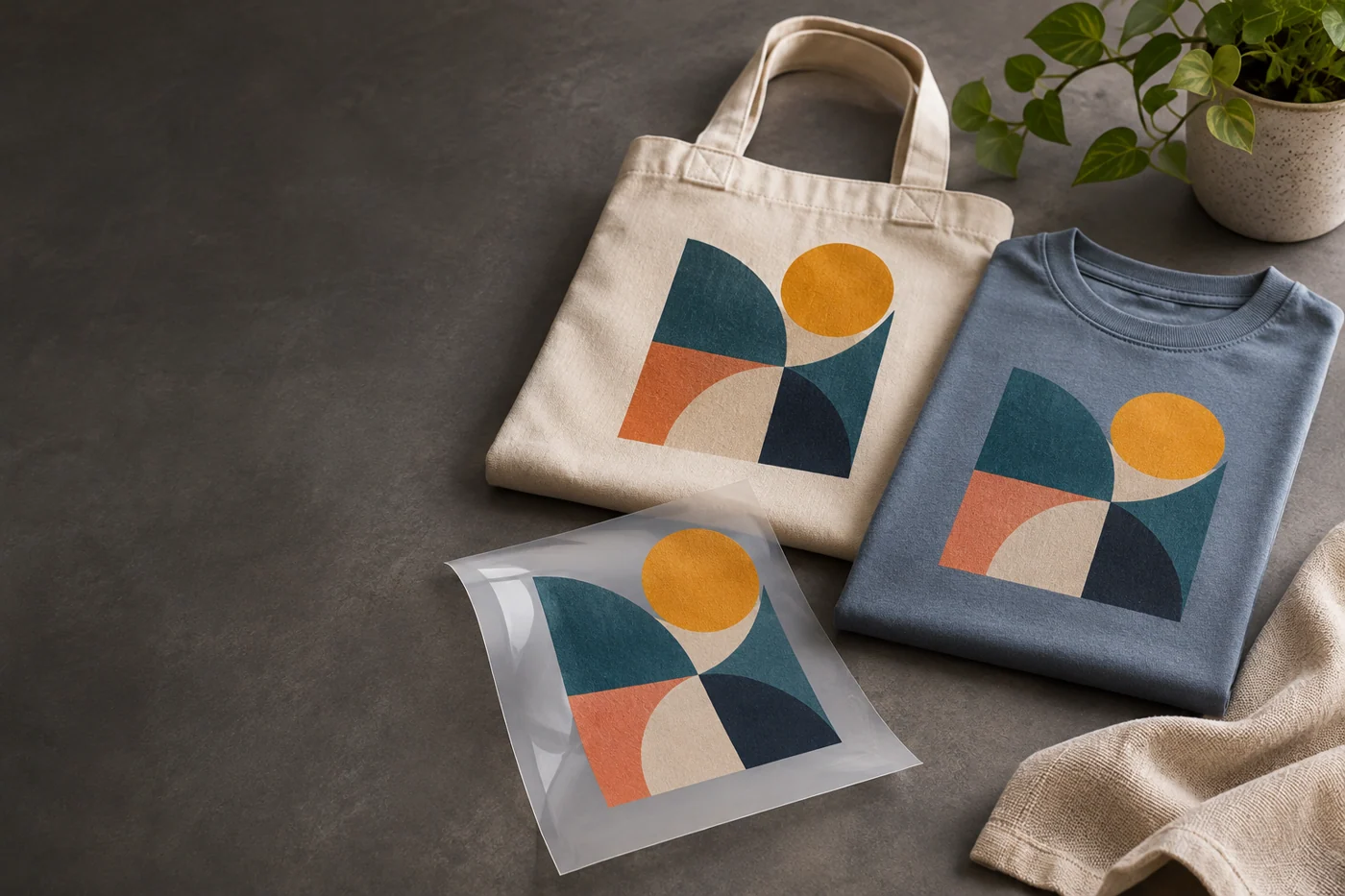
DTF prints the design onto film before transferring it to the garment. DTG prints ink onto the garment itself. The difference matters most at the edge of a large graphic, on a dark fabric, or when a quote covers several garment types. A side-by-side sample gives a buyer more useful evidence than a broad claim about which method is better.
Use the same design and base garment
Send the same high-resolution art, final width and placement to both providers. Keep one area with saturated color, a line of small type and a solid block big enough to check stiffness. For a black shirt, ask each provider to describe how the white layer is handled; ask whether the DTG method includes pretreatment for that exact fabric. Print samples under identical garment conditions when possible.
Inspect what a photo may hide
Flex the decorated area, then inspect it from the inside. A print can look sharp on a tabletop but feel stiff across a large area when the shirt hangs. Check small type for fill-in, pale areas for visible fabric show-through and outer edges for a hard boundary. If portions of the art are transparent, confirm whether the print preserves that effect on the chosen base color.
Start with the fabric and finished garment rather than assuming one decoration can go on every style. Review the decorated wholesale apparel.
Match the order to the workflow
DTF can suit a program where the same film artwork is applied to several compatible garments, but the production team still needs to approve temperature, pressure and adhesion for each surface. DTG can suit designs where direct printing and garment feel meet the brief; compatibility depends on the printer, ink, pretreatment and garment. Ask both providers to quote setup, repeats, necessary sample runs and replacements separately.
Approve a production sample, not a technology
Wash the sample under the agreed finished-garment instructions and record changes against an unwashed control. Compare the exact variants you will order, especially if a light cotton sample and a dark blend use different processing. Keep a photo of the approved art area and the garment lot reference with the quote.
Discuss a decorated apparel order
References: Epson’s textile printing reference.