Materials & appearance
Review fabric, color, texture and visible finish against the agreed reference.

Quality & Compliance
Build clothing quality control into your order brief, from the approved sample to finished-product checks. Identify the product, intended use and destination so inspection criteria, textile testing requirements and relevant documents can be reviewed.
SPECIFICATIONS BEFORE ASSUMPTIONS
Quality & Compliance
Record materials, dimensions, measurement tolerances, colors, construction and decoration placement. Textile quality control starts with a defined material reference; a fabric name alone does not establish weight, shade or performance.
Use the approved sample and its revision record to define the expected result. Identify fit, appearance, finishing and packing details before bulk production, and record any changes instead of relying on informal photographs.
Agree on the inspection stage, sample size, acceptance criteria and reporting. A garment inspection checklist should cover the selected product and its use, including measurements, workmanship, decoration and packing.
Review applicable textile testing standards, buyer requirements and destination-market rules. Confirm the required test method, sample identity and report scope. Teebling is not presented as an independent laboratory or as universally certified.
THE APPROVED REFERENCE
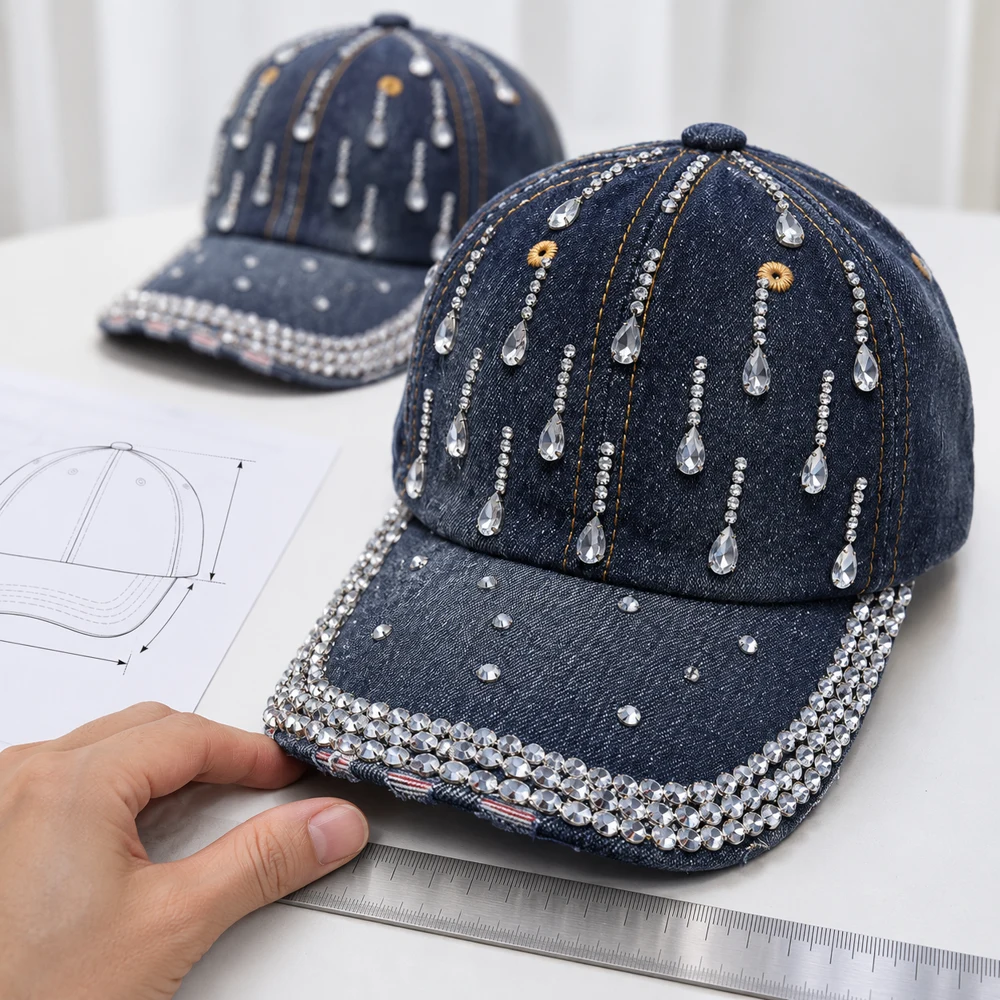
Garment quality control compares production against an agreed reference. For an embellished cap, for example, define the base fabric, dimensions, fastening and rhinestone layout. Appearance checks and textile performance testing answer different questions; one cannot substitute for the other.

Review fabric, color, texture and visible finish against the agreed reference.
Define measurement points and acceptable tolerances for your product.
Confirm artwork placement, rhinestone layout and decorative attachments.
Review seams, closures and intended use; agree on any testing required.
Check label details, quantities, packing instructions and carton markings.
Keep the approved sample, specification revision and review records together.
Checks and testing scope are agreed for each product and order.
DOCUMENTATION & SCOPE
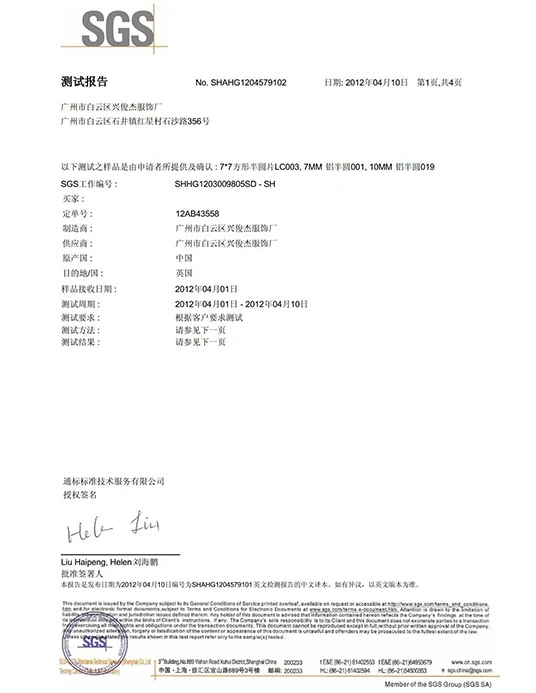
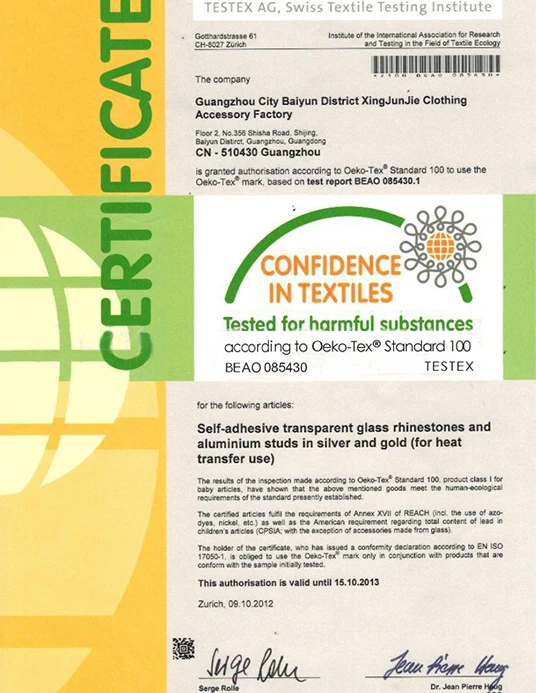
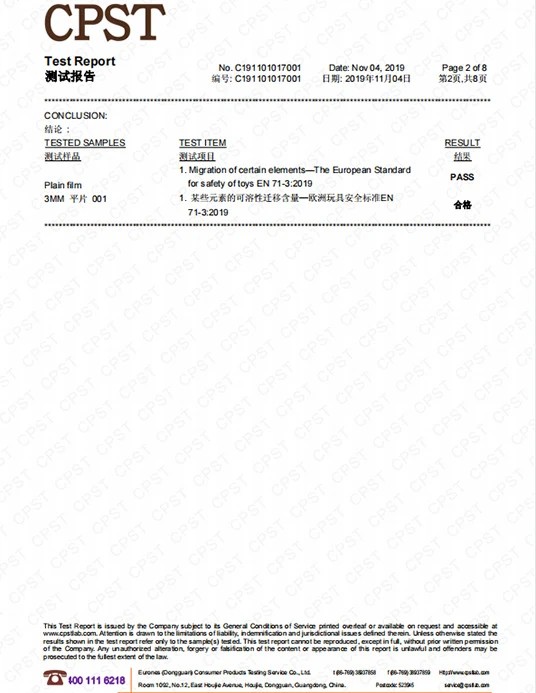
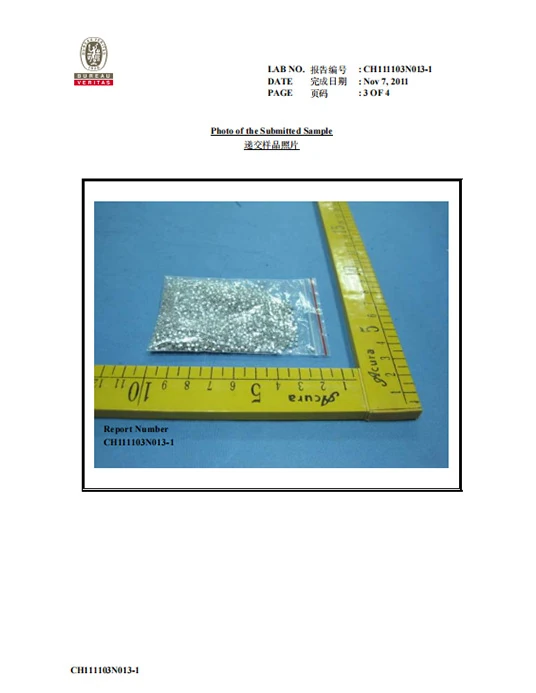
Historical material and sample records for reference. These pages do not establish current Teebling certification or catalog-wide compliance. Open a record to review the document image.
BEFORE YOU GET STARTED
No. Inspection checks a product against agreed specifications and acceptance criteria. Product compliance can involve separate requirements, test methods and documentation for a particular item, use and destination. Agree on both scopes before production.
A pre-shipment inspection reviews the agreed order checks before dispatch. Depending on the confirmed scope, these may include quantities, appearance, measurements, workmanship, labels and packing. The timing, sampling method, acceptance criteria and reporting should be agreed in advance; inspection is not a guarantee about every individual item.
Identify the order and approved reference, confirm the inspection stage and sample selection, list the checks and acceptance criteria, and specify how findings will be recorded. Agree who reviews any nonconformities and whether corrections or a further check are required before dispatch.
Ask the buyer, importer or relevant authority what document is required for the product and destination. An inspection report and a certificate requested for a particular trade requirement are not automatically interchangeable. Confirm the issuing organization, document format and scope before arranging the work; a certificate is not included with every order.
Quality control uses the agreed specifications and checks to review an order. Textile testing methods can assess particular material or performance characteristics under defined conditions. Specify the question to be answered, the sample and the relevant method so the resulting report is meaningful for your product.
Send the intended use, material composition, destination, buyer specifications and any required test methods. If performance requirements such as washing behavior, colorfastness or attachment durability matter to the project, identify them for review. Applicability and testing scope must be confirmed rather than assumed from the product category.
No. They are historical material or sample records with limited scopes. Some pages do not contain test results, and the displayed OEKO-TEX document has expired. They are not evidence of current certification for Teebling or for the full catalog.
Identify the exact product, materials, intended users and destination market. Include any buyer specifications, required test methods, labeling requirements and documentation deadlines so the scope can be reviewed.
An approved sample is a reference, not proof of the condition of every bulk item. The order should separately state which production or finished-goods checks are needed and how results will be reviewed.
Match the report to the item, material and sample identification in your order. Check the issuer, date, method, stated result and limitations. Ask whether a change in fabric, color, decoration or intended use affects its relevance. A cover page or a sample photograph alone does not establish that a product passed a test.
LET’S TALK ABOUT YOUR PROJECT
Apparel testing and quality control must relate to your actual product. Request current records for the exact material, finished item and destination. A historical report or a result for one sample does not establish compliance across a collection.