




Embroidery vs Screen Printing: Compare the Same Logo Before You Order
A practical comparison of detail, feel and quote structure for a stitched or screen-printed logo run.
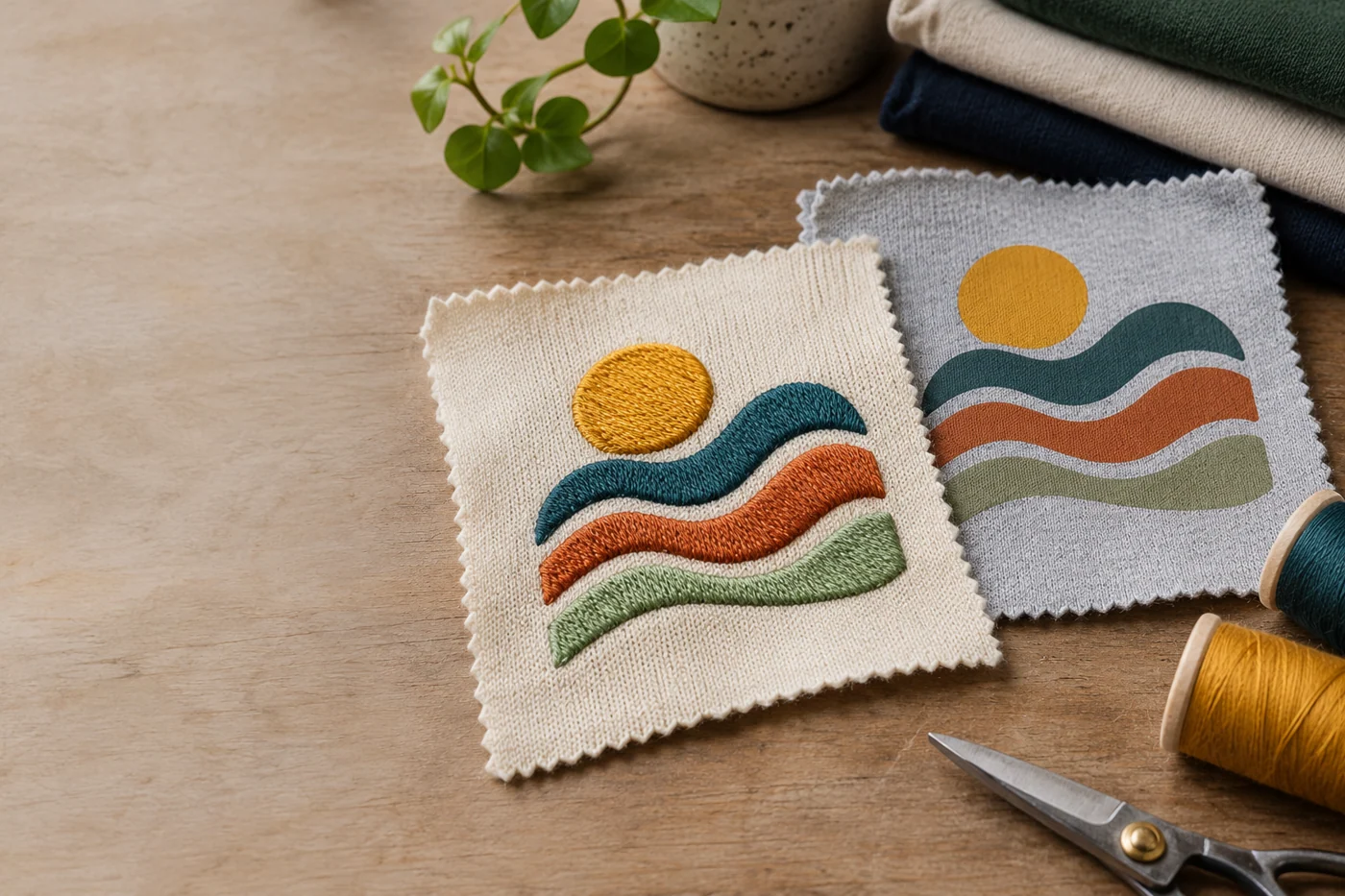
Embroidery builds a logo from thread; screen printing deposits ink through a stencil. The useful choice is not which method is better in general. It is which one reproduces a particular design, in the intended position, on the fabric that will actually be ordered. Set up the comparison so the two quotes and samples answer the same question.
Start with a matched artwork test
Pick a normal-size version of the mark and a smaller version that includes its most difficult detail: the smallest enclosed letter, a negative gap or a fine tagline. Keep the base garment, color, placement and viewing distance the same. Request approval samples rather than comparing a photograph of thread on a cap with ink on an unrelated shirt.
| Check | Embroidery | Screen printing |
|---|---|---|
| Small clear space | Inspect where adjacent stitch areas visually merge. | Inspect ink edges and whether enclosed counters remain open. |
| Large solid area | Check thread density, surface stiffness and how the garment hangs. | Check coverage and feel, particularly if a light design needs an underbase. |
| Back of the garment | Inspect backing and loose ends where they touch the wearer. | Check for ink penetration or visible press impressions, as applicable. |
Use the finished apparel collection as a base-garment reference. A catalog garment or embroidered accessory does not establish that every decoration process is suitable for that item.
Separate setup costs from the recurring unit charge
Ask whether digitizing a stitched file or preparing screens and color separations is billed separately. On each quote, record base garment, decoration position and size, number of pieces, setup charge, sample charge and any reorder setup. For illustration, a setup charge of $60 contributes $2 per piece at 30 pieces and $0.30 at 200. That arithmetic shows why two methods can switch order by quantity; the figures are not Teebling prices.
Verify feel and laundering, not just the front view
Lay each piece flat, lift it by the shoulder and inspect the logo again while the garment hangs. A stiff sample may look fine on a table yet distort the fabric on the wearer. Record whether the logo touches skin or a liner. Repeat the review after the laundering procedure agreed for the actual garment, and note which sample was tested. Avoid universal wash claims based on the process name.
Send one brief with two requested options
Include the editable artwork, maximum size, position, fabric or garment reference, color split, quantity and delivery destination. Ask each provider to flag any artwork simplification before sampling and to itemize it. If the samples need different artwork to succeed, approve the revised versions separately rather than assuming they are interchangeable.
Discuss a decorated apparel order
Reference: Printful’s original decoration process comparison.