




Pilling Fabric: How to Specify a Test and Read the Result
Specify the method, checkpoints and acceptable grade before comparing fabric pilling results across suppliers.
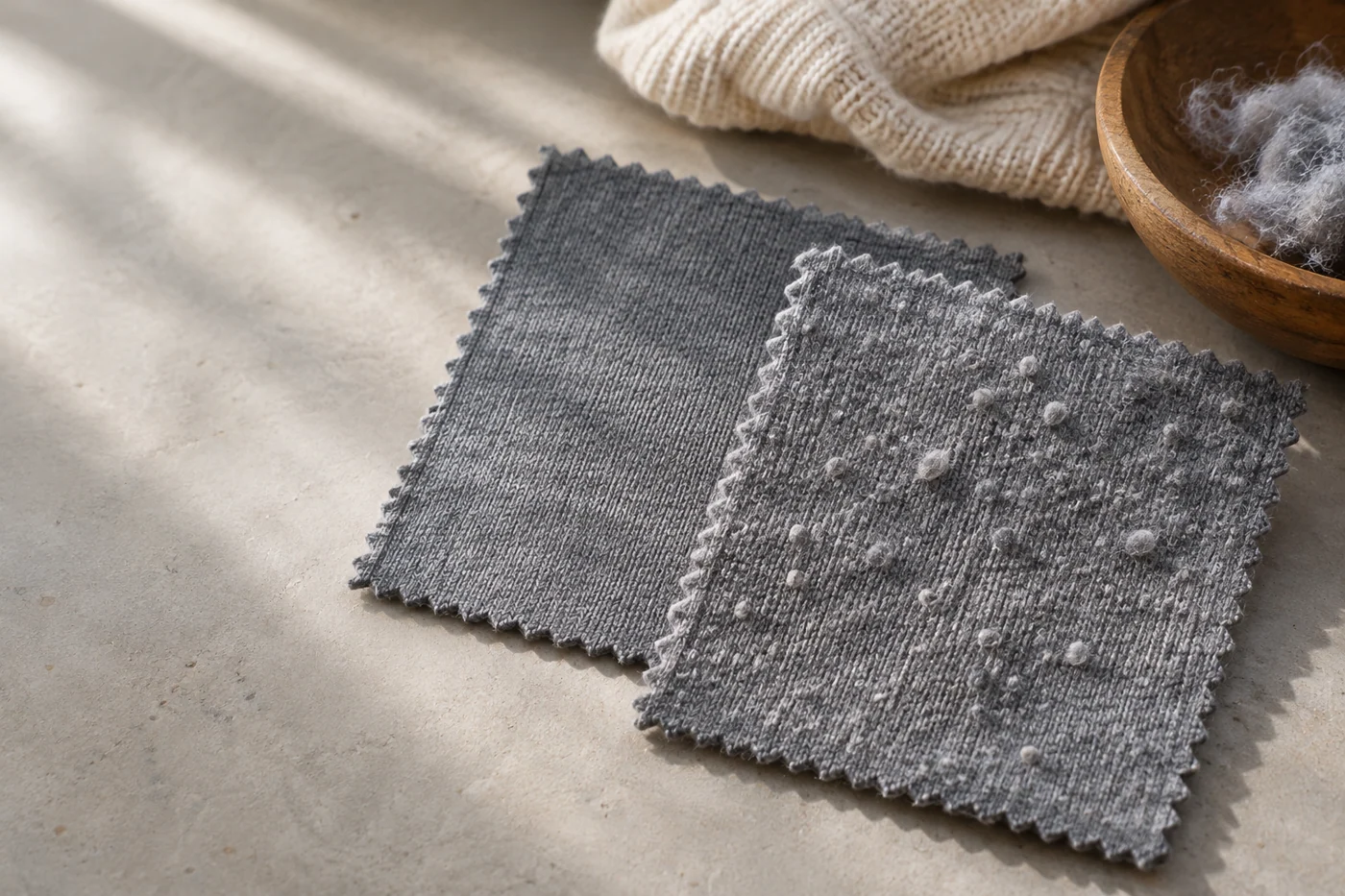
Pills are small balls of fiber that develop on the surface of a textile. An area can look fuzzy without forming distinct pills, and an area that has lost material can be worn even without many visible pills. Ask a lab to distinguish those observations rather than asking whether the fabric is “anti-pilling.”
Pick the relevant surface and use case
If the concern is a brushed sweatshirt, indicate whether the test should examine the outside face or the raised interior. For a lined bag, name the lining material and the contact surface, rather than testing the shell by default. If the garment has different fabric at a cuff, patch or panel, treat it as a separate specimen when it raises a different failure risk.
Describe the use conditions you are worried about. For example, a light top worn under a dark bag strap may show visible surface change in a narrow band. A pilling test helps compare the fabric’s surface response under the specified laboratory method; it does not recreate every customer’s wearing habits.
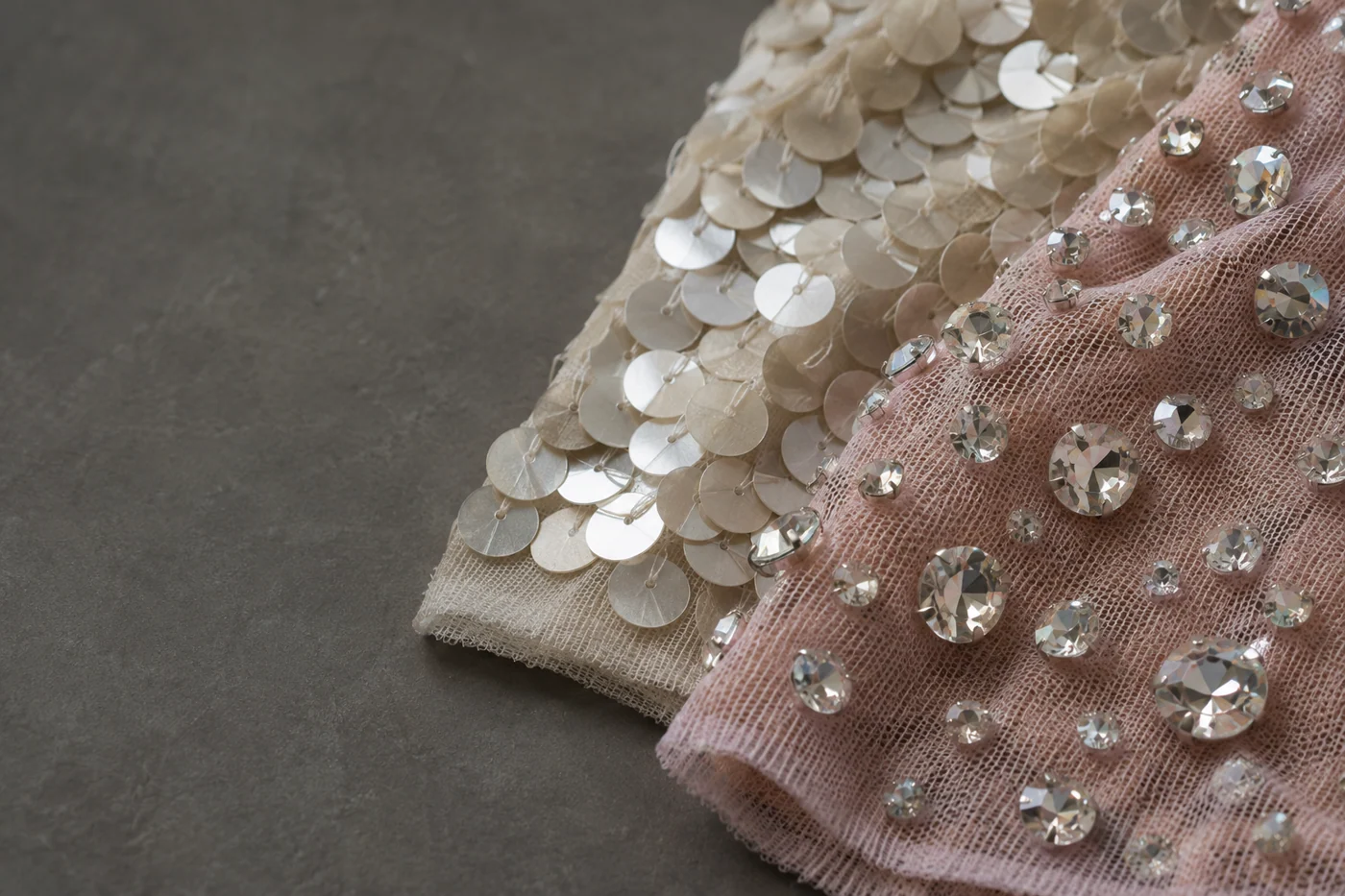
See finished apparel and rhinestone bag designs as examples of products with different textile faces. Catalog appearance alone does not establish a pilling rating.
Use a consistent comparison
| Record | Why it matters |
|---|---|
| Method, version and checkpoints | Results from different methods or exposures cannot be compared as though they use one scale. |
| Material ID, color and finish | Matches the specimen to the cloth proposed for the order. |
| Face tested and preconditioning | Prevents a result for a different surface or preparation being applied to the one you intend to buy. |
| Observed grade and acceptance threshold | Keeps the measured result separate from your commercial pass/fail decision. |
Use the report to decide what to change
If two fabrics have equal grades at the first checkpoint and diverge later, do not quote the early grade alone. Compare the whole test record and inspect companion swatches when available. If a grade misses the agreed threshold, ask whether the remedy is a different fabric, a revised finish or a change in where that fabric is used. Recheck the selected revision rather than carrying the old report forward.
Discuss material and test requirements
Reference: ASTM’s description of the random tumble pilling method. Ask your lab which current method and version apply to your order.