




Garment Quality Control Checklist: What to Check Before Approving Production
Build a practical inspection brief around materials, measurements, construction, decoration and packaging.
A garment quality control checklist gives a buyer and supplier a common way to describe acceptable work. It should be connected to the approved specification, not copied from an unrelated product. The checklist for a plain cotton tee will not cover every concern on a lined jacket or a heavily embellished accessory.
Define the scope before production
Agree which checks occur during manufacturing and which occur before dispatch. Early checks can help identify problems while corrective work is still practical. A final inspection addresses the goods available at that stage; it does not reconstruct every earlier process.
Ask who performs each check and how the result is recorded. If an independent inspection is required, confirm that arrangement separately. A supplier’s internal review and a third-party inspection are not interchangeable descriptions.
A garment inspection worksheet
| Area | Check against | Record |
|---|---|---|
| Material and shade | Approved fabric and color reference | Visible variations, stains and disclosed substitutions |
| Measurements | Points of measure and agreed tolerances | Actual readings by inspected size |
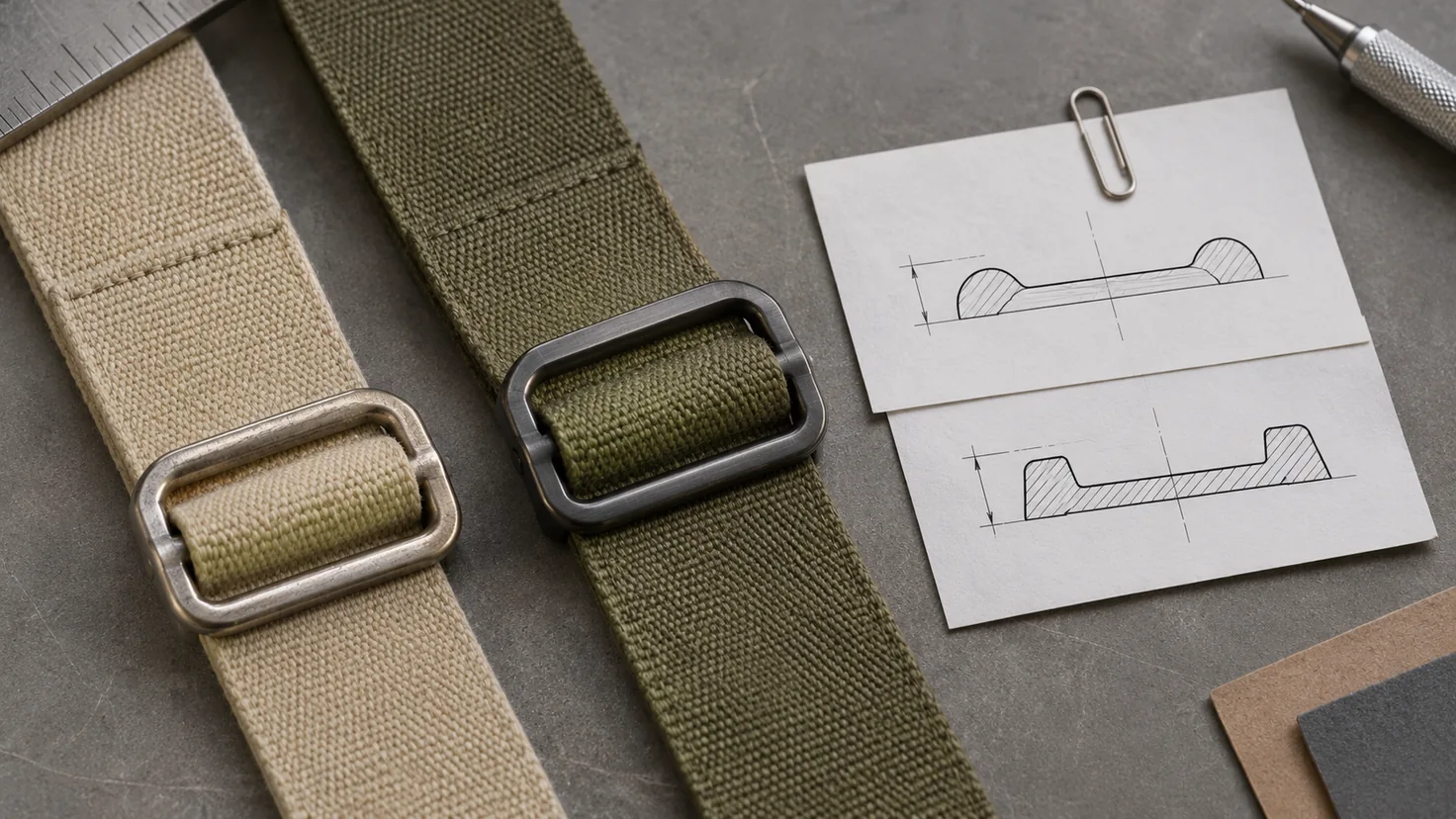
| Construction | Seam, hem, closure and finishing instructions | Location and photographs of workmanship concerns |
| Decoration | Artwork revision, placement and finish | Missing, displaced or visibly inconsistent elements |
| Labels and packing | Approved files and packing breakdown | Variant identification, quantities and packaging differences |
Make measurement checks repeatable
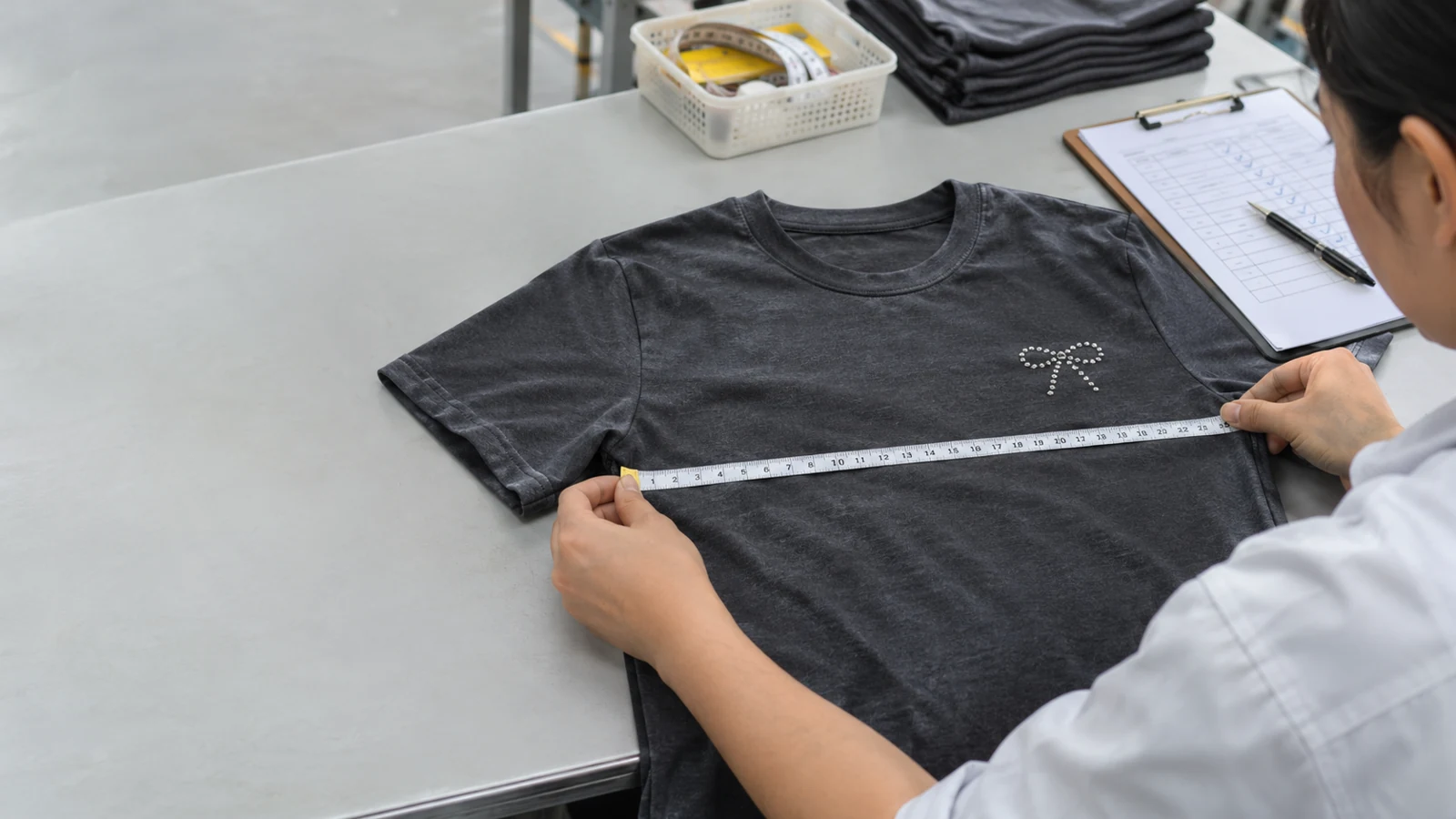
Specify how the garment is laid out, which endpoints are used and whether the dimension is measured flat or around the body. List the unit beside each column. Two people using different measurement methods can produce different results on the same garment.
Record the actual value rather than only writing “pass.” If a measurement is outside the agreed tolerance, the recorded figure allows the team to assess the issue and confirm a correction. Keep the measurement chart connected to the size and style of the inspected item.
Add decoration-specific checks
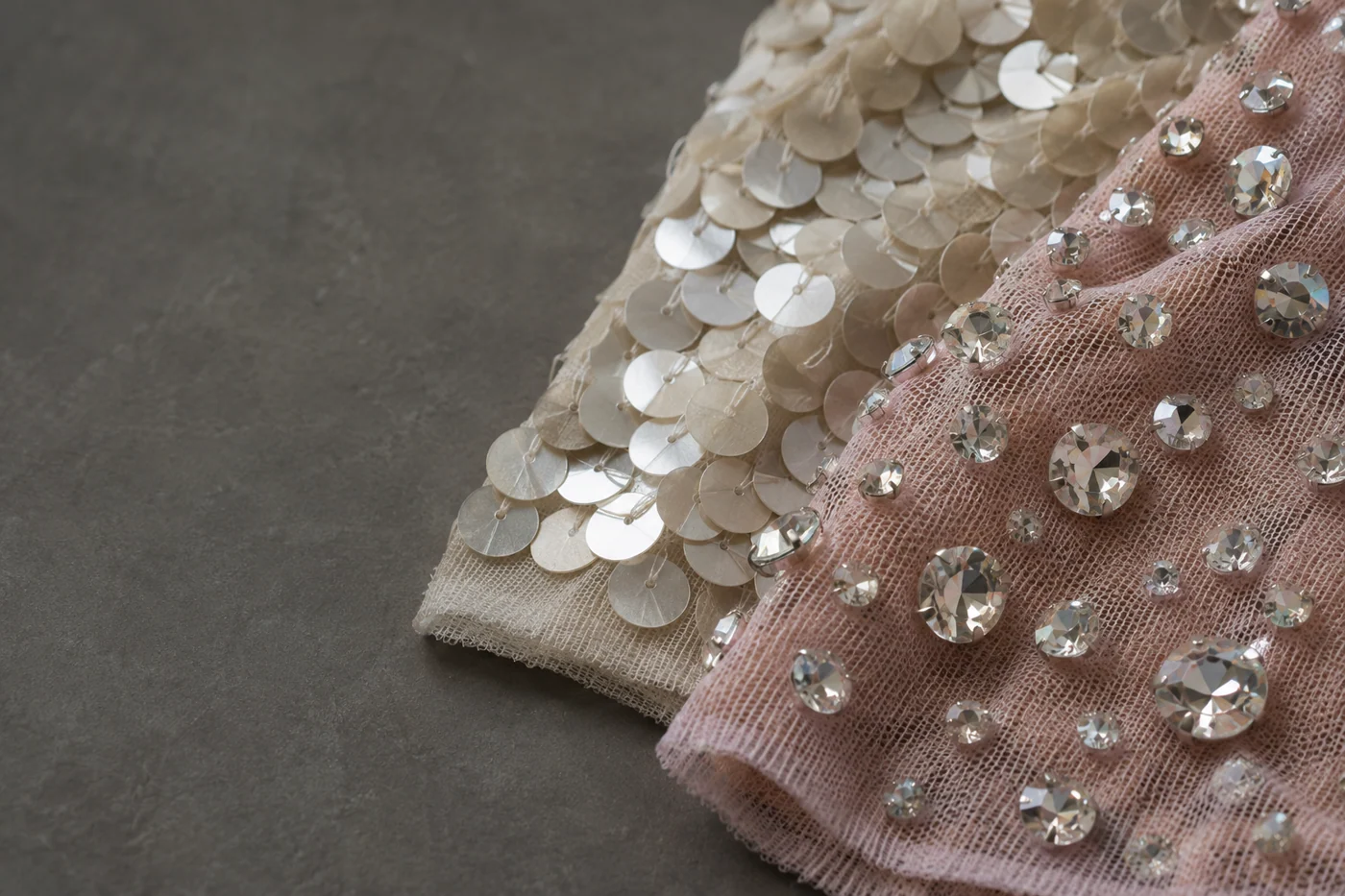
For rhinestone apparel, the visible review should address motif size, position, stone arrangement and missing elements. Inspect the garment surface around the decoration as well as the motif itself. Record any puckering, marks or other visible changes that need investigation.
Visual appearance alone does not demonstrate wash durability or attachment performance. If performance checks are needed, specify the method and acceptance criteria with a competent provider. Do not turn an informal pull or wash into an unsupported compliance claim.
Agree how defects will be handled
Prepare examples of unacceptable conditions where possible. Ask the inspection provider how it will classify defects and select units. If a statistical sampling plan is used, agree on the lot definition, inspection level and acceptance criteria; a sample result is not a claim that every unit was inspected.
- Identify the affected style, size, color and quantity where known.
- Describe the observed issue with photographs.
- Record the proposed corrective action and responsible party.
- Decide whether reinspection or additional testing is needed.
- Keep the release decision separate from the inspection observations.
Quality control questions
Does a passed inspection prove compliance?
No. Workmanship inspection and product compliance testing address different questions. Define any destination-specific testing or documentation needs separately.
Is an approved sample enough?
No. It provides a reference for production, not evidence that the full run matches it. Use the reference within a planned checking process.
Explore Teebling’s quality and compliance approach and plan the final stage with our pre-shipment inspection guide.
Further reading: QIMA: garment quality inspection.