




Rhinestone Mesh and Fabric: What to Check Before Cutting or Ordering
Compare mesh structure, usable width, edge behavior and attachment requirements for rhinestone panels and accessory projects.
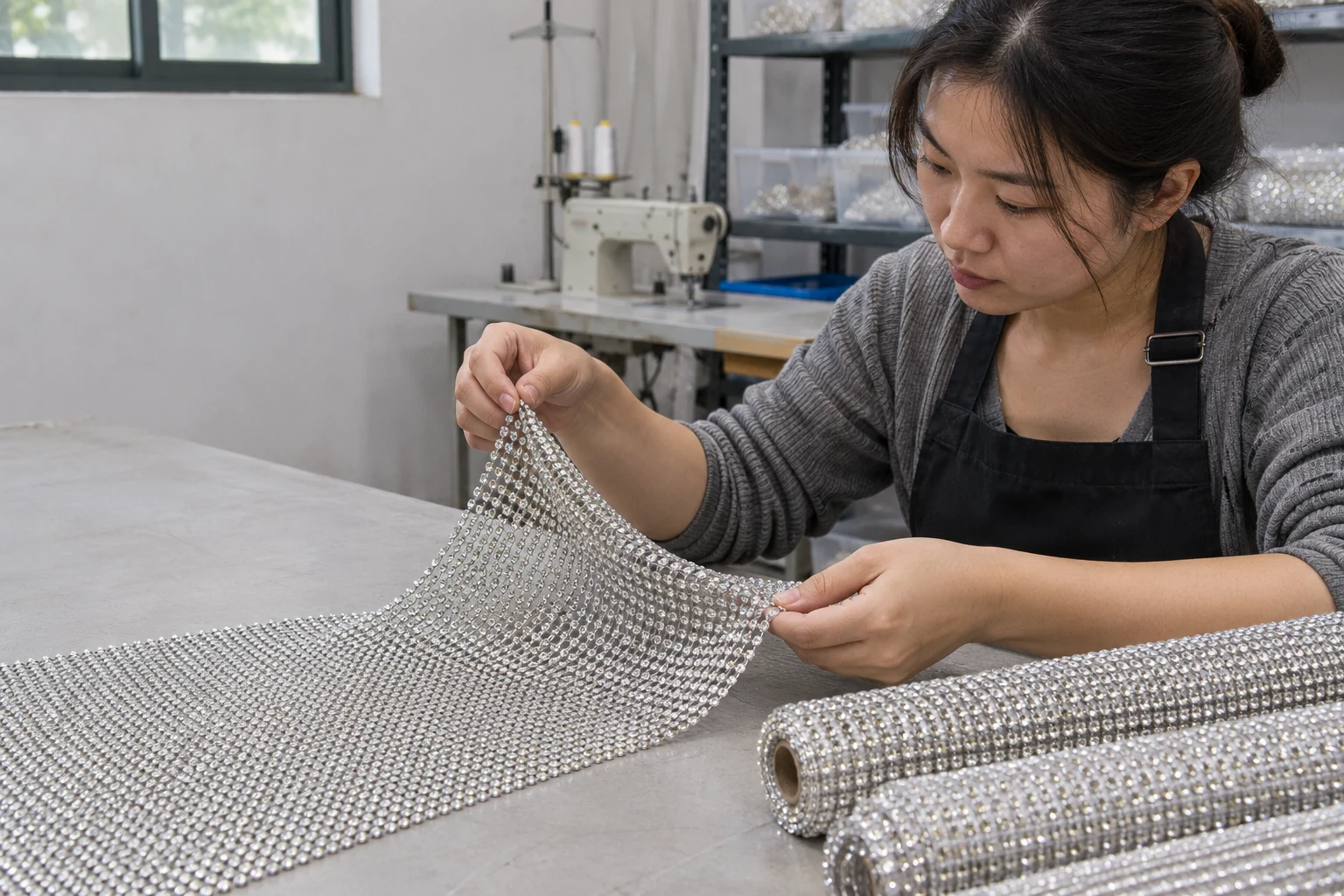
Rhinestone mesh and rhinestone fabric are broad selling terms. They may describe linked crystal mesh, stones on a textile backing or other decorative constructions. Before ordering, establish what the product actually is and whether it suits the way your finished item will be cut, assembled and used.
Identify the construction first
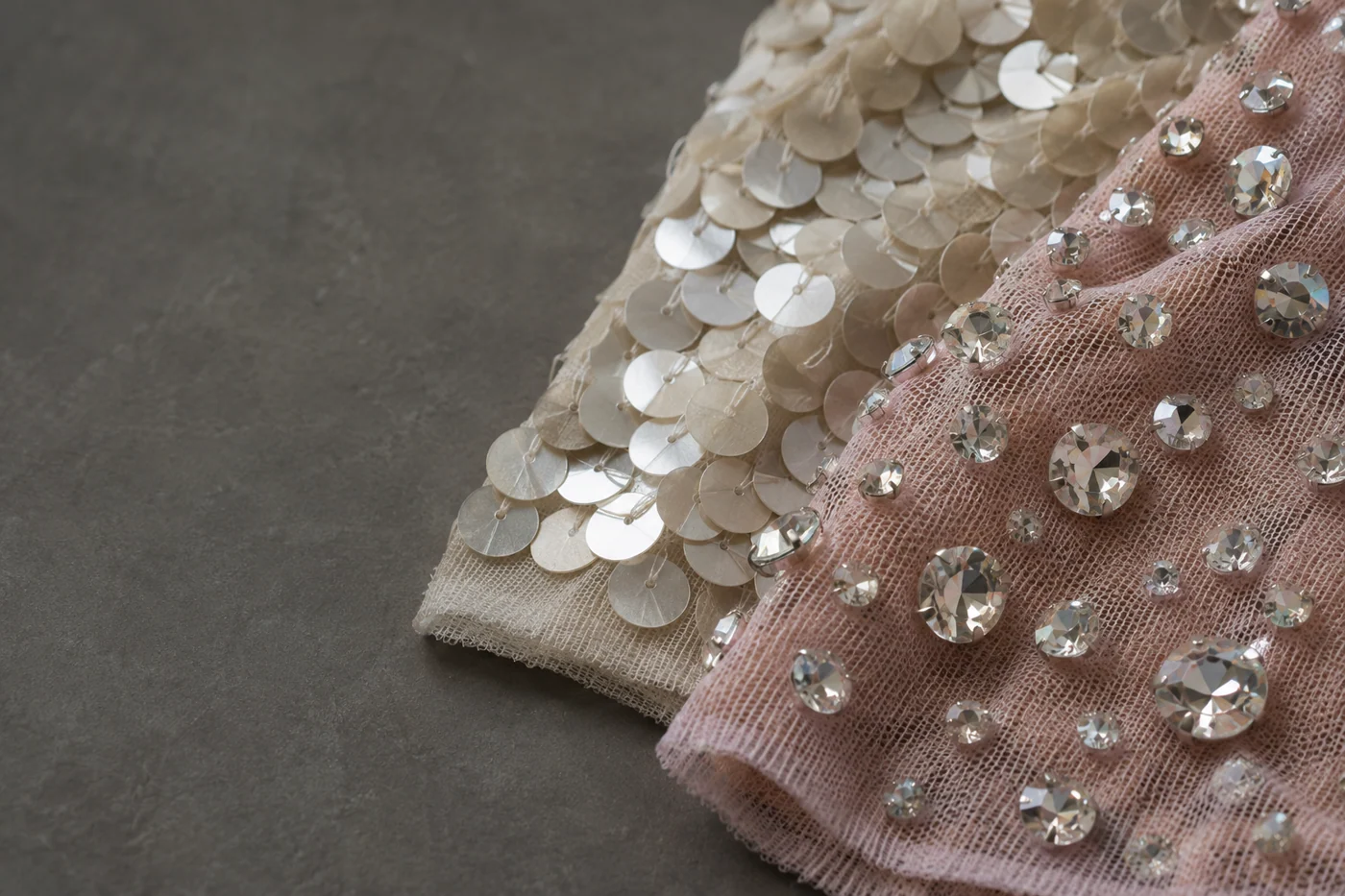
Ask for photographs of the face, reverse and cut edge. Record the stone layout, backing or links, flexibility and supplied dimensions. Do not infer stretch from the word mesh. A linked decorative sheet may drape without behaving like an elastic textile. If the project depends on stretch or recovery, define and evaluate that requirement explicitly.
Check usable width and cutting direction
Overall sheet width may not equal the usable area after edge finishing. Show the supplier the panel shape and orientation you intend to cut. Ask how edges should be handled and whether cutting interrupts links or stone rows. Small curved pieces can use material less efficiently than a large rectangle, so provide the pattern layout when seeking a production estimate.
| Requirement | Evidence to request |
|---|---|
| Construction | Face, reverse and edge images |
| Dimensions | Usable width and supplied length |
| Cutting | Panel drawing and orientation |
| Assembly | Mounted sample with final edge finish |
Agree the attachment approach
Application guidance is component-specific. A method suitable for a flatback stone may not be appropriate for a linked mesh or coated backing. Ask for the supplier’s recommendations and validate the intended construction on a sample. Keep the selected adhesive, stitching or other attachment process tied to the exact material, rather than treating a general online tutorial as production approval.
Review weight, drape and contact
A decorative panel can change the balance of a clutch, bow or garment. Check how it hangs, folds and meets adjacent materials. Inspect edges and the reverse where they could contact fabric or skin. A lining or edge finish may be part of the design, but its suitability should be assessed on the completed sample. Do not approve only the front-facing appearance.
Quote panels and raw material separately
If you need finished cut panels, state that clearly. A price for a roll or sheet does not include cutting, edge treatment or assembly unless agreed. Specify whether the supplier should quote material only, prepared pieces or a completed accessory. This makes the offers comparable and prevents important finishing work from appearing after the initial price.
Questions buyers ask
Is rhinestone mesh the same as hotfix transfer film?
No. Confirm the actual product construction and application method; the names describe different possibilities.
Can I specify flexibility from a photograph?
Not reliably. Ask for a physical sample or a clear handling demonstration, then assess it in the intended product.
Prepare your quotation request
Provide the finished item, panel drawings, quantities, stone color, material reference and assembly scope. Ask for separate prices for material, prepared panels and finished production where those alternatives are relevant.
Related products and planning guides
Reference: Preciosa component-specific application guidance. Product availability and project requirements are confirmed in your quotation.