




T-Shirt Fabric GSM: How to Choose the Right Weight for Your Order
Compare T-shirt fabric weights, understand GSM tolerances and prepare a fabric specification that suppliers can quote accurately.
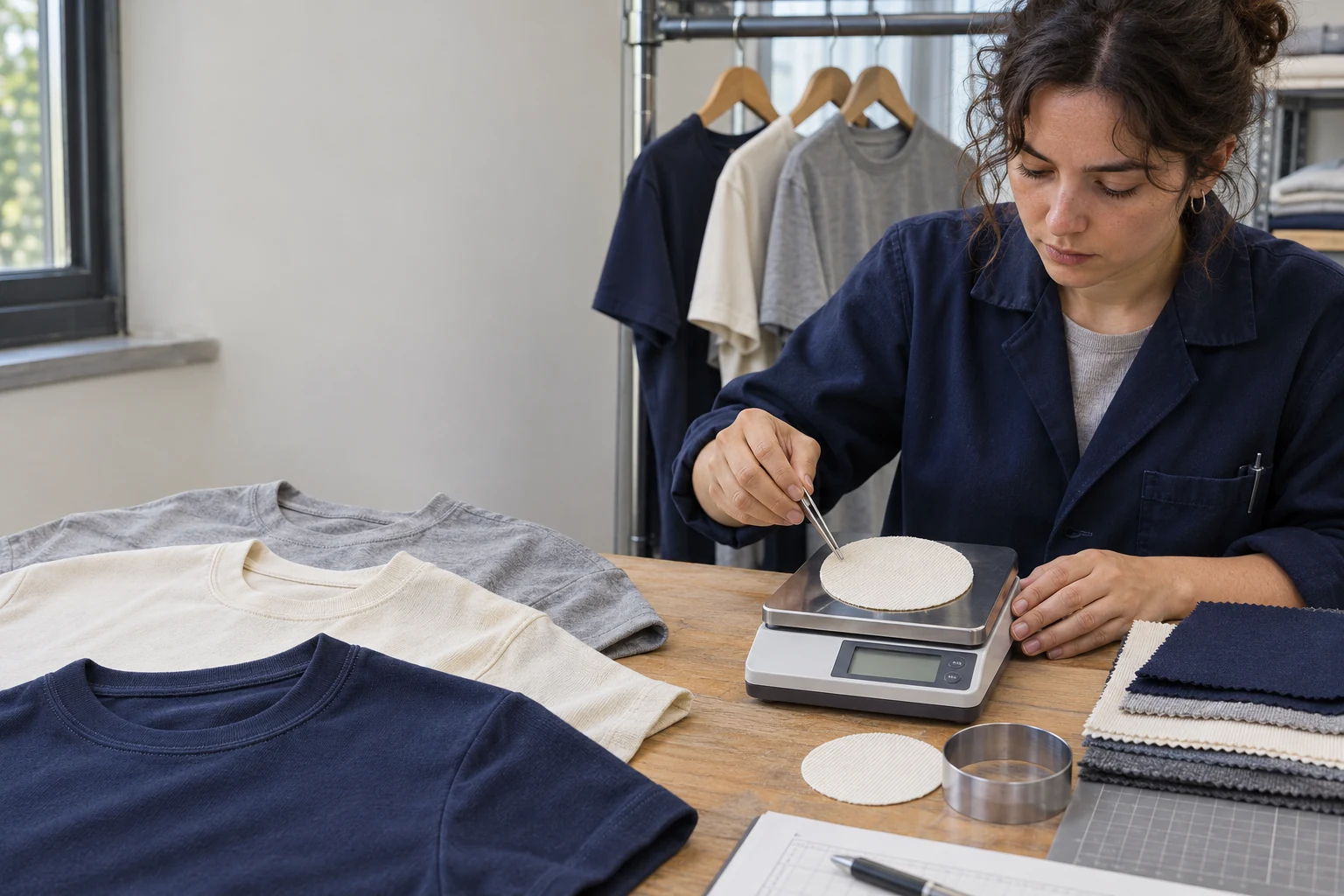
GSM means grams per square meter: the mass of a defined area of fabric. It is a useful starting point for a T-shirt order, but it does not tell you everything about softness, opacity, shrinkage or durability. Two fabrics with the same GSM can feel very different because their fibers, yarns, knit structures and finishes differ.
Start with the product, not the biggest number
A lightweight promotional tee, a fitted fashion top and a substantial streetwear T-shirt do not need the same fabric. Decide how the garment should hang, where it will be worn and what retail positioning it needs. Then compare physical swatches and finished samples. A higher weight can improve substance, but it also changes drape, packing volume and comfort. Ask whether the quoted GSM describes finished fabric rather than unfinished material.
Use weight ranges as a shortlist
The following ranges are buying starting points, not industry quality grades. The boundaries overlap, and fiber content or construction can change the result. White and pale colors deserve a separate opacity check even when their weight matches a dark sample.
| Starting range | Possible direction | Check before approval |
|---|---|---|
| Under 160 GSM | Lightweight tees and layering | Opacity, seam stability and decoration support |
| 160–200 GSM | Everyday T-shirts | Drape, fit and laundering behavior |
| Above 200 GSM | More substantial styles | Bulk, comfort and neckline recovery |
Check weight and decoration together
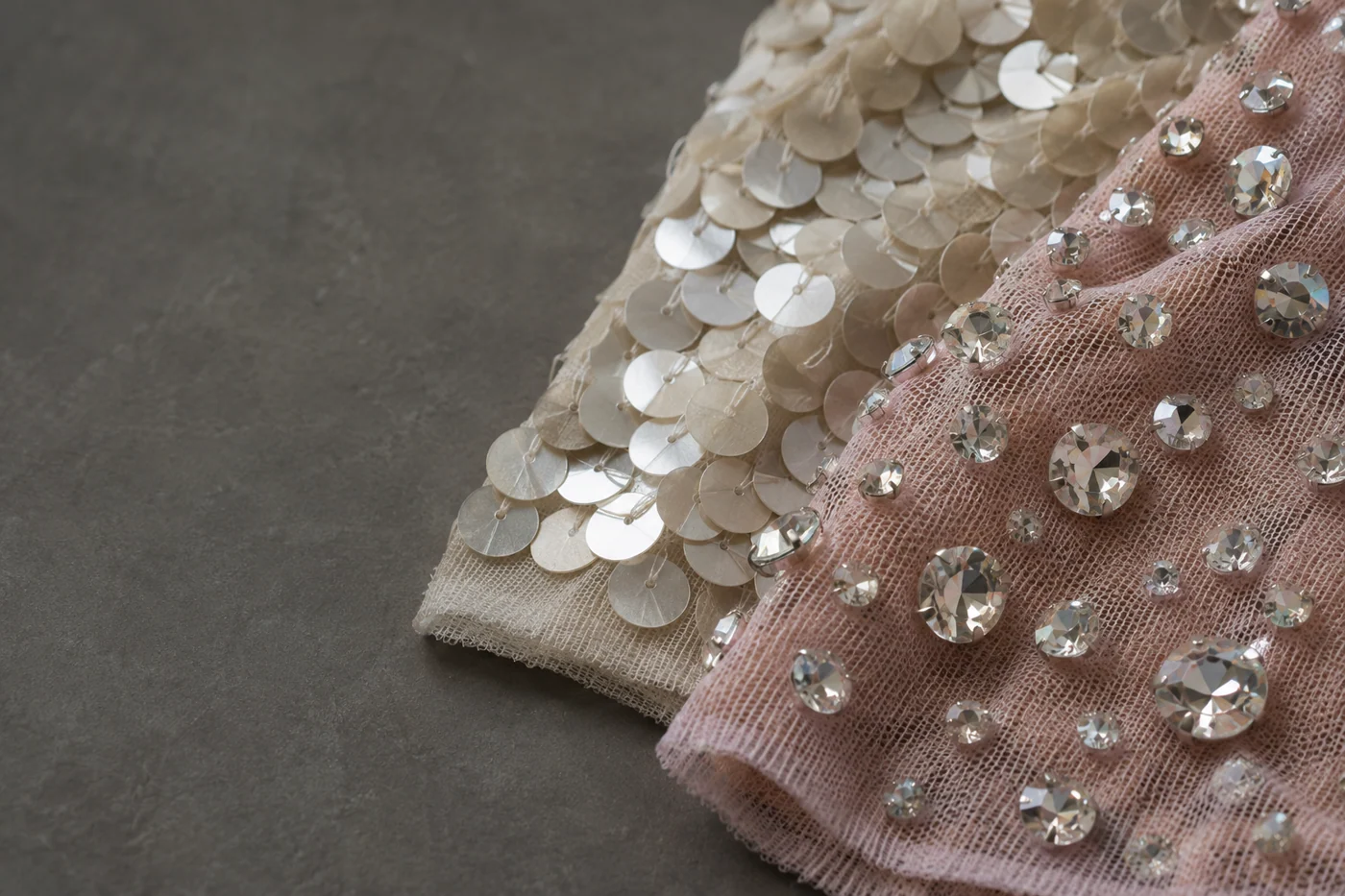
For a rhinestone shirt, consider the weight and placement of the decoration as well as the base fabric. A large motif may pull differently on a light, stretchy knit than on a heavier tee. Review the actual decorated sample for drape, distortion and feel. Do not assume a successful application on one fabric proves suitability for another. The selected decoration process and care instructions should be agreed with the supplier.
Write a measurable fabric specification
Replace 'premium heavy cotton' with a defined fiber composition, knit type, target finished GSM, agreed tolerance and approved hand-feel reference. Specify color and finish too. Have the supplier identify how and when weight will be checked. For example, a request for a 200 GSM cotton single jersey is more useful than 'thick T-shirt', but still needs a tolerance and sample approval. Do not treat that example as a recommended weight for every project.
Keep the approved sample for repeat orders
Retain the fabric reference and the finished garment together. A future delivery can match the weight while differing in softness, surface appearance or shrinkage. Record the approved revision, and ask the supplier to flag material substitutions before production. If you are choosing between two weights, request separate quotations using the same artwork, size mix and packing scope so the price difference is meaningful.
Questions buyers ask
Does higher GSM mean better quality?
No. It measures fabric mass per area, not the quality of the yarn, stitching, dyeing or finished garment.
Can I convert ounces to GSM?
For ounces per square yard, multiply by approximately 33.906. Confirm the quoted unit is per square yard, not per linear yard.
Prepare your quotation request
Send your preferred garment fit, intended use, fiber composition, target GSM or physical reference, colors, size quantities and decoration artwork. If weight is undecided, ask for two clearly specified alternatives rather than one vague 'premium' option.
Related products and planning guides
Reference: CottonWorks fabric specifications. Product availability and project requirements are confirmed in your quotation.