




What Is a Tech Pack? A Clothing Brand’s Guide with a T-Shirt Example
Turn your design into clear manufacturing instructions, from fabric and measurements to artwork placement and sample approvals.
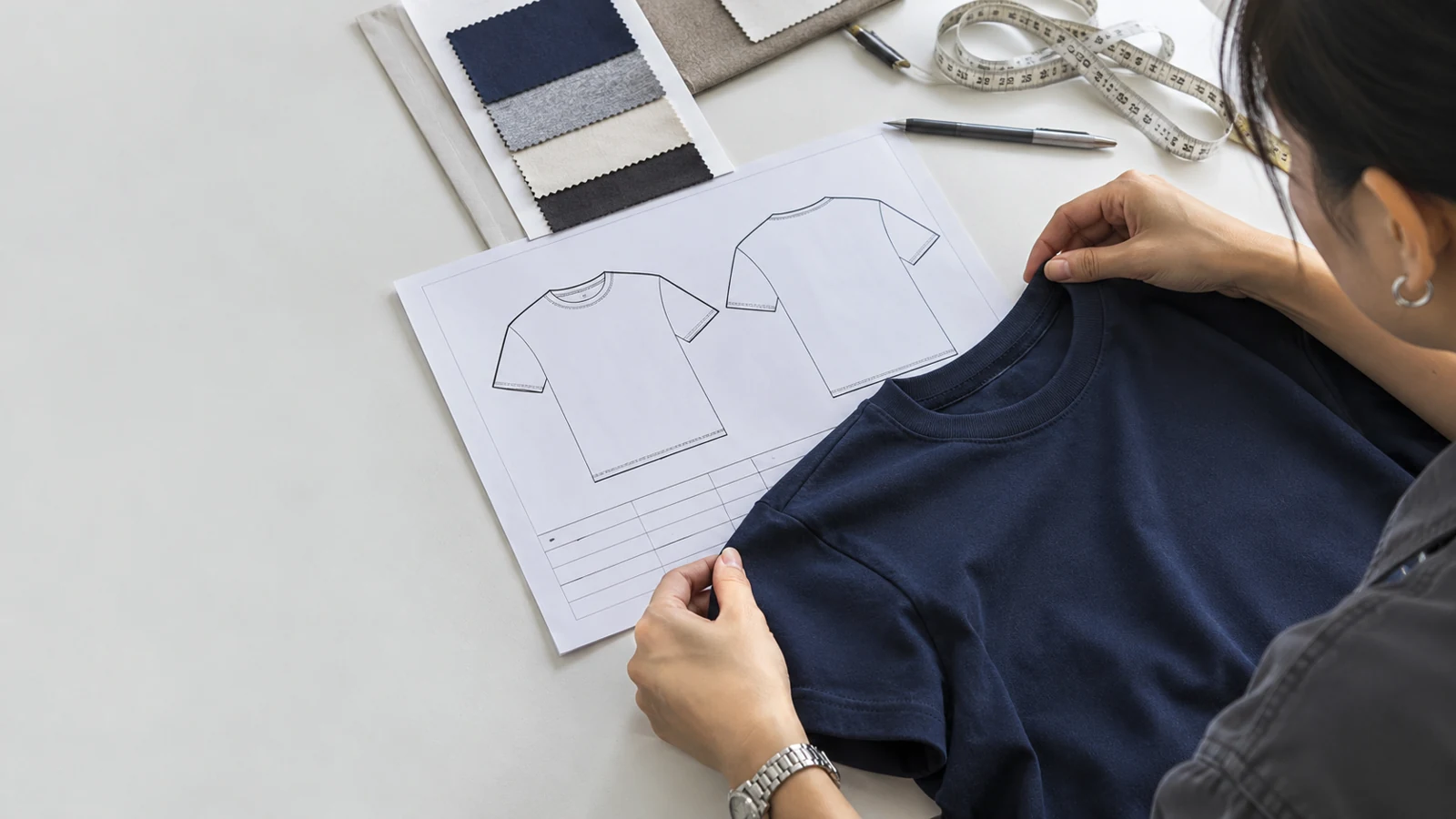
A good garment brief answers the questions that a photograph cannot: which fabric to use, how the garment should fit, where the artwork belongs and which version is approved. A tech pack brings those decisions together so the buyer and manufacturer work from the same instructions.
What belongs in a clothing tech pack?
The format can be a PDF, spreadsheet or shared product-development system. What matters is that the details are readable, complete enough for the current stage and controlled through revisions. A mood board communicates a direction; a tech pack turns that direction into something a sample maker can follow.
- Style identification, reference images and front/back technical drawings.
- A bill of materials covering fabric, thread, trims, labels and decoration.
- Points of measure, units, base size and agreed tolerances.
- Construction notes for seams, neckline, hems and finishing.
- Artwork files, finished dimensions and placement references.
- Sample comments, approval status and revision history.
A practical T-shirt tech pack example
For a rhinestone T-shirt, separate the garment specification from the decoration specification. A correct stone layout cannot compensate for an unsuitable neckline or an incorrect body length. Use the following worksheet to make the missing decisions visible before requesting a sample.
| Specification | What to record | What to confirm |
|---|---|---|
| Base garment | Style reference, fabric composition, knit and target weight | Whether the proposed fabric is available and suitable for decoration |
| Fit | Base-size measurement chart and measurement method | How the approved fit will extend across the size range |
| Decoration | Artwork version, stone sizes, colors and finished motif size | Position relative to the neckline and center front |
| Finishing | Neck label, care-label information and packing format | Files and requirements needed for the destination market |
Define measurements instead of relying on “regular fit”
Start with a reference garment you can physically measure. Lay it flat without stretching and identify the exact endpoints for each dimension. Record whether a chest measurement is a flat width or a full circumference. Keep centimeters and inches clearly identified rather than mixing them in one column.
Ask the sample maker to review the measurement method before using the figures. A tolerance should be agreed for each relevant point; it should not be an arbitrary allowance copied from a different garment. Fit approval also needs a wear assessment, not just a spreadsheet of dimensions.
Keep one approved version
Name the file with a style code and revision, such as TEE-01-R02. When a sleeve or motif changes, record the change and date inside the document. Send a consolidated revision rather than expecting production staff to assemble the latest instructions from several messages.
- Issue the initial brief for feasibility and quotation.
- Review the sample against that revision.
- Document corrections with marked photographs and measurements.
- Approve the updated specification and retain the matching sample.
Questions before you send the brief
Do I need a finished tech pack to make an inquiry?
No. You can start with product references and the details you know. Identify open decisions explicitly so the supplier can explain the development work needed. A preliminary inquiry is not the same as production approval.
Is a tech pack the same as a sewing pattern?
No. The tech pack describes the product and its requirements; the pattern provides the shapes used to cut its components. Clarify who develops, stores and supplies each deliverable.
Explore Teebling’s product-development capabilities or read our guide to clothing samples before arranging your first review.
Further reading: Techpacker: technical packs.